
Aaron Loewenberg
Senior Policy Analyst, Early & Elementary Education
Kaine has a solid track record of advocating for increased access to pre-K
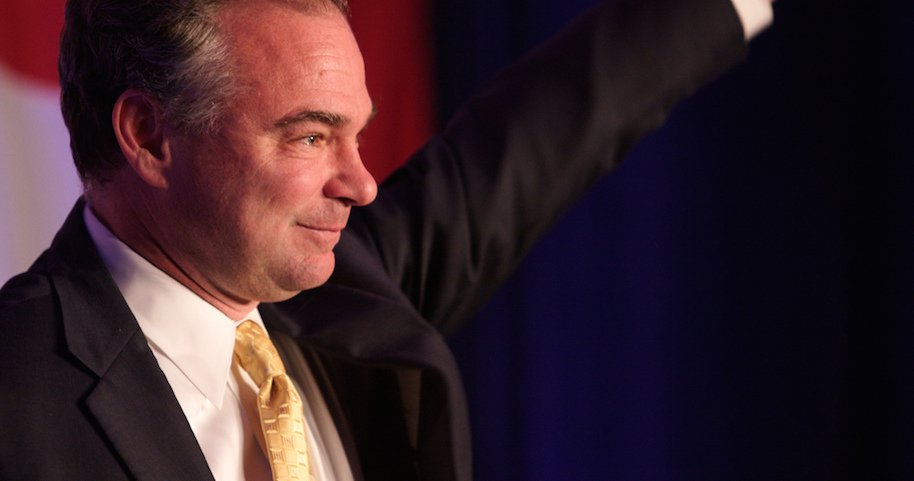
With Hillary Clinton鈥檚 decision to add Tim Kaine to the ticket, early education advocates have reason for enthusiasm. Kaine, whose wife, , just stepped down as Virginia鈥檚 secretary of education, has a solid track record of advocating for increased access to pre-K dating back to his time as Virginia鈥檚 governor from 2006 to 2010.
While campaigning for governor, Kaine made a centerpiece of his education platform to provide pre-K to all Virginia four-year-olds at an investment of $300 million in its first year of implementation. Kaine argued that expanding pre-K access throughout the state would reduce the need for costly remedial instruction over time and provide young children with the necessary skills to enable them to be successful throughout the rest of their academic career.
Once he became governor, Kaine was forced to scale back his ambitious plan to provide universal pre-K access to four-year-olds due to budget shortfalls caused by the 2008 recession. However, over the course of his term he did manage to increase the annual budget of the from $46.3 to $58.6 million while increasing the number of four-year-olds served .
As a senator, Kaine was one of nine senators to introduce the 鈥�,鈥� which aimed to expand and improve early childhood education for four-year-olds across the country for families making less than 200 percent of the federal poverty level. In 2013, Kaine wrote an making the case for expanded pre-K access in which he stated that, 鈥渋t is tough to identify an educational program with a higher return on investment than early childhood education.鈥�
Kaine joins a ticket that has universal pre-K for all four-year-olds over the next ten years by building on President Obama鈥檚 Preschool for All proposal. Clinton has also called for increasing federal investment in home visiting services while also in Early Head Start and the program. The Clinton campaign has put forth the outlines of a plan to make child care more affordable by ensuring that no family spends more than 10 percent of their income on child care and to improve career advancement opportunities and compensation levels for early childhood teachers.
A recent of 800 registered voters shows that there is bipartisan support for improving the accessibility and affordability of early childhood education across the country. The First Five Years Fund鈥檚 annual national poll found that 90 percent of voters agree that the next president and Congress should work together to improve access to early education. That includes 78 percent of Trump supporters and 97 percent of Clinton supporters.
The found that 72 percent of voters identify the ages of one to five as the most important for developing a child鈥檚 capacity to learn and 73 percent of voters voice support for a proposal that would make available $10 billion per year for ten years to help states provide access to high-quality child care for infants and toddlers, pre-K programs, home visiting, and parent education. Support for this hypothetical proposal has been consistent over the last four years of the poll, ranging from a low of 70 percent to a high of 76 percent. Even when voters are presented with information critical of the proposal, such as the fact that the proposal could be 鈥渁nother huge government entitlement program,鈥� 62 percent of voters still express support for it.
If the Clinton/Kaine ticket is victorious in November, how likely is it that they鈥檒l be able to convert this public support for early education into law? That depends in large part on which party controls the Senate and House of Representatives. In 2013, President Obama used his State of the Union address to call for making high-quality pre-K available to every child in America, but his was never seriously considered by the Republican-controlled Congress.
There鈥檚 reason for optimism that a Clinton/Kaine administration might have more success in garnering congressional support for early education legislation. Democrats have a of having a majority in the Senate come January and are to gain 15-20 seats in the House – enough to close the margin with Republicans but still short of the 30 seats needed for a majority.
If Clinton does win the presidency and Democrats successfully take control of the Senate, there might just be a two-year window for the new administration to have a realistic chance of pushing early education legislation through Congress. The Senate elections in 2018 look for Democrats, with Republicans defending only eight seats compared to the Democrats鈥� twenty-five. Stay tuned for more coverage of the 2016 election and its potential impact on early education.
Senior Policy Analyst, Early & Elementary Education


