
‘Wild Wild Country’ Holds a Mirror to the Present
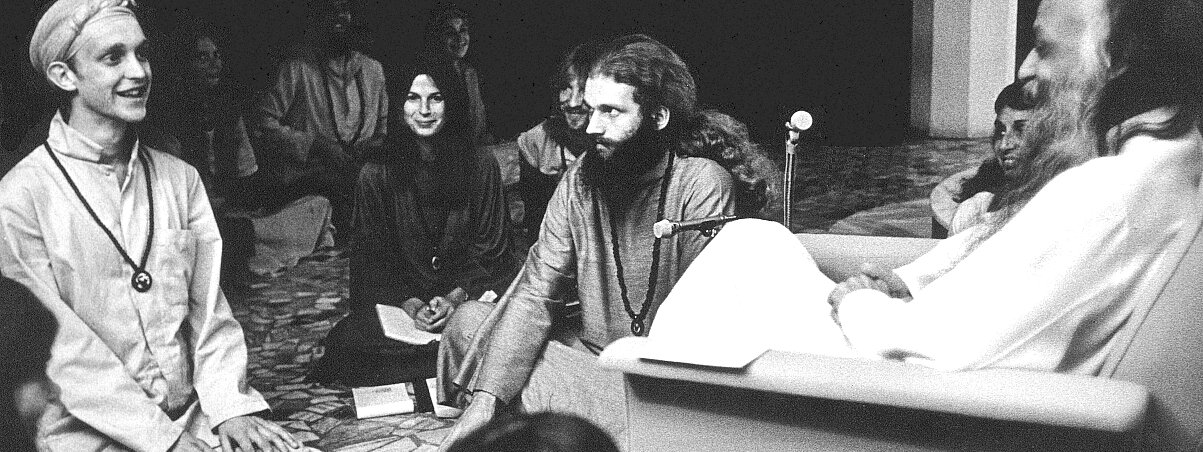
The spiritual guru Bhagwan Shree Rajneesh entered the American consciousness in the 1980s, when he moved his followers from India to 鈥淭he Big Muddy Ranch鈥� in Wasco County, Oregon. His provocations and control over his cult raised suspicion among Antelope鈥檚 small-town residents, who lived near the 64,000-acre ranch the band of outsiders looked to transform into their countercultural utopia. Netflix鈥檚 fascinating new documentary series, Wild Wild Country, looks to reconstruct Rajneesh鈥檚 story and the events that ensued during this dramatic chapter of American history.
Created by filmmakers and brothers Chapman and Maclain Way, the six-episode series is unnervingly relevant. Bottled in all the 鈥�80s strangeness is a strikingly contemporary image for viewers in the Trump age. Consider, for instance, that the election of Donald Trump demonstrated how an unlikely candidate could secure the presidency by, among other things, exploiting racial resentment among white Americans and stoking conservative fears () of cultural obsolescence.
Wild Wild Country typifies these dynamics between American conservatives and liberals, depicting each side鈥檚 struggle for political and cultural survival. In that, the documentary is an illuminating analogue to today鈥檚 sociopolitical climate, revealing how tribal fervor can unhinge a society.
The emigration of the Rajneeshees, as they were called, drew national attention, as the media widely covered the group鈥檚 zaniest characters鈥攏amely, Sheela Silverman (Ma Anand Sheela), Rajneesh鈥檚 trusted secretary, who pitched and organized the move across the Pacific. 鈥淲hat excited me about America?鈥� poses present-day Sheela in the documentary, silver hair bobbed and shoulders draped in a shawl. 鈥淓verything, I guess, in that moment. America was a land of promise. I was fascinated with the idea of freedom, to see the equality among men and women.鈥�
It鈥檚 precisely that freedom鈥攖o practice religion, to vote, to speak freely鈥攖hat frightened Antelope鈥檚 residents, who didn鈥檛 want their (conservative, mostly white) community to be disturbed by a group of outsiders (which also included thousands of Westerners) and, as a result, worked to expel them.
Crucially, I鈥檓 not arguing that the Rajneeshees were uncomplicated avatars of liberalism. After all, they managed to change the name of Antelope to Rajneeshpuram, and in 1985, Sheela pleaded guilty to attempted murder and assault for her part in poisoning 751 people in Wasco County. The locals, understandably, felt validated by this guilty plea. However, that the townspeople of Antelope, some of them quite wealthy, expressed this worry via coded language, speaking about threats to their 鈥渨ay of life鈥� and Christianity and wanting to 鈥渒eep Oregon, Oregon,鈥� signaled that their deeper fear extended out and lay in differences of race and religion, which created the conditions that ultimately led to a political tug-of-war between the two groups.
Perhaps there鈥檚 a message embedded in this narrative about the importance of tolerance. Indeed, the Rajneeshees were, in almost every practical sense, different from the locals, including in their sartorial taste. Though they insisted on their individuality, they each wore identical bright orange clothing. And, of course, there was the sex. They professed 鈥渇ree love,鈥� open marriages, and sex positivity, which, while hardly strange, was certainly culturally unfamiliar to the residents of Antelope.
And yet, despite that subtle message, Wild Wild Country also illustrates how the confluence of money, power, and difference in America can very easily fuel chaos.
There鈥檚 a national dialogue currently swirling around whether our current factionalism鈥攐ne side exurban, largely white, and conservative politically but also culturally; and the other, secular and diverse, and often siloed in big cities鈥攚ill chip away at American democracy. These cultural and political differences that plague us鈥攁nd that reached a dangerous tipping point in Wasco County鈥攈ave always simmered beneath America鈥檚 tenuous unity. But as the conservative writer Andrew Sullivan argues in the seams that previously held our social fabric together, 鈥渟hared icons that defined us, and a common pseudo-ethnicity鈥斺�渨hiteness鈥濃�攊nto which new immigrants were encouraged to assimilate,鈥� have arguably been unraveling in a post-2016 national reckoning with America鈥檚 blemished history.
In Wild Wild Country, the financial power and political legitimacy of the Rajneeshees placed them on relatively equal footing with the conservative residents of Antelope, such that when they showed up in Wasco County, the residents felt dispossessed of their cultural and ideological supremacy, their local identity threatened. In old, grainy television footage captured in the documentary, an unnamed resident says, bluntly, 鈥淎s far as I鈥檓 concerned, they鈥檙e not doing this country any good.鈥� Another person called their arrival the 鈥渄ownfall of our civilization.鈥�
If the series is indeed intended to reflect our political moment, the Ways, notably, aren鈥檛 taking sides. The most prominent feature of the documentary, conceptually, is how it handles its interview subjects. The settings and even background music at times feel intrusive, but they鈥檙e useful for reflecting the emotions of the characters, independent of their particular side in the conflict, encouraging the viewer to see the characters鈥� actions with the same righteousness and conviction they do, even when it contradicts the reality of their circumstances. In that, the Way brothers encourage sympathy for their subjects, while withholding judgement about their personal crimes (artistic choices that ).
This isn鈥檛 to suggest that Wild Wild Country is perfectly analogous to the present. Again, some of the Rajneeshees鈥� crimes did little to separate them from other cult murderers. But what happened in Wasco County is arguably a scaled-down version of what鈥檚 actively playing out now: people who鈥檝e historically enjoyed a privileged status whipped into a frenzy over perceived threats to that status, fear of 鈥渢he other,鈥� political tribalism. For the Antelope residents, everything was changing too much, too quickly鈥攄espite the fact that that fear also smacked of bigotry and further entrenched prejudice.
Wild Wild Country is almost too unbelievable to be true. But viewed as a kind of time capsule, a certain clarity emerges about how the convergence of old and new can yield turmoil instead of communion. And what seems almost contrived manages a realism beyond what present-day wishers for national unity dare to acknowledge: Sometimes, the two sides never truly reconcile. The events the Rajneeshees鈥� arrival set in motion were extremely destructive, and the resulting fight for survival only deepened the cultural chasm and tribal wedges between the two groups.
In all that, the documentary, while centered on an聽鈥�80s聽cult gone awry, asks the America of 2018 a key question: Will we鈥攕omehow, at last鈥攍earn from the past?
More 国产视频 the Authors
Related

Engagement in a Civic Education Desert

Built to Last: How Leaders Are Creating Sustainable Early Childhood Funding

Pre-K Is Having a Curriculum Moment. A Professional Learning Movement Needs To Follow.
