
Will History Repeat Itself?
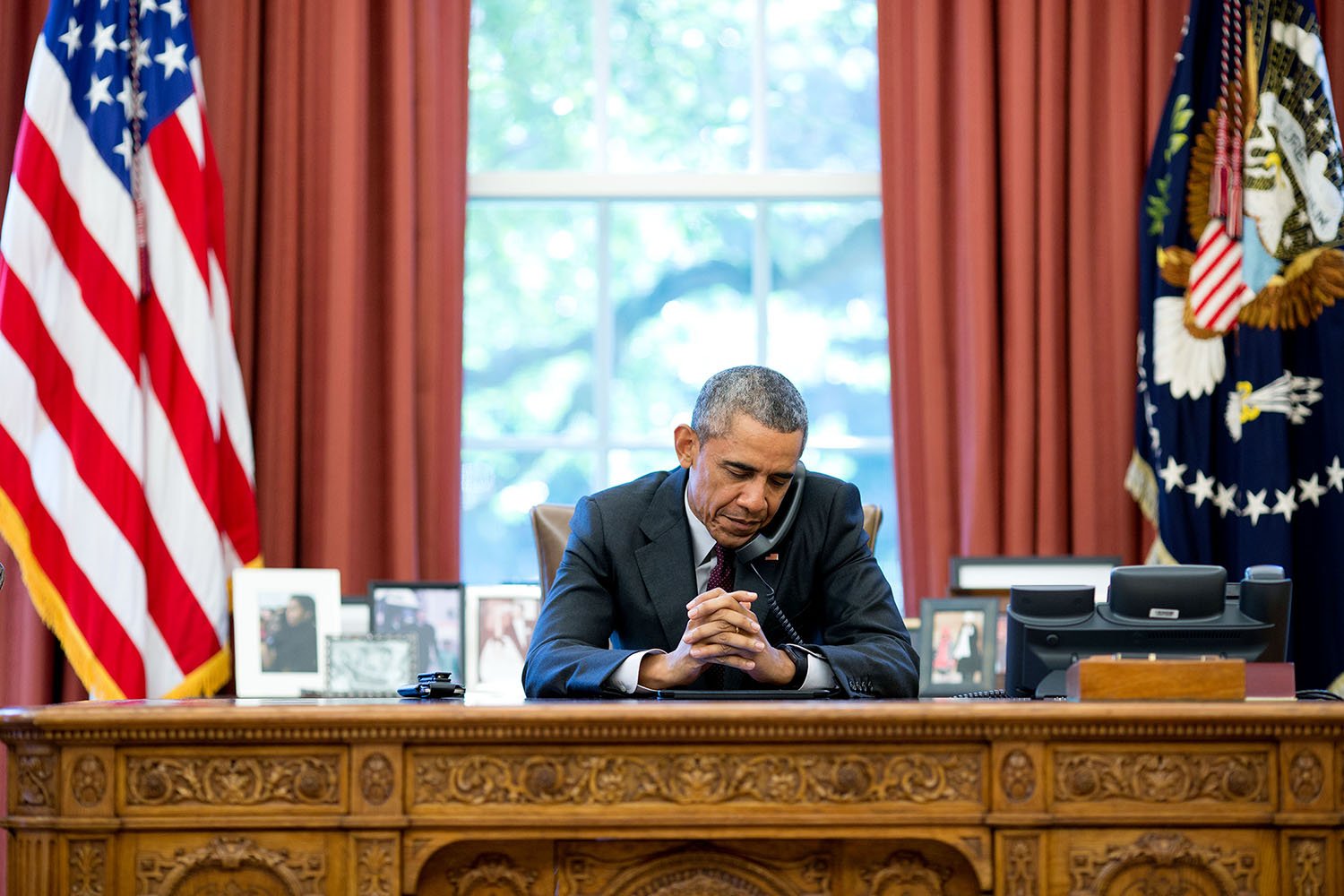
Hindsight is 20-20, but President Obama doesn鈥檛 seem to be taking full advantage of that view.
When the (AUMF) was approved just a week after the 9/11 terrorist attack, no one could have predicted that it would embroil the United States in almost a decade and a half of war in countries beyond Afghanistan. That law became the basis for drone strikes and military operations in countries such as Pakistan, Yemen, Libya and Somalia, among others.
Obama is now attempting to implement another AUMF, this time to fight ISIS. Last week, he asked Congress to formally authorize military force against the terrorist group that has taken over large portions of Iraq and Syria.
But as much as President Obama is trying to avoid history repeating itself, the question nonetheless remains: will it? 聽His illustrates his effort 鈥� offering limitations that were absent from the 2001 AUMF 鈥� 聽but will they be enough to actually ensure that the United States doesn鈥檛 end up in various countries fighting a number of enemies?
Put another way, what makes President Obama鈥檚 proposed AUMF substantially different from the one passed in 2001?
For one, the proposed AUMF actually named the group against whom military force would be authorized. This may seem like a common-sense inclusion, but the 2001 AUMF lacked any specific mention of Al Qaeda 鈥� or any other terrorist group 鈥� and simply said the President could use force 鈥渁gainst those responsible for the recent attacks launched against the United States.鈥�
But the proposed AUMF would allow military operations only against ISIS 鈥渙r associated persons or forces.鈥� 聽While the resolution attempts to impose limits by defining those 鈥渁ssociated persons or forces鈥� as 鈥渋ndividuals and organizations fighting for on behalf of, or alongside ISIL or any closely-related successor entity,鈥� this language still leaves a great deal of room for a broad interpretation of who these people are or might be in the future. 聽As ISIS grows, so does its influence, and many terrorist and extremist groups across the region are to ISIS. 聽In the past six months, ISIS has drawn into its fold some dozen militant groups from Afghanistan, Algeria, Egypt, Libya, and Pakistan. According to the proposed AUMF, whatever sphere of influence ISIS develops next would become a potential battleground for the United States.
Perhaps for this reason, Obama also made it clear that his proposed resolution does not call for ground troops to be deployed to either Iraq or Syria. In a submitted to Congress, Obama wrote that his administration鈥檚 draft AUMF 鈥渨ould not authorize long-term, large-scale ground combat operations like those [鈥 in Iraq and Afghanistan.鈥� 聽But, under the proposed resolution, battling ISIS and its associated persons could include ground combat operations, as long as they鈥檙e not 鈥渆nduring.鈥� Obama admitted this obliquely in his letter to Congress, when he wrote that the resolution would 鈥減rovide the flexibility to conduct ground combat operations in other, more limited circumstances,鈥� using missions by special operations forces as an example.
The draft resolution also puts time limits on the President鈥檚 authority to conduct military operations against ISIS. After three years, the President would have to seek reauthorization from Congress to continue. While this is a limitation on its face, the new resolution doesn鈥檛 actually guarantee that military force against ISIS will end in three years 鈥� even if the proposed AUMF is not reauthorized. That鈥檚 right, and here we鈥檝e come full circle 鈥� the 2001 AUMF is still in place, permitting President Obama, or any future President, to follow its broader mandate.
It鈥檚 that AUMF that the Obama administration has airstrikes being carried out now in Iraq and Syria. Despite Obama鈥檚 to 鈥渞efin[ing], and ultimately repeal[ing]鈥� the 2001 AUMF, all this new proposal does is replace the 2002 AUMF that gave President George W. Bush the authority to begin the Iraq War. 聽In fact, this most recent request broadens the scope to include Syria, thus expanding the original mandate, in the aggregate. Fourteen years after the Sept. 11 attacks, the list of authorized targets in the war on terror seems to only grow larger.
More 国产视频 the Authors
Peter Bergen
Vice President, Global Studies & Fellows; Professor of Practice, Arizona State University
Related

Children Belong in School Learning, Not Left to Languish in ICE Detention

A National Review of Early Childhood Cost Models: Findings on Children with Disabilities and Developmental Delays

Gender Equity in High-Quality Youth Apprenticeship: A Deeper Dive into the PAYA Data
