
Youth Savings: Finding the Right Financial Tools at the Right Age

Originally posted on
With a third of the global population today under the age of 19 and 90 percent of these young people living in developing countries 鈥� 45 percent living on less than $2 a day鈥攖here is an urgent need to create easy and efficient savings mechanisms for the young.
While national governments, NGOs and multilateral institutions broaden program mandates to embrace financial inclusion ( as well as the follow-on are just two examples) the idea of providing savings at birth has experienced a resurgence here in the U.S. and around the world. This resurgence is part of a larger movement to provide the tools youth need to accumulate savings, in order to build responsible financial habits throughout their lives.
Bagwhan Chowdry, founder of (FAB) and Phillip Longman, senior research fellow at the 国产视频 Foundation, have both laid out plans for providing bank accounts at birth. Chowdry argues that global issues of financial access and poverty can be substantially reduced if we provide each child in the world with an electronic bank account and $100 at birth.
Longman recently appeared on outlining the structure and benefits of children鈥檚 savings accounts here in the U.S. Longman argues that given at birth could serve several important functions over a child鈥檚 lifetime 鈥� including providing savings for education and retirement.
Savings accounts at birth represent just one approach to engage youth in asset building. Private for-profit institutions are quickly entering the youth financial services market. Today more and more financial products are designed with low-income youth in mind. These institutions recognize the of attracting young customers early on and the low-income children experience from building savings early in life.
In two different exploratory savings studies, the found that an overwhelming number of private for-profit financial institutions specifically targeted low-income youth and/or children. In 鈥渕ore than 1 in 5 savings products surveyed targeted childrenand/or youth鈥︹�� the study found. The majority of these products were offered by private institutions and provided higher average interest rates (4.03 percent compared to 1.63 percent) and more flexibility than products that did not target a specific demographic. In the , SPINNAKER found that 22 percent of savings products surveyed targeted children and/or youth. While these products differed from those in Kenya, they shared similarities when it came to providing more flexibility in regards to balance requirements and fees.
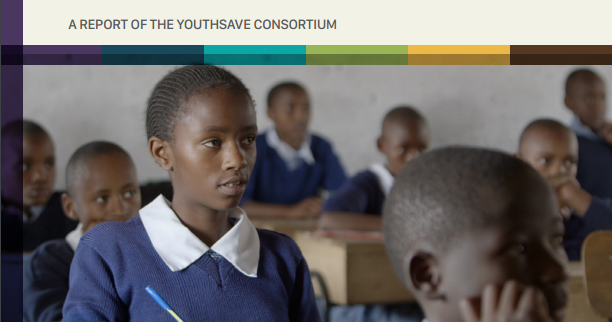
, a consortium comprised of , , the at Washington University in St Louis, the at the 国产视频 Foundation and , is helping financial partners likein Kenya and in Colombiathrough market research, national studies and more to deliver the right financial products at the right time to this demographic. The YouthSave initiative will first focus onColombia, Ghana, Kenya, and Nepal.
On Thursday (July 26), the Global Assets Project hosted the event: . Members of the Consortium and other experts in youth financial services shared recent findings, trends and opportunities for encouraging youth savings. Panelists discussed different areas of study and shared their preliminary answers to questions, like 鈥榳hat do we really know about the financial preferences of low-income youth? and 鈥榟ow do we encourage positive financial behavior?鈥�
Whether we start encouraging savings at birth or at other points in a child鈥檚 development, such as through school and community programs, there is still a lot to learn about the financial needs and behaviors of this large and significant population. This event provided an important opportunity to continue the dialogue and build off existing research, with an eye toward future opportunities. As new products and programs are launched or updated, more opportunities will be created to generate data and learn how to more effectively reach low-income youth in developing countries.
More 国产视频 the Authors
Alexis Saffran
Issues
Programs/Projects/Initiatives
Topics
Related
85,000 Low-income Youth Open Savings Accounts through YouthSave
A Conversation on the Weekly Wonk: Should We Bank On It?
Global Anti-Poverty Targets Tepid