Mark Schmitt
Senior Director, Political Reform Program

Over the years, April 20 (aka 4/20) has gone from a stoner inside joke in Northern California to a widely recognized, if unofficial holiday鈥攆amiliar to marijuana consumers and non-users alike. But beyond the haze and humor, the day should be a reminder of something bigger: the power of everyday people to make big policy changes.
After a false start and some backlash in the 1970s, the long road toward legalizing cannabis truly began in 1996, when California voters with 56 percent of the vote. Voters in six more states followed suit. Meanwhile legislators didn鈥檛 act until four years later, when Hawaii became the .
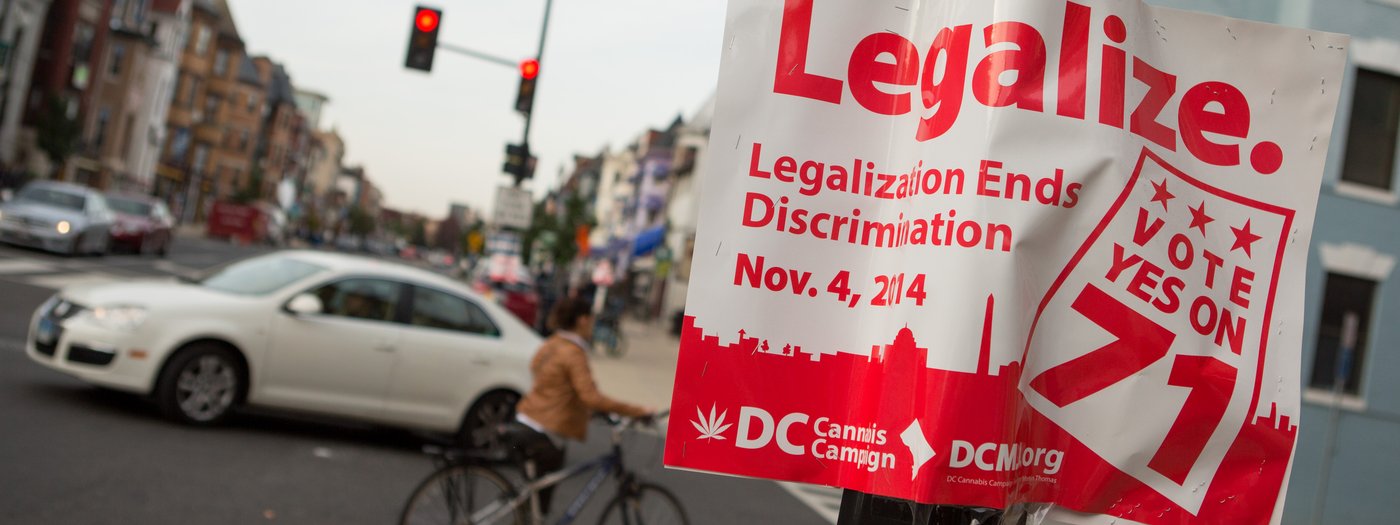
Similarly, when the fight for recreational legalization began in 2012, it again started with voters, who led the way in and . Only after those wins did lawmakers in other states begin to act. In all, over the last three decades, legalized medical or recreational cannabis by ballot initiatives. All the remaining states holding out on any kind of legalization are mostly in the South鈥攁nd not coincidentally, they鈥檙e among the 24 states that do not give voters the opportunity to put proposals on the ballot.聽
It鈥檚 easy to forget just how dramatic this shift was. In 1996, the culture was still steeped in the Reagan-era drug war. The had passed just two years earlier, championed by then-Senator Joe Biden. More than half a million people were arrested for marijuana possession that year, and workplace drug testing was commonplace. Very few elected politicians were willing to challenge the 鈥溾�� status quo. But voters alone changed everything.聽
Cannabis isn鈥檛 the only issue where citizen-led ballot initiatives advanced policies that elected officials avoided. Voters in Michigan by establishing an independent redistricting commission. In South Dakota, Utah, Oklahoma, and four other states under the Affordable Care Act after state legislatures refused, leaving Florida and Wyoming as the only two initiative states still holding out. In Missouri, they and mandated paid sick leave. In 2024, voters in Arizona, Montana, and other states enshrined reproductive rights in their state constitutions鈥攐ften with more support than the winning statewide candidates on the same ballot.
These victories reinforce studies showing that states with initiative options are significantly more likely to pass laws that majorities actually support. Political scientist John Matsusaka found that public policy was 18 to 19 percent more likely to match median voter preferences in states with direct democracy options.聽
Critics argue ballot measures can be messy鈥攙ulnerable to big money or poorly worded. Sometimes they are. But research shows most successful efforts are driven by grassroots coalitions, not corporations. Imperfect laws can be amended. What鈥檚 worse is when voters have no path to act at all, especially when normal representative channels are jammed鈥攁s are many state legislatures, whose elections are often uncompetitive, prohibitively expensive to enter, and gerrymandered to favor one party.聽
And right now, voters鈥� path to action is under attack. In Mississippi, the on a technicality, halting the entire initiative process. In Ohio, the legislature for ballot wins ahead of a high-stakes abortion vote. As of January this year, have been introduced to weaken initiative rights, by raising signature thresholds, shortening petition timelines, or limiting what issues voters can address.
Importantly, this isn鈥檛 a left-versus-right story. Conservatives have long used ballot initiatives to cap taxes, push voter ID laws, and limit spending. Progressives have used them to expand access to health care, protect abortion rights, and strengthen labor protections. Historically, both parties endorsed citizen initiative processes to reform governance and elections. The initiative process itself is nonpartisan鈥攊t simply allows people to act when their representatives won鈥檛, or can鈥檛.
That鈥檚 why we need to protect ballot initiatives where they exist and expand them where they don鈥檛. Half of U.S. states still offer no way for voters to put a measure on the ballot. In many of these places, especially those with gerrymandered legislatures and thin majorities鈥攍ike Wisconsin and North Carolina鈥攂roadly popular reforms have no real path forward.
So on 4/20, sure鈥攃elebrate how far we鈥檝e come on cannabis reform. But more importantly, remember how we got here. It wasn鈥檛 Congress. It wasn鈥檛 governors. It was the people.
And if we want to make progress on other long-stalled issues鈥攈ousing, health care, climate, criminal justice鈥攚e need to keep that power in the hands of voters, or help them gain it.
Senior Director, Political Reform Program
Deputy Director, Political Reform Program