
Tim Robustelli
Senior Policy Analyst, Future of Land and Housing

On May 5th, Americans struggling to make rent in the pandemic received news that threatened their housing stability. A federal judge the national eviction moratorium, finding that the Centers for Disease Control and Prevention (CDC) overstepped its authority when imposing the COVID-19-related ban in early 2020.
The moratorium in place for now due to an appeal from the U.S. Justice Department, and advocates continue to stress that such emergency protection is critical for keeping vulnerable tenants housed.
But the eviction moratorium won鈥檛 stay in place indefinitely, and it doesn鈥檛 erase months of past-due rent. Nearly 9 million households鈥攐r one-quarter of all American tenants鈥攁re significantly on rent payments and are at risk of displacement. Business could be booming in eviction courts around the county when proceedings eventually resume.
Local governments, legal aid groups, and housing nonprofits will undoubtedly scramble to keep threatened tenants housed. They鈥檒l thankfully be helped along by a presidential administration that鈥檚 more aid dollars and improved rental assistance programming. Yet making these benefits more easily accessible for tenants is no easy feat given one significant roadblock: a blatant lack of eviction data.
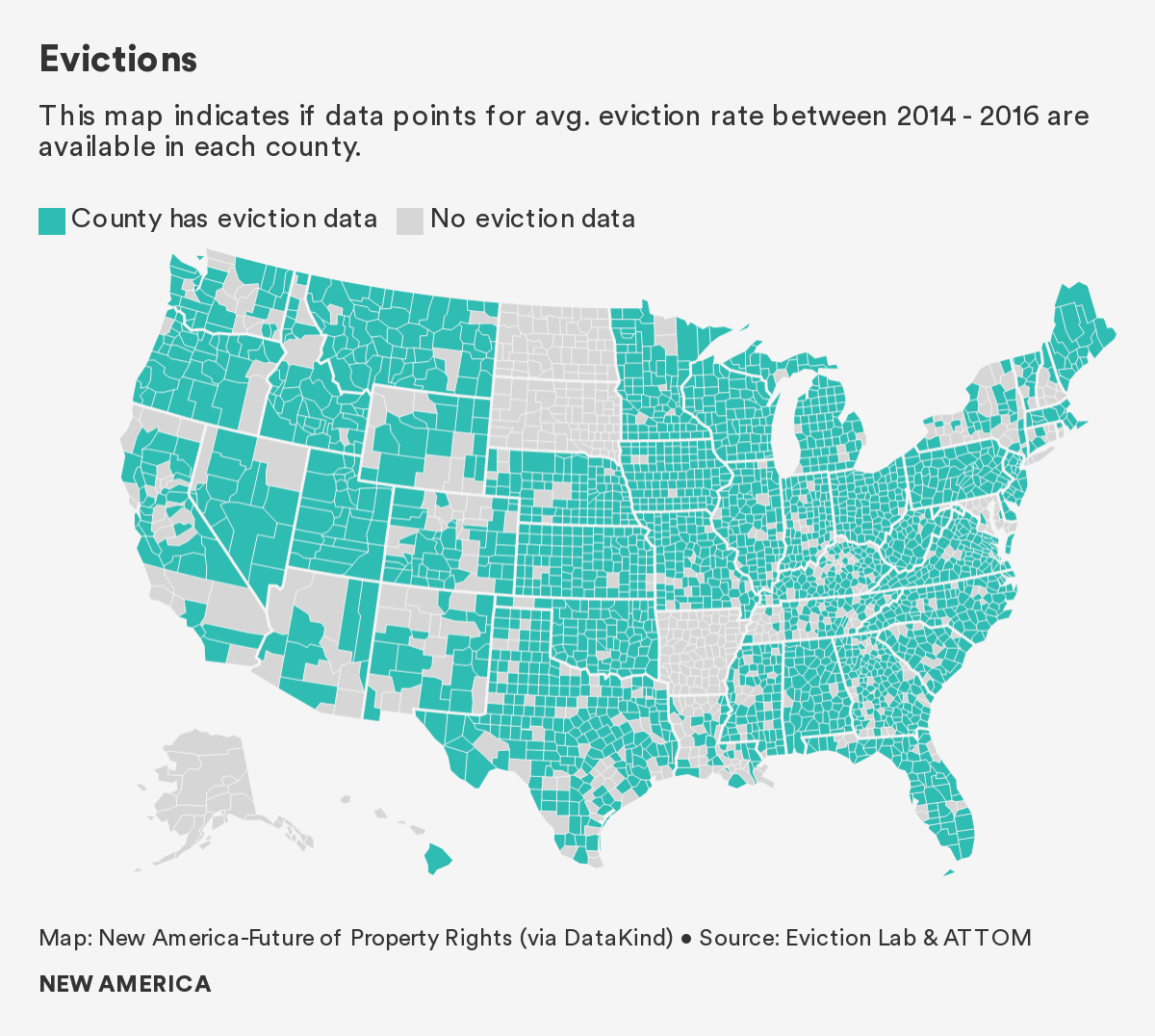
As an eviction case winds its way through the legal system, it amasses data: a filing date, the address of the rental property, names of the plaintiff (landlord) and defendant (tenant), and case outcome. Clerks at county civil courts are usually responsible for its collection.
Unfortunately, one-third of U.S. counties don’t have this data or can鈥檛 easily provide it. Lacking national guidelines for recording eviction information, some courts keep only handwritten records, while others store data only on a local computer, never shared to an online database. The data is often outdated or missing important pieces. If you鈥檙e a researcher or decision-maker who does manage to get their hands on this data, converting it into a readily-usable format for analysis and policy work is extremely time-consuming and difficult to do at scale. (Take it from someone who鈥檚 done it.)
So what does all this mean for eviction prevention as we emerge from the pandemic?
Once the CDC’s moratorium is lifted, cities and counties will likely need to prevent of housing insecurity using precious little data. Without detailed, up-to-date, and comprehensive eviction information, we can鈥檛 answer simple questions like: 鈥淲hich neighborhoods are most impacted by displacement?鈥� and 鈥淲ho is most at risk for home loss?鈥� As a result, myriad local leaders won鈥檛 be able to make data-driven and real-time choices about where to direct outreach, rental aid, and other resources in order to help tenants most in need.
to better share eviction data demonstrate that this information is a powerful tool in the fight against housing loss鈥攊n order to address both the immediate effects of COVID-19 and longer-term structural issues. In Houston, for example, local reporters used to call attention to ongoing evictions proceeding despite a city-ordered . And in Connecticut, a local aid group worked with to advocate for legal representation for renters in eviction court.
The United States needs an extensive push to standardize county eviction data and regularly feed it into a national database. Legislators, housing advocates, and other stakeholders across the country could then use this repository to more clearly understand which landlords rely heavily on the courts, how much back rent a tenant typically owes, and where evictions are concentrated within a community. Federal, state, and local aid can then be directed based on a greater awareness of needs.
Building a federal eviction repository won鈥檛 be easy, but it鈥檚 possible. There鈥檚 growing interest in Washington D.C. to get a system online, and we know from in other sectors that the U.S. government can provide funding, training, and leadership to build both political interest and technical capacity around the country. We don鈥檛 have to start from scratch either, as the White House, Congress, and other federal leaders can look to nationwide already collecting eviction data and tap into their expertise and know-how.
By bringing together skills and resources from all levels of government, we can unlock eviction data in thousands of communities and start building a national database. This work can鈥檛 come soon enough, because once the CDC鈥檚 eviction moratorium comes to an end, millions will be at risk of displacement. Any effective response to this crisis must utilize data in order to direct rent relief towards communities hardest hit by evictions and keep our most vulnerable families in their homes.
Senior Policy Analyst, Future of Land and Housing