
Donna A. Patterson
Fellow, Future Security Program
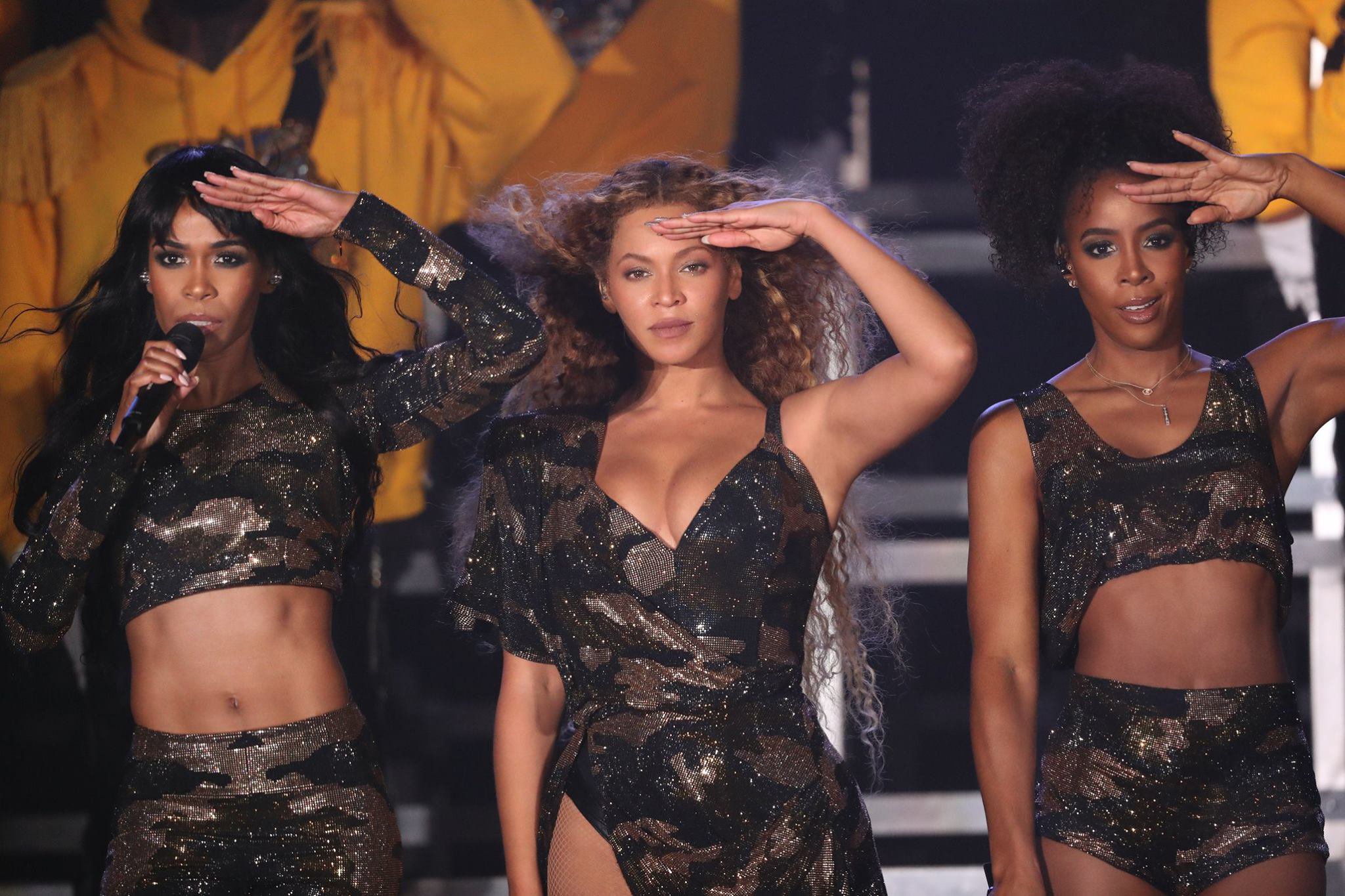
While I鈥檝e long enjoyed 叠别测辞苍肠茅鈥檚 work, like the blogger and author until recently, I wasn鈥檛 a card-carrying member of the Beyhive, the name given to the singer鈥檚 enthusiastic fanbase. Over the years, though, I鈥檝e increasingly enjoyed 叠别测辞苍肠茅鈥檚 music, including her performances. For instance, I found her and Bruno Mars鈥� musical takeover of Coldplay鈥檚 2016 Super Bowl performance spectacular. During the halftime show, 叠别测辞苍肠茅 explicitly celebrated global blackness and black womanhood, as she does on her two most recent albums, Lemonade (2016) and 叠别测辞苍肠茅 (2013).
In a similar vein, looking at the Coachella kickoff last weekend, it鈥檚 clear that 叠别测辞苍肠茅 hasn鈥檛 merely continued with these themes鈥攕he鈥檚 launched them into another realm entirely. More specifically, her performance at the festival was a love letter to black America, dusted with Afrodiasporic imagery, the traditions of historically black colleges and universities (HBCUs), women鈥檚 empowerment, and Southern flash and flare. Especially after last weekend, not to see the power of 叠别测辞苍肠茅 and her work is to miss what she means for black culture more generally.
In February, Ryan Coogler鈥檚 Black Panther blasted open discussions on broader notions of blackness. Via the dazzling world of Wakanda, the movie explores Afrodiasporic themes of class and culture. It also dives into African and black American cultural mores, and offers a beautiful visual representation of Africa鈥檚 many cultural traditions. These representations of African culture merge with Afro-futurism, creating new ideas of what a black future might look and feel like. For someone like me, who teaches African studies, the widespread enthusiasm for learning more about the continent鈥攊ts politics, its clothing, its languages, its people鈥攖hat emerged after Black Panther鈥檚 release was thrilling.
Likewise, at Coachella, 叠别测辞苍肠茅 inverted the Afrodiasporic gaze, pointing it inward as she focused on celebrating black American traditions. She exposed a mainly white audience to a different form of art, one centered on blackness in a more textured sense. As her mother Tina Knowles-Lawson earlier this week on Instagram, 叠别测辞苍肠茅 was intentional about not bowing to mainstream conceptions of 鈥減alatable鈥� blackness, instead prodding the audience to consider an oft-unconsidered vision of black power. Now, Americans of all races are looking to unpack and learn more about the range of cultural traditions she highlighted onstage. And black Americans, in particular, have been heartened by the singer鈥檚 bold illumination of their culture.
Put another way, what Black Panther did for Africa and the diaspora, 鈥淏eychella鈥� is doing for black American culture.
For one, 叠别测辞苍肠茅 shone a light on black collegiate experiences. The show began with a female drum major calling everyone to attention, as dancers moved aside on a staircase to reveal 叠别测辞苍肠茅鈥攄ressed regally in black and gold Egyptian-inspired regalia, with a motif of Nefertiti on the back of her cap. The significance of the dancers and marching band, which performed for most of the two-hour set, ought to be obvious, at least to black viewers. It let the world know about the distinct and creative nature of HBCU bands. In fact, 叠别测辞苍肠茅 hired band members from several HBCUs鈥攊ncluding Florida A&M University, Alabama State University, and North Carolina A&T University, among others鈥攖o perform with her. These traditions are common not only at HBCUs, but also in high-school marching bands in the South, including in 叠别测辞苍肠茅鈥檚 hometown of Houston, Texas.
Yet her embrace of black traditions didn鈥檛 stop there. She also centered black fraternities and sororities. In fact, 叠别测辞苍肠茅 went so far as to create her own co-ed organization for the performance: Beta Delta Kappa (though some suspect that the 鈥淏鈥� and 鈥淜鈥� actually stand for 叠别测辞苍肠茅鈥檚 initials). One of the standout scenes came between her renditions of the songs 鈥淔ormation鈥� and 鈥淪orry.鈥� In it, she plays 鈥渂ig sister鈥� to a group of male pledges. She鈥檚 unhappy with their attempts to entertain her. She and her group of 鈥渟orority鈥� dancers haze the men, employing taunts and stomps that lead to a step-show. The women win and the men exit the stage, as 叠别测辞苍肠茅 and her dancers shift from taunting the 鈥渓ine鈥� to performing 鈥淪orry.鈥� 叠别测辞苍肠茅 asks the women onstage (and, truly, everyone who鈥檚 watching): 鈥淟adies, are we smart? Ladies, are we strong? Ladies, have we had enough?鈥�
In all that, 叠别测辞苍肠茅 grapples with women鈥檚 frustration with gender barriers, at the same time bolstering notions of women鈥檚 power. More than that, though, while 叠别测辞苍肠茅 promotes empowering all women, she鈥檚 specifically concerned with what power means for black women. When she spoke about the significance of her performance at the festival, she said, with a wink: 鈥淐oachella, thank you for allowing me to be the first black woman to headline. Ain鈥檛 that 鈥檅out a bitch?鈥�
Indeed, 叠别测辞苍肠茅, whose show trounced YouTube鈥檚 previous live-stream record, did what few black pop stars have done: demand that a predominantly lily-white venue bend to meet her鈥攁nd succeed.
People will, most likely, continue to find fault with 叠别测辞苍肠茅: with her art, with her activism, with the ways in which she embraces those whom society has long kept at arm鈥檚 length. Yet these dismissals say more about detractors than anyone else. Because to watch Beychella is to marvel at an artist who does more than just elevate herself鈥攕he unapologetically elevates key elements of black culture, too.
Fellow, Future Security Program


