Beyond Big Brother
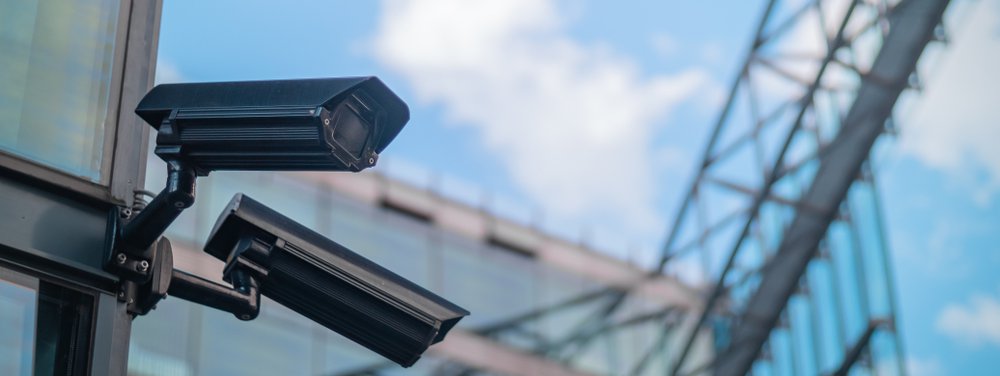
By now, everybody knows the mantra: Big Brother is watching you.
Those famous words from George Orwell鈥檚 1984鈥攚hich turns 70 years old this year鈥攕till ripple throughout American popular culture, offering a dystopian vision of government surveillance. But as technology is increasingly integrated into our 21st-century lives, is Orwell鈥檚 prophecy from 1949 not merely unfolding鈥攂ut also evolving?
Orwell鈥檚 novel introduces readers to a world in which it鈥檚 hardly possible to escape the eyes of the state, with telescreens constantly monitoring every action of every citizen of Oceania to detect possible rebellion, and blasting totalitarian propaganda. More than that, the unnerving thing isn鈥檛 just that the Party, helmed by the aforementioned Big Brother, is watching everyone鈥攊t鈥檚 that everyone knows that they鈥檙e being watched, and are afraid as a result. But while critics and fans more broadly have dissected the novel in innumerable ways鈥攎ainly focusing on the Party鈥檚 obstruction of civilians鈥� right to think, act, and express themselves freely鈥攍ittle attention has been paid to the fact that, differently from Orwell鈥檚 novel, surveillance technologies in the digital era have actually become more discreet as our privacy and security concerns have grown.
Put another way, what if, in 2019, surveillance is accelerating at a rate that catalyzes sousveillance, the idea that our every move is being captured all the time鈥攚ithout us even realizing it?
More than one and a half centuries have passed since the of surveillance technology. In 1864, a stockbroker used wiretapping鈥攐ne of the earliest forms of surveillance鈥攕o that he could overhear information on corporate telegraph lines and later sell that information to stock traders. But security and privacy concerns over issues of wiretapping really only garnered public attention starting in the 1950s.
Unlike the more widely-known concept of surveillance, or the state watching from 鈥渁bove,鈥� sousveillance is a term originally coined by Canadian researcher and wearable-computing engineer Steve Mann, and it describes inverse surveillance, or vigilantes watching from 鈥渂elow.鈥� The term has gradually evolved to encapsulate the broader notion of everything being recorded at all times, especially when people aren鈥檛 aware that it鈥檚 happening.
These arguably more invasive, from-below technologies are rolling out at full tilt, and how their real-life implementation affects our lives may go far beyond Orwell鈥檚 speculative fiction.
While the Party forced the citizens of Oceania to adapt to a deranged set of societal rules by imposing 鈥渇rom above鈥� the constrained language of Newspeak鈥攊n turn inflicting the 鈥渄oublethink鈥� mentality鈥攎odern sousveillance technologies are taking it to the next level, with more subtlety and concealment. They鈥檙e spying on civilians on a daily basis, and in a way that鈥檚 secretive enough to cause minimal disruption and largely unseen damage to our lives.
Take, for example, Alexa. The virtual assistant developed by Amazon has now been so seamlessly integrated into so many homes that, sometimes, we aren鈥檛 even aware that if we accidentally say the wake word, Alexa, she could be , recording and collecting data about our daily private lives. (Ever find yourself in what may feel like a d茅j脿 vu situation, where you talk to friends offline about a subject and, without looking anything up online, later see a flood of social media ads related to what you鈥檇 just discussed?)
But that鈥檚 not all. Consider, too, the newly-installed in Las Vegas, called Intellistreets, that are capable of recording video and audio of pedestrians and motorists. And back in 2013, two artists, Brian House and Kyle McDonald, introduced , a light bulb-like device that automatically transcribes conversations into tweets, blurring the lines between a presumably private physical environment and a public digital space.
In addition, local law enforcement agencies across the country are testing out a new policing system called , which primarily patrols or surveils certain areas to help police predict crimes and potential offenders. PredPol, as Motherboard reported, has already been deployed, or at least covertly deployed, in a dozen cities all over California, Michigan, South Carolina, and Arkansas. And last July, ProPublica contributed to the lengthy queue of sousveillance reports that shed new light on how some , scrutinizing their social media and spending habits to determine insurance rates and maximize profits.
And, more recently, House Democrats responded to President Donald 国产视频 plan to build a literal border wall with a for border security that calls for increasing the use of drones, facial recognition, and biometric and DNA collections at entrances to the country. The House is also demanding a more extensive use of automatic license plate readers (), already a common practice of local, state, and federal law enforcement, to surveil more vehicles in the vicinity of the border. These proposals, if enacted, may to vulnerable communities along the border, including traditionally marginalized communities of immigrants, people of color, and indigenous people.
It鈥檚 hardly a stretch to say that the ubiquitous implementation of invasive surveillance and sousveillance technologies could chip away at basic rights like the right to privacy and freedom of thought and expression. These technologies, when used for discreet, malicious purposes and with no regard for civil liberties, are a ramped-up version of the society that stalked the citizens of Oceania in 1984. Orwell鈥檚 scenario, in important ways, seems to have begun taking shape. I wonder: What might it look like in another 70 years?
More 国产视频 the Authors
Issues
Programs/Projects/Initiatives
Related

Take Back Tech鈥擴nderstanding How Surveillance Culture Impacts Advocacy