
Climate Change Should Kill the Act of God
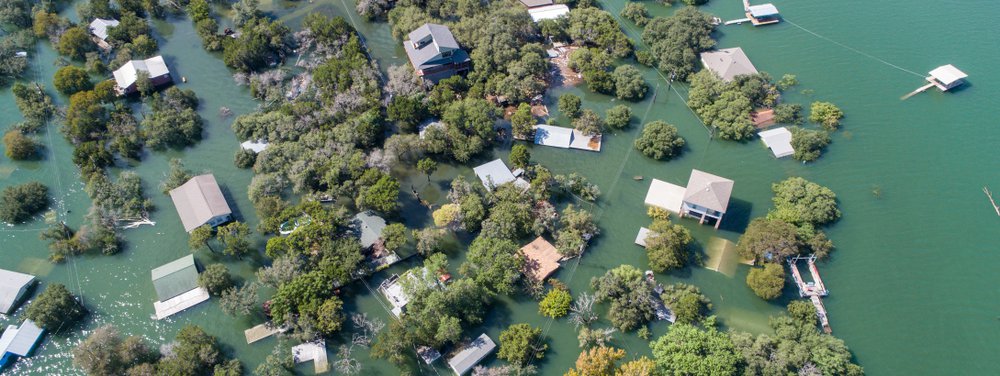
Climate change keeps challenging our understanding of, well, everything. and famously argued that our quaint ideas of nature are dead. But nature was only one of climate change鈥檚 early victims. Other deceased include and, in smaller terms, .
But there鈥檚 one thing that climate change should kill: the act of God.
This isn鈥檛 a theological discussion; the term has actual legal meaning. Act of God provisions protect parties from being held responsible for 鈥渦npredictable and unpreventable鈥� circumstances, usually extreme acts of weather like hurricanes, earthquakes, and lightning. They get written into insurance policies, business contracts, and foundational American environmental legislation like the Clean Water Act and the Comprehensive Environmental Response, Compensation, and Liability Act.
Broadly, two criteria qualify an event as an act of God: 1) No human agency could have stopped the event, and 2) no human agency could have exercised due care to prevent or avoid the event鈥檚 effects. In other words, acts of God must be unpredictable, and their damage must be unpreventable. On that basis alone, the act of God is nearly obsolete, or at least it should be. While specific weather events such as hurricanes or fires may seem to be acts of God, our growing knowledge of climate systems challenges any vision of weather divorced from human activity. Humans meddle with the climate, which meddles with weather, and the two can鈥檛 be disentangled.
But legislators haven鈥檛 yet caught on. They鈥檙e stuck with a centuries-old precedent built on outdated understandings of nature. While no one person can be held legally responsible for causing a specific hurricane, it鈥檚 just wrong to say that weather events are uncaused or unpreventable by human activity鈥攁ka human agency. We can鈥檛 prevent all weather, but human action could have prevented the cataclysmic droughts, fires, and floods that lurk in the near future. The public now knows who triggers the growing spate of hurricanes, floods, and extinctions, and it is not God. Scientists have been warning the public about human-caused climate change . In fact, the act of God鈥檚 obsolescence is just one symptom of a deeper disease. Our legal and intellectual frameworks have not kept pace with our understanding of the climate.
The act of God鈥檚 history illustrates how ill-prepared we are for the pivotal restructuring of thought necessary to understand climate change. The term first slipped into the British legal framework roughly 400 years ago, nearing the outset of the Industrial Revolution and, , the Anthropocene, the geologic era when humans became the globe鈥檚 dominant environmental agent.
Legal scholar Denis Binder has outlined of the act of God. It does not, despite its name, have much to say about God. Even in the 1500s, the invocation of 鈥淕od鈥� in the act of God was a little 鈥� loose. Rather, the act of God exists only to explain what the more common 鈥渁ct of man鈥� cannot. Binder cites Lord Mansfield, one of the early shapers of British common law, who defined the act of God simply as 鈥渟omething in opposition to the act of man鈥� rather than the will of the divine. Courts in the 16th through 18th centuries mostly referenced acts of God in connection to common carriers, the businessmen who shipped merchants鈥� goods. When common carrier ships caught fire, sunk in storms, or lost goods to unforeseeable circumstances, early courts had to decide whether the carrier should be held liable for the loss of property, or whether the loss of property resulted from an act of God.
Those early cases set precedents for the act of God in explicit opposition to the act of man. Acts of man, when injurious, demand consequences. Murder begets incarceration. Negligence begets fines. These are acts of men. But when human minds cannot trace an injury backward to negligence or cause, the legal system needs a scapegoat. It blames God.
In the 19th century, courts began applying act of God defenses to environmental negligence cases. Binder traces the early environmental negligence defense to the illustrative but hotly contested 19th-century case Nichols v. Marsland. The central problem of Nichols v. Marslandfeels preternaturally modern: A private landowner dammed a stream to create a personal water feature. A strong storm surged. The dams failed, washing away four public bridges. Witnesses described the storm as worse than any in public memory, which informed the jury鈥檚 decision that the storm constituted an unpredictable vis major, an act of God, releasing the landowner from liability (until the trial judge overturned the decision). Building on that unseemly origin, the act of God grew into a common defense against negligence or liability.
The United States inherited the act of God from the British tradition, adapting it into key environmental legislation. In American environmental law, the act of God protects companies from liability when their activities 鈥渦navoidably鈥� pollute or degrade the land. Companies that spill oil off American coasts, for instance, can avoid the cost of cleanup by successfully proving the spill resulted from an act of God. Getting rid of the distinction wouldn鈥檛 necessarily change who is held responsible for disasters鈥攁t least in court. It鈥檚 already almost impossible for companies to shed their liability using an act of God defense. As professor Laurencia Fasoyiro , 鈥渢o successfully invoke the act of God defense one must show that: the act of God was unanticipated; the act of God was a grave natural disaster 鈥� of an exceptional, inevitable, and irresistible character; the act of God was the sole cause of the disaster; and the violation resulting from the act of God could not have been prevented by exercise of due care or foresight.鈥� Even before modern understandings of climate systems, that was a near-insurmountable burden of proof. In fact, Clifford J. Villa, a former Environmental Protection Agency attorney turned legal scholar, surveyed the history of American environmental law and found that 鈥渢he number of reported [legal] cases where the act of God defense had prevailed against environmental liability, under all statutes and all federal circuits, was 鈥� exactly zero.鈥� Villa鈥檚 article 鈥溾�� reveals that companies do not regularly escape liability from ecological disasters via the act of God.
Despite the act of God鈥檚 poor record in court, Villa persuasively argues that the provision plays a key function in the environmental liability landscape鈥攊n corporate and state agency decision-making. To Villa, the act of God ensures that agencies like the EPA focus their limited resources pursuing the worst environmental actors. He asks his readers to imagine heading the EPA after a massive earthquake: 鈥淏etween two industrial facilities that appear as likely sources of oil spills, if one facility has a sterling maintenance record and the other has a notorious history of maintenance failures, which facility would you be more likely to pursue?鈥� The act of God defense pushes the EPA鈥檚 gaze鈥攁nd scarce resources鈥攖o the worse company, an argument that assumes that the EPA is depleted in both manpower and funding. Likewise, Villa argues that companies will pre-emptively limit their liability prior to disasters, knowing that the act of God defense only applies if the defendant proves due care. In Villa鈥檚 telling, the act of God provides 鈥渁 viable and valuable incentive for the exercise of due care in order to save lives and protect property and the environment from the foreseeable impacts of natural disasters.鈥�
But companies and legislators do not understand what 鈥渄ue care鈥� looks like in the age of climate change. Villa鈥檚 approach overlooks the extent to which our knowledge about the climate renders the act of God an obsolete, even dangerous instrument. No, we cannot blame specific parties鈥攅ven the 鈥攆or isolated acts of weather. But we can鈥檛 say that the weather was uncaused, unpreventable, or unpredictable either. The fossil fuel industry is not just responsible for the pollution after the storm; the industry bears some responsibility for the severity of the storm, too. The legal system should not preserve laws that protect polluters from the disastrous, macroscopic consequences of their actions.
Purging the act of God would begin dismantling a legal system that often obstructs, rather than facilitates, climate justice. Just as the Great Depression fueled a new set of financial regulations, the climate crisis demands an overhaul of environmental legislation. Yes, current are making headway with lawsuits against the . But lawsuits only work within existing legal frameworks. They navigate the unequal distributions of power written into law, while legal precedents dictate the response to unprecedented crises. For instance, presents climate justice as a power play between the already rich. The state鈥檚 case accuses Exxon Mobil of defrauding shareholders, with the implication that Exxon Mobil can , but the real crime鈥攖he one most prosecutable by the government鈥攊s misleading investors. The public needs more legal tools to attribute blame and responsibility within the complex systems of climate change. Nixing the act of God, even if it鈥檚 rarely used at this point, is a small but pertinent place to start.
The act of God relies on a view of nature separate from humanity. For an act of God defense to make sense, nature must be a closed system uninfluenced by human activity. But climate science challenges the closed-system model. Human activity may not determine specific weather events, but humans have certainly increased the of weather patterns. The act of God鈥檚 artificial distinction between human and nature does not hold. The danger becomes clear when we look at the act of God in the public imagination. As a rhetorical maneuver, it nearly always runs cover for the powerful and the culpable.
Consider Taylor Energy, the oil company responsible for an oil spill that has been active in the Gulf of Mexico since Hurricane Ivan in 2004. As Darryl Fears of the Washington Post , it threatens to become the largest American oil spill ever. It would take that mantle from BP鈥檚 Deepwater Horizon disaster, which drew far more media attention than this ongoing catastrophe. Taylor Energy argued in a 2016 Q&A that the oil spill should legally be considered an 鈥渁ct of God,鈥� given that the spill resulted from a hurricane. That flimsy defense came from company president William Pecue, then Taylor Energy鈥檚 last remaining employee.
Pecue drew ire and ridicule from across the country, but his defense of Taylor Energy perfectly captures the hollowness and hypocrisy of the act of God. As long as it remains a legal definition, those most liable for our global catastrophe can reach for it as a crude defense.
To be clear, the act of God is just one of many legal concepts that need updating because of climate change. As Brad Allenby and Daniel Sarewitz have , 鈥渢he essence of the Anthropocene is not really about humanity鈥檚 planetary-scale impact, but about the beginnings of a radical destabilization of the core human ideas and institutions that made this impact possible.鈥�
The act of God is one such idea. Dealing with climate change will require more than just changing human behavior. We need to rewrite our laws and rethink our relationship to the Earth as well.
This article in , a collaboration among , 国产视频, and .
More 国产视频 the Authors
Related

State Education Budgets in Turbulent Times

Making the Case for Youth Apprenticeship: The Appeal to Gen Z

Nothing 国产视频 Us Without Us Can Actually Raise Us
