Hollie Russon Gilman
Senior Fellow, Political Reform Program
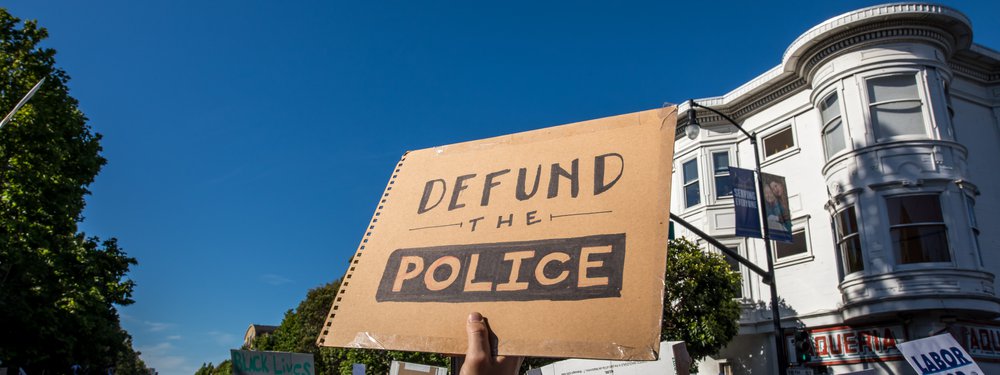
In the past few weeks, have sparked vigorous debates over whether and how to rebalance budgets between policing and other priorities. Indeed, cities across the country have over-invested in the police, often at the expense of all other areas: According to a by the Center for Popular Democracy, Law for Black Lives, and Black Youth Project 100, funding for police in U.S. cities often outpaces funding for all other social services combined. In FY2019, for instance, , while just 3.4 percent went to jobs, youth, and mental health programs.
But defunding is only half the equation: Building out an affirmative alternative is just as urgent. As cities across the country work toward greater public empowerment in budget decisions鈥攅specially for Black and Brown communities鈥攐ne especially promising model is .
First developed in the 1980s by the Brazilian Workers鈥� Party, participatory budgeting aims to rebuild public confidence in civic engagement by giving communities decision-making control over a portion of the public budget, empowering them to self-define what it means to be safe, healthy, and thriving. It offers a viable and realistic structure for centering public dollars on the very communities the public is supposed to serve, but rarely does.
In my , I have seen time and time again the power of the process to bring people together and help them forge new relationships with their community, neighbors, and elected officials. Although most forms of public participation activate wealthier constituencies, participatory budgeting in Brazil has been able to attract the participation of people with lower income and education levels. Substantively, it鈥檚 led to improved governance, less corruption, a decrease in the a growing number of civil society organizations, and . It also has a redistributive effect, with poorer locales receiving more spending per capita than wealthier areas.
For all its successes, participatory budgeting isn鈥檛 easy. It鈥檚 time intensive, requiring a sophisticated process design and significant attention and resources from community organizations and civil society groups that can facilitate engagement from everyday residents, as well as from public officials whose staff are needed to guide the process.
In the United States, the nonprofit has driven growing recognition for participatory budgeting, placing racial and social equity front and center. It鈥檚 proven to be an effective tool for empowering Black and Brown communities鈥攅specially , non-citizens, and recently incarcerated people鈥攁nd has also deployed innovative and in-person voting mechanisms to further reduce barriers to entry.
These days, the shift to participatory budgeting is happening across the country, from and to and . $35 million in taxpayer money to constituents they aim to serve, creating opportunities for people as young as 11 to take part in the budget process. In the 2019 cycle, New York City residents on projects ranging from capital improvements in parks to upgrades in public schools. In some places, people voted to spend their money on safety measures, such as security cameras and shorter, safer crosswalks.
The ongoing protests have also helped other participatory models around budgeting gain traction: Advocacy organizations in Los Angeles have urged city council members to 鈥�,鈥� championing the 鈥攁n effort put forward by a coalition of LA-based activist organizations to redirect public resources from policing toward other needs, such as health care, child services, education, and infrastructure. Other cities, , are also calling for People鈥檚 Budgets, while Portland, Ore.鈥檚 city council to reallocate $1 million from police funds to a participatory budgeting process by and for homeless residents, with another $1 million being potentially diverted to a Black youth fund.
Crucially, the effect of allowing community members to participate in budgeting goes beyond allocation of funds. It expands democracy, empowering a wider range of people to participate in the electoral process. According to from the 2015 cycle, 57 percent of participatory budgeting voters in New York City were people of color, versus 47 percent of voters in the 2013 local elections. Nearly 25 percent of participatory budgeting voters were barred from other elections because of citizenship or age requirements; approximately 50 percent of participatory budgeting voters cited it as their first civic act. show many remain civically engaged after these formative encounters.
With people across the country calling for new community-based funding models, participatory budgeting can provide instructive lessons for achieving more direct community control over public funds鈥攁nd investing more equitably in public education, infrastructure, the elderly, child care, and a host of other areas. As outcomes from Brazil show, participatory budgeting might also help achieve the overall public health and safety goals of police divestment.
But even beyond the current moment, empowering residents to participate in municipal budget decisions is long overdue, and it must be done in a way that centers social justice, racial equity, and civic empowerment as guiding principles. Safeguards are needed to ensure that entrenched interests don鈥檛 monopolize the process. And finally, communities need access to decision-making over larger pots of public money in order to have a real voice in strengthening the communities our cities have chronically ignored.
While participatory budgeting鈥檚 presence in the United States is still relatively modest, it鈥檚 a model that can and should be scaled鈥攁nd proof of concept for a larger investment in democratic reform.
Senior Fellow, Political Reform Program