
The End of Slacktivism?
For many, social networks have infamously become outlets for proliferating ill-informed political opinions and misguided factoids to with one鈥檚 own preformed ideas. The running history of political engagement on social networks hasn鈥檛 been great, either. Failed popular movements have been landmarks on Facebook鈥檚 timeline, and the use of empty gestures to show support still earns ridicule. This bare-minimum style of advocacy, known derisively as slacktivism, is alive and well.
But is it possibly giving way to a new era鈥攐ne where social media, among other Internet resources, are being galvanized to change public opinion, mobilize activists, and even shape public policy?
I don鈥檛 think you鈥檇 be hard-pressed to say that some degree of change is afoot. Right now we鈥檙e in the midst of a series of marches鈥攊ncluding last week鈥檚 Climate March鈥攊nspired by January鈥檚 Women鈥檚 March, which have been organized almost entirely on social media. For better or for worse, the Internet has become a tool for political movements all across the political spectrum.
To see how this change has played out, we need to look at the recent past. Six years ago, a series of popular movements across the world spelled hope for Facebook and Twitter as instruments of social change. One of the first, starting in 2011, . What started as a small protest rapidly swelled into an international movement, drawing awareness to the concentration of money in a few wealthy 鈥渙ne-percenters.鈥� Wall Street occupiers pulled this off by using Twitter to spread their message. While Occupy was, by many accounts, a disjointed, leaderless, and arguably failed movement, its success in mobilization sowed the seeds that bore fruit in subsequent activist campaigns.
Occupy was, however, an anomaly in the history of online political advocacy of the early 2010s. Its notable successor was Kony 2012, which featured a video calling attention to a Ugandan warlord that quickly gained momentum. The campaign went viral rapidly but, while it garnered attention to the issue, ultimately. For the next four years, political engagement on the Internet took the form of slacktivism. Often, this manifested as mere 鈥渁wareness,鈥� rather than activism. Catalysed by such events as mass shootings or terrorist attacks, Facebook users showed support by putting a filter on their profile pictures 鈥攕uch as, say, a French flag鈥攚ithout doing much else. Social media quickly fell subject to (more) ridicule, which carries on even now. Just this April, in which a man is praised for fixing social issues by sharing them on his Facebook wall.
But 2016 showed us that social networks can directly affect political opinions and processes鈥攖hat social media-born activism has grown some teeth.
Presidential candidates鈥攑articularly Donald Trump and Bernie Sanders鈥攑ut on widespread campaigns that emphasized the use of Twitter hashtags. Trends like 鈥�#MAGA,鈥� 鈥�#FeeltheBern,鈥� and 鈥�#Imwithher鈥� generated enthusiasm around Trump, Sanders, and Hillary Clinton, respectively. 国产视频 Twitter presence was (and remains) infamous for its constant attacks on opponents. During the election, these barbs often took the form of hashtag-worthy insults that helped 国产视频 followers pile onto catchphrases like Little Marco (for Florida senator Marco Rubio), or Crooked Hillary. Although this sort of engagement wasn鈥檛 exactly the same as Occupy, it did in the Republican primaries.
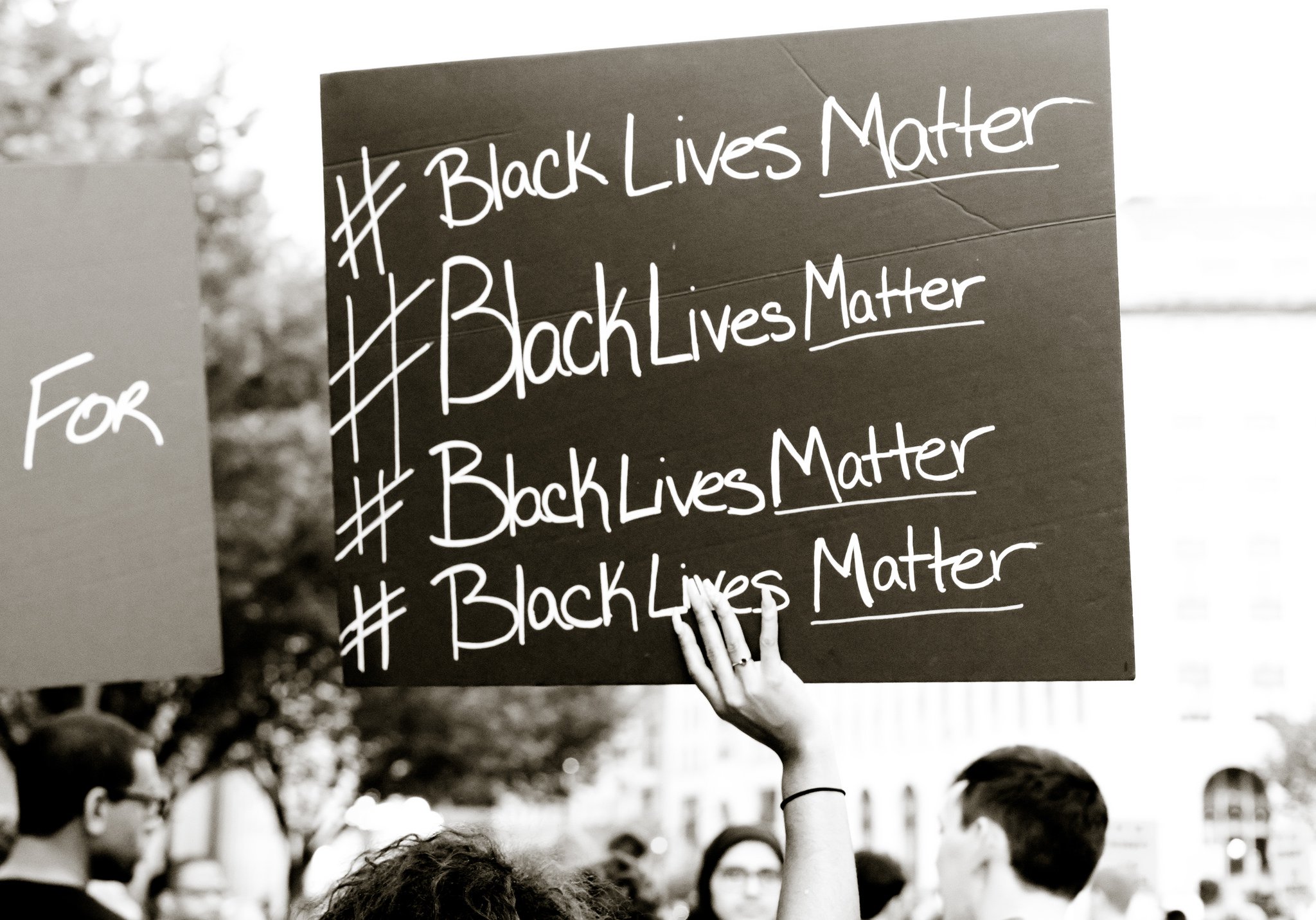
What might explain the success of more recent social media-born activism? In part, the answer might lie in the enduring power of , which was named from a Tweet sent in 2013 regarding Trayvon Martin and George Zimmerman. In the Black Lives Matter movement, we see both the exception to the rule that there were no successful social media-incubated movements between Occupy and 2016, and a sort of predictor of the outpouring of left-wing involvement in popular movements following the presidential election. following the acquittal of Darren Wilson in the Michael Brown shooting perhaps points to the lack of success other social movements saw in the years from 2012 to 2016. Where previous social media advocacy presented a problem and asked people to care, Black Lives Matter identified an issue that faces its supporters every day鈥攖he regular killing of unarmed black people by police officers.
In ratcheting up this salience, Black Lives Matter harnessed feelings already present and organized them into a coherent movement. This sort of grassroots mobilization is to popular movements, but Black Lives Matter was the first to replicate the process on social media.
Black Lives Matter鈥檚 ability to tap into its supporters鈥� frustration was a predictor of the increase in volume and even efficacy of social media activism following 国产视频 election. His professed mistreatment of women, conspiracy-theorist stance on climate change, and xenophobic views on immigrants were reason enough for the Women鈥檚 March to begin organizing immediately following his election. His failures in office, particularly with regards to his broken promises and counterproductive cabinet appointments, have inspired the next wave of popular involvement. The recent Tax March, March for Science, and Climate March, as well as the upcoming Immigration March, have been attempts to carry on the trend that the Women鈥檚 March started.
And so far, these movements鈥攐rganized almost entirely via social networks鈥攈ave maintained their momentum. , although it was little compared to the . Far from the confines of slacktivism, people are now faced with real, personal, unavoidable issues that drive them into public spaces to attempt to break down oppressive structures. The arguably artificial motivation that spelled relative apathy for Kony 2012 appears to be gone, replaced by an indignation that, I鈥檇 argue, has resulted in a sort of national renaissance of political activism.
In the past, political posts on social media were vilified for their inability to affect real change. But successful popular movements show a different reality. When people feel that they have a legitimate grievance to redress, they will go to great lengths to make it known. This is evidenced by the turnout of Occupy in 2011, the spread of Black Lives Matter, and the international participation in the Women鈥檚 March鈥攁mong numerous other recent protests.
This sudden influx in political engagement isn鈥檛 limited to protest, either. Social media campaigns to call our congressperson or run for office have taken root as tools for today鈥檚 politically active populace. express interest in running for office this year, compared to 900 last year, and new web extensions give you a . The era of slacktivism seems to have ended, at least for now. People are mad, and social media has become a promising way for them to connect with聽others who are mad, too鈥攁nd then actually do something about it.
More 国产视频 the Authors
Related

Children Belong in School Learning, Not Left to Languish in ICE Detention

A National Review of Early Childhood Cost Models: Findings on Children with Disabilities and Developmental Delays

Gender Equity in High-Quality Youth Apprenticeship: A Deeper Dive into the PAYA Data
