Danielle Kehl
Fellow, Open Technology Institute
What to Expect at the 2014 Internet Governance Forum
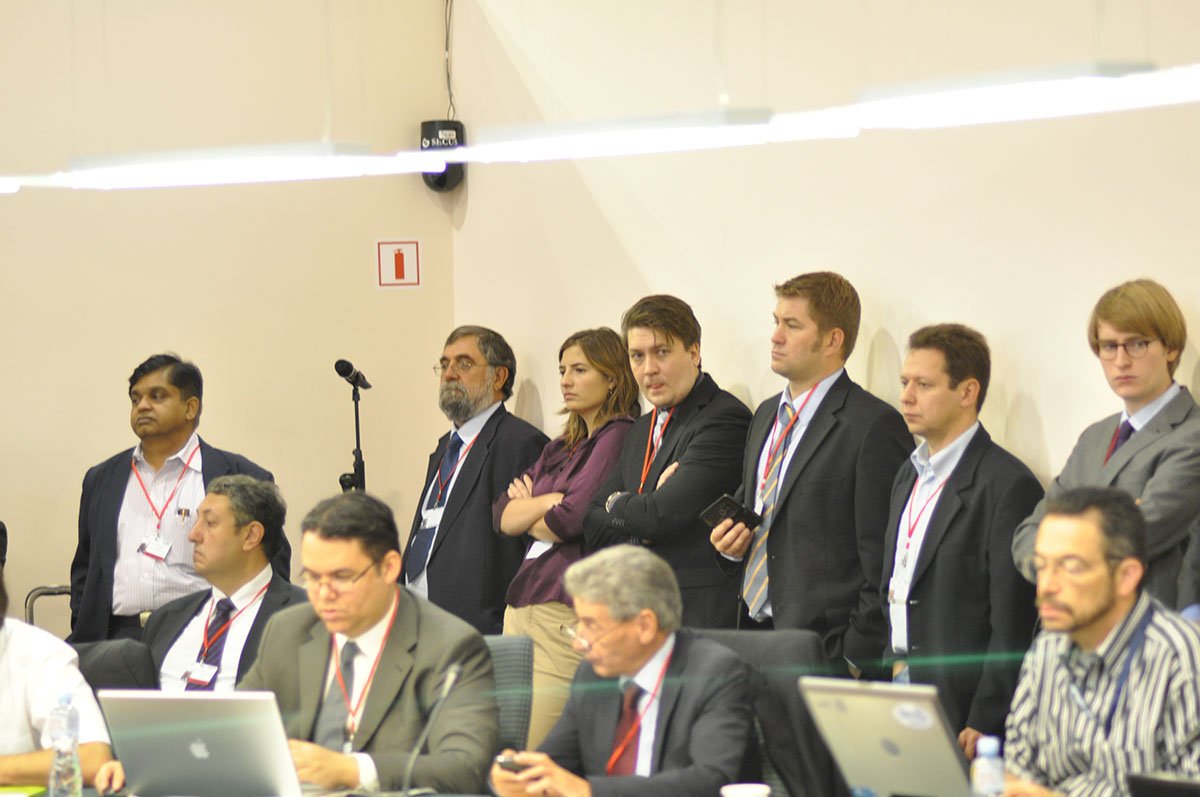
This week, OTI鈥檚 Policy Director Kevin Bankston and I are in Istanbul, Turkey, to attend the ninth annual along with Rebecca MacKinnon, Director of the project. OTI will be leading or participating in a number of key sessions and side meetings at the conference (which officially starts tomorrow) as well as attending various panels and events related to our broader work.
The yearly IGF is the largest multistakeholder Internet governance convening, bringing together representatives of governments, members of civil society, academics, corporations, and more to discuss a wide range of issues that impact the future of the global Internet. Key issues on the agenda this year include government and the future of the . Here鈥檚 what we鈥檒l be paying special attention to throughout the week:
The future of Internet governance
OTI is keenly interested in the and has conducted strategic research on swing states in the global Internet governance debate in the past year. Our paper published by the Center for International Governance Innovation earlier this year, identifies a core group of 30 potential countries whose behavior could significantly shift the future of Internet governance. We will the various international processes underway 鈥� including the of the (IANA) function from the U.S. Commerce Department to the global multistakeholder community, and the follow-up from the multistakeholder convening earlier this year in Brazil 鈥� and weigh in on these discussions at both the IGF and the for civil society.
More than a year after the first Snowden leaks, a tremendous amount of about the impact of the National Security Agency鈥檚 surveillance programs on the U.S. and the as a whole. Following the recent publication of a study that attempts to categorize and quantify these effects, OTI will continue to examine the fallout from the NSA programs. In particular, we鈥檒l be looking into the damage to the United States鈥� Internet Freedom agenda, which faces a serious credibility gap post-Snowden, as well as the technical implications of a number of proposals that have emerged in the past year to increase data localization and attempt to route Internet traffic around the United States. Related to this work, OTI鈥檚 Kevin Bankston will be part of a panel at IGF on privacy, surveillance, and the cloud a year after Snowden, discussing how policymakers, businesses, and users have responded to government access to user data in the cloud.
It鈥檚 been a busy year for net neutrality advocates around the world. The and took significant steps to codify net neutrality protections this spring while consumers advocates, policymakers, and Internet Service Providers here in the United States the best path forward for the Federal Communications Commission to take in the wake of the January 2014 * decision. While OTI remains in this issue domestically, there are undoubtedly spillover effects that as well as from abroad. We鈥檒l be part of these discussions at IGF, which has dedicated several workshops as well as a plenery session to the topic.
OTI has been a leader in analyzing how U.S. trade regulations impact the free flow of information around the world, particularly in repressive countries. Our research has analyzed under U.S. sanctions, recommending that the government harmonize its treatment of these products and services](http://www.slate.com/articles/technology/future_tense/2014/01/sudan_sanctions_are_keeping_secure_communications_tools_from_activists.html) across all five comprehensively sanctioned countries and continue to carve out exceptions for tools that allow ordinary individuals to communicate more safely and securely. At the same time, we have traced the recent emergence of designed to stop the transfer of censorship and surveillance technology to which would mirror and expand the approach taken toward preventing the export of 鈥榮ensitive technologies鈥� to sanctioned countries like Iran and Syria. We are continuing to track these issues as emphasizing the importance of ensuring that good technologies are available to ordinary people while monitoring and tracking equipment is kept out of the hands of repressive governments and other bad actors. This is an issue of particular resonance as the IGF convenes in Turkey, a country that has a deeply when it comes to and, according to from the University of Toronto鈥檚 Citizen Lab, has acquired sophisticated hacking tools from Western companies for use against dissidents.
In the past year, OTI has partnered with the at Harvard University to emerging trends in the field of transparency reporting and begin to a develop a best-practice guide for these reports that can be used by everyone from small startups to Internet giants. Kevin Bankston will lead a at the IGF on 鈥淭ransparency Reporting as a Tool for Internet Governance鈥� which will look at the standards developing around transparency reports and how those standards can be internationalized and enforced. In coming weeks, OTI will also be publishing additional research memos on transparency reporting best practices as part of its ongoing transparency reporting work.
Now in its ninth year, IGF has proven itself to be a unique and irreplaceable venue for thoughtful dialogue between civil society, government and business on the future of the Internet. OTI is honored to be a part of it this year, and looks forward to continuing that dialogue into the future.
Learn more about what Rebecca MacKinnon and the Ranking Digital Rights project team will be doing at IGF
Fellow, Open Technology Institute