Changing the Conversation: Language, Concepts, and Choices that Could Broaden the Constituency that Understands WPS
The Women, Peace, and Security agenda has evolved for over two decades thanks to the efforts and conscious choices of women and men around the world. For many advocates and practitioners, this community has great value, and its vocabulary and core concepts are central to its goals. As the assumptions we uncovered in our research illustrates, the core concepts and vocabulary of WPS are not known to the U.S. national security community, or summon up problematic frames and images for U.S. decision makers and influencers鈥攁cross generational and ideological divides.
A core frame that advocates may wish to use instead of or in addition to the classic WPS language is a classic of policymaking and social science:
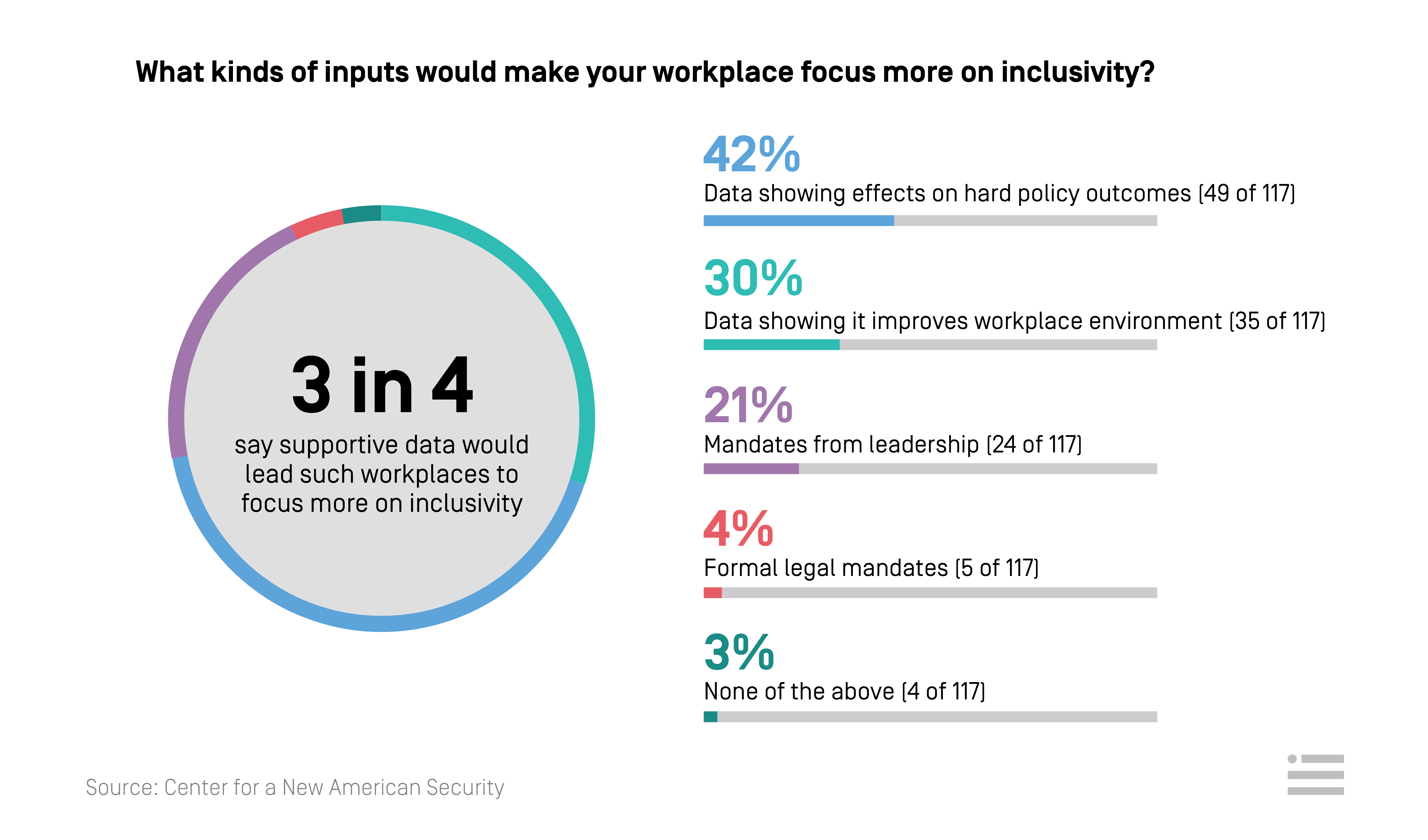
Use a data-based frame.聽Security policymakers showed themselves to be heavily invested in the idea that security decision-making is a meritocratic space, driven by outcomes. As the social science data on the value of analysis and policymaking that consider gender effects grows stronger, framing the challenge as one of implementing cutting-edge findings, rather than implementing a UN agenda, is likely to be more palatable to some audiences, avoid triggering biases carried over from U.S. domestic politics, and help establish new habits of thought in younger policymakers.
Below we identify some of the specific reactions we heard to the vocabulary of WPS, to assist users in making conscious choices about whether they are attempting to teach and spread the WPS framework, or whether they are attempting to achieve policy shifts that may not engage or even acknowledge their connection to the WPS framework. In the years ahead there will be plenty of need for both types of effort.
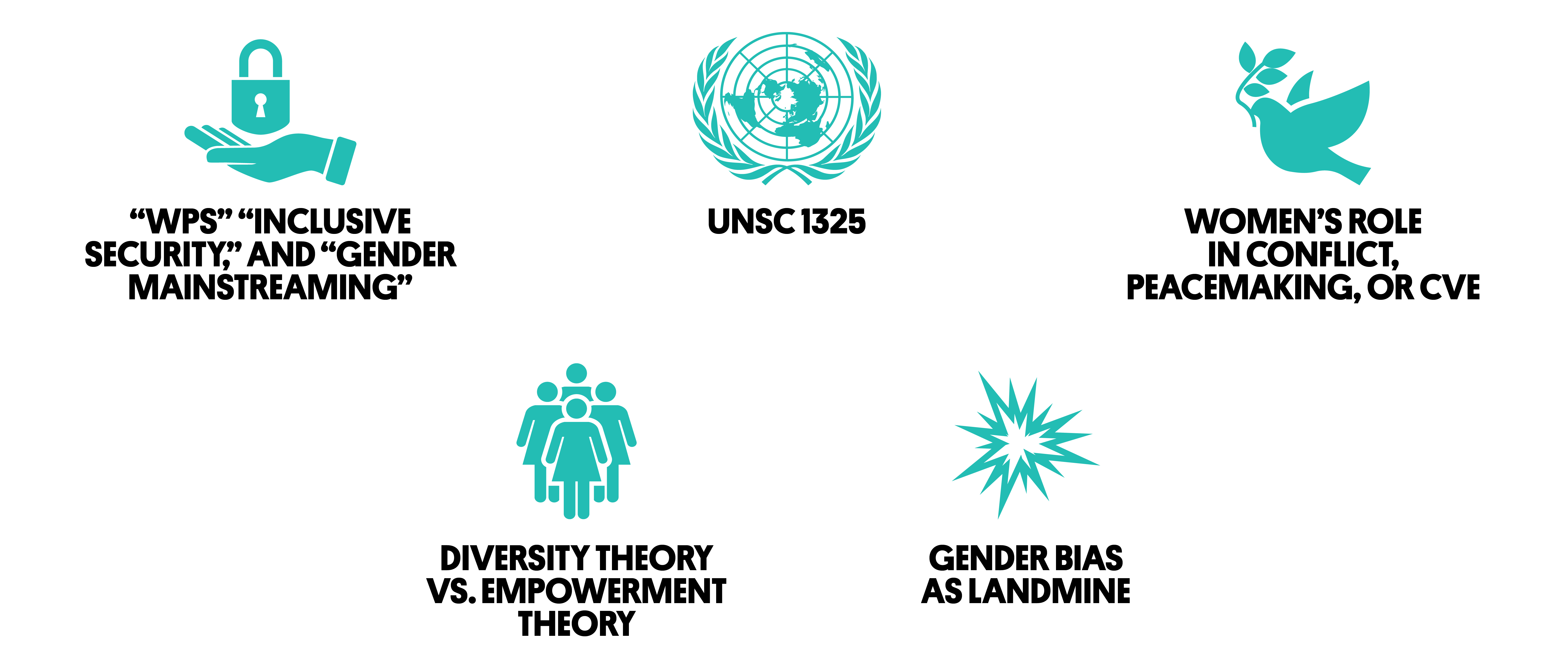
鈥淲omen, Peace, and Security,鈥� 鈥淚nclusive security,鈥� and 鈥淕ender mainstreaming.鈥�聽Don鈥檛 rely on this shorthand when communicating with the broader national security community. Develop a few short phrases that communicate exactly what you want in a particular context, for example, 鈥渁nalyzing how policies affect people of different genders differently,鈥� 鈥渇ull-society participation in peacebuilding,鈥� or 鈥渞eaching different sectors of the civilian population.鈥� When you聽do聽want to use the terms, use the explanatory phrases as well.
鈥淯NSC 1325.鈥�聽UN Security Council resolutions don鈥檛 carry any special authority in most U.S. national security circles and will surely invite hostility in some. If your context is one where policymakers will be looking for legitimacy or support in an international context, explaining how couching a policy in 1325 may help is a good idea; if the challenge is legitimacy in a domestic policymaking context, an effectiveness frame is likely better. Another alternative is to pair mention of the UN with NATO鈥檚 work on gender, as many military policymakers and observers perceive NATO as a more U.S.-friendly bureaucracy.
鈥淲omen鈥檚 role in conflict, peacemaking, or CVE.鈥�聽This framing evoked essentialist feminist theory in career national security wonks. It risks alienating both those who see policymaking as difference-blind and those, women in particular, who see their own rise and status in the security establishment as at odds with a view of women as inherently peaceful, or as nurturers and influencers rather than actors. Avoid it when possible. Simple substitutions include 鈥渨omen鈥檚 experience鈥� or 鈥渞oles for women鈥� or 鈥渨omen鈥檚 inclusion鈥� in place of 鈥渨omen鈥檚 role.鈥�
鈥淒iversity theory鈥� vs 鈥渆mpowerment theory.鈥�聽 The idea of equal rights and equal access for men and women has deep resonance within the national security establishment and the broader American public. The diversity theory developed in the private sector鈥攖hat teams with a diversity of experience are more resilient and produce better outcomes鈥攈as broad understanding as well. Framing WPS goals and policies in these two contexts will be helpful to security policy audiences. The idea of empowerment鈥攁lthough it is standard-issue in the development policy world鈥攊s less well understood among security analysts or the general public. Participation and empowerment themselves are not first-tier goals for security agencies and thus will be less compelling even when understood, unless connected to stability and security outcomes that are the job of security interlocutors.
鈥淕ender bias鈥� as landmine.聽Our interviews with decision makers uncovered no one who thought discrimination against women was okay; many with more traditional views nonetheless saw themselves as keen supporters of equality, and a striking number had a personal story about themselves as fortunate sons of strong mothers. Ensuring that the WPS agenda is not viewed as a response to or reparation for sexism, or 鈥渟ocial engineering鈥� in affected societies, or as a criticism of practitioners, but as social science that improves how policymakers take existing societal dynamics into account will help avoid policymakers鈥� perceiving that they are being accused of sexism.

A Guide to Talking Women, Peace, and Security Inside the U.S. Security Establishment
- Summary
- What You Will Find in this Guide
- Lost in Translation: Mapping Policymaker Assumptions and Knowledge Gaps
- Dissecting the Story: How Are Women in Conflict, Peace, and Security Contexts Portrayed in Media?
- Changing the Conversation: Language, Concepts, and Choices that Could Broaden the Constituency that Understands WPS
- Five Gender Datapoints Every National Security Professional Should Know (And Be Ready to Share)
- Conclusion of Curiosity: Questions for Further Analysis and Research