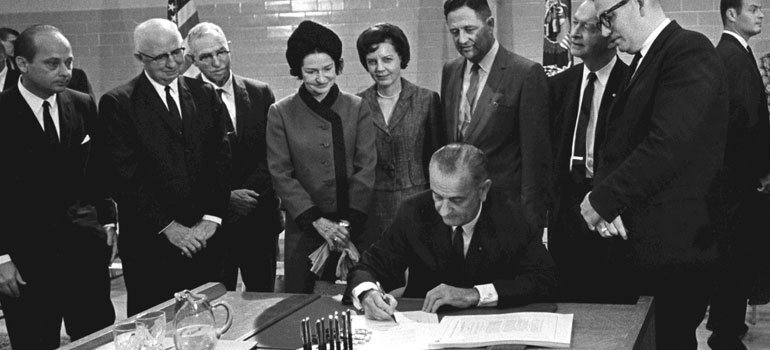
A Chapter of: The Higher Education Act of 1965
Recommendations
Access and Affordability
Incent Greater Access for Low-Income and Minority Students with a Pell Grant Bonus
Among public and private four-year colleges, the schools with the fewest resources tend to serve the largest share of low-income students; and while community colleges do much of the heavy lifting in educating students, they receive the fewest resources from their states and the federal government. Congress should support those schools by doubling the amount of Pell Grant funding it provides to colleges that enroll a substantial share of Pell Grant recipients (more than 25 percent) and graduate at least half of their students schoolwide 鈥� with the aim of having the schools use this money to boost their institutional aid budgets and therefore reduce the net price charged to the neediest students. Colleges could also use a portion of this additional money to support programs to further increase the retention and graduation rates of low-income students on their campuses.
These colleges should receive additional Pell Grant funding to support even greater access and success for the lowest-income students. Please see the 鈥淔ederal Financial Aid Policy鈥� section for more Pell Grant recommendations.
Radical Proposals to Improve College Access to Selective Institutions
End Federal Financial Aid for Schools That Use Legacy Admissions
Historically, the college admissions landscape at highly-selective institutions has been sustained by policies that favor the white and wealthy, propping up a status quo that blocks access to low-income students of color. Chief among those policies is the practice of giving preference to legacy students. While race-conscious admissions policies are the constant target of undeserved scrutiny, legacy preference has gone mostly , to great effect. Low-income students of color who are academically qualified should have the opportunity to attend a prestigious college or university without going through a cumbersome and opaque admissions and financial aid process. For this reason, Congress should withhold Title IV aid to those highly-resourced and highly-selective institutions that engage in legacy admissions and other preferential admissions treatments that , including early decision programs.
Require Lottery-Based Admissions Among Highly-Selective Colleges and Universities That Want Access to Federal Research Dollars
Building on ending legacy admissions, this policy would focus on requiring the same highly-resourced and selective institutions to participate in a lottery-based admissions system where anyone who has a minimum SAT or ACT score and/or GPA can enter the lottery for free. Setting the minimum bar for test scores would be critical to ensuring access鈥攊t could be done, for example, by using an average of the 25th percentile of those accepted over the three previous years. This would do away with admissions preferences that overwhelmingly favor white and wealthy applicants, including for athletes and legacies. It would also make the admissions process more transparent to students and families. If institutions don鈥檛 participate in the lottery, they would lose all eligibility not only to Title IV aid but also to federal research dollars. This is, no doubt, a radical proposal, but if the federal government is a primary payer for many of these institutions, it has a stake in ensuring elite colleges and universities increase social mobility, rather than reify existing inequities.
Simplify the FAFSA, Without Oversimplifying
While there has been significant support in recent years for simplifying the FAFSA to make access to federal financial aid easier for students, it is critical that such efforts not create unintended, harmful consequences. Over the past few years, the U.S. Department of Education (Department) has substantially simplified the FAFSA by reducing the number of questions, employing skip logic for the online FAFSA, and introducing the IRS data retrieval tool (DRT) to help auto-populate a significant proportion of the form. These efforts have helped to significantly reduce the average time students and families take to complete the application, and mean virtually no one ever sees the full set of questions included on the paper printout of the FAFSA.
Part of the reason the FAFSA was required for federal aid beginning in 1992 was to prevent individual institutions from demanding different applications for financial aid; and that is a continued risk moving forward. Instead, Congress should codify a change to using income information from two years prior to the application (known as prior-prior year taxes); eliminate some of the less-useful and more-complex assets questions currently required; and explore additional opportunities to use existing federal data to automate the process of applying for federal aid. For instance, Congress could task the Department and the Internal Revenue Service (IRS) with auto-calculating estimates of families鈥� aid eligibility and provide early notification to students. These kinds of changes could make significant strides in helping low-income families understand the benefits for which they are eligible. Congress should also examine ways to reduce the burden of verification on low-income families to streamline their access to higher education by fast-tracking Pell Grant eligibility to students who receive means-tested federal benefits such as Temporary Assistance for Needy Families or the Supplemental Nutrition Assistance Program without requiring them to complete the FAFSA.
Rethink Cost of Attendance Calculations
Congress defined cost of attendance (COA) in 1972, more than four decades ago. Since then, well-documented returns to higher education and shrinking opportunities for students without postsecondary credentials have driven up demand for additional education. At the same time, the increasing number and diversity of institutions of higher education, along with new technologies, have substantially altered the delivery of education. These factors have made estimating COA more difficult. Institutions now have an incentive to artificially raise or lower their estimated COA. For example, since affordability plays a key role in students鈥� enrollment decisions, as well as many media-based college rankings, schools may reduce the expenses allocated for student living allowances in order to appear more affordable overall and to have lower net prices. Still, other schools may want to inflate their COA numbers so that their students are eligible for more financial aid. Depending on the particular missions and goals of each institution, we would expect them to weigh these mixed incentives quite differently, which likely explains much of the across-school variation in cost estimates. What鈥檚 most problematic about this is that it鈥檚 extremely difficult for an outside observer to know whether outright manipulation is happening without understanding what鈥檚 actually happening at a given financial aid office.
Congress should grant the Department the ability to regulate how COA is calculated and to be able to audit an institution鈥檚 COA if it seems irregular or a student makes a complaint. We don鈥檛 believe that the Department should create a rigid system in which to calculate COA since institutions need some amount of flexibility depending on the students they serve and where they are located. Instead, Congress should specify allowable methods institutions can use to determine COA, allowing institutions to choose the method that suits their needs. In addition, policymakers should revisit some of the components of COA. For example, they should require schools to include technology/connectivity and health care costs as part of COA since these expenses have become such a substantial budget item for students.
Additionally, exploring the adoption of a so-called negative EFC tied to additional Pell funding could help students who struggle most to make ends meet by providing additional grant aid to help them cover living expenses, and may reduce pressures to inflate COA.
Make Improvements to Net Price Calculators
According to a survey of prospective and recently enrolled college students commissioned by 国产视频 in 2014, more than half had never heard of net price calculators (NPCs). Moreover, only 14 percent had used one to figure out how much college costs. But for those who did use NPCs, students overwhelmingly (84 percent) found them helpful for figuring out the cost of a specific college. This presents a problem: if students don鈥檛 know about NPCs, it is unlikely they will stumble across one and use it, reducing the promise of these federally mandated calculators.
Since colleges tend to bury their NPCs somewhere on the financial aid or admissions page of its website, it would be more helpful if there was a centralized repository of NPCs where students could enter their information one time and get price comparisons for multiple institutions. Currently, College Abacus, a free online resource, does exactly that by aggregating individual institutional NPC data in one site. Students enter their information and can get a price estimate from over 4,000 colleges. However, not every college is included. Colleges should be required to make the underlying data elements of their NPCs publicly available so that resources like College Abacus can include all Title IV institutions.
Alternatively, Congress could require the Department to create a one-stop online NPC that includes every Title IV-participating institution. A single, reliable website would significantly ease the burden placed on students to track down individual calculators on each college鈥檚 website.
Efforts to Simplify R2T4 Should Protect Students
Among the most vulnerable of our nation鈥檚 students are those who withdraw from college before completing a program. Those who drop out of college, with even small amounts of debt, are at the greatest risk of default. And, for a variety of reasons, such students often find it difficult to return to college and complete a postsecondary education after dropping out. Federal policies relating to such students should be designed to protect them when they leave school, and support their ability to re-enroll and complete their degrees when they are able to do so.
Currently, when a student withdraws from college, any unearned portions of the student鈥檚 aid must be returned to the Department of Education, a process that colleges frequently complain is overly complex and difficult to manage. However, we urge you to consider alternative options carefully; the Return of Title IV funds (R2T4) reform proposed under the PROSPER Act creates some new problems that the Senate should take care to avoid. First, H.R. 4508 breaks with the longstanding tradition of having colleges return loan funds first and instead requires institutions to return unearned Pell amounts, then loans, than other forms of aid. This means that no-strings-attached grant aid would be returned prior to many-strings-attached loan debt, leaving withdrawn students with much larger outstanding debts than under current law. We agree with the ACE report of the Task Force on Federal Regulation of Higher Education, which argued for amending the order of returns so that institutions must return the least-advantageous loans first, the exact opposite of what would occur under PROSPER.
Second, the PROSPER Act鈥檚 proposed solution would further harm these students by increasing the amount that they are responsible for returning to the government. Already, many institutions withhold transcripts as leverage for students to repay institutional debts, which often occur as a result of the R2T4 process. However, the PROSPER Act would permit institutions to shift as much as 10 percent of the costs of returning funds to the Department onto the student鈥攃olleges that choose to do this would cause their students to return substantially more grant aid to the Department than what is required under current law. Students who can鈥檛 immediately repay these funds will be saddled with a third type of debt in addition to student loans and balances owed to institutions. This would likely result in even more unmanageable debts and unaffordable costs for students. Any simplification of R2T4 must protect students by correcting for these two critical problems.
Toward a State-Federal Partnership
For there to be meaningful state participation in higher education today, we need to change the design of the HEA to better incorporate the role of states. Toward that end, federal funding should be provided to states to, at a minimum, ensure state coordination with the federal government. Such funding could be used to encourage better accountability systems within states, increase state financial aid offerings, and even require a maintenance of effort for state investment in higher education. Reauthorizing and modernizing programs like the Leveraging Educational Assistance Partnership and Grants for Access and Persistence are a logical first step toward that goal.
Federal lawmakers should also use this reauthorization opportunity to include a meaningful state plan requirement in the Higher Education Act (HEA). In most of the major federal statutes governing the American education system (i.e., the Elementary and Secondary Education Act (ESEA), the Workforce Investment Act (WIA), etc.), there is a requirement for a state plan鈥攁n articulation of how the state will use federal funding to improve an aspect of the system. If used effectively, such plans have the potential to bring greater coordination to the system of education as a whole. To advance meaningful coordination within the education system, the federal government should implement a requirement for a meaningful state plan within the HEA and give states the option to submit a consolidated, early-ed through workforce, plan that would satisfy requirements across the various federal education statutes.
A more robust state-federal partnership could also be used to improve the student aid system as a whole鈥攃urrently, a combination of vouchers, loans, and tax credits, all of which follow the student. Not only has this system led to more expenses for students鈥攐ther consequences have emerged. Many colleges that benefit from this federal system of vouchers and tax credits do not serve students well, with low graduation rates and wide variation across colleges in how graduates fare in the labor market. Problems with the current voucher-based system are exacerbated by the lack of any meaningful quality control and accountability. Congress could alter the allocation of federal higher education funding to support institutions and encourage states to invest in both public and private higher education.
Federal Financial Aid Policy
Pell Grants
Make Pell Grants Mandatory
Despite being the bedrock of federal financial aid, only 40 percent of the Pell Grant program is provided through the 鈥渕andatory鈥� or 鈥渆ntitlement鈥� side of the federal budget, while 60 percent of the funding rests on year-to-year budgeting decisions made through the always-uncertain appropriations process. Congress should move the entire program to the mandatory side of the budget to create certainty about the program鈥檚 future.
Increase the Maximum Pell Grant Award
The Pell Grant program鈥攁 cornerstone of college access鈥攑rovides well-targeted financial assistance to low-income undergraduate students. However, College Board estimates show that increases in the maximum award have not kept pace with increases in tuition, particularly at four-year colleges. Just 15 years ago, the maximum Pell Grant amount covered 98 percent of the average tuition and fees at public four-year institutions, but challenging economic circumstances and diminishing state investments in higher education mean that last year, it covered just 59 percent. At private four-year colleges, the grant covered an even smaller portion of the cost (from 22 percent of average tuition and fees in 2003 to 17 percent a decade and a half later). Congress should help restore the purchasing power of the Pell Grant program to its past levels by increasing its total value, helping low-income students to take on less debt and making college more affordable.
Index Pell to Inflation
In 2010, Congress increased the maximum Pell Grant by the percentage change in the CPI each year, but it let that annual increase expire after the 2017-18 award year. Congress should reinstate鈥攑ermanently鈥攖he annual inflationary increase to the maximum Pell Grant. The size of the Pell Grant award is already well below the average cost of college, and getting worse as college tuition skyrockets. While small increases aligned with inflation may seem marginal, for low-income students, every dollar counts.
Provide a Pell Bonus for Full-Time Students Who Go Above and Beyond
One proposal that has support from both parties, advanced by the Obama Administration and Chairwoman Foxx, would provide a Pell Grant bonus for full-time students who exceed the statutory definition requiring them to take 12 credits and instead take at least 15. Students who take 12 credits each semester will graduate with a bachelor鈥檚 degree in five years鈥攏ot four. While those low-income students who are juggling school with family and work obligations should be able to receive a full Pell Grant for taking 12 credits, research shows that taking 15 credits greatly increases students鈥� rate of credit accumulation, retention, and completion. And getting through college faster means fewer years of tuition payments for the student. Congress should provide a sizeable bonus to low-income students for taking on the added challenge of enrolling in 15 credits each semester, without further disadvantaging the millions of Pell Grant students who can鈥檛. Please see the 鈥淚ncent Greater Access for Low-Income and Minority Students with a Pell Grant Bonus鈥� section for a recommendation for an institutional Pell Grant bonus.
Eliminate Pell Grant Lifetime Eligibility
Currently, Pell Grant lifetime eligibility is limited to the equivalent of six years of funding. According to the Education Department鈥檚 National Postsecondary Student Aid survey, in the 2015-16 academic year, 29 percent of Black students, 25 percent of American Indian students, and 37 percent of Native Hawaiians or other Pacific Islanders had received their first Pell Grant more than six years before. Depending on the situation of these students, who were still undergraduates at the time of the survey, they might have lost access to funding to help them complete their degrees. Given the educational pathways of students today, where it can take many years to earn a degree and students may follow many different avenues to a credential, it does not make sense to artificially limit Pell Grant funding.
Approach Funding Short-Term Programs With Federal Financial Aid With Extreme Caution.
Very short higher education programs can provide students with valuable skills and credentials when they are strongly connected to clear employer needs, but Congress should be extremely cautious before permitting unfettered access to Pell Grants for short-term programs (less than 15 weeks). Under the current rules and regulations, the Department, state, policymakers, and consumers lack the tools necessary to ensure the quality of short-term certificate programs. Specifically, the only way to truly determine the quality of short-term training programs is through the employment and earnings outcomes of the students who complete them. But those data are not easy for institutions or policymakers to obtain, which severely limits lawmakers鈥� ability to protect students and taxpayers from low-quality programs. What鈥檚 more, existing studies of short-term certificate programs point to wide variations in the employment and earnings of program graduates, as well as significant variation in the cost of similar programs offered by different providers. For example, among Gainful Employment certificate programs, thirty-two percent of for-profit graduates and 14 percent of public college graduates went to programs in which the typical borrower earned less than a full-time minimum-wage worker ($14,500). Other rigorous research confirms those findings; a found, using data on students from Washington State, sizeable increases in quarterly wages for both long-term certificates and associate degrees, but found 鈥渢hat short-term certificates have no overall labor market value in terms of increasing wages.鈥� Another study found that, using a nationally representative survey, certificates and associate degrees did not increase earnings as compared with students with some college but no credential; and there were 鈥溾�� from any combination of stacked credentials considered.
Given the substantial barriers to ensuring the quality of short-term programs, lawmakers should never expect or allow a student to take on debt for these kinds of training programs. Variations in tuition and labor market outcomes also mean that short-term programs can easily cost students more than they鈥檙e worth and will eat into students鈥� lifetime eligibility for Pell Grants, limiting their options in the long run. While Congress already permits programs to be as short as 15 weeks (or 10 weeks in some cases), there is little justification or evidence that shortening programs to 8 weeks will improve students鈥� outcomes upon completion鈥攁nd plenty of evidence that students don鈥檛 often see significant positive on their investments for short programs or that they consistently return to continue their education with a higher-value credential.
While we oppose shortening the minimum length of programs in the Higher Education Act, any expansion of the Pell Grant program to these types of training courses should be highly limited in the amount of aid provided. They should have very strict outcomes-based quality measures in place, including earnings and employment outcomes, that result in loss of eligibility if they fail to meet the bar.
Renew Investments in Workforce Programs
Federal funding for workforce development and career technical education programs has been declining steadily for more than two decades. For example, funding for the Department of Labor鈥檚 programs to support dislocated workers is less today, in real dollars, than in the late 1990s. State spending on higher education in 2017 was less, in real dollars, than in 2001, and community colleges have taken a comparatively of cutbacks. Funding for adult education systems has declined by 20 percent since 2005 and the system serves 1 million fewer adults that it did in 2000, despite a for services. In fact, the United States spends the least on job training, re-skilling, and employment programs among advanced economies. Congress should reverse this trend by making heavy investments in workforce programs, like those under the Workforce Innovation and Opportunity Act, which are more appropriately designed to fund short-term training programs.
Give Incarcerated Individuals a Second Chance
Congress should reverse a longstanding ban on providing Pell Grants to incarcerated individuals, and instead invest in critical education within prisons that has been proven to lower recidivism rates by permitting those students access to federal Pell Grants. Importantly, Congress should do so while protecting taxpayer dollars by ensuring prisoners remain ineligible for federal student loans, and limiting Pell access to only programs and institutions that will offer a demonstrated high-quality education. We have been heartened to see support for reversing the ban from both Secretary DeVos and Chairman Alexander in recent days, and urge you to act鈥攚ithin a reauthorization process or outside of it鈥攖o change this policy now.
Loans
Give Part-Time Students Part-Time Loans
Under current law, full-time students get larger Pell Grants than part-time students. This makes sense because the more classes students take, the more they have to pay the school, and the less time they have to work to pay for college. However, due to some historical quirks related to the now-defunct Federal Family Education Loan (FFEL) program, these same rules do not apply to the current Direct Loan Program. As a result, low-income students who attend part-time only get a partial Pell Grant, but are still eligible to receive a full debt load. A policy that permits students to get only a portion of a Pell Grant while still allowing them to take out a full loan exacerbates the unfortunate trend of Pell becoming a gateway to debt. Congress should fix this historical anomaly.
Retain a Single Federal Standard for Loan Limits
Many institutional officials have asked for the authority over the years to limit the amount of loans that borrowers take on based on certain criteria (type of program, year in school, etc.) That policy carries significant risks. Limiting loans for certain student subgroups may do little to solve the issue at hand, but could have a negative impact on student success. Giving part-time students part-time loans, as described above, could address some of the issues identified by financial aid advisors. Before contemplating such a dramatic change to decades of federal student loan policy based on incomplete information, college leaders, Department officials, and lawmakers should continue to test this policy and explore other options with widespread consensus to help students make appropriate borrowing decisions on their own, decisions that enable students to get what they need. No more, and no less.
Do Not Spend Scarce Taxpayer Dollars on Student Loan Refinancing Schemes
Congress should not spend billions of taxpayer dollars to create a process for federal student loan borrowers to refinance to a lower interest rate. While a popular idea among members of the public, it would cost billions without truly addressing affordability problems in higher education. According to our research, although many households would be eligible for refinancing, a large portion of the benefits would go to a small number of households with high debt balances. Moreover, households would save an average of only $8 per month; and borrowers with the lowest credential levels or no degree would see the smallest difference, in part because their current monthly payments are already relatively low. Instead, lawmakers should facilitate easier enrollment in income-driven repayment plans to provide a true safety net for borrowers, especially those most at risk of default, after leaving school; and seek to make college more affordable for the lowest-income students.
Simplify the Constellation of Repayment Plans for New Borrowers
To date, there are more than a half-dozen repayment plans, including multiple variations of income-driven repayment. The choices are difficult to navigate, needlessly complex, and鈥攊n some cases鈥攐verly expensive for taxpayers. Consolidating income-driven repayment (IDR) plans into a single plan for new borrowers, one that recognizes the need for affordable payments and for forgiveness for borrowers whose low return on investment means they will otherwise repay well into retirement, will make the student loan repayment options easier for students to understand and take advantage of.
Importantly, Congress should not attempt to simplify loan repayment options by creating yet another plan. Instead, we urge lawmakers to adopt the REPAYE repayment plan, a fair, reasonably designed plan that provides an appropriate safety net for borrowers while eliminating many of the unintended consequences and potential perverse incentives of other repayment plans.
Improve Student Loan Servicing to Work Better for Borrower
The student loan servicing space is filled with complaints and allegations that servicers bungled the handling of their loans, didn鈥檛 process paperwork in a timely manner, and failed to keep at-risk borrowers from slipping into default on their loans. In addition to making for a simpler loan repayment system that reduces confusion about the program, Congress should require high-touch efforts for the borrowers who need it most, hold servicers accountable to consistent, high standards of practice, and protect the existing authority of both states and the Department of Education to hold servicers accountable when they fall short.
End The Non-Profit Loan Servicer and Guaranty Agency Entitlement
The 2010 law that eliminated the FFEL program in favor of Direct Lending vastly simplified the federal student loan system and removed unnecessary administrative costs from the program. However, vestiges of the old program remain in place. The law effectively grandfathered over two dozen non-profit student loan agencies that had participated in FFEL into the Direct Loan program by guaranteeing them the right to service at least 100,000 newly issued loans at competitively set compensation rates plus a premium rate. The remaining loans are allocated to four non-profit and for-profit servicing companies that won competitively bid contracts from the Education Department; those companies are paid a fee based on their bids.
The non-profit servicer entitlement has made the federal student loan program more complicated and costly than it should be. First, the shuffling of student loan accounts that has occurred as the Department brings each of the non-profit loan servicers on board has been confusing and disruptive to affected borrowers. In some instances, borrowers have experienced serious accounting and repayment errors. Second, because the non-profit servicers were awarded contracts that cost the government more per loan than do the competitively bid servicers鈥� contracts, the federal government is spending more than necessary to run the federal loan program.
Congress should end the non-profit servicer program and allocate student loan servicing among companies that competitively bid contracts. Furthermore, borrowers should be allowed to switch among servicers if they are unhappy with the one which they have been assigned.
Additionally, the middlemen of the now-defunct Federal Family Education Loan (FFEL) program should no longer receive payments from the federal government. Guaranty agencies, which were created to insure and collect on defaulted student loans, serve an ever-shrinking pool of borrowers. Yet they still sit on a , and continue to receive account maintenance fees. Eliminating those account maintenance fees would save taxpayers . That funding can be much better spent improving servicing for the borrowers who need it most.
Allow Borrowers to Automatically Recertify Their Incomes for IDR
Federal data show that over half of borrowers enrolled in income-driven repayment plans fail to recertify their incomes on time. This is an unacceptable result for borrowers enrolled in the safety net repayment plans that Congress has offered to borrowers, and can lead to payments increasing from $0 to a substantially higher鈥攁nd entirely unaffordable鈥攕um for the lowest-income borrowers. By making a change to section 6103 of the Internal Revenue Code, Congress could create a process for borrowers to have to certify their incomes only once. After that, the federal government will be able to connect existing federal data systems to automatically recertify borrowers鈥� incomes and recalculate annual loan payments due. This proposal, which has support from the Trump Administration, could significantly improve borrowers鈥� experiences in student loan repayment and simplify the process of annual loan payment calculations.
Automatically Enroll Delinquent Borrowers in IDR Plans
The Department of Education proposed in its fiscal year 2019 budget request that delinquent borrowers be automatically enrolled in an income-driven repayment plan鈥攁nd we agree. While there are significant challenges with automatic payroll withholding for student loan repayment, automatically enrolling delinquent borrowers in those plans would save tens of thousands of borrowers each year from the devastating consequences of default and give them another alternative to allow them to repay their loans on more affordable terms that the borrowers may not have been aware were available to them.
Allow for Targeted Loan Cancellation
A renewed investment into students of color will reduce, or perhaps even do away with, borrowing for these students. But for those borrowers currently in the system, struggling with debt and facing labor market discrimination and/or degrees with little value, there must be a way to cancel debt sooner than signing up for an IDR plan and waiting 20 to 25 years for forgiveness while interest accrues. Those who fall delinquent on their loans should be able to have their debts canceled if their outcomes show that the investment in higher education is far from paying off鈥攆or example, they have received a means-tested federal benefit such as enrollment in Medicaid, Supplemental Security Income (SSI), or Supplemental Nutrition Assistance Program (SNAP) for a determined number of consecutive years of repayment.
Preserve, but Reform, the Public Service Loan Forgiveness Program
The Public Service Loan Forgiveness (PSLF) program is designed for the worthy purpose of incenting more borrowers to engage in community service by taking jobs in the public sector. But it鈥檚 a tricky program to implement, has created certain incentives that could have negative effects, and is worthy of reforming to protect the long-term interests of the program. Specifically, Congress should: (1) limit the PSLF program to apply only to government employers and 501(c)(3) organizations to facilitate easier implementation and avoid forcing the Department to make more challenging determinations that take enormous time and effort; (2) limit the taxpayer costs and potential that institutions jack up tuition for graduate borrowers, ensuring the sustainability of PSLF over the long term, by capping the amount of available loan forgiveness at a reasonable amount; and (3) increase outreach and identification of eligible borrowers by using data to find those public servants and grant them the forgiveness to which they are entitled.
Pouring more funds to the Temporary Expansion of Public Service Loan Forgiveness (TEPSLF) does little good for borrowers, given the terms for TEPSLF mean the bulk of those funds will likely remain unspent for the foreseeable future. Congress should consider uses of that funding that may better support low-income borrowers and borrowers of color. While it鈥檚 clear that the narrow and difficult-to-track terms of the Public Service Loan Forgiveness program have led to widespread confusion among applicants, the above fixes are a better solution to improving the implementation of the program鈥攁nd can provide more targeted financial aid to the students who truly need it. The $700 million Congress has so far appropriated to TEPSLF could instead provide upfront grant aid, reducing the need to borrow loans at all; an investment that large would provide aid equivalent to the maximum Pell Grant for nearly 112,000 borrowers. Current and future investments should be made with consideration to how well targeted the aid is to the students who need it most.
Ensure Students Borrow Federal Loans Prior to Any Private Loan, Including ISA, Debt
Some companies have developed a new form of private debt, known as human capital contracts or income share agreements (ISAs), that requires students to sign over a portion of their future income in exchange for upfront capital. While most ISAs claim to be a replacement for the less-beneficial categories of student aid (private loans and Parent PLUS loans), it鈥檚 not clear that鈥檚 always the case.
Ultimately, ISAs鈥攑articularly later entrants to the marketplace鈥攎ay present a whole raft of new problems for borrowers. Congress should not promote this new vehicle for student lending until further research is available into their consumer protection implications, including establishing minimal thresholds in law for their operation; setting benchmarks too low could create a race to the bottom, and too little information is available about where to appropriately set those marks. Congress could, however, require that students exhaust their federal student loan eligibility prior to taking on any form of private student loan, including income share agreements. This will help ensure that borrowers are taking on federal debt that carries critical safety net protections before they approach riskier kinds of debt.
Restore Bankruptcy Dischargeability for Private Student Loans
Private student loans are often riskier than federal loans for students despite the fact that, theoretically, the private market should be a relatively safe source of additional credit. But federal policy undermines the checks and balances of the private student loan market since, unlike other forms of private credit, including credit cards and mortgages, private students loans are not dischargeable in bankruptcy. The lack of a bankruptcy provision means that those with private student loans are essentially on the hook for a lifetime, which provides the lenders with little incentive to consider whether borrowers will be able to repay their loans. Private student loans should be subject to the same bankruptcy policies as other unsecured consumer credit. If borrowers can declare bankruptcy, like they can with credit cards, lenders might reconsider giving loans to those who can鈥檛 afford to pay them back and borrowers will have a safety net should they experience unexpected financial hardship.
Ban States from Taking Away Professional Licenses or Withholding the Transcripts of Students Who Default
Currently, 16 states deny professional or driver鈥檚 licenses to borrowers who default on their federal student loans. This stymies their ability to earn a living, leaving it nearly impossible to get out of default. Moreover, the Education Department recently noted that some colleges have policies of withholding transcripts for students whose federal loans are discharged or who default, preventing those students from completing their degrees elsewhere. Congress should prevent states and colleges from imposing such restrictions.
Parent PLUS Loans
Preserve PLUS But Add an 鈥淎bility-to-Pay" Measure
Parent PLUS was not designed for low-income parents. It was designed to provide better interest rates than middle- and upper-income parents could get in the private market during a time when interest rates were over 20 percent. It was meant to provide upfront liquidity to cover expected family contributions, not to fill unmet need. Given some of the issues with the program, it might be tempting to end the Parent PLUS loan program and let the private market prevail again. But turning things over to the private market usually leads over time to predatory products that are worse in terms of consumer protections. Instead, the Parent PLUS program should be preserved for those looking for a fixed-rate higher-education loan with stronger consumer protections than are typically available in the private market.
The primary filter for Parent PLUS, looking at a parent鈥檚 adverse credit history, is not the best way to accurately assess whether or not someone has the ability to repay the loan. Someone with no income, no assets, and no credit history would be Parent PLUS-eligible, because that person does not have a negative credit history. Adding an ability-to-repay measure to the Parent PLUS credit check would be a much less predatory standard, ensuring that parents are able to access a capped loan that they actually would have the means to repay. The government already collects information on a family鈥檚 ability to repay through the FAFSA and its calculation of expected family contribution (EFC). EFC could be used in tandem with adverse credit history to determine a family鈥檚 loan limit. If a family has a zero EFC, the parent could not be offered a PLUS loan. This does not mean the student would not have access to student loans. In fact, they would be eligible for the normal amount of student loans and also offered additional loans up to the independent lending limit, a process that currently happens when parents are rejected for PLUS loans based on adverse credit history alone. In other words, if a parent applies for a PLUS loan with EFC of zero to $4,000 or $5,000, depending on the year a student is in school, his child would instead be given access to $4,000 to $5,000 in additional federal student loans. Overall, Parent PLUS limits would should be capped by EFC or COA, whichever is lower.
While it may seem counterintuitive to give more loans to low-income students, the loans made directly to students come with protections that Parent PLUS loans do not have, like access to income-driven repayment and lower interest rates. They also ensure the neediest of parents do not end up with non-dischargeable debt as they close in on retirement. Students should also be required to exhaust their own loan eligibility before their parents turn to PLUS.
Expand Grant Aid to Low-Income Students, Rather Than Making PLUS Eligible For Income-Driven Repayment
The 2018 House Democratic bill to reauthorize the Higher Education Act and a student loan bill from Senator Merkley have both called for expanding IDR to Parent PLUS borrowers. This would band-aid over a significant problem of non-repayment and unaffordable debt for parents who borrow (as much as the full cost of attendance at the school) to pay for their children鈥檚 education using PLUS loans. Rather than providing enough grant aid to let low-income students and their parents afford college, or reforming the program so that only parents with a demonstrated ability to repay can borrow, or holding colleges accountable for packaging PLUS debt with parents who ultimately default on the loans, it would simply make Parent PLUS loans eligible for income-driven repayment plans. IDR, which is designed to serve as a safety net for students whose education doesn鈥檛 pay off, is singularly ill-suited for parent loans, where the parent obviously isn鈥檛 expected to see an earnings bump from his or her child鈥檚 education. In fact, as parents head to retirement, they鈥檒l likely see their earnings go down. Funnelling Parent PLUS borrowers who can鈥檛 afford their debt into IDR plans is virtually guaranteed to make the non-repayment problem worse, threatening the long-term viability of the federal loan program. Low-income families need grant aid, not more loans.
Allow Parent PLUS Loans to Be Dischargeable in Bankruptcy
Higher education loans, whether federal or private, are not usually dischargeable in bankruptcy. While private higher-education loans should be dischargeable like other consumer debts (as noted elsewhere in these comments), federal loans will likely remain nondischargeable as they are backed by taxpayer dollars. Given that there are hardly any safety valves for Parent PLUS debt, and that of all the loans within the federal portfolio of higher-education loans it most closely resembles private debt, the path to discharging PLUS debt should have a simpler test compared to current standards. In the future, Congress should make PLUS loans dischargeable in bankruptcy, especially because it already has some underwriting, given the adverse credit history check, and even more so once an ability-to-pay measure is added to the credit check.
Require Entrance Counseling and Better Disclosure Surrounding Terms and Conditions of Parent PLUS Loans
Entrance counseling is required of all federal student loan borrowers but cannot be required for Parent PLUS borrowers. The only counseling requirement currently mandatory for Parent PLUS borrowers is when a parent is rejected but wins an appeal. Since entrance counseling is not required, parents and students are often blindsided by how the terms and conditions of these loans are very different than federal student loans. Going forward, Congress should make all federal higher-education loans align with current entrance counseling requirements. Parent PLUS entrance counseling must indicate that the loan is borrowed by the parent, is non-transferable to the student, and is not eligible for income-driven repayment plans. It must also explain repayment options, including deferments and forbearances, and that the loan is not dischargeable in bankruptcy. Finally, it should clearly state that failure to pay not only results in damage to credit scores but could also result in wage garnishment, Social Security offsets, and seizure of tax refunds.
Prevent Institutions from Listing PLUS Loan Amounts in Financial Aid Award Letters
Once students are accepted into college, they receive a financial aid award letter detailing what federal, state, local, and institutional aid for which they are eligible. An analysis by 国产视频 and uAspire of thousands of award letters to predominantly low-income families revealed that 15 percent of letters contained PLUS loans, often misleadingly designed to make the college appear affordable by including tens of thousands of dollars in PLUS loans to fill any financial aid gaps for the student. A Parent PLUS loan amount should never be packaged anywhere within a student鈥檚 financial aid award letter as it is not a guarantee and is not direct aid to the student. Institutions should be encouraged to only mention Parent PLUS loans as a way to cover outstanding expenses along with other options such as a tuition payment plan, with no amount given.
Campus-Based Aid
Rework the Federal SEOG and Work-Study Funding Formulas
Federal Work-Study and Supplemental Educational Opportunity Grant (SEOG) dollars are currently distributed through an archaic and inflexible formula that directs a large share of funds to a relatively small number of private colleges that do not serve many low-income students. For instance, private schools receive about 45 percent of Federal Work-Study funds, despite enrolling only about a quarter of undergraduates. Meanwhile, only 11 percent of the program鈥檚 funds go to community colleges, which enroll nearly 40 percent of all undergraduates. Work-Study dollars also flow disproportionately to schools in the Northeast, despite the fact that the largest concentrations of low-income students attend public institutions in the South and Southwest.
These funding formulas can and should be fixed, by: (1) phasing out the 鈥渃ampus-base guarantee鈥� over a five-year period and replacing it with a guarantee of 10 percent of the total funding annually; and (2) replacing the fair-share formula with one driven by a combination of Pell Grant students鈥� enrollment and Pell graduation rates. As we shared in a letter about Federal Work-Study to the Senate HELP Committee along with a dozen other organizations, the formula has become increasingly unbalanced over the years; and Congress can and should correct that imbalance. These dollars need to be redistributed, not cut or eliminated, in order to better meet the needs of low-income students across the country.
Give Institutions the Flexibility to Use SEOG for Emergency Aid
Today鈥檚 students can quickly find themselves off-track and close to dropping out if an unexpected emergency or financial hardship occurs. Maybe it is a broken-down car and no money for repairs, or childcare falling through and no resources to hire a babysitter or enroll in daycare, or a family medical emergency that results in a bill too difficult to pay off. These life events prevent many students from continuing with their studies, even when they have been successful in the classroom. For this reason, once Congress rectifies the problems with the SEOG formula to ensure the program is targeted to institutions serving low- and moderate-income students well, it should give institutions the flexibility to use SEOG as a flexible pool of money to provide emergency funding for students. This promising intervention is rooted in evidence and provides an effective outlet for investing in students鈥� futures.
Tie Federal Work-Study Positions to Students鈥� Career Goals
Federal Work-Study could be a much more effective tool for helping students gain career relevant work experience while they are in college. Too many work-study jobs involve re-shelving books or staffing desks at the recreation center. It doesn鈥檛 have to be that way. Evidence points to the value of career-relevant work experience for students, which often comes in the form of an internship. But many students can鈥檛 afford to work as unpaid interns. Work-Study could fill that void for thousands of students every year, if the colleges ensure the jobs they make available to students are relevant to their career or educational goals. This would bring the Federal Work-Study program back into alignment with the original vision for the program鈥攖o help students earn money for college and gain relevant work experience. Again, we noted this recommendation in a letter to the Senate HELP Committee along with a dozen other organizations, and we strongly encourage you to make Work-Study more useful for borrowers.
Redirect Regressive Tax-Credit Dollars to Promote 鈥淩ace Conscious鈥� or 鈥淭argeted Universalism鈥� Financial Aid Policies
It is clear that current higher education policies exacerbate the racial wealth gap. Because the risk of debt is much higher for students of color, especially Black students, every attempt must be made to reduce the price of a college education on the front end either through direct grant aid (for example, by providing a double Pell Grant for students of color with zero EFC) and/or through aid to institutions that predominantly serve those populations. Though the details of such a program could be conceived of in many ways, it would have to be a large investment of money specifically to help students of color, primarily Black students and other groups such as American Indians, who are often masked in outcomes data due to their small population. This money could come from the tens of billions of dollars that are allocated for higher education benefits in our tax code that overwhelmingly benefit wealthy families. In 2017 alone, Congress permitted more than in foregone revenue through higher education-related tax expenditures like the student loan interest deduction, tuition savings accounts, and the American Opportunity Tax Credit鈥攖ax benefits that are eligible even to families earning six-figure incomes.
This aid could be need-based, but given how wide the racial wealth gap is, an argument could be made to make it non-need-based. The only stipulation on this aid would be that it not be available to the for-profit sector, which has had poor outcomes with students of color. And the answer should not be to leave price reduction and aid distribution to states alone. In the past, as seen with the state implementation of the G.I. Bill, biases led to of benefits to veterans of color. For this reason, there would have to be a strong federal and state partnership in place to distribute that aid and make debt-free college a reality for students of color.
Responsible Innovation and Use of Evidence
Establish a Tiered-Evidence Competition That Expands Use of Research in Higher Education
Equity gaps begin early in college: Low-income students and students of color are to enroll in their second year of college than their white or affluent peers. This early disparity grows into the large college completion rate gap between white students and students of color. At four-year institutions, the completion rate for Native and Black students is almost 20 percentage points below the completion rate for white students, and are less likely than students who do not receive one to complete a degree or credential program. Moreover, existing research about what works鈥攁nd as importantly, what doesn鈥檛鈥攊s relatively limited in postsecondary education. The federal government has a vested interest in building that body of evidence, and expanding the uses of research by institutions that serve over 20 million students each year. The Senate should mirror the structure of the Education Innovation and Research program in the Every Student Succeeds Act to create a tiered evidence competition that rewards and invests in evidence-based policymaking and evaluations of promising interventions. To maximize the usefulness of the results, the Senate should ensure that academic research produced under this program is published using an open content license, building upon the Department鈥檚 recent open licensing rule.
Increase the Use of Evidence in Existing Higher Education Programs
Existing higher education programs prioritize applicants who offer adherence to the priorities set by Congress, those who meet minimal standards for past performance, even those who have demonstrated prior experience鈥攂ut they are not statutorily required to include a focus on evidence. The Department, under multiple administrations, has made great strides in recent years in incorporating evidence into these competitions. Congress should codify those changes by adding evidence priorities to TRIO, GEAR UP, minority-serving institution programs, and other institutional grant programs to ensure taxpayer dollars are wisely spent on programs that serve students well. Congress should use evidence to direct resources to programs that are best meeting the needs of students, but it should not use evidence as a simple pretext to cut federal aid for students who need it.
Additionally, Congress should repeal the ban on conducting randomized control trials within the TRIO programs. With a substantial federal investment each year, the Education Department should have not just the authority, but also the obligation, to evaluate how those funds can best be used to support students to and through college. Eliminating the ban has been included in Secretary DeVos鈥� two budget requests to date, and we agree that this policy should be overturned.
Congress Should Put the Experiment Back in the Experimental Sites Initiative
The Department鈥檚 Experimental Sites Initiative is designed to help policymakers test out higher education policy and program improvements on a small scale to learn what works, helping more Americans complete their degrees and ensuring better value for the taxpayers who fund federal student aid programs. The valuable mission of the Experimental Sites Initiative, however, has not been fully realized. While the authority has enabled the testing of a range of innovative potential improvements, a lack of credible evaluation of those experiments has meant that we do not know the true impact of those changes. Congress should: (1) require that all experiments be evaluated using an approved methodology; (2) provide a dedicated funding stream to support those evaluations; (3) accommodate rigorous evaluations by reforming the Paperwork Reduction Act to encourage collaboration in the context of those evaluations; and (4) insist on biennial reports and policy recommendations.
Reform Remediation
Over 50 percent of students entering community college and a third of students entering four-year institutions are required to take remedial courses, and students of color and low-income students are disproportionately placed into these classes. This increases time to completion and often serves as a barrier to graduation鈥攐nly 9 percent of students placed in remedial courses at community college graduate within 3 years, and only 35 percent of students at four-year institutions in these courses graduate within six years. However, studies show that these students can be almost as successful as peers who did not qualify for remediation if colleges redesign how the courses are facilitated or offer alternative supports. Congress should improve completion outcomes for students by creating a new grant that provides funding for colleges to improve or adopt successful, evidence-based remediation models. The Remedial Education Improvement Act introduced by Representatives Norcross, Moulton, Walz, Scott, and Davis provides an example of how Congress could develop a program that supports institutions to reform remediation through a variety of evidence-based models.
Preserve Regular and Substantive Interaction Requirements for Non-Competency-Based Online Programs
There has been a robust conversation about the need to update the requirements for 鈥渞egular and substantive interaction鈥� for competency-based education (CBE) programs, with which 国产视频 has been deeply engaged. However, while it鈥檚 tempting to just say 鈥渢hrow it out,鈥� we must remember the origins of and intent behind the original requirement. It came in response to rampant fraud and abuse stemming from the increase in correspondence programs in the 1980s and 1990s (which came a few decades after rampant abuse in correspondence programs aimed at veterans returning from war with GI Bill dollars to use). These programs promised flexible options for working adults, but the availability of federal dollars鈥攚ith no strings attached to student outcomes鈥攑roved too tempting for unscrupulous providers to resist. Many students were taken for a ride, taxpayers were left on the hook, and Congress took action.
In conjunction with the credit hour and other rules, the regulations governing regular and substantive interaction have effectively helped to prevent many of the abuses spotted in correspondence education. Meanwhile, the regulations do not appear to have hindered growth in distance education. We feel strongly that flexibilities for regular and substantive education must not be applied to all distance education programs, writ large. Given the rise of CBE programs in which being separated from the instructor in a self-paced program can鈥攂ut doesn鈥檛 have to鈥攎ean students are largely left to learn on their own, this provision of the law should be carefully considered by Congress, but for CBE programs only. Moreover, any changes to the law should be within the broader context of looking at the student outcomes in these programs.
Crack the Credit Hour, Without Gutting the Credit Hour Rule
The credit hour has become the bedrock of virtually all calculations of students鈥� enrollment intensity鈥攁 critical measure that affects the amount of aid for which they are eligible. Traditionally, how credit hours are defined rested solely in the hands of colleges and their accreditors. But reports in 2009 and 2010 by the Inspector General (IG) of the Department of Education found insufficient oversight by the three regional accrediting agencies鈥攊n fact, none of them had established a definition for a credit hour. The IG documented several egregious abuses that grew out of the accreditors鈥� failures to establish minimum standards, including credit inflation by colleges that elevated concerns that colleges were abusing taxpayer dollars and students were wasting their limited federal financial aid dollars in poor-quality or wasteful courses.
In response to the IG鈥檚 reports and recognizing the potential scope of the problem, the Department of Education developed a regulatory definition of a credit hour that would both protect the integrity of the federal financial aid programs and allow for emerging non-time based innovations in higher education. That definition, with its consideration both for time-based and learning-based measures, has proved workable for many institutions that have launched CBE programs in recent years.
国产视频 has long led the charge to 鈥渃rack the credit hour,鈥� pushing the federal government to allow federal dollars to go to high-quality, non-time-based programs through direct assessments and experimental sites. However, we do not believe the credit hour regulation should be repealed. In today鈥檚 environment, which is not outcomes-based and has virtually no accountability, the credit hour serves as an important (yet insufficient) buffer against fraud and abuse.
Combat the Rising Cost of Course Materials Through New Program for Open Textbooks
In higher education, textbooks are a commonly required student expense for the vast majority of coursework鈥攁nd over the years, the cost of these texts has rapidly increased. Current estimates put the annual cost of textbooks and other materials at $1,420 for the average community college student, an increase of more than 80 percent over the past decade. Due to these increased costs, almost two-thirds of students have forgone purchasing a textbook for at least one of their classes. Further, almost half of students have indicated that the cost of materials has caused them to enroll in fewer courses. In response, college professors have increasingly turned to open educational resources: the number of faculty who reported using open materials nearly doubled, growing from 5 percent in 2015-16 up to 9 percent in 2016-17. These open educational resource (OER) degree programs have drawn attention as a potential strategy for increasing college affordability. The Senate should support these efforts, helping to responsibly scale the use of open textbooks and course materials while collecting evidence of student cost savings. Building upon legislation recently introduced in both chambers of Congress, the Senate should include in HEA a competitive grant program to support the creation and expanded use of open textbooks and OER degree programs.
Consider Ways to Responsibly Scale Competency-Based Education Through a Demonstration Project
Competency-based education offers tremendous promise to shift the input-oriented nature of higher education to outcomes. And while we agree that time is an imperfect and inadequate measure of learning, there is currently no consensus in the field about what a replacement would look like, which makes the prospect of blanket changes to HEA for CBE programs a risky endeavor. A bipartisan bill introduced in the House by Representatives Messer (R-IN) and Polis (D-CO) would provide flexibilities to CBE programs while collecting evidence on what works, for whom, and under what conditions. It would also create a Competency-Based Education Council, made of up experts, to address critical issues for Congress to consider as it looks to make broader changes to the law including, the amount of learning in a competency unit, the minimum amount of time in an academic year for CBE programs, the role of faculty and faculty involvement in CBE programs, considerations for accreditors recognizing CBE programs, the transfer of CBE credits to other programs, and resources needed for adequate oversight of CBE programs. Unless and until there is some agreement about what a competency-unit is, it will be hard, if not impossible, for federal policy to shift from time without serious risk of fraud and/or abuse. A demonstration project is needed in order to innovate responsibly.
Prevent Institutions From Outsourcing Academics to Unaccredited, Unaccountable Providers
Some have proposed to allow institutions to outsource the majority of their academic programs鈥攐r even the entire course of study鈥攖o nontraditional educational providers that lack accreditation or other quality protections. The proposal is akin to EQUIP, a 2016 Department of Education experiment that allowed institutions to partner with non-institutional providers like coding bootcamps to offer more than 50 percent of the program. But whereas EQUIP experimented with more rigorous attempts at quality assurance, other legislative proposals simply throw any pretext of quality assurance out the window. Under those proposals, noninstitutional education providers鈥攖hose that haven鈥檛 gone through the checks that actual colleges must, like obtaining state authorization, becoming accredited, or passing financial responsibility and other tests from the Department of Education鈥攚ould be permitted to offer up to 100 percent of a college鈥檚 program, for which the institution can receive just as much federal student aid. There are no standards or expectations for what the institution is responsible for when it outsources the educational delivery; no limits on federal aid; and no requirement for any serious quality review, let alone a review of the noninstitutional provider beyond what鈥檚 included in the contracts. But this policy creates significant risks, both for students and for taxpayers; and Congress must not alter this section of the law or it will risk creating a massive, gaping loophole for certain providers to avoid accountability and oversight.
Accountability
Retain Separate Definitions of Public/Nonprofit and For-Profit Institutions
Currently, federal law distinguishes between different institutional types; and those definitions represent the decades of experience Congress had in evaluating the risk different institutions present to students and taxpayers. Unlike public and private nonprofit institutions, for-profit colleges are not eligible for federal grants as minority-serving institutions; and are subject to 90-10 and gainful employment rules. (Public and nonprofit certificate programs are also subject to gainful employment.) But while accountability is important and should be beefed up for all institutions throughout the postsecondary education system, differentiated accountability is not鈥攁s some have suggested鈥攕imply discriminatory against certain institutions.
The gainful employment requirement has been included in the Higher Education Act for for-profit colleges since 1965, years before Congress even permitted those institutions to be eligible for federal financial aid. When lawmakers finally did grant for-profit colleges access to aid, they retained the gainful employment reference, arguing that there were significant concerns that for-profits would abuse a loosely controlled voucher system. They turned out to be right; over the next forty years, state and federal agencies had to expend significant resources battling the waste, fraud, and abuse from for-profit colleges that drastically exceeded that in the public and nonprofit sectors. Recent studies have found that, while for-profit colleges enrolled only 11 percent of postsecondary students in 2009, they accounted for half of defaults; that their repayment rates are substantially lower than those in other sectors; and that, far from seeing a return on their investment, students who attended for-profit programs at all sectors actually saw negative returns on their earnings.
Therefore, any future HEA reauthorization bill should include particular accountability measures related to return on investment for vocational programs designed to lead to a particular occupation. Those measures must provide both transparency and accountability. Students have the right to accurate, comprehensive, program-specific information about their likely outcomes in the labor market.
Importantly, to be transparent, the Department must use the actual earnings of graduates based on tax records, rather than averages such as regional Bureau of Labor Statistics information or estimates or poor-quality surveys. And those data should reflect all students in a program, not a subset of students, to give a comprehensive and reliable indication of the program鈥檚 true quality.
However, transparency is not sufficient to spur program improvement by institutions. Institutions already have access to information about high debt levels among their students, yet have rarely taken action on those programs. While the gainful employment rule has provided far better information about the labor market outcomes of career college programs, institutions have often failed to make needed improvements that would better align their programs with the realities of the labor market, absent real sanctions from the Department and other oversight bodies. An HEA bill must take this into account and link poor performance among gainful employment programs to loss of Title IV eligibility and/or other sanctions.
Update Cohort Default Rates to Measure The True Scale of Repayment Problems
The cohort default rate measure drastically understates the repayment problems across institutions of higher education. Data from the Department show that, three years after leaving school, fewer than half (46.2 percent) of borrowers have paid down even one dollar of their outstanding loan balances. Fewer than a dozen schools lost eligibility for federal aid last year based on their cohort default rates, despite these egregiously bad outcomes for borrowers at hundreds of schools.
The solution for these problems is fairly straightforward. Rather than measure only defaults, Congress should require schools to meet a stricter standard that considers all manner of poor repayment outcomes. A non-repayment rate鈥攐ne that includes defaults and delinquencies, such as the version proposed in H.R. 4508 鈥攎ay capture a broader range of outcomes. However, a repayment rate that
looks at the percentage of borrowers meeting repayment targets on their loans, such as to pay down a certain percentage of their loan balances within a three-year timeframe, would provide an even more accurate measure of whether or not borrowers are struggling to repay their loans. Importantly, institutions should be held accountable for all of the loans their students take on鈥攊ncluding PLUS loans.
Setting a precise target can be very difficult, but we urge you to conduct and publish an analysis informed by data from the Department鈥檚 Office of Federal Student Aid to develop an understandable definition of repayment rate, and to establish an acceptable target for repayment that maintains rigorous expectations for institutions鈥� outcomes to protect students鈥� and taxpayers鈥� dollars. This analysis should also inform whether and how best to consider accountability at the program level, as too little analysis has been done to understand the degree to which repayment rates vary across programs within an institution. And regardless of whether Congress elects to use program-level metrics to assess repayment outcomes, it should supplement鈥攁nd not replace鈥攊nstitution-level accountability.
Hold Institutions Accountable for Graduate Borrowing and Repayment
While the entire higher education system is lacking in accountability for programs with prices too high relative to their graduates鈥� outcomes, this is particularly true among graduate programs. Borrowing among graduate students is a significant driver of increases in student debt, opening students and taxpayers to billions of dollars in each year. While graduate loans tend, on average, to perform better than other types of loans in repayment, lawmakers must remain vigilant to ensure such repayment continues. Moreover, highly generous repayment plans (such as Pay As You Earn) provide such significant benefits that they may reduce successful repayment of the loans; estimates from the Department of Education project that a borrower with between $50,000 and $100,000 of debt and earning $60,000 to $80,000 per year will repay less than he borrowed on Pay As You Earn, and borrowers with more than $100,000 in debt are virtually to repay less than they borrowed unless their incomes exceed $150,000 per year.[2] This also prevents institutional accountability since graduate students are able to borrow up to the cost of attendance, leaving institutions to name their price knowing students may never come close to repaying their loans even though they are technically in repayment. It鈥檚 an institutional abuse of taxpayer dollars. Moreover, Graduate PLUS loans are excluded from institutions鈥� cohort default rate measures, despite the high levels of debt borrowers often take on. This needs to change. Just like all other student loans, Graduate PLUS loans should have a cohort default rate.
Hold Colleges Accountable For Parent PLUS Default Rates
Parent PLUS loans are not included in institutional cohort default rate calculations, making them a no-strings-attached revenue source for colleges and universities. Colleges and universities should face the same accountability for these loans as subsidized and unsubsidized direct loans. Three-year institutional cohort default rates should be calculated specifically for Parent PLUS. Just like with current cohort default rate policy, institutions should face sanctions if their Parent PLUS default rate is at least 30 percent (or likely lower, since parents must pass a credit check), including loss of eligibility to offer PLUS loans if the rate remains high year over year. To craft appropriate yearly cohorts, Parent PLUS loans should not be eligible for deferment while the student is enrolled in school.
Retain and Strengthen 90-10 Requirements for For-Profit Colleges
The 90-10 rule is designed to prevent corporate welfare for for-profit colleges that would otherwise rely entirely on federal student aid. In 1992, Congress established the 85-15 rule for the Higher Education Act, stating that no more than 15 percent of revenue could come from Title IV student aid; and in 1998, under pressure from the colleges whose business model it threatened, relaxed the rule to 90-10. Worse yet, the HEA retained a gaping loophole for for-profit colleges: servicemember and veterans benefits didn鈥檛 factor into the 90-10 calculation, leading to aggressive recruiting abuses. Each additional veteran鈥檚 dollar allows for-profit colleges to soak up nine more dollars from virtually unlimited Title IV aid.
It is clear that for-profit institutions are barely skirting these rules today, suggesting that a more rigorous threshold would create a stronger incentive for for-profit institutions to ensure they appeal to paying students in the marketplace and attract new investments from employers and more diverse sources of funding. Estimates from the Department suggest that raising the 90-10 requirement by just five percentage points, to 85-15, would mean close to 500 schools would miss the mark in a single year, rather than just over a dozen. As when the cohort default rate threshold became too easily gamed by institutions, and Congress increased it from 25 to 30 percent, so too must an HEA reauthorization raise the bar for institutional reliance on federal aid dollars. The rule should be reverted to an 85-15 requirement, and servicemember and veterans dollars should be included in the calculation. Doing so has bipartisan support in Congress and widespread support from the veterans and servicemembers community. It represents an important protection for veterans and servicemembers, some of the most vulnerable students in the higher education system.
Protect and Strengthen Incentive Compensation Rules
The incentive compensation rules grew out of scores of abuses in higher education, particularly in the for-profit sector, uncovered throughout the 1980s and early 1990s. A report from then-Senator Sam Nunn and the investigations subcommittee of the Senate Committee on Governmental Affairs found that colleges were misrepresenting the schools to students, illegally recruiting ineligible students, and even falsifying information. In the most egregious cases, recruiters blatantly and openly lied to prospective students about their programs and financial aid to persuade them to enroll. The recruiters had a strong incentive to do so, since their pay was tied to the number of students they enrolled. The Higher Education Act should maintain strict restrictions on incentive compensation of all types for admissions and recruitment work by institutions and their third-party servicers; clarify that salary reductions鈥攏ot just bonuses鈥攃an run afoul of incentive compensation laws; and add an additional statutory restriction on compensation regimes that are based on retention or graduation rates, existing loopholes in the law that let institutions proxy recruitment activities without necessarily breaking the law.
Retain Borrower Defense to Repayment Provisions for Students
While the borrower defense to repayment language has become somewhat controversial in recent years, we urge Congress to recognize the harm done to students in the past鈥攁nd the continued risk of that harm鈥攆rom institutions鈥� illegal or misleading practices. Any HEA reauthorization should retain statutory language permitting a reasonable avenue to student loan discharges for borrowers who likely would never have borrowed those loans in the first place, if it weren鈥檛 for their institutions鈥� deceptive advertising or other illegal behaviors. Congress should permit for a streamlined process at the Department to handle sizeable backlogs or large-scale cases of institutional misconduct; and taxpayers should not be left holding the bag for cases of misrepresentation or unlawful conduct. Moreover, we urge Congress to prohibit鈥攊n law鈥攖he use of predispute arbitration clauses and class action waivers that have historically and could continue to obscure institutions鈥� behavior and build up additional potential taxpayer liabilities until the misconduct is discovered.
Reform Accreditation to Enhance Agencies鈥� Focus on Quality
The current accreditation system has too often failed to provide the kind of quality assurance that policymakers, students, and taxpayers have come to expect from them. Accrediting agencies have failed to move beyond the status quo, to systematically or seriously consider their institutions鈥� outcomes, or to incent improvement among poor-performing colleges. The time has come for serious reform. Congress should require that accrediting agencies abide by strict student outcomes standards and consumer protection elements; act transparently, decisively, and appropriately; and that they are held accountable by the Department when they fall short of these goals. One bill previously introduced in the Senate that would do this well is the Accreditation Reform and Enhanced Accountability Act. In particular, Congress should: (1) establish appropriate conditions for accreditors to establish risk-based reviews of their institutions, with a strong role for the Department to hold agencies accountable for the ways in which those reviews are identified and conducted; (2) standardize the terminology used across accrediting agencies and increase transparency of decisions by requiring the publication of all final accrediting documents; and (3) increase the expectations that accreditors take action against poor-performing institutions, clarify some circumstances in which that action is expected, and ensure accrediting agencies are accountable when they undermine the public鈥檚 trust in their work.
Require Meaningful State Authorization Requirements
State authorization is an integral part of the program integrity triad. Dating back to the National Defense Education Act of 1958 (the precursor to the Higher Education Act of 1965), state authorization has been a fundamental requirement of what constitutes an institution of higher education eligible to participate in Title IV programs. In this way, access to taxpayer dollars is predicated, in part, on a State鈥檚 affirmative approval of an institution. The Department bolstered the role of the states in 2010 by ensuring that approval be specific to higher education and that an institution鈥檚 students had access to a consumer complaint system鈥攅xpanding a state鈥檚 ability to oversee its institutions. Given a new medium for the delivery of postsecondary programs, the Department provided further clarity through regulations focused on distance education. These regulations showed deference to state sovereignty and ensured, for federal purposes, institutions offering educational programs in any state cooperated with state rules for doing so, regardless of physical location. The distance education rules also recognized arrangements among states for approval through reciprocity agreements. Unfortunately, the PROSPER Act would repeal these rules, weakening program integrity and further limiting protections for taxpayers and students.
The Senate should refrain from jeopardizing the integrity of Title IV and state oversight by preserving the state authorization authority in the Higher Education Act and leaving the underlying rules in place. In fact, the Senate should codify aspects of the state authorization regulations, including: the requirements for a consumer complaint system, the minimum requirements for reciprocity agreements, institutional disclosures for distance education, and the requirements for foreign locations.
Fix Rules That Allow Colleges to Be Financially Irresponsible
The concept of 鈥渇iscal responsibility鈥� first appeared in the 1976 reauthorization of the Higher Education Act (HEA), and then fourteen years later, in 1992, explicitly charged the Education Secretary with a mandate to determine whether an institution had the 鈥渇inancial responsibility鈥� to participate in the federal student aid programs, enumerating three baseline requirements鈥攁 school had to be able to provide the services it promised to students, it had to comply with federal laws and regulations, and it had to be able to meet financial obligations like refunds to students and repayment of liabilities and debts to the Department. The changes to the law were a bipartisan response to what had become a routine cycle of closure and abuse of Title IV dollars by for-profit institutions since the 1960s. Students were frequently left in the cold, without the education they had been promised and without the refunds their school owed them; and taxpayers were stuck holding the bag when those students defaulted on their loans.
Congress should help to update financial responsibility rules. In particular, it should appropriate funds for the Department to hire risk management and accounting experts to conduct an in-depth review of the financial composite score to improve its capacity to predict failure, and require the Inspector General to ensure composite scores are carefully analyzed. Additionally, Congress could avoid requiring the Department to conduct a full-scale negotiation for even minor updates by creating a board of nonpartisan accounting experts to offer guidance on unresolved accounting disputes with institutions and evaluate potential changes to financial responsibility standards. Further, institutions should be required to timely report significant financial events to the Department, and Congress should establish financial protection requirements for non-financial issues in statute to account for other common sources of closure.
Update Education Department Oversight Structures to Reflect the True Risk Colleges Present
With the rise of for-profit education, the spread of distance learning, and the increasing sophistication with which colleges maneuver around federal laws and regulations, it is clear that the culture of compliance at the Office of Federal Student Aid is insufficient to keep up. Its performance-based organization leads it to be operationally effective at getting student aid dollars out the door, but too little emphasis has been placed on the oversight of institutions, third-party servicers, and other entities.
Moreover, FSA has been largely lacking in some of the skill sets necessary to succeed in rigorous oversight. Congress should direct the Department of Education to increase its capacity for investigation, audit, and proactive oversight, including by working much more closely with the Inspector General鈥檚 office to develop goals and establish processes for review. Additionally, Congress should reinstate the cross-agency task force that sought to share information between ED, DoD, VA, FTC, CFPB, and other agencies, to ensure agencies are working together and no one agency is left in the dark as it seeks to protect students, borrowers, and the public.
Put Consumer Protection at the Forefront of the Debate and Push Back on Harmful Deregulatory Efforts
With much discussion in recent years on the need to reduce regulation in higher education鈥攊ncluding the creation of a task force that asked the higher education lobby to write its own 鈥� lawmakers must proceed with extreme caution. Efforts to deregulate must place students, particularly students of color, as the primary consideration, and avoid making any changes in law that are designed simply as a handout to the higher education industry.
Secretary Betsy DeVos鈥� deregulatory efforts in recent years present a prime example of this 鈥渉andout鈥� approach. Removing the gainful employment rule and rewriting the borrower defense rule, as Secretary DeVos has indicated is her goal, will have serious implications for the students who enroll in poor-performing programs, take on debt they cannot afford, and cannot access remedies鈥攂ut have significant benefits for the institutions that will no longer be held accountable for poor actions or, in the vast majority of cases, even for their own lies to students. Secretary DeVos has since expanded that deregulatory agenda to include a whole host of other, critical consumer protections: a definition of the credit hour that brings some consistency to a particularly messy part of higher education; a requirement that online programs meet minimum standards for interaction between students and teachers, and comply with state regulations; the baseline requirements that accrediting agencies must meet; and more.
But accountability measures such as Gainful Employment Rules have proved effective. Out of 767 gainful employment programs that failed both the rule and the appeal process (almost all of which were at for-profit institutions), of programs have been suspended by the institution; in many cases, the institutions have been closed. that, when these poor-performing for-profit institutions close, students are likely to re-enroll at local community colleges that cost them less in tuition and fees but can lead to better-valued degrees. Lawmakers should reverse this exceedingly harmful deregulatory agenda, reaffirming their commitment to ensuring students who enroll in higher education are accessing a system that gives them good odds for success in their lives and careers.
Data and Transparency
Allow Students and Taxpayers to Get Answers to Critical Questions 国产视频 College Outcomes
As anxiety over student debt and college costs reaches new heights, the public is growing increasingly uncertain about the value of a college education and is asking the question: 鈥淚s college worth it?鈥� The answer is an unequivocal 鈥測es.鈥� But the questions we should be asking are: In which program, at which college, at which price, and for which students is it worth it? Students, families, and taxpayers are spending unprecedented amounts on higher education, but remain largely in the dark about how to spend these precious dollars. Information exists to help answer these questions鈥攂ut students don鈥檛 have access to it. It shouldn鈥檛 be this way, as was mentioned in nearly every hearing the HELP Committee has recently held on reauthorization. And it doesn鈥檛 have to be this way.
Congress should incorporate the bipartisan, bicameral College Transparency Act into its HEA reauthorization to help provide answers that students, families, taxpayers, and policymakers have a right to know. This language, supported by every major public higher education association, business organizations like the Chamber of Commerce and the Business Roundtable, and 130+ other organizations is critical in helping students and policy makers make informed choices, states understand what is happening to their students and investments, accreditors better understand institutional performance, and reducing institutional reporting burden.
While other proposals have been floated to address the lack of transparency in higher education, they fall short in significant ways. Proposals to use Bureau of Labor Statistics (BLS) average earnings for particular occupations would mask the variation in actual programs students attend鈥攁nd pay for.
Students are not paying for average programs鈥攖hey are paying for (and taking out debt to pay for) particular programs at particular institutions. Research from our team illustrates how misleading substituting BLS data for actual program earnings can be. For instance, we found that in comparing the typical BLS earnings nationally with the typical earnings for graduates in gainful employment programs, BLS earnings exceeded GE earnings by an average of nearly $23,000; more than 96 percent of programs analyzed had lower earnings when their actual graduates were measured than when national average were used. The results were similar in looking at regional BLS data. Proposals by for-profit college leaders and lobbyists to use BLS earnings rather than graduates鈥� actual earnings have one goal in mind: to obscure reality from prospective students.
Still, other proposals would limit which students 鈥渃ount鈥� to those who receive financial aid under Title IV of the Higher Education Act. But all students deserve accurate, representative information, regardless of whether they receive this type of aid. All students benefit from federal dollars that go to Title-IV eligible institutions and many students benefit from other federal investments in higher education, including the American Opportunity Tax Credit and other tax benefits for higher education under the Treasury Department (which already collects data from institutions on all tuition-paying students), GI Bill benefits, and/or the DoD Tuition Assistance Program. With incomplete information, claims about institutional performance are incomplete鈥攕ometimes dramatically so. Consider, for instance, the two million students enrolled in California鈥檚 100-plus community colleges; because of their state鈥檚 commitment to keeping down the direct costs of higher education, only 18 percent of those who started in 2016 received a Pell Grant, and just 1.5 percent took out a federal loan. This means that at best, four out of five students in the nation鈥檚 largest community-college system would not be represented under a Title IV-only system, distorting the outcomes of the school and continuing to leave students in the dark.
Moreover, it is critical that Congress approach the HEA reauthorization with a goal of reducing equity gaps, as Chairman Alexander said in a recent HELP Committee hearing on HEA reauthorization. Omitting non-Title IV students would leave policymakers with a significant blind spot in understanding the current state of equity in higher education, and would limit our ability to provide students with the information they have a right to know so they can make informed decisions.
As Congress looks to reauthorize the Higher Education Act, it must, in the words of recent HELP Committee witness, Dallas Community College Chancellor Joe May, count all students. The College Transparency Act鈥攂ipartisan legislation already introduced in both the House and Senate鈥攚ould ensure students have access to information they have the right to know.
Expand Utility of Federal Financial Aid Data to Help Students
Current law creates certain restrictions around federal financial aid data that limit our ability to understand the student loan portfolio, institutions鈥� outcomes, and the effectiveness of the higher education system more broadly. For instance, the HEA creates certain restrictions on when students鈥� financial aid data can be shared, limiting schools鈥� ability to share aid data with scholarship organizations or to access the data for certain research purposes. Broadening this language, as was proposed in the PROSPER Act, could help avoid duplicating low-income students鈥� requirements to complete aid application and support greater research in higher education. The language also restricts the Education Department鈥檚 ability to partner with other federal agencies for research purposes, and should be expanded to support federal efforts to better understand and manage the student loan portfolio.
Collect Better Data on PLUS Loans
The Education Department should release more detailed information on PLUS loans, broken out by loan type. As our research has shown, the only way to understand the demographics of PLUS loan borrowers currently is through triangulation using U.S. Department of Education surveys of students. The lack of default data makes it almost impossible to determine whether PLUS loans are predatory. The problems with PLUS loan data are twofold: 1) Parent PLUS and Graduate PLUS, federal loans made for graduate education, are often combined even though the demographics of borrowers are different; and 2) Parent PLUS loan data are not reported and sometimes not even collected. Right now, policymakers are operating blind when it comes to understanding and diagnosing problems with the PLUS loan portfolio. In the aggregate the portfolio performs well, but even with the limited data available there are worrisome issues with PLUS. Without better information, it is difficult to craft thoughtful solutions. Congress should request that the Education Department release the following data by institutions, sector, and portfolio, separated by Grad and Parent PLUS: lifetime (20- or 30-year) default rates; cohort-default rates; PLUS loan repayment outcomes including delinquency, by income and race; data to calculate accurate repayment rates; and data to calculate total familial indebtedness by linking PLUS and undergraduate debt.
Publish Better Data 国产视频 Higher Education
Currently, lawmakers and the public have many questions that are unanswered鈥攁nd unanswerable without legislative or executive intervention鈥攁bout higher education, such as detailed information about defaults, repayment, and delinquency in the student loan portfolio. Congress should:
- Direct the Department to produce much of this information publicly, including producing all routinely produced oversight and monitoring data files related to student loan servicing, portfolio analysis, and debt collection.
- Require the collection of better information about distance-education programs (offered by traditional schools and fully online entities), including a student-level identifier for distance-education enrollees, cost of attendance variations, including tuition and fees, and information about which programs or courses are offered entirely online.
- Insist on the publication of Grad PLUS and Parent PLUS loan default rates by institution; this information has not been released at a granular level, despite being one of the more common metrics of institutional success for undergraduate loans.
- Provide a clearer proxy for low-income students鈥� enrollment than Pell Grant receipt does now by publishing greater detail on the financial circumstances of students.
- Direct the Department of Education to create a privacy-protected version of the statistical extract from the National Student Loan Data System (NSLDS), such as the one currently used for budget analysis and cost estimation. These updates would aid the public in answering critical questions about the federal student aid portfolio.
- Solve one of the fundamental challenges of the postsecondary education data landscape by creating a common identifier for institutions. Currently, institutions, systems, and campuses are recorded differently by different federal data sources鈥攅ven within the Department of Education鈥檚 own data systems. For instance, the Federal Student Aid鈥檚 data center reports information for institutions, while the Integrated Postsecondary Education Data System allows institutions to report graduation rates and other key information separately for each of its campuses or branch locations. This causes major issues in matching data across various sources for a particular school, and in understanding what the data mean. Congress should direct the Department to develop a single, common identifier system that is used across all federal data sources.
Ensure Transparency Around Graduate Programs
Additionally, lawmakers should ensure additional data reporting鈥攁t the program level鈥攆or graduate programs and institutions, to provide clearer information about the outcomes of students in those programs. Little is known today about the success of students from those programs or the value of the education relative to the often extremely high costs of enrolling. Congress should use those data in its policymaking, by seeking to better target benefits like income-driven repayment to the students who need those benefits most鈥攊ncluding borrowers of color鈥攁nd to establish accountability mechanisms to ensure institutions are not offering programs of minimal value in exchange for such significant levels of student debt.
Require and Standardize Financial Aid Award Letters
Over the past few months, 国产视频, in partnership with uAspire, a national college access and success nonprofit focused on college affordability, has analyzed thousands of financial aid award letters. We have found these letters to be confusing, misleading, or in some cases, downright deceptive. More than one-third of the letters in our sample excluded cost information on the page listing financial aid awards; many failed to calculate the total costs students would owe; and terminology is often poorly explained and difficult to compare. Congress should require all institutions to provide an award letter to students. In addition, Congress should, at least, standardize the elements included on the letters, if not to require the Education Department to create a standard letter like the Financial Aid Shopping Sheet that is consumer-tested and required for use at all federal financial aid-participating institutions.
Create a Federal Consumer Website That Makes Data Publicly Accessible to Students and Researchers
The College Scorecard has proven to be a critical resource鈥攂oth for students and for researchers. To students, the Scorecard presents a trusted voice to help parse their college options. To researchers and developers, it is a treasure trove of data that has permitted a wave of new analysis about colleges and formed the foundation for dozens of other college choice websites. While the College Scorecard should continue to be consumer-tested, updated with new features and information, and revised to better inform the college decisions of students鈥攅specially low-income students鈥擟ongress should require that it or a comparable resource is always available to the public.
Importantly, any public-facing resource like this website should be carefully consumer tested. Congress can direct the Education Department to conduct this testing, but can also facilitate easier implementation by relaxing the Paperwork Reduction Act requirements for well-designed focus groups, as recommended by the ACE Task Force on Federal Regulation of Higher Education report.
Reduce Regulatory Burden, While Protecting Students
Eliminate Some IPEDS Surveys and Streamline Data Reporting with a Student-Level Data Network
While we made a similar recommendation above (鈥淎llow Students and Taxpayers to Get Answers to Critical Questions 国产视频 College Outcomes鈥�), a complementary recommendation is to eliminate the student-specific IPEDS reporting surveys, which form some of the most burdensome reporting for colleges and universities. In IPEDS, schools report aggregate data for multiple cohorts: first-time full-time for graduation rates; all students for enrollment; Title IV recipients for net price; and all four combinations of first-time/non-first time and part-time/full-time for the new Outcome Measures completion survey, among others. All told, schools now spend more than a million burden hours a year, collectively, responding to IPEDS. To answer each new question raised by policymakers, institutions must spend thousands more hours each year.
However, institutions already have the underlying data needed to calculate those cohorts. Instead, by reporting the minimum necessary amount of underlying, student-level information, the federal government can calculate metrics like completion rates, taking some burden off of institutions without sacrificing the amount of information available for policymakers and students. In total, nearly two-thirds of IPEDS reporting burden could be eliminated and then replaced with more streamlined, student-level reporting. In the report of the Task Force on the Regulation of Higher Education, asked for by Chairman Alexander, IPEDS and other data-related burden were mentioned again and again. The report calls out the unnecessary and burdensome duplication of having the Department of Education ask for information that is already collected by other federal agencies (e.g. information on service member or veteran benefits), saying 鈥淚nstead, the Department should be required to work with other federal agencies to obtain the necessary information.鈥� Dr. William 鈥淏rit鈥� Kirwan, Chancellor Emeritus of the University System of Maryland and co-chair of the task force, has also said he believes establishing a student-level data network 鈥渨ould be an important tool for improving the performance of higher education.鈥�
Eliminate Drug Convictions Limitations and the Drug Policy Notification
Current law states that any student who receives a conviction for a drug-related offense while enrolled in higher education and receiving federal financial aid may not continue to receive such aid. Logically, the law also requires that students be notified of this policy upon their initial enrollment and following any relevant conviction. Congress should eliminate both of these requirements. Aside from creating additional burden to assess student eligibility, these rules likely target low-income and minority students who are more likely to receive a conviction following a charge and create a class of crimes鈥攄rug-related offenses鈥攖hat places undue importance on such matters. They are unfair, irrational, and ineffective at preventing problems in the federal student aid program. Moreover, given the national opioid epidemic, such policies may do more harm than good in an affected student鈥檚 path to recovery.
Streamline or Eliminate Requirements That Are Not Related to Students鈥� Outcomes or Taxpayer Protections
Under current law, institutions are required to comply with dozens of requirements. However, many of those are unrelated to students鈥� outcomes, the protection of taxpayer dollars, or the fundamental missions of higher education. Congress can and should eliminate or streamline those requirements鈥攚hich include eliminating annual reporting on campus and fire safety in favor of retaining regular logs, breaking the link between Title IV eligibility and Constitution Day, eliminating file-sharing oversight, and eliminating the requirement for Selective Service verification鈥攖o better focus the requirements an institution is subject to under the Higher Education Act.
Teacher and Leader Preparation
There is wide, bipartisan agreement, backed by research, that the quality of a school鈥檚 teachers and leaders is the most important school factor in promoting student learning. But while we currently collect little useful information about the quality of the initial preparation educators receive, the evidence we do have points to much opportunity for improvement. In particular, research shows that adults learn best when engaging in active, hands-on learning, yet many prospective teachers receive little meaningful real-world experience before entering the classroom full time. We also know that students benefit from access to teachers that reflect their cultural, racial, and linguistic background, but the workforce far from mirrors our student population. Additionally, many teacher candidates who go to work in high-need schools or with special needs students have little prior exposure to or preparation for meeting the needs of the students in those schools.
The federal government stands to play an important role in remedying these issues, given historical challenges to preparation programs and/or states proactively doing so. The next reauthorization of the Higher Education Act (HEA) should strive to strengthen educator preparation by promoting a stronger focus on innovation, quality, and equity through 1) grant programs to promote high-quality, evidence-based preparation and to address educator shortages, 2) improved data collection, reporting, and accountability requirements, 3) support for the preparation of school leaders, and 4) promotion of greater diversity among the educator workforce.
Specific recommendations in these four areas follows, and a PDF version can also be downloaded .
1) Grant Programs to Promote High-Quality Evidence-Based Preparation and to Address Educator Shortages
Reauthorize and Expand Teacher Quality Partnership Grants (TQP)
In Title II of HEA, TQP grants competitively fund teacher-preparation programs to partner with high-need districts with the goal of better meeting students鈥� needs within these districts. To date, the $43 million program has supported the spread of empirically-based practice and the development of innovative approaches in the teacher preparation field, including the expansion and evaluation of teacher residencies. It has also provided an opportunity for the field to learn and improve by requiring formal evaluations of funded initiatives, in order to highlight practices that were found to be effective or ineffective.
We encourage Congress to reauthorize TQP grants with some enhancements and modifications. First, the program should be renamed Educator Quality Partnership Grants. Make school leader preparation programs eligible in partnership with any high-need LEA, not just rural ones, as research shows that leaders have a strong impact on the culture and success of a school, including on teacher satisfaction and retention. TQP should also require the faculty at the partner institution to be spending substantial time in the field engaging with and learning from current practitioners to incentivize practice-based professional development.
We also recommend expanding eligibility and funding for the TQP program to include other evidence-based pathways for educators that utilize a school-based preparation model, such as 鈥淕row Your Own鈥� (GYO) programs and Registered Apprenticeships. GYO programs are a promising strategy for diversifying the educator workforce and increasing teacher retention, but are also ripe for more research on their influence on improving student outcomes. Partnership grants for GYO programs should focus on supporting collaboration between educator preparation programs, school districts, and community organizations that recruit and prepare local community members (e.g., parents, paraeducators, and uncertified school staff) to enter the teaching profession and teach in their own communities. Registered Apprenticeships, a proven earn-while-you-learn education and workforce development model, could be particularly valuable for building a more qualified, stable early education workforce. These preparation program models should be made available to candidates with and without bachelor鈥檚 degrees and should prioritize diversity.
Finally, HEA reauthorization should ensure that TQP grants can be more easily used to support preparation of early childhood educators. For example, language should clarify that clinical/professional work experiences can be carried out in licensed, regulated child care centers and Head Start programs and include these early education employers as eligible partners, in addition to public schools.
In order to achieve the desired impact of these expanded efforts, Congress should double the current funding support for the program.
Enhance Educator Quality for English Learners
English learners (ELs) are a rapidly growing segment of the U.S. student population, making up nearly 10 percent of K鈥�12 enrollment and almost one-third of the early childhood population. However, key outcomes for this group of students have lagged behind national averages. For example, the average graduation rate is 85 percent, but only 66 percent for EL students. National data suggest that a majority of teachers rarely receive professional development on how to best support these students, and that many also feel unprepared to serve them effectively. At the same time, 31 states and the District of Columbia report shortages in English as a Second Language (ESL), dual immersion, and bilingual educators鈥攕hortages that have only grown over the past 20 years. The reauthorization of HEA should include new competitive grant funding for the recruitment, training, and retention of English learner educators. Competitive grant funding should also target teacher preparation programs that embed dual certification in special education and/or instruction for English learners.
Encourage Alignment Between Educator Preparation Policies and Other PreK鈥�12 Educator Policies
Tweaks to educator preparation programs are not sufficient to attract, develop, and retain the level of talent needed to ensure all students can succeed. State policies that impact the educator pipeline are often incoherent at best, and contradictory at worst, leading to discontent within the profession and poorer outcomes for students. Title II of HEA should also include a new competitive Educator Pipeline Innovation grant that works to ensure alignment in state educator policy from preparation program approval/reauthorization, to initial educator certification and licensure renewal, to career and professional development pathways. This grant program would help create a necessary link between the efforts to support improvements in educator quality and access in Title II of the Elementary and Secondary Education Act and those in Title II of HEA, creating synergies to strengthen the impact of each.
2) Improve Data Collection, Reporting, and Accountability for Educator Preparation Programs
Collect and Report Meaningful Program-Level Data Based on Outcomes
Currently, the data that Title II require to be collected on educator preparation programs are focused on inputs to preparation that provide little insight into which aspects are most related to strong in-service performance. As 国产视频 and others have previously recommended, states and teacher/principal preparation programs should collect and report more meaningful data that are focused on recent program graduates鈥� outcomes鈥攕uch as job placement and retention rates, recent graduates鈥� perceptions of how well their programs prepared them to enter the profession, employer feedback, student feedback, and a measure of recent graduates鈥� performance in the classroom that reflect their individual impact on student growth. (See on page 7 for our full list of recommended data measures for collection and reporting.) These measures should replace the current data collection requirements that create unnecessary burden while failing to provide value to stakeholders.
Additionally, data collected currently are at the educator preparation entity level (i.e., an institution of higher education or alternative route provider), despite the fact that many entities house several different educator preparation programs with different approaches to preparation as well as outcomes. To provide more useful data that could be used to guide program improvement, prospective educators鈥� program attendance, and local educational agency hiring decisions, data should be collected and reported at the program-level in addition to the entity level, where applicable. States should be required to leverage their longitudinal data systems to collect data on program graduates鈥� outcomes and share those data with the appropriate preparation program in order to minimize burden in the reporting process, as well as to promote program learning and improvement.
Enhance Accountability for Program Performance
Any HEA reauthorization should promote the use and reporting of educator preparation program quality measures to rate program performance to help prospective educators, hiring districts, and state and federal policymakers make more informed decisions, and to ultimately drive program changes that will improve the quality of educators teaching in and leading our PreK鈥�12 schools.
States should reflect on the findings from their respective data collections to design and implement an educator preparation program assessment system that reflects best practices for program accountability. The assessment systems should be based on a set of meaningful performance measures, including graduates鈥� impact on PreK鈥�12 student learning outcomes, and should clearly define criteria for at least three performance categories, with the bottom category being 鈥渓ow-performing.鈥� Each state should provide a description of its rating system criteria, and how those criteria are combined in the assessment system to assess overall preparation program performance. States should be required to engage stakeholders in the development of these systems; they should include current and prospective educators in order to promote alignment with the work and goals of PreK鈥�12 systems, a variety of preparation entities to weigh in on creating effective feedback loops to drive improvement, and program evaluation experts to ensure the systems will result in valid and reliable results.
States should have substantial autonomy in determining how to rate preparation program quality, while benefiting from some federal requirements on which measures will best assess program performance (see for the specific required measures recommended for inclusion). Retaining a federal role will ensure some data consistency and comparability across programs in different states, which would benefit hiring school districts and prospective educators.
The federal government should authorize funds to support the initial development of these data reporting and accountability systems, and to help states provide technical assistance to programs in identified areas for improvement. Additionally, the entities responsible for educator preparation program approval and accreditation should analyze and use these data in their reviews of institutions, including in order to identify programs in need of improvement or action.
3) Support the Preparation of School Leaders
Research has demonstrated that effective school leaders are crucial to improving student achievement, teacher satisfaction and retention, and school culture. While policy has mostly focused on how to improve and assess teacher quality, school leaders create the conditions necessary for teachers' success. Principals are increasingly expected to excel as "instructional leaders" in addition to their roles as "building managers," meaning that principals are expected to provide feedback and coaching to teachers on their practice, and connect instructional approaches and curricular resources to state standards. Any reauthorization of HEA should support the preparation of school leaders throughout Title II. For example, it should include and expand relevant definitions for school leaders, such as a definition of 鈥渓eadership skills鈥� and expand definitions of mentoring and induction programs that are currently only defined for teachers. It should also expand grant programs and preparation program quality report cards to include school leader preparation programs.
4) Promote Greater Diversity Among the Educator Workforce
In 2015鈥�16, 51 percent of students in public schools were non-white, more than double the share of minority public school teachers (19.9 percent in 2015鈥�16.) This demographic mismatch between teachers and students is especially problematic as research demonstrates that students benefit from having access to teachers that reflect their cultural, racial, and linguistic background. Any reauthorization of HEA should include a definition for 鈥渄iverse educators鈥� that includes linguistic and racial diversity, and should promote the recruitment, training, and retention of diverse educators throughout. For example, grant criteria should reward efforts to increase candidate/graduate diversity, and data collection and reporting requirements should ensure that states and programs consistently share data on candidate/graduate diversity.
Registered Apprenticeships and Workforce Development
Expand Access to High-Quality Apprenticeships
Apprenticeship is a highly effective strategy for equipping individuals with valuable knowledge, skills, and work experience. A of apprenticeship completers transition directly into jobs with average earnings of over $50,000 per year. And they finish their program with zero student loan debt, compared to an average of for today鈥檚 college students. But so far, American apprenticeship has not grown to scale. In 2016, only around 500,000 people were enrolled in the Registered Apprenticeship system. Compare that to academic higher education, where 2 million new students enroll in community college every year.
Part of the reason for this disparity is the failure of apprenticeship to connect to the higher education system. This has meant that successful apprentices don鈥檛 have access to the degrees that are necessary to advance in most careers. In fact, outside of the skilled trades, career advancement in the United States increasingly requires an associate鈥檚 or bachelor鈥檚 degree 鈥� which only colleges and universities can award. The following reforms in the Higher Education Act would help begin to align the systems.
Congress should create a special class of student that is also an apprentice and a special class of postsecondary academic degree that includes the core features of apprenticeship, using the following definitions. A 鈥渟tudent-apprentice鈥� meets the definition of 鈥渞egular student鈥� as defined by the regulations for the Higher Education Act (34 CFR 600) and 鈥渁pprentice鈥� as defined by the regulations for the National Apprenticeship Act (29 CFR 29); and a 鈥淒egree Apprenticeship鈥� is an apprenticeship program that meets the standards established in 29 CFR 29.5 and the requirements of a postsecondary degree program as established by the relevant state education agency in the state where the program is delivered.
Congress should also develop a process for expanding the definition of 鈥淩egistration Agency鈥� (29 CFR 29) to include state education agencies that meet a set of established criteria. Those criteria should include formal recognition from the U.S. Secretary of Labor, demonstrated capacity to verify the standards of apprenticeship laid out in the National Apprenticeship Act, and demonstrated capacity to collect and report performance data on apprentices and apprenticeship programs.
To finance expanded apprenticeships, Congress could create an annual discretionary grant program to support the development of Degree Apprenticeship programs. Grants would fund partnerships among employers and/or industry associations, institutions of higher education, and other intermediaries as appropriate. Additionally, it could expand and reform the Federal Work-Study program to allow funds to cover the tuition and fees of 鈥渟tudent-apprentices鈥� as defined in the earlier section.