How the Federal Trade Commission Can Regain Public Trust
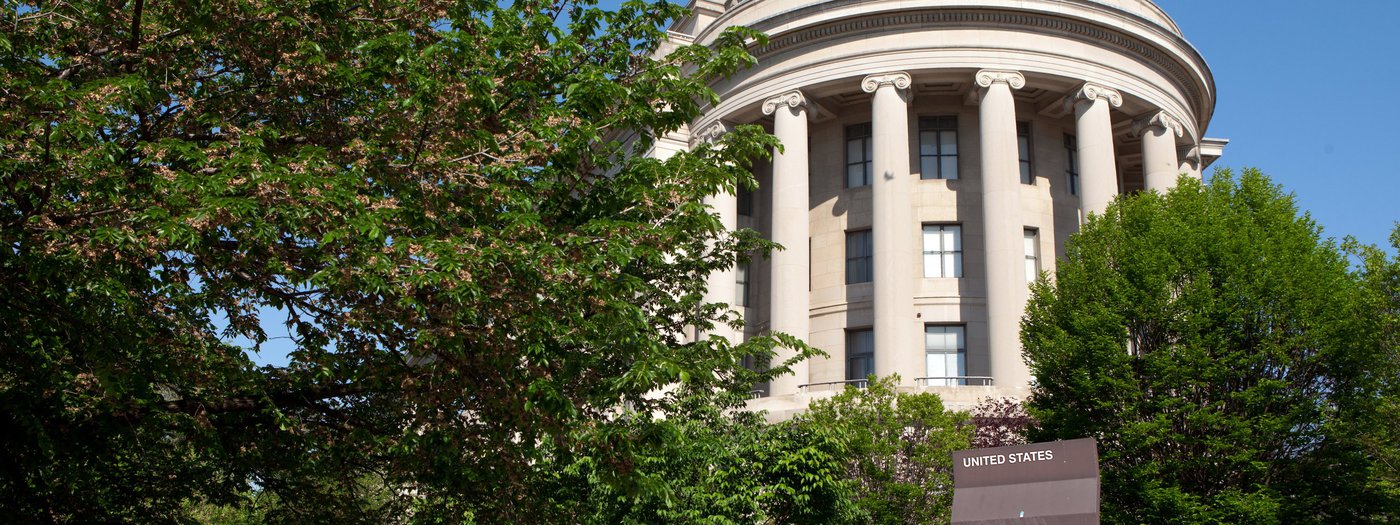
Beginning last fall and continuing into the new year, the Federal Trade Commission (FTC) has embarked on a series of . To date, there鈥檝e been nine hearings, each spanning two or three days. The harms technology presents to consumers have taken center stage during the hearings, with much debate centering on issues like consumer privacy, data security, and the risks platforms pose to competition. Indeed, the hearings stem from a problem that鈥檚 been brewing for years: Companies have repeatedly shown that they鈥檙e not up to the task of self-regulation.
And yet, while it鈥檚 certainly good that the FTC wants to be more accountable and transparent, convening a series of public hearings won鈥檛 be enough鈥攁t least, not if they don鈥檛 get at the deeper question of whether, and how, to regulate today鈥檚 towering tech companies.
Understanding the scope and stakes of the hearings requires taking a zoomed-out look at the current tech-company landscape. Importantly, the hearings take place against a context of growing public outcry directed both at tech giants for violating consumer trust and at government agencies for a perceived lack of enforcement. A , for instance, shows that 80 percent of consumers agree that government regulation of new technologies is crucial for consumer protection鈥攂ut 70 percent believe that the government is ineffective at ensuring fair use of their data.
As the primary government agency charged with enforcing privacy regulations, the FTC is from these accusations.
In this light, it鈥檚 clear that the public has lost trust in the FTC鈥檚 ability to promote competition and protect consumers. A major question for the hearings, then, isn鈥檛 just how to restore trust in big tech, but also how to restore trust in the FTC鈥檚 broader ability to fulfill its mission.
On the one hand, the hearings are a commendable move, as others in the antitrust community, like , have noted. Above all, the hearings represent an effort to reconcile three public frustrations with the agency: that it hasn鈥檛 been too successful at curbing anti-consumer behavior, that U.S. consumer protection and competition enforcement are less aggressive compared to E.U. enforcement, and that recent antitrust enforcement has been too lax.
But despite that, merely convening a public forum to debate the agency鈥檚 enforcement record has critical limitations. This is especially true when you consider that the experts invited to the hearings frequently disagree on whether there鈥檚 a problem with the FTC鈥檚 record and tools in the first place. In particular, the FTC has given a platform to a diverse crowd of practitioners, academics, economists, industry representatives, and public-interest advocates who have offered drastically different perspectives on whether the , , and . While regulating new technologies is certainly complex and tricky, the public likely isn鈥檛 reassured by the lack of consensus on seemingly indisputable problems, particularly when the harms they鈥檙e experiencing are both real and urgent.
Let鈥檚 take, as one example, the debate at the first hearing over the agency鈥檚 role in privacy regulation. In the fallout over the Cambridge Analytica scandal last year, the FTC has begun to see if it violated the company鈥檚 2011 consent order by allowing third parties to access user data without user permission. The investigation raises questions about whether the FTC鈥檚 consent orders effectively deter bad behavior. Think of it like this: If the FTC had intervened years earlier to put an end to this type of anti-consumer behavior, ?
This question has come up during the hearings, with former enforcement officials, like David Vladeck, to gain the ability to impose civil penalties on the initial offense for privacy infringements. But another FTC veteran disagreed. Howard Beales of what constitutes a privacy violation may lead to an unclear standard in executing civil penalties. We must ask: Would disputes like this stymie change that may enable more vigorous enforcement from the agency in the future?
In addition, the hearings have also grappled with the public perception that U.S. enforcement lags behind E.U. efforts when it comes to consumer protection and competition. The public is paying attention to the that the European Commission has levied against Google, Intel, Qualcomm, and other tech companies for antitrust violations. Meanwhile, the FTC鈥檚 record on platform enforcement has been beleaguered by from 2012 recommending charges against Google for anticompetitive practices. While the facts of the investigation remain non-public, the memo contrasts sharply with a unanimous to close the investigation into the company鈥檚 search-related practices soon after.
If the reason for this departure in enforcement actions between the United States and the E.U. stems from a difference in antitrust legal doctrine, the debate ought to move beyond whether the two jurisdictions treat competition cases involving platforms differently. Without actions demonstrating vigorous enforcement, debate alone will leave the public unpersuaded.
Today鈥檚 tech giants have been and of the past, with calling for them to face the same fates of forced divestitures and break-ups. But antitrust is far from a panacea; breaking up the platforms address underlying privacy and data-security concerns. Still, the historic shake-ups suggest that 鈥攅specially in light of recent decisions like opting not to pursue a formal investigation into .
In many ways, it鈥檚 easy to see why there鈥檚 a strong sense of public discontent with the agency, and a gnawing appetite for it to do more. While the hearings are a step in the right direction鈥攖oward building consensus, educating the public, and increasing transparency鈥攖he time for vigorous enforcement by the FTC is long overdue. The key to regaining the public鈥檚 trust lies in the agency鈥檚 actions鈥攊n having a robust enforcement record to show the public that it鈥檚 doing its job. The agency would be wise not to accept the disagreement over whether there鈥檚 even a problem in its current enforcement regime as a reason for maintaining the status quo. Instead, as the FTC wraps up its hearings over the next year, the debate ought to focus on how it can concretely improve its processes鈥攖hrough, for instance, 鈥攁s it looks to bring about similarly concrete results.
More 国产视频 the Authors
Issues
Programs/Projects/Initiatives
Related
OTI Welcomes SCOTUS Decision Extending Location Data Privacy

Take Back Tech鈥擴nderstanding How Surveillance Culture Impacts Advocacy