
‘The Invisibles’ Is German History Hiding in Plain Sight
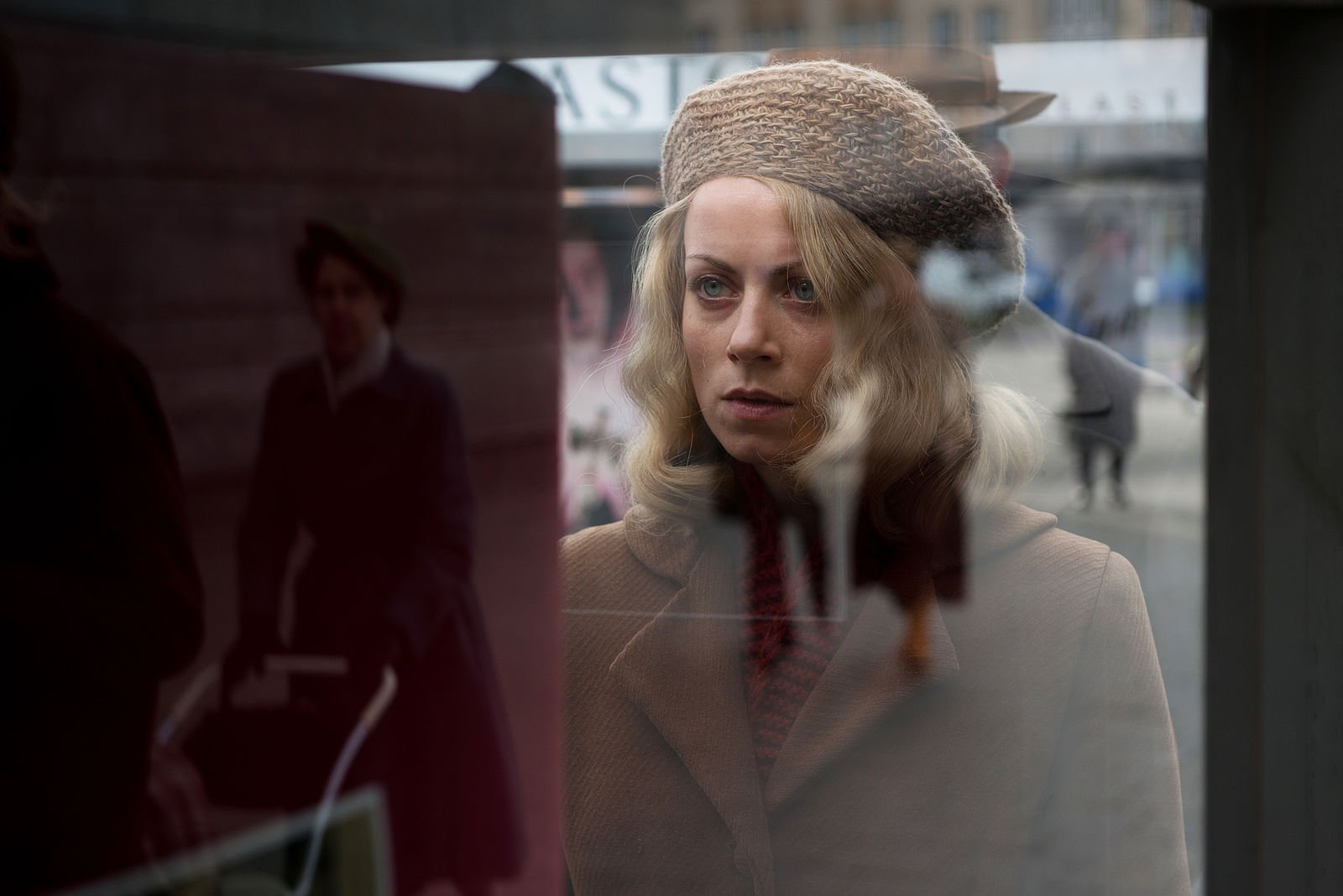
At 17 years old, Hanni Weissenberg (now L茅vy) changed her name to Hanni Winkler. She dyed her brunette hair blonde. During the day, she spent all her time at the movies, where she could sit in the dark, not having to worry about anyone watching her. Sometimes she鈥檇 see the same movie more than once. The theater was also reliably heated鈥攁 warm, relatively safe place compared to the streets outside.
In Berlin, in the middle of the Holocaust, L茅vy was a Jewish orphan.
In June 1943, the propaganda minister of Nazi Germany, Joseph Goebbels, announced that 鈥攆ree of Jewish people. Or, directly translated, 鈥渃leansed.鈥�
Of course, this statement wasn鈥檛 only 鈥攊t was also untrue. Estimates vary, but approximately 5,000-7,000 Jewish Berliners went into hiding after Goebbels made his claim in 1943. They disappeared into the city itself, living illegally on the margins鈥攜et simultaneously in plain sight. Historians call these Berliners U-Boote鈥擥erman for 鈥渟ubmarines鈥濃�攂ecause of the way they submerged into the depths of the city and re-emerged after the war was over. By the time Russian soldiers reached Berlin in April 1945, however, only some 1,500-1,700 of the U-Boote who had been in hiding .
The docudrama The Invisibles, recently released in American theaters, tells the story of L茅vy and three other U-Boote鈥擟ioma Sch枚nhaus, Ruth Arndt, and Eugen Friede鈥攊lluminating a piece of oft-ignored Holocaust history by jumping between interviews with the survivors and dramatic reenactments performed by young actors. The film describes in careful detail the purgatory-like world these Berliners navigated, not only explaining how they survived the experience, but also giving an intricate picture of how they lived day-to-day. Though he tells only a slice of this story, by highlighting the U-Boote, director Claus R盲fle provides audiences with a new look at the terrors of the Holocaust鈥攁nd he does so at an important political moment.
As the film shows, many of the U-Boote, like L茅vy, were stuck alternating between extreme existential threat and sometimes slow daily life. But they were always with a constant fear of discovery and, later, bombs and air raids. After years of and forced transports to the 鈥淓ast鈥濃�攎any going to in Poland and what鈥檚 today the Czech Republic (formally Czechia)鈥擩ewish Berliners lived with high risk. They couldn鈥檛 take public transportation, hold jobs, or see doctors. Neither could they own pets, bikes, or radios. They were required to give lists of all their assets to the state, and forced out of their homes. Their travel was restricted. And at a time of food shortages, they also couldn鈥檛 obtain ration cards.
Ultimately, everyday activities, like walking down the street, became enormously dangerous, and the 鈥渄rama鈥� part of this docudrama feels part thriller in its retelling, especially because some Jewish Berliners also worked as informants for the Gestapo, or the German secret police. Through its movie accompaniments, the film shows the extreme terror and high stakes of doing something as basic as riding the bus. In every case, the U-Boote were unavoidably at the mercy of whomever had taken them in, given them a job, decided to look the other way, or simply failed to pay attention.
When these daily needs were (briefly) met, however, some of the young U-Boote report having had temporary moments of early-鈥�20s normalcy. Friede fondly remembers the period when he lived with family friends, and the crush he had on their daughter. With the money he got from forging documents, Sch枚nhaus bought a used sailboat. His friend felt that taking it on the water was too dangerous and perhaps obvious. For Sch枚nhaus, those moments helped keep him sane.
In this way, The Invisibles tells a remarkable story about creativity, resilience, and adaptability. It underscores unimaginable bravery. But the movie also shows something that American audiences don鈥檛 often see: daily urban life during the Holocaust.
By rooting the story in a setting that audiences recognize as almost similar to their own daily experiences鈥攔omantic interests, hobbies, jokes with friends鈥攊t shows a slightly different picture of the Holocaust than the one that viewers typically receive. Especially for American audiences, whose education typically covers Anne Frank and Auschwitz and not much in between, they might be surprised to learn about people who had escaped concentration camps by staying in the city, working jobs, and walking the streets.
The movie, in that, seeks to speak to viewers who may be either desensitized to or unaware of this sliver of German history鈥攁nd it also arrives at a time when people around the world could use a potent reminder of the horrors of the past.
Seventy-four years after the liberation of German concentration camps, this history feels, perhaps, removed to many people. Voters today are among the first generations without direct connections to survivors, as family members who experienced that trauma have largely already passed. In addition, not only do 41 percent of U.S. Millennials not know that , but a 2017 study by the Koerber Institute found that some 40 percent of German 14-16-year-olds .
Online, Holocaust denial is becoming a on social media platforms like Facebook. One auction house even noted earlier this year that the . To make things worse, this is all happening against a backdrop of rising far-right populism .
Put another way, The Invisibles coming in this political season鈥攊t was released abroad in 2017 but is only now hitting American theaters鈥攊s soberingly good timing. As increasing hate speech, anti-Semitic attacks, and right-wing populism seem to trend toward normalcy, it鈥檚 impossible to have too many reminders of their true stakes. After all, rarely does political evil happen overnight.
Of course, this isn鈥檛 to say that the film is perfect. For all the importance of its message, the amount of information in it can feel a little lacking. By design, a documentary is an exercise in editing and selective storytelling. The film rightfully amplifies the stories of the aforementioned four Berliners and their families, and this kind of historical review is dramatically overdue. To get modern audiences to connect to the stories, R盲fle鈥檚 focus on the docudrama format may have been one way to tell the story right鈥攖o point up the danger, stress, and chaos of that daily experience鈥攂ut R盲fle does so at the expense of including a truly wide range of other key experiences.
While it may appear difficult to have more information about such a secretive population, it does exists. Studies from historians like Texas Tech University history professor Richard Lutjens Jr., for instance, offer , who included older Berliners and younger children. Lutjens points out that the experiences of U-Boote in Berlin were far different from those in other parts of the Third Reich, who had a harder time hiding. The movie only lightly touches on the elaborate underground networks the Jewish community built to distribute food. Lutjens also explains how some U-Boote who saw early warning signs spent years building effective covers and false identities, in contrast to the comparatively spontaneous decisions to hide that viewers see in the movie.
In addition, unlike most documentaries, this format means that the film has none of the traditional informative voiceovers. Apart from a few title cards that give brief information about major events and the number of survivors, the focus is entirely on the survivors鈥� memories. Ideally, there would鈥檝e been a way to highlight their experiences and also give more context.
In some ways, mentioning these elisions can feel like academic needling. Still, when it comes to such an important, overlooked topic, to not paint a fuller, more textured picture seems like a missed opportunity.
That said, The Invisibles is worth its almost two-hour runtime. The stories are heart-wrenching, the shots beautiful. More than that, the visceral experience of hearing about the Holocaust from survivors themselves is crucial, given that the opportunity dwindles every day; two of the four interviewees, in fact, have died . Indeed, the belatedness of a film like this, coupled with its timeliness, makes it such that when you watch it, it鈥檚 hard not to think about all the other pieces of this history that audiences have yet to hear鈥攁nd maybe never will.
More 国产视频 the Authors
Issues
Programs/Projects/Initiatives
Related

“Getting the Golden Ticket”: Participants’ Perspectives on Lexington’s First Assembly

Civic Assemblies: A Framework for Community Colleges

Mixed-Member Proportional Representation and the U.S. House of Representatives