
David Sterman
Deputy Director, Future Security
Recent reports raise questions about whether the U.S. is conducting covert strikes in Yemen.
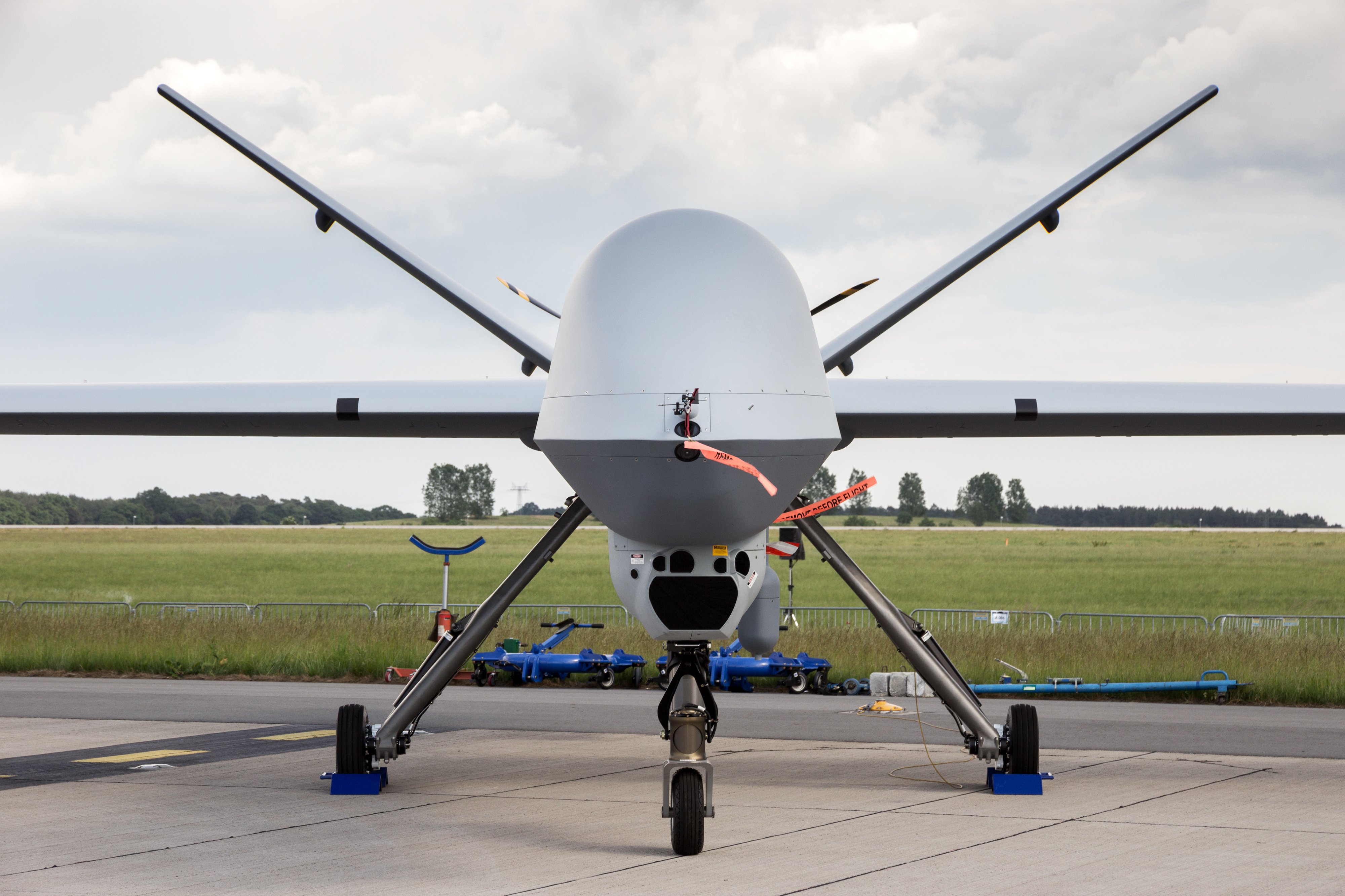
Is the United States waging a secret drone war in Yemen? It鈥檚 a question that is difficult to answer because the U.S. has a history of carrying out covert drone strikes in Yemen, lacks a unified structure to credibly and quickly deny that it conducted a specific strike, and has not renounced its authority to conduct strikes in Yemen.
The question of whether there is an ongoing U.S. drone campaign was resurfaced on February 27, when Arab News, and others, that two people were killed in a suspected U.S. strike in Yemen鈥檚 Marib governorate. Much remains unclear about the reported strike, including whether it could have been carried out by a force other than the United States.
U.S. Central Command (CENTCOM) told this author that it did not conduct any strikes over the time period in question. However, such a statement would not rule out a covert CIA strike, and the February strike is not the only one this year to resurface questions about whether the U.S. is conducting strikes even as the U.S. government has not acknowledged conducting a strike in Yemen since 2020.
On January 30, the Arabic-language news site Akhbar Al Aan that a drone strike hit a car in the Al Samda area of Wadi Ubyadah in Yemen鈥檚 Marib governorate. The report stated that three people believed to be members of al-Qaeda were killed, and suggested that the strike was an American drone strike.
The publication of photos from the January strike site quickly led analysts to assert that the wreckage showed 鈥�,鈥� referring to the secretive U.S. missile that uses blades rather than relying upon a traditional explosive warhead with the aim of minimizing civilian casualties 鈥� a method that tell-tale indications. Given the secrecy around the R9X, evidence of its usage would suggest American responsibility.
AFP later that an anonymous Marib government official told them that 鈥淭hree al-Qaeda members were killed in a strike by a drone that is believed to be American,鈥� adding, 鈥淭he three were in a car in Wadi Obeida when they were targeted by the suspected US strike that killed them immediately.鈥� Turkey鈥檚 Anadolu state news agency, local media as reporting that 鈥淗assan al-Hadrami, an al-Qaeda explosives expert, was among those killed in the attack鈥� and Al-Arabiya likewise Hadrami as the target. On February 10, the AP that 鈥渢wo local tribal leaders鈥� told them that the people killed were from Al Qaeda in the Arabian Peninsula (AQAP), that one was Hadrami, and that al-Qaeda fighters surrounded the vehicle after the strike. AQAP later Hadrami鈥檚 death.
Yet the United States has not credibly clarified whether it conducted the alleged January strike as of yet. U.S. Air Forces Central (AFCENT) told the AP that it didn鈥檛 have evidence of its forces conducting a strike in the area, but a recent of AFCENT鈥檚 data as a tally of all U.S. military strikes 鈥� and in any case the data would not cover covert CIA strikes. Meanwhile, the CIA and White House refused to comment when asked by the AP.
For its part, in November 2021, CENTCOM Airwars, 鈥淐ENTCOM conducted its last counterterror strike in Yemen on June 24, 2019. CENTCOM has not conducted any new counterterror strikes in Yemen since.鈥� Yet the aforementioned Voice of America cited data that recorded one U.S. military strike in Yemen in 2020. When asked by this author for details about the date, location, and target of that strike, CENTCOM refused to provide such information, instead pointing the author to the FOIA process.
We do know that June 24, 2019 was not the last U.S. strike in Yemen. In May 2020, then-Attorney General William Barr and FBI Director Christopher Wray in a press release regarding the investigation into the deadly attack at Naval Air Station Pensacola by Mohammed al-Shamrani that 鈥渁 counterterrorism operation targeting AQAP operative Abdullah al-Maliki, one of Alshamrani鈥檚 overseas associates, was recently conducted in Yemen.鈥� The New York Times a senior administration official as saying the operation was a CIA drone strike.
Similarly in January 2020, the United States reportedly an airstrike that killed AQAP leader Qassim al-Rimi. The operation was by President Trump, and the State Department鈥檚 Country Reports on Terrorism 2020 , 鈥淯.S.-led military operations in 2020 resulted in the deaths of Qassim al-Rimi鈥� among others. The United States also targeting an IRGC official in Yemen the same day that it killed IRGC Qods Force Commander Qasem Soleimani in Iraq in January 2020.
Under the Biden administration, there have been no such confirmations of U.S. strikes in Yemen. However, there have been multiple reports alleging U.S. strikes in Yemen during the Biden administration. Attributing such strikes to the United States is difficult given the challenges of reporting from Yemen and the wide array of belligerents with air capabilities active in Yemen鈥檚 skies. For example, 国产视频鈥檚 data tracking the U.S. drone war in Yemen recorded a pair of in Yemen in November 2021. CENTCOM denied conducting the strikes, and while they could have been covert and conducted by another part of the U.S. government, multiple other sources they were carried out by the Saudi-led coalition.
Airwars, which uses a broader set of inclusion criteria than 国产视频, drawing heavily upon social media and the local Arabic-language press, has recorded under the Biden administration. These include an alleged November 30, 2022 , February 2022 , December 2021 , and an alleged March 2021 (which illustrating the attribution challenge, Airwars notes may have been a Houthi ballistic missile strike rather than a U.S. strike). Notably all of the above cases reportedly occurred within the governorate of Marib, and thus might potentially be parts of a larger campaign of strikes or a hunt for particular AQAP leadership figures.
The possibility that the U.S. is conducting an ongoing covert campaign of drone strikes in Yemen should be concerning. The escalation of the drone war in Yemen in late 2009 was characterized by an official U.S. silence regarding covert strikes. That state of affairs, as I have written elsewhere, produced a confusing and ill-defined jumble of strategic objectives 鈥� contributing to the war鈥檚 having an endless character.
Similar questions arise today. Did recent alleged strikes target specific individuals who posed an imminent threat to the United States? Or were they meant to protect or support Emirati-backed forces (or others) against AQAP? Were the strikes meant to degrade AQAP鈥檚 overall capabilities and if so to what level? Perhaps they were meant to contribute to AQAP鈥檚 defeat 鈥� an objective that has been downplayed by the administration although the objective of defeating terrorist groups continues to be cited in other contexts.
Alternatively, perhaps the U.S. did not conduct the pair of recent strikes or any of the other alleged strikes under Biden. Yet if that is the case, it is concerning that the government is not able to credibly and quickly deny reports of U.S. strikes because it clings to its authority to conduct such strikes 鈥� even in secret – and lacks a unified system for denying strikes that it did not carry out. As a result, it is left to those tracking the wars to try and piece together various statements from different components of the government 鈥� some of which simply refuse to comment. For both strategic and moral reasons, the United States needs a on its drone wars (including their covert side). The latest reports from Yemen starkly emphasize the urgency of that effort.
Deputy Director, Future Security


