A Chapter of: Lessons from the Past to Govern for the Future
The Festival Is Resistance: A Fight to Preserve the Future in Oaxaca, Mexico
By Claudette Salinas Leyva
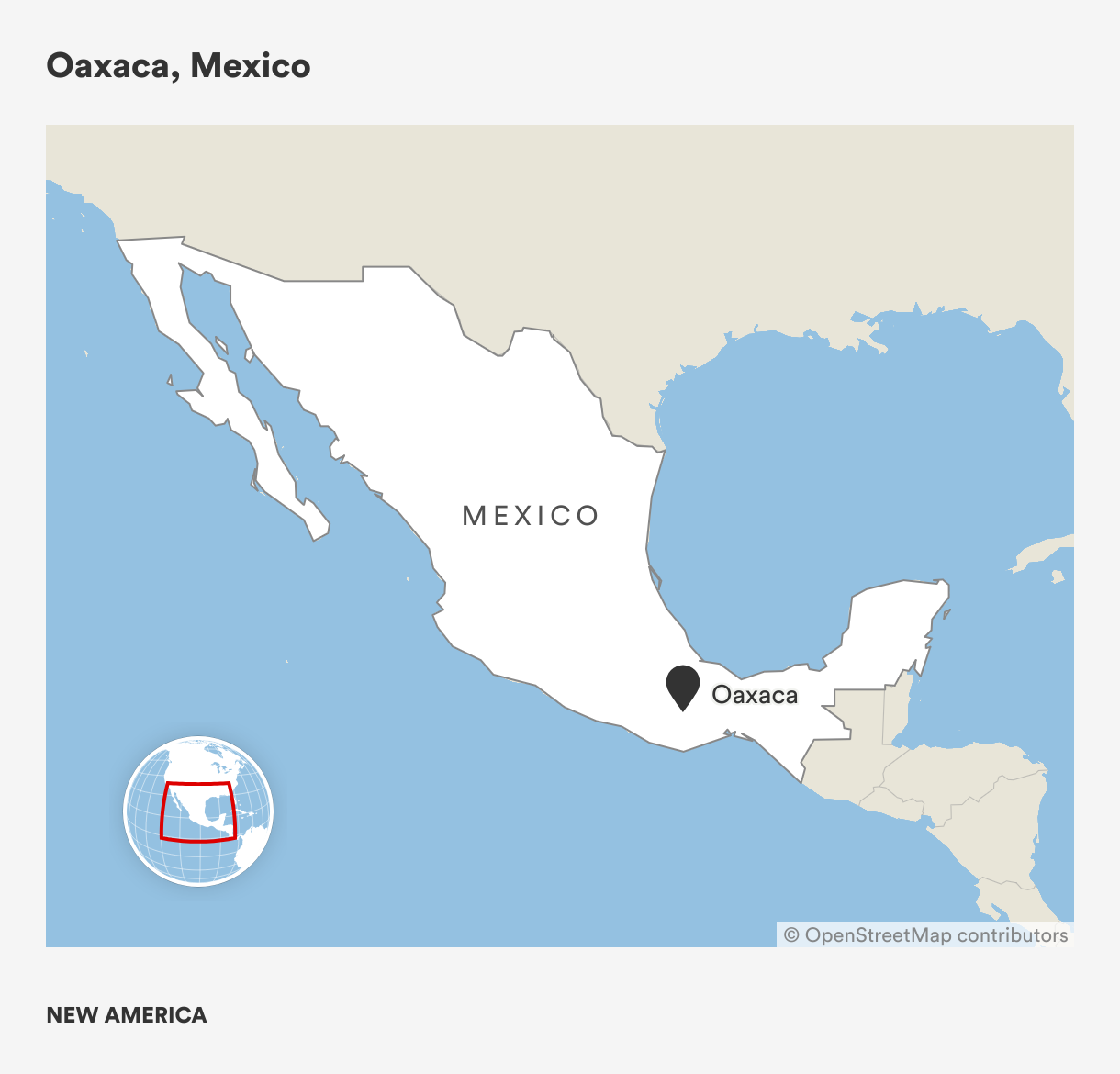
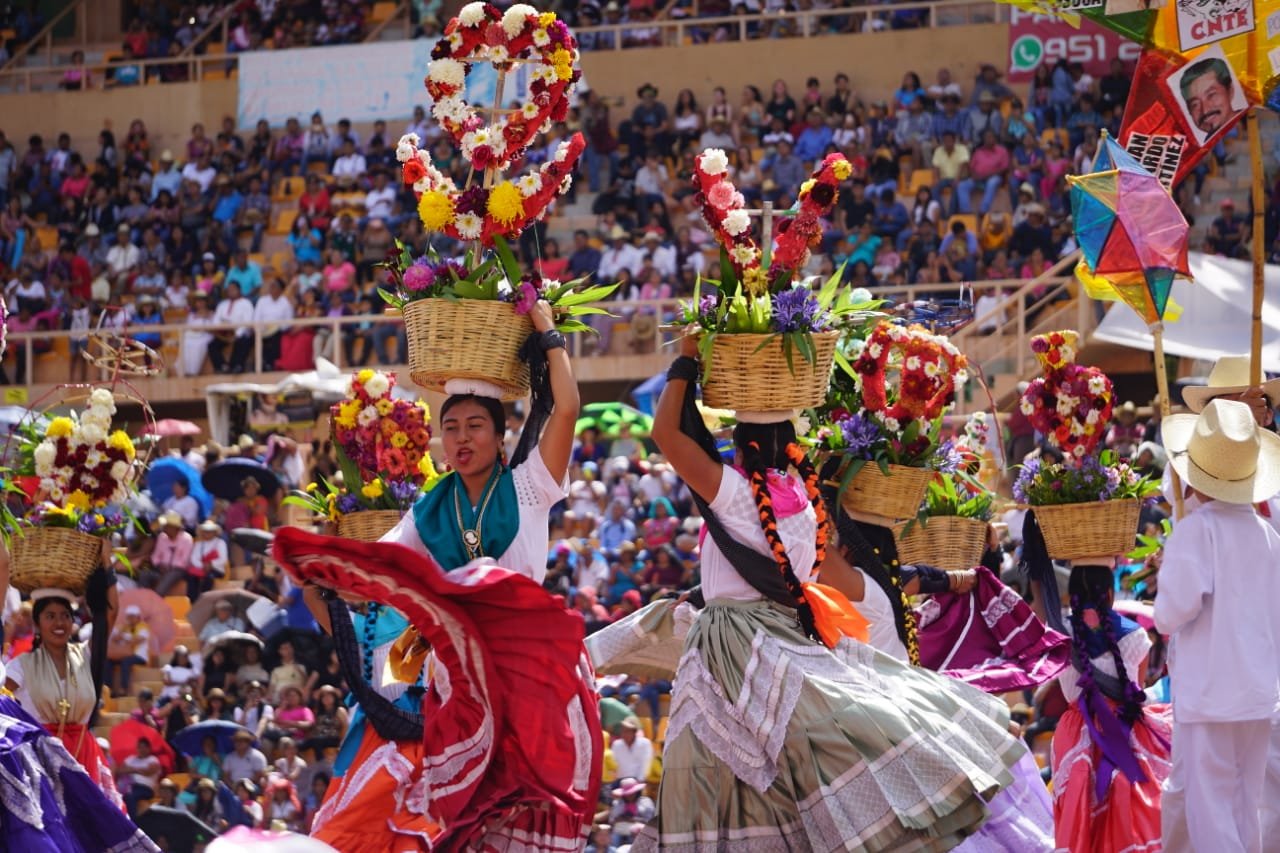
Every July in the heart of Oaxaca, a state in southeastern Mexico, a vibrant cultural celebration unfolds. La Guelaguetza Popular, full of color and sound, attracts Indigenous communities from all over the region. Over the course of three days, celebrants in distinctive cultural attire fill the squares and streets to perform dances, play music, and enjoy traditional foods. The Guelaguetza鈥攁 Zapotec word meaning mutual cooperation鈥攈as brought together Oaxaca鈥檚 diverse Indigenous peoples for centuries.
But the festival is also a platform for politics and resistance. In a region where legal methods of resistance have been ineffective and dangerous鈥擮axaca is one of the deadliest states in Mexico for activists鈥擫a Guelaguetza Popular offers a place for political protest against threats posed by the short-term interests of extractive industries and the state. Indigenous leaders and activists hold conversations at the festival and organize around pressing issues of environmental protection, education, land rights, and food sovereignty. In the process, they build coalitions that sometimes develop into effective political action.
Noticias Oaxaca NVI
Over time, La Guelaguetza Popular has reframed political narratives in the region, amplifying Indigenous and other communal perspectives about solidarity and resistance. Experts on social movements agree that progress requires a long-term approach to organizing. People need to find ways to engage in ongoing conversations with others to clarify values and objectives, develop expertise, share information, and generate the capacity for action. The festival creates the opportunity for the community鈥檚 deepest preferences to find expression. At the same time, it emphasizes the importance of preserving cultural traditions and values to build a better future.
The Struggle for Land and Future
Oaxaca has a diverse geography, ranging from vast coastal plains to soaring mountains. One of the three poorest states in Mexico, Oaxaca is rich in natural resources, especially gold, silver, zinc, copper, and lead.1 The region鈥檚 political history has been marked by struggles over control of these resources, especially among outside corporate and government interests.2
Sixteen distinct Indigenous peoples鈥擬ixtecs, Zapotecs, Triquis, Mixes, Chatinos, Chinantecos, Huaves, Mazatecos, Amuzgos, Nahuas, Zoques, Chontales, Cuicatecs, Ixcatecos, Chocholtecos, and Tacuates鈥攃omprised 43.7 percent of the state鈥檚 total population in 2015.3 Each group has its own unique language, rituals, and traditions.4 Livelihoods revolve around communal agriculture inland and artisanal fishing on the coast. The peoples of Oaxaca have lived sustainably, using resources wisely while caring for people at all ages, by following practices of their ancestors and preserving their way of life for future generations. They engage in 鈥渕ilpa鈥� agriculture, which mixes maize with other species like beans, squash, and potatoes, which helps prevent erosion and degradation of the soil.5
For decades, Oaxaca communities have been locked in struggles for their land and future. The Mexican government has seized territory, and private companies have extracted ore from the mineral-rich mountains. Gold and silver mining, a major industry since colonial times, has quickened in the twenty-first century. The result is environmental damage and economic dependency.
For example, in Capul谩lpam de M茅ndez, a small mountainside town, mining activity has polluted rivers and drained natural springs and aquifers. In 2010, three dams collapsed, leading to a flood of wastewater that turned 26 towns and villages into a toxic graveyard.6 Much of the water in Indigenous areas is no longer safe for human consumption, animal husbandry, or crop irrigation.7 Severe health issues, including respiratory diseases and cancer, have proliferated.8 At the same time, climate change has made droughts more frequent, further threatening traditional agricultural practices.
The government has failed to protect Indigenous communities from the environmental harms and risks associated with mining. Between 2002 and 2011, the federal government issued concessions to mining companies on more than 50,000 hectares of Zapotec land in the area around Capul谩lpam, a significant portion of the group鈥檚 ancestral holdings.9 The government made these concessions without consulting or informing communities about legal, environmental, and social considerations. The deal violated the binding International Labor Organization鈥檚 Indigenous and Tribal Peoples Convention.10 In 2019, a federal district court in Oaxaca ruled that the concessions also violated constitutional protections.11 But mines have continued to operate on Zapotec land.12
Conventional channels for political action have proved inadequate to protect land, rights, and interests. The people of Oaxaca often turn to community organizing and activism. But corporations and governments respond with acts of intimidation, repression, and violence. They often attempt to pit Indigenous groups and activists against one another. Organized criminal groups, often linked to the drug trade, and security forces, representing the state as well as legal and illicit private interests, often threaten violence against activists.13 According to data from El Centro Mexicano de Derecho Ambiental (CEMDA), a human rights organization, 79 reported attacks occurred in Oaxaca from 2012 to 2018鈥攎ore than in any other state.14
Indigenous activists also face legal persecution. 鈥淔or years the government has tried to punish and dissolve collective and community organizations by fabricating crimes against us,鈥� said Pedro A., an Indigenous activist from Los Valles Centrales, in an interview. With arrest warrants, evictions, and brief jail sentences to 鈥渟end the message,鈥� activists are further deterred from carrying out acts of civil protest, such as blockades or demonstrations. 鈥淭hey consider us country folk who cannot express ourselves well,鈥� said one resident from Magdalena Ocotl谩n. 鈥淭hey look down on us, but it鈥檚 not fair for us to be treated this way.鈥� Lacking power in formal systems of politics and policy, Oaxaca鈥檚 Indigenous peoples have been forced to find creative ways to fight for the interests of the future.
La Guelaguetza Popular and Expressive Politics
The Guelaguetza festival, as it is now known, dates back to pre-Columbian times, when the Zapotecs held annual celebrations to share customs and celebrate the harvest. In 1932, the government of the state of Oaxaca established a festival in which Indigenous people would gather in the capital city to present crafts and products from their region.15 The government began calling the festival Guelaguetza in 1953 and promoted it for economic development. In 1974, to accommodate growing crowds of tourists, the state government built an 11,000-seat amphitheater for the festival.16 It became highly stage-managed and charged admission, with prices too high for many Indigenous and low-income people to participate. Private mining companies became sponsors.
Then there was a clear mandate to change. In 2006, a strike in Oaxaca by the National Union of Education Workers (SNTE) over wages and classroom resources spiraled out of control. Previously, the government had attempted to negotiate with teachers in the event of a strike. But in 2006, Governor Ulises Ruiz Ortiz refused to bargain and sent between 1,000 and 3,000 armed state police to disperse an encampment in the center of Oaxaca.17 SNTE escalated its protest and found support from student groups, other labor unions, and Indigenous groups. A months-long battle ensued. Police used clubs, rubber bullets, and tear gas against the teachers. As fires burned, gunfire could be heard nightly. Hundreds of thousands of demonstrators took over the city and demanded the governor鈥檚 resignation.18 Some of the protestors formed an ad hoc organization called the Popular Assembly of Oaxaca (APPO). Protesters blockaded the city, occupied public buildings, closed banks, and held regular marches. The takeover lasted for six months. With 800,000 people joining the protests, APPO demanded democratic reforms.19
As part of this protest, APPO organized a boycott of the official Guelaguetza festival. APPO argued that the festival, what should have been a powerful expression of Indigenous culture and power, had become, in the words of one observer, a 鈥渨aste of economic resources that only benefits big business, owners of hotels, restaurants, and travel agencies鈥ot the Oaxacan people.鈥�20 When activists blocked access to the amphitheater, the government canceled the event. In subsequent years, the government continued to hold its festival. Those festivals drew tens of thousands of tourists and boosted the local economy. But as a result of the fiery protests of 2006, a challenge was coming.
Reviving the Traditional Festival
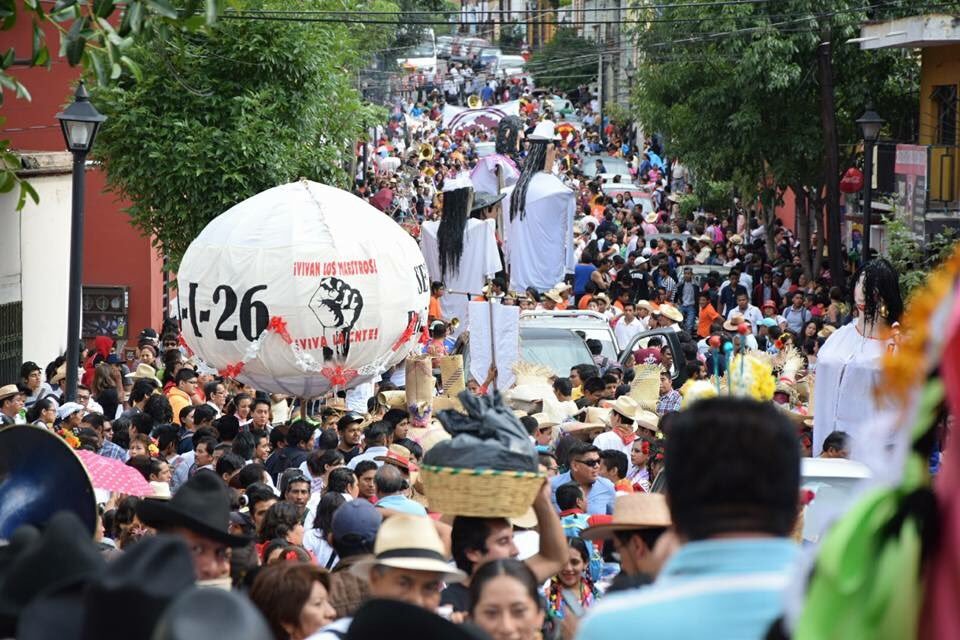
When the government canceled its festival in 2006, APPO organized La Guelaguetza Popular, a free, multi-day festival intended to capture Guelaguetza鈥檚 original spirit of mutual cooperation and solidarity. The region鈥檚 Indigenous peoples attended, along with activists, union members, and residents of Oaxaca.21 Over the years, the festival has grown to tens of thousands of celebrants, where participants wear the colorful costumes of their ancestors and perform traditional dances and music. The streets fill with the sound of drums, the smell of tamales cooking on open fires, and the smoke of copal, a resin used in Indigenous rituals.
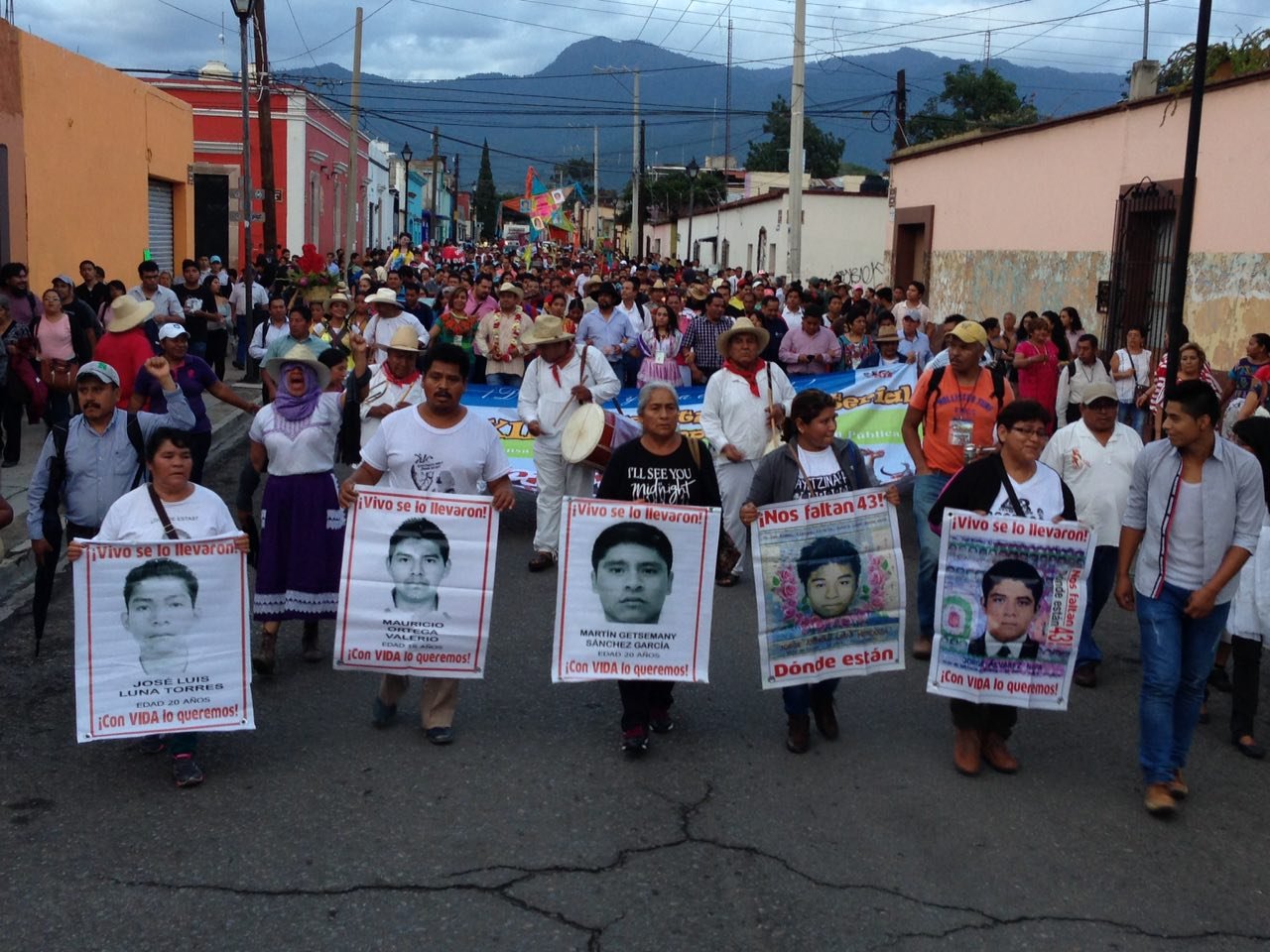
The festival also provides a venue for activists to organize and carry out protests that can be risky for Indigenous groups elsewhere. Political scientists have referred to this as expressive politics, or 鈥渋nfrapolitics.鈥� With subtle, often unnoticed actions of resistance in everyday life, repressed groups can gain solidarity and begin to develop a political agenda.22 Infrapolitics, often held in private spaces or selected public events, provides a space for marginalized voices to express their views. During the festival, Indigenous activists give speeches to raise awareness about community struggles. They lead chants like 鈥淵es to life! No to mining!鈥� and 鈥淣o gold! No silver! Mining kills!鈥� Participants speak out against the health hazards and environmental damages of mining and criticize state and federal authorities for supporting mining industries and denying their harmful effects.
Coordinadora 1DMX
Organizers and activists鈥攚ho requested anonymity in this report for fear of reprisals鈥攕ay the festival is a safe place in which to speak out. 鈥淲e want attention, and each July, we get it from neighbors, tourists, states, and corporations by showing up as a united coalition in the face of adversity,鈥� said Rosa B., an organizer in 2023. 鈥淲e are a point of unity against repression, and we exist because we resist.鈥� Crowds gather in churches, streets, and stadiums and hear testimony from activist leaders and ordinary people. On the final day, people fill the seats of the iconic Technological Stadium of Oaxaca for performances.
Festival participants have an opportunity to learn about the economic and social conditions of the region鈥攁nd to connect with the activists, offer support, and explore political strategies. 鈥淲e have faced retaliation for our resistance,鈥� said one Indigenous activist in 2023. 鈥淏ut every [person] that hears our stories, every nod of understanding, and every hand that joins us in support adds to our resolve. This festival, while a celebration, is also a testament to our fight for justice and equality.鈥�
Groups are invited to join the festival through word of mouth. The organizers often identify and connect with local initiatives that fight against government and criminal abuses such as imprisonment, forced disappearances, and land grabbing, and social issues such as food insecurity and poverty. 鈥�La fiesta es resistencia,鈥� participants in the events say.23 鈥淏eing Indigenous is not just about folklore. It is a form of resistance,鈥� said Karla N., a Mixtec activist. The cultural rituals, songs, dances, and symbols all date back generations, and their continued display ensures their continuation.
Women play a leading role. In ceremonial rituals using the Zapotec language, they express gratitude for the abundance of Mother Earth and call for strength and endurance to preserve their land and resources. Elders prepare traditional tamales and mezcal, with the help of young girls. 鈥淲e nourish, we sustain, and, like water, we鈥檙e essential to life,鈥� said Biaani, a Zapotec woman. 鈥淭hese rituals remind everyone that we, as women, are the bedrock of our community.鈥�
Teachers and unions are also instrumental. Giving speeches, carrying placards, and engaging in artistic performances, they assert their rights and express their frustration with government policies. They are playing the long game. 鈥淲e鈥檙e shaping the minds that will uphold our traditions, fight for our rights, and contribute to our society,鈥� said Yolanda C., a teacher. 鈥淭his festival allows us to convey that teachers鈥� concerns matter, and we deserve better.鈥�
The concept of intergenerational justice unifies the festival. Informed by ancestral wisdom and determined to forge a sustainable future, festival celebrants seek to reimagine politics and invoke the traditions of solidarity and cooperation. In this reimagining, the government and private interests join with the community to nurture the environment and safeguard societal welfare, not just for those alive today, but also for those yet to come.
Preserving the Future
For the Indigenous communities of Oaxaca, the most pressing goal is to defend the land for themselves and for future generations. Activists reject the extractive approach to development, in which the environment is simply a collection of resources to be exploited for short-term profit. Instead, they embrace a holistic relationship with the environment in which every act of construction is also an act of stewardship.
Defense of the land and opposition to mining is a prominent theme at La Guelaguetza Popular. In some cases, inspired and brought together by the festival, activists have gathered the support and motivation to carry out campaigns that have succeeded. For example, in the town of Ixtepec, a determined group of young women who go by the name of 鈥渓as me帽as鈥� spoke out against a mining project that posed a severe threat to their community. The 2015 project was backed by Plata Real, a subsidiary of the American company Sunshine Mining and Refining, and the Japanese firm Dowa.24 The proposal鈥檚 open-pit mines would damage hillsides and endanger the Guigu Bicu River, critical to irrigation.25 The project would have destroyed around 6,000 hectares of farmland for Zapalote Chico maize, which is not just a food staple but also a cultural asset embedded in the community鈥檚 identity, fundamental to traditional gastronomy and rituals.26
Despite significant opposition from local leaders who were determined to push forward with corporate development, the women refused to back down. 鈥淎lthough women鈥檚 voices have traditionally been marginalized in discussions about land and territory, we have a vital role in defending these resources,鈥� the group said in a statement. 鈥淎fter all, we are responsible for the reproduction of life and the maintenance of our families.鈥�27 Communal festivals and events helped them recruit activists. At a protest in 2016, they used sledgehammers and crowbars to destroy one of the five boundary markers of the project.28 That year, more than 2,500 people gathered in a Forum Against Mining Exploitation and signed a declaration to express their support for an Ixtepec free of mining.29 As information about the negative impact of mining activities circulated, opposition swelled.30 In 2017, due to mounting resistance and the growing disapproval of their operations, the companies withdrew from the area.31
This successful campaign offers a model for translating political expression into political action. In these communities, the bond with the land goes beyond market relationships and processes.
鈥淔or me, the territory is not merely a physical space, but a source of dignity and vitality,鈥� V铆ctor D., a Zapotec man, said in 2023. 鈥淚ts destruction would directly threaten our very existence, jeopardizing access to essential resources, culture, and traditions.鈥�
Cencos 22
The power of Indigenous peoples鈥� activism lies in their ability to look forward as well as backward. If elites, and the political system they run, tend to focus on the immediate impacts of economic empowerment strategies, infrastructure, water resources, and mining and other extractive industries, these activists make a strong case for long-term considerations. La Guelaguetza Popular creates an opening for traditional communities to express and develop long-term needs and preferences. Even if they cannot eliminate short-term pressures, they can resist them.
Claudette Salinas Leyva, a research associate for 国产视频鈥檚 Future of Institutions program, is a Mexican researcher and lawyer. One of the 10 youth consultants at the United Nations Foundation leading the Task Force on Future Generations, she also works as a governance affiliate in Riesgos 颁补迟补蝉迟谤贸蹿颈肠辞蝉 Globales, an initiative to help build institutional resilience in low- and middle-income countries.
Citations
- Servicio Geol贸gico Mexicano, Anuario estad铆stico de la 尘颈苍别谤铆补 mexicana, 2019 (Mexico City: Gobierno de M茅xico, 2020), ; IMCO Staff, 鈥淓n Chiapas, Guerrero y Oaxaca se encuentran los municipios con mayor porcentaje de la poblaci贸n en situaci贸n de pobreza,鈥� Instituto Mexicano Para La Competitividad, December 15, 2021, .
- Carlos Ram铆rez, 鈥淟as revueltas de Oaxaca,鈥� Letras Libres, September 15, 2016, .
- Panorama educativo estatal de la 辫辞产濒补肠颈辞虂苍 indi虂gena 2018: Oaxaca (Mexico City: Instituto Nacional para la Evaluaci贸n de la Educaci贸n, 2019), .
- Mar铆a del Carmen Castillo Cisneros, 鈥淟as identidades 茅tnicas en Oaxaca,鈥� Nueva 脡辫辞肠补 no. 41 (January-April 2018), .
- 鈥淟a milpa, saberes y sabores,鈥� Secretar铆a de Agricultura y Desarrollo Rural (blog), October 14, 2020, .
- Baltasar Hern谩ndez and Netzar Arreort煤a Mart铆nez, 鈥淓xtractivismo de minerales en la sierra de Ju谩rez, Oaxaca,鈥� La Jornada, March 27, 2022, .
- Dulce Olvera, 鈥淐onflictos sociales, inseguridad y enfermedades deja una d茅cada de operaci贸n de minera en Oaxaca,鈥� SinEmbargo.mx, April 11, 2021, .
- Hugo Adalberto Von Thaden Ugalde, Celerino Robles, and Mario Enrique Fuente Carrasco, 鈥淢ining Activity in the 20th Century in the Oaxaca Valley: Today鈥檚 Public Health Risks,鈥� Revista internacional de 肠辞苍迟补尘颈苍补肠颈贸苍 ambiental 36, no. 1 (February 2020), .
- Juan Carlos Cruz Vargas, 鈥淎cusan habitantes de la Sierra de Ju谩rez: Minera Natividad, una devastadora impune,鈥� Proceso, April 29, 2023, .
- Hern谩ndez and Arreort煤a Mart铆nez, 鈥淓xtractivismo de minerales en la sierra de Ju谩rez,鈥� .
- Salvador Aquino-Centeno, 鈥淓xpertise and community juridification: Defense of subsoil and communal lands in Oaxaca, Mexico,鈥� 脥肠辞苍辞蝉: Revista de Ciencias Sociales 72 (January 2022), .
- Aquino-Centeno, 鈥淓xperticias y juridificaci贸n comunitaria.鈥�
- 鈥淒enunciamos criminalizaci贸n y amenazas contra el defensor Carlos Beas Torres en el Istmo, Oaxaca,鈥� Congreso Nacional Ind铆gena, March 22, 2023, .
- Overall, 460 such attacks occurred in Mexico. See 鈥淰iolence Against Indigenous Groups in Oaxaca Remains Mostly Environmentally Motivated,鈥� Justice in Mexico, July 10, 2020, .
- Michelle Whitford, 鈥淥axaca鈥檚 Indigenous Guelaguetza Festival: Not All that Glistens Is Gold,鈥� Event Management 12 (2009): 1鈥�17, .
- Whitford, 鈥淥axaca鈥檚 Indigenous Guelaguetza Festival,鈥� .
- Kylin Navarro, 鈥淥axacan Teachers Strike Against Governor, 2006,鈥� Global Nonviolent Action Database, January 11, 2010, .
- Luis Hernandez Navarro, 鈥淥axaca: Memoria Viva, Justicia Ausente,鈥� El Cotidiano 148 (March鈥揂pril 2002): 5鈥�20, .
- Navarro, 鈥淥axacan Teachers Strike,鈥� .
- Diana Denham, 鈥淪tate-Sponsored Guelaguetza Canceled, Alternative Guelaguetza Carried Out by APPO,鈥� Casa Collective, July 25, 2006.
- Nancy C谩zares, 鈥溌緾u谩l es el origen de la Guelaguetza Popular?鈥� La Izquierda Diario, July 14, 2017, .
- James C. Scott, Weapons of the Weak: Everyday Forms of Peasant Resistance (New Haven, CT: Yale University Press, 1985), .
- Y谩snaya Elena A. Gil, 鈥淢ujeres ind铆genas, fiesta y participaci贸n pol铆tica. Revista de la Universidad de M茅xico,鈥� Dossier, November 2019, .
- Diana Manzo, 鈥淢ujeres zapotecas resisten frente a las Zonas Econ贸micas Especiales,鈥� Lado B, November 5, 2017, .
- Manzo, 鈥淢ujeres zapotecas,鈥� .
- Manzo, 鈥淢ujeres zapotecas,鈥� .
- 鈥淓xtractivismo profundiza la violencia de g茅nero en todos sus niveles: Mujeres de Ixtepec,鈥� 顿别蝉颈苍蹿辞谤尘茅尘辞苍辞蝉, March 21, 2022, .
- 鈥淩echazan proyecto minero en Ixtepec,鈥� El Universal, July 11, 2016, .
- 鈥淚xtepec se declara como territorio libre de mina,鈥� No a la Mina, April 13, 2016, .
- Manzo, 鈥淢ujeres zapotecas,鈥� .
- 鈥淟a Resistencia de Puente Madera,鈥� Observatorio Memoria y Libertad, April 26, 2023, .