Ayushi Roy
Chief Program Officer, New Practice Lab
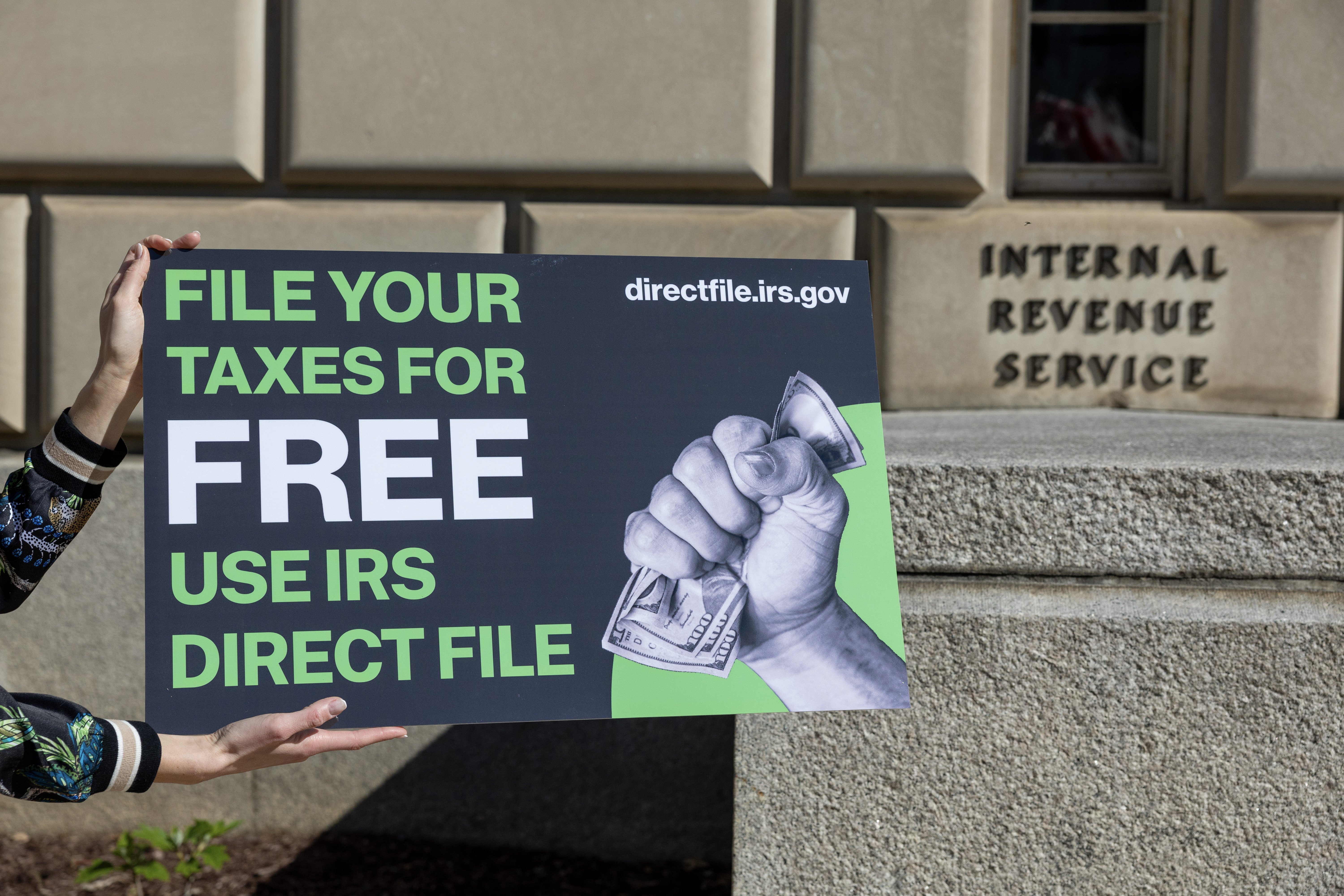
Direct File is under attack, and if the IRS continues to lose the sustained funding promised in the Inflation Reduction Act, it鈥檚 everyday taxpayers who will pay the price.
Direct File is the best tool the federal government has to help millions of Americans file their taxes for free. As we celebrate the 50th anniversary of the Earned Income Tax Credit (EITC), it鈥檚 time to learn from the past and broaden access to filing tools that help people claim what they鈥檝e earned.
Paying taxes is an annual obligation鈥攁nd a headache. For many families, it鈥檚 a source of deep stress as they struggle to navigate a complex, costly tax code. The it takes 13 hours to file a tax return. Professional help averages $240 dollars per filing. That鈥檚 a steep burden for families already living paycheck to paycheck.
Yet filing a tax return is also essential to accessing critical financial support. Tax credits, especially the EITC, are a major part of anti-poverty programs in the U.S. In 2022, the federal EITC averaged $2,500 per return. The expanded Child Tax Credit (CTC) in 2021 reduced child poverty by 40 percent in just one year. And yet approximately 20 percent of eligible households nationwide miss out on the EITC鈥攅specially lower-income, less-educated households.
With an uncertain future for Direct File, it鈥檚 more important than ever to consider other ways to lower the barriers for the people who need tax credits most鈥攑articularly first-time filers, intermittent filers, and those not required to file because of low annual incomes.
To better understand these barriers, the New Practice Lab led the largest national survey of non- and intermittent-filers to date, reaching over 5,000 households. The majority (88 percent) earned less than $65,000 annually. We learned that 36 percent of respondents identified cost as a barrier, with some forgoing basic utility bills to afford tax services. More than half said they feared making mistakes鈥攅ven with help鈥攍eading many to avoid filing, and thus accessing credits, altogether.
This is the very problem Direct File was built to solve. As part of the Inflation Reduction Act, Congress gave the IRS funding and a mandate to explore the feasibility of a direct e-file system that would modernize a burdensome and fear-filled obligation. In 2024, Direct File launched as a pilot across 12 states, helping 140,803 Americans file their taxes in just three months.
That success is now in jeopardy. Under the Trump Administration, the IRS has already seen $20 billion in funding cuts and a 20 percent workforce reduction. The and the 鈥攖wo of the tech teams that helped build Direct File鈥攈as also cast doubt on the program鈥檚 future. And despite public interest, lawmakers have introduced multiple bills to defund Direct File, arguing () that the IRS鈥檚 Free File Alliance with industry partners is enough.
But the evidence says otherwise: Direct File is working鈥攁nd here鈥檚 what we鈥檙e learning.
The demand for Direct File is growing. In its 2024 pilot phase across 12 states, over 140,000 Americans used Direct File to submit their taxes鈥攎any filing electronically for the first time or after at least a year of not filing at all. While small in scale, the pilot showed clear interest in a public filing option. In 2025, the IRS expanded eligibility to cover more tax scenarios and added more than a dozen states with leadership from both parties. Now available to about half the country, Direct File is seeing its user base grow rapidly.
鈥�鈥� delivers results. User satisfaction with Direct File was . Ninety percent rated their experience as 鈥渆xcellent鈥� or 鈥渁bove average,鈥� and the tool received a Net Promoter Score of +74鈥攈igher than TurboTax () and on par with like Costco (+79) and Starbucks (+77).
Investing in customer service pays off. Direct File鈥檚 launch coincided with a in IRS customer service. In 2023, agents answered 7.7 million calls鈥攁 65 percent increase from the year before鈥攁nd cut average wait times from 28 minutes to just three. It鈥檚 a reminder that government services can be seamless and efficient when they鈥檙e built with the public in mind.
Scaling Direct File is cost-effective. Designed as a pilot with modular components that could be tested and scaled for wider audiences, Direct File is built to be the opposite of a monolithic system. estimate that the cost of expanding the system鈥攊ncluding staff, infrastructure, and development鈥攚ill remain relatively flat, instead of being directly proportional to the number of filers using the tool. As more people use it, the cost per user drops. This year鈥檚 rollout across 25 states will offer a clearer picture of its full impact.
Free tax filing keeps money in people鈥檚 pockets. In 2019, Intuit and H&R Block controlled . These companies spend millions
lobbying to protect their dominance. But Direct File offers a powerful alternative鈥攐ne that lets Americans file for free, avoid hidden fees, and keep valuable money in their own pockets. It鈥檚 a tool that puts the public, not private profit, first.
The American people want this. In 2023, 72 percent of taxpayers told the IRS they鈥檇 use an IRS-provided online filing tool. Now that it exists, Congress should be celebrating鈥攏ot sabotaging鈥攊t.
Direct File shows us a better way to build government technology. It started small, tested rigorously, adapted quickly, and delivered strong results. It鈥檚 a model we should replicate in other programs that serve the public.
But to fully realize its potential, we need leadership. Whether or not Direct File survives in the long term, must continue to invest in lowering the barriers to filing via state-simplified filing tools, more outreach, decreased misinformation about penalties, secure data sharing and pre-populated data, smarter calculations in employer withholdings, and entry points designed for people new to the process.
We already have the knowledge to help. Now we just need federal leaders to give us the opportunity.
Chief Program Officer, New Practice Lab