Julia Craven
Senior Writer and Editor, Better Life Lab
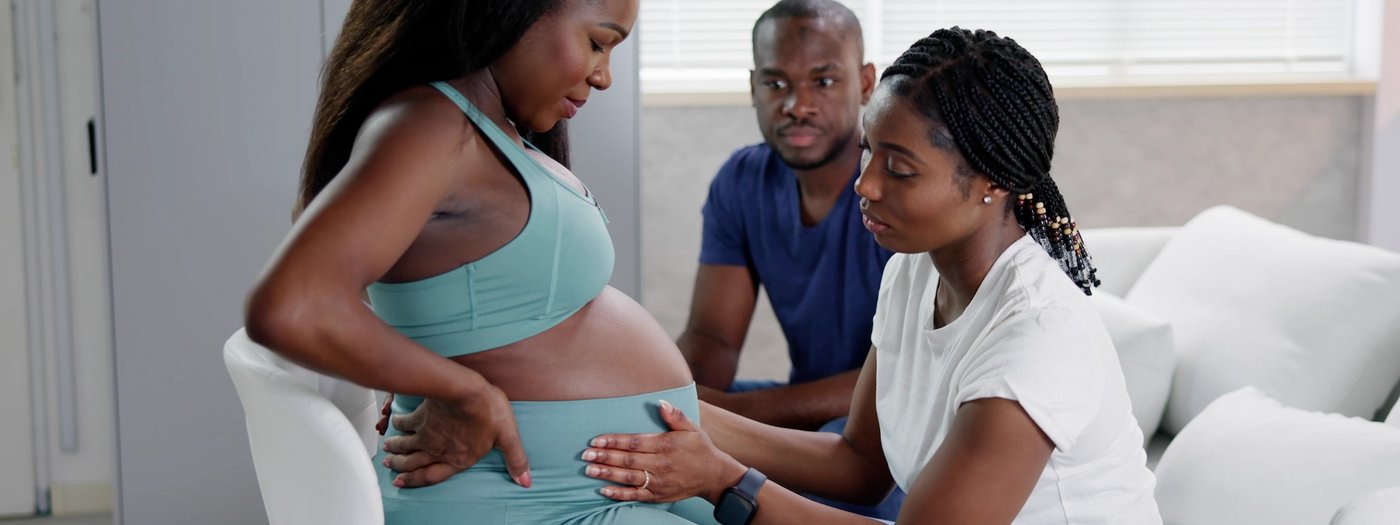
After a traumatic experience during her first pregnancy, Tonya Abari wasn鈥檛 sure she wanted to have children again. But when she found out she was pregnant, Abari was determined for this time to be different. She sought out Tanzye Hill, a Nashville-based doula she鈥檇 befriended in the interim, to help build a Black care team that would respect her.
On the morning her daughter was due, Abari鈥檚 doula arrived at her home with a photographer to document the process and a therapist to provide mental health support. Her care team held her hands during contractions, sang, made a playlist of her favorite songs, and recited affirmations with her. That same day, they decorated her bedroom with photos of her family. They cooked for them all, too. Labor and delivery went smoothly, and she delivered a healthy baby girl in November 2021. Tonya Abari鈥檚 second pregnancy was different鈥攁nd adding a doula was the key.
But two weeks later came the excruciating leg pain. Abari kept it to herself, a decision she now attributes to postpartum depression. Late one night, she shared a photo of her swollen legs with her doula and midwife. They told her to get to the hospital. There, a kind-hearted Black woman obstetrician told Abari a blood clot was causing a light stroke. She was rushed into surgery.
鈥淚 didn鈥檛 know things could fall apart that fast. I didn鈥檛 know that I needed that extra help and that extra care after I had the baby鈥攁nd what helped to save my life was her care,鈥� Abari said of her doula. 鈥淪he was there. She did so much.鈥�
As a Black woman, Abari was particularly vulnerable to having an adverse birthing experience due to and its effects on health. Across all causes of maternal mortality, Black birthing persons experience 鈥攁lmost three times the rate of their white and Hispanic counterparts and just about four times as often as birthing persons of Asian descent. of pregnancy-related deaths happen in the year after delivery, and the Centers for Disease Control and Prevention (CDC) estimates that of these deaths are preventable.
With everything going on in health care and how systems are already not for us, it is important that we have that support.
This grim reality makes the that would over the next decade all the more concerning. Medicaid finances about of U.S. births, with 22 percent of those recipients being Black. Though Abari was able to partially cover her doula services with private insurance, Black women across the country would be left more vulnerable if Medicaid funding is slashed. amid an ongoing shortage, , and the erosion of essential programs鈥攍ike 鈥攚ould exacerbate .
鈥淲ith Medicaid coverage for doula care, there has always been this very explicit grounding in wanting to address racial disparities,鈥� said Amy Chen, a senior attorney with the National Health Law Program and lead of their . 鈥淲e know this current federal administration is very hostile to even admitting that racism against BIPOC people exists. They鈥檙e very hostile to admitting that it not only impacts lives, but it claims lives.鈥�
As of March 2025, for Medicaid recipients. Six other states are implementing doula coverage this year, and 17 have adjacent programs aimed at improving maternal health outcomes through doula care. However, doulas already . If House Republicans鈥� proposed budget cuts pass, states could be forced to eliminate doula coverage, reduce the number of covered appointments, restrict coverage to only parts of the perinatal period, or lower reimbursement rates, leaving Black women and their families without the vital support they need.
鈥淚nstead of, say, eight prenatal and postpartum appointments鈥� each per pregnant person, 鈥渟tates could just provide three of each,鈥� explained Chen. 鈥淥r maybe they just provide care during labor and delivery and no prenatal and postpartum appointments.鈥� Such limitations would further disrupt health care access for vulnerable populations.
Doulas offer a range of essential support services throughout pregnancy and the postpartum period, as seen in De Ajanae Gunn鈥檚 story. In December 2023, Gunn, who was nearing the end of her pregnancy, found a doula through Sacramento-based community support group United and Guided, thanks to the state鈥檚 . Her doula helped her navigate a challenging birth, assisted with breastfeeding, and offered emotional support for postpartum mood swings.
鈥淵our doula is there to advocate and support you and your family, especially with their mission to support the whole family and keep the Black family together,鈥� said Gunn. 鈥淲ith everything going on in health care and how systems are already not for us, it is important that we do have that support.鈥�
Community-based doulas are , empowering Black families, and addressing systemic health care inequities. If Abari had a doula during her first pregnancy, perhaps her journey would have gone smoothly. In 2014, seven years before her second child was born, Abari suffered from undiagnosed hyperemesis gravidarum, a severe form of pregnancy-related nausea that led to her vomiting up to 20 times a day. She was never tested to identify what was wrong, and as her pregnancy progressed, she became hypertensive, believing that she had preeclampsia but never formally diagnosed.
During labor, Abari was told she鈥檇 need an emergency C-section due to her weight, which she initially refused. But after 56 hours of labor, she gave in. Both her heart rate and her newborn鈥檚 plummeted. Although they eventually recovered, Abari left the hospital feeling unheard, dismissed, and victimized by the health care system. 鈥淚 felt like there was a lot of bias during the entire process,鈥� she said.
If it weren鈥檛 for doula care, Abari鈥檚 second pregnancy might have ended in more trauma. The proposed cuts to Medicaid would put this vital service in danger and endanger the lives of many Black people looking to give birth.
Senior Writer and Editor, Better Life Lab