
Andrew Bolden
National Fellow, 2016
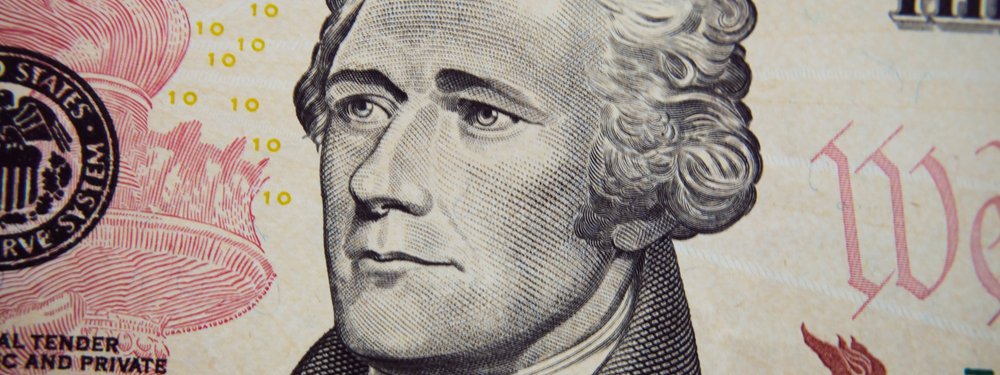
Alexander Hamilton found a fan base outside of the financial sector, and the 鈥渢en-dollar founding father鈥� lives to see another printing. Meanwhile, Andrew Jackson gets the bump and the beloved heroine of the Underground Railroad, Harriet Tubman, gets her due. There were a number of actors involved, including the campaign, but this ten-month paper portrait saga owes its visibility and staying power to a player not normally cast in pecuniary politics: musical theatre.
Had Treasury Secretary Jack Lew announced his intention to remove his principal predecessor from the ten dollar note a year or even just six months earlier, we鈥檇 likely be celebrating Susan B. Anthony鈥檚 promotion from a rare coin to popular paper currency (and perhaps enduring a new campaign to get Hamilton鈥檚 portrait on some other denomination). I鈥檇 wager ten bucks that Lew figured he鈥檇 meet little resistance to a plan replacing a peripheral founding father with a prominent suffragette; who would expect an upstart hip-hop show about Alexander Hamilton to become a national cultural phenomenon? But the announcement came just as the musical was making its sensational Broadway transfer, a minor miscalculation that sparked a controversy yielding , and yet another opportunity to cull the overgrown Facebook friend list.
When the news hit that Hamilton was saved and Jackson was a goner, there was a sentiment coming across my Facebook feed that if only Jackson had a hit musical, he鈥檇 have been saved, too. was promptly invoked, and the accompanying commentary suggested that perhaps it just wasn鈥檛 popular enough to keep Old Hickory on the twenty. But it seems to me that the niche musical, though not as wildly successful as Hamilton, did exactly what it was supposed to do: it brought Andrew Jackson back into the public consciousness, critiquing his legacy in such a way to make a strong case for his removal from our currency.
The two shows are each clever and powerful in their own ways, but have different ends in mind. Americans love rags-to-riches stories, and while both men came up from nothing, the popularity enjoyed by their respective shows likely has much to do with the fact that Hamilton tells a straight-forward sympathetic story while Bloody Bloody Andrew Jackson is largely hostile commentary and caricature. In its sexy, anachronistic slapstick, Bloody Bloody forces us to reflect on our not-so-pleasant history and consider how it closely resembles our present; Hamilton is inspiring and cool, offering a relatable glimpse into a distant era while motivating us to get off our duff and 鈥渘ot throw away our shot.鈥� The earnest narrative of Hamilton hip-hop stands in stark contrast to the ironic satire of Andrew Jackson鈥檚 emo-rock-inspired score. So where Lin-Manuel Miranda manages to humanize a historical and often hagiographic figure, Friedman & Timbers give us Andrew Jackson, the petulant adolescent rock star. We see ambition in two very different guises, which might explain our preference for the flawed and complicated Hamilton with legitimate merits over the genocidal, power-hungry Jackson, cloaked in hubris and bitterness that nearly dismantled the system of government created by Hamilton鈥檚 generation.
The greater point, however, is this: art speaks to us in ways that policy papers and op-eds never will. We respond viscerally, emotionally, and suddenly. But likewise, art demands our sustained attention and provokes us to ponder the problems we often ignore in our everyday realities. From Mozart鈥檚 comic operas mocking the nobility, to Stravinsky鈥檚 riot-inducing ballets; from Shakespeare鈥檚 histories of beloved and hated monarchs, to recent hit plays like Robert Schenkkan鈥檚 All the Way, which chronicles President Lyndon Johnson鈥檚 battle for re-election amid the civil rights movement, the theatre has always been a home for politically-charged commentary. And when a show strikes a nerve, it can fuel a movement, even if it鈥檚 a somewhat trivial distraction of whose mug is on our money.
The true victory here, though, does not belong to Hamilton鈥攊t belongs to Harriet. Yes, it鈥檚 ironic that Jackson, who hated paper money and dissolved the central bank, has his face on the bill most likely to meet us at the ATM. But irony be damned: we鈥檙e getting one hell of a badass woman on our twenty in what Damon Young of VSB called 鈥�.鈥� And thanks to a little added pressure (#NotWillingToWait), Secretary Lew has accelerated the timeline for redesign of the twenty alongside the ten and five to coincide with the centennial of women鈥檚 suffrage in 2020. Critics who might call this change political correctness run amok fail to see the multiple-level, national civic engagement with artists creating, citizens debating, and statesmen responding. Regardless, this is the perfect moment for an inspired woman composer to create a new musical called Harriet.
National Fellow, 2016


