A Chapter of: A New Politics Beyond 2020
We鈥檙e on the Brink of a New Era of Political Reform
Dissatisfaction with the status quo reveals that this is the time when political possibilities expand鈥攂ut also when we should be careful.
Lee Drutman
鈥淏old, ambitious ideas need a hearing right now.鈥�
That was , the wunderkind mayor-turned-presidential candidate who has made a strong case that structural democracy reform issues need to come first. There are many ways to interpret Mayor Pete鈥檚 unlikely rise in the crowded Democratic primary field. But one way is to see him as connecting to a diffuse but growing sense that the rules of our democracy are broken, as well as a hunger for some new ones.
In other words, we鈥檙e likely on the verge of a new era of political reform, one in which possibilities expand and big changes become more likely. This is the time when imagination grows鈥攂ut also when we have to be careful, lest we get too carried away.
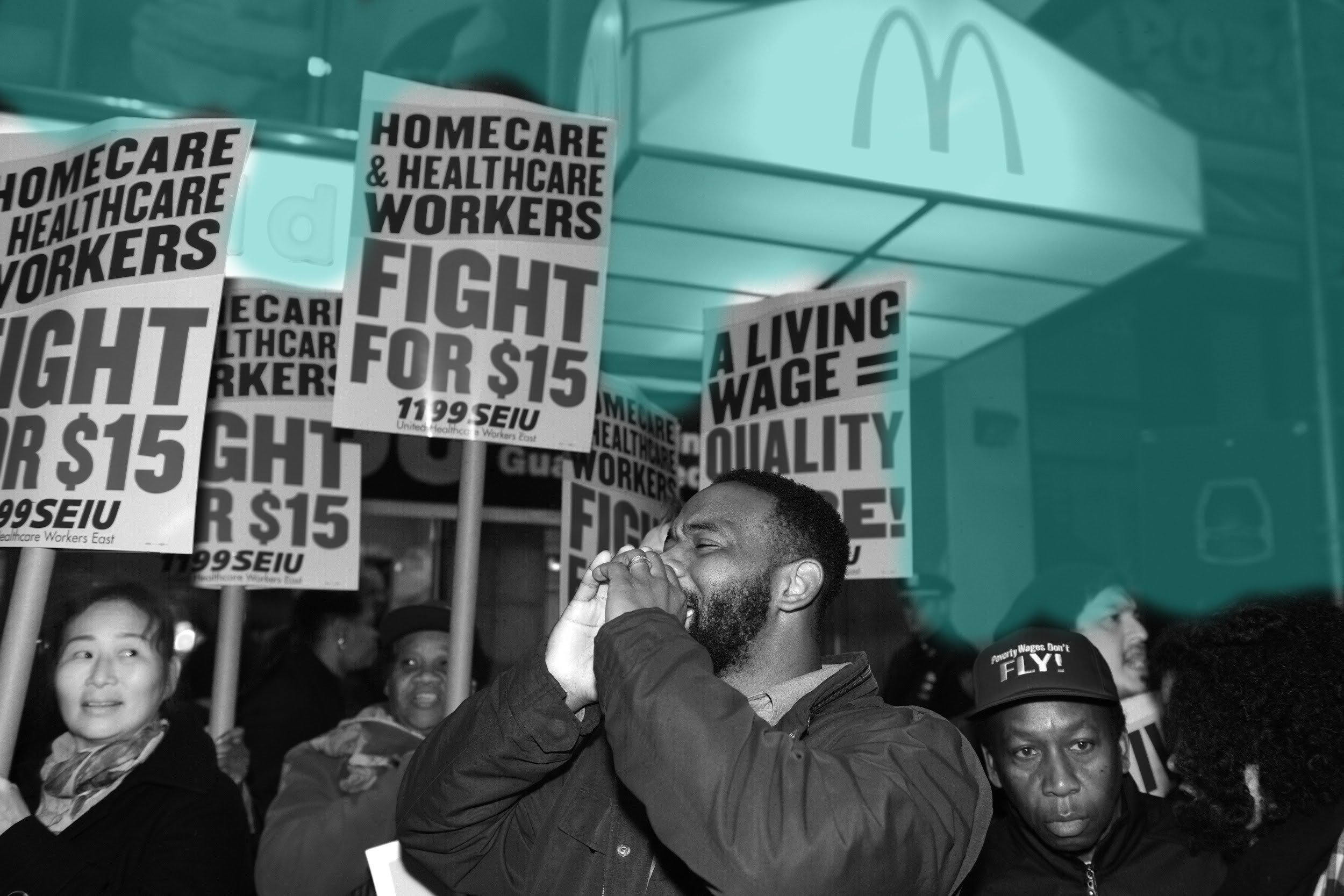
The clearest sign we鈥檙e approaching a new era is the widespread dissatisfaction with the status quo. You don鈥檛 need to be a pollster to see which way the wind is blowing. Americans are deeply frustrated with how democracy is working in the United States.
A few recent polling nuggets will suffice to tell you what you may already know.
- Just 38 percent of Americans say that they鈥檙e satisfied with the U.S. system of government and how well it works. Since 2012, the percentage has fluctuated between 35 and 40 percent, but is down considerably from a recent high of 76 percent in 2002.
- Just 28 percent of Americans say that they鈥檙e satisfied with the 鈥渨ay the nation is being governed,鈥� which is also near a record low. That share was 37 percent in 1971 and 55 percent in 1984. It has hovered between 26 and 33 percent since 2008.
- More than two in three (71 percent) Americans believe that politics has reached a dangerous new low point, and 39 percent of Americans believe that this dangerous new low point is the new normal.
But this dissatisfaction goes deeper still. Americans are also unhappy with their political parties. 鈥淚ndependent鈥� has been the in the United States for almost all of the last three decades, but since 2010, it has pulled away further from both of the two major parties. Even if independents vote like partisans, they are expressing frustration and disengagement with their choice to stand apart from partisan politics.
Given the levels of dissatisfaction with the two parties, it鈥檚 not surprising that Americans want more parties. The share of Americans saying 鈥淎 third party is needed鈥� hit an all-time high in 2018: . Solid majorities of both Democrats and Republicans agree.
As with the desire for more parties, more Americans are open to structural changes now than have been in a long time鈥攑robably in at least 100 years, since the Progressive Era. In a , only 15 percent of Americans said that the U.S. political system is the 鈥渂est in the world鈥� (way down from earlier polling), while another 26 percent said that it was above average, 28 percent said that it was merely average, and 29 percent (almost three in ten) said that it was below average. In the same poll, 61 percent of Americans agreed that 鈥渟ignificant changes鈥� are needed in the fundamental 鈥渄esign and structure鈥� of American government鈥攁 high openness to change.
As with the desire for more parties, more Americans are open to structural changes now than have been in a long time鈥攑robably in at least 100 years, since the Progressive Era.
We鈥檙e not only seeing this craving for change in polls. We鈥檙e also seeing it on the ballots. In 2018, Maine became the first state in the United States to use ranked-choice voting in state-wide elections, re-affirming a 2016 statewide referendum supporting the innovative new voting method, which guarantees majority support for winning candidates, avoids spoiler effects, and can help incentivize compromise and civility in our divisive politics. Now, ranked-choice voting is spreading, with campaigns building in states and cities across the country.
Indeed, wherever political reform was on the ballot in 2018, it . Four states passed independent redistricting commissions, and three passed voter enfranchisement reforms.
Momentum is only growing, and part of it is generational. The new younger political leaders, like Buttigieg, have no nostalgia for an old system that may have once worked, but no longer does. They understand that, despite whatever once existed, there鈥檚 no going back. Only forward.
History suggests that we鈥檙e at an inflection point on the cusp of a new era of reform. In one sense, it鈥檚 right on schedule. As Samuel Huntington notes in his 1981 classic, American Politics: The Promise of Disharmony, the United States goes through periods of reform politics about every 60 years or so: the 1960s, the Progressive Era, Jacksonian Democracy, and the Revolutionary War. In these years, Americans grew disillusioned and discontented with the corrupt status quo, and reform movements spread. New media and expanding participation upended traditional power politics. The.
An era of reform creates opportunities. But, of course, it also creates challenges. The history of political reform is littered with utopianism and unintended consequences. Too often, American reformers have crashed on the shoals of unrealistic expectations, working against, rather than with, the grain of the United States鈥� political institutions, denying the realities of both politics and human psychology, and being unwilling to learn from experience and experiment. And reform skeptics, for their part, have frequently defended the status quo reflexively and unthinkingly, arguing tradition for tradition鈥檚 sake without engaging with reforms or acknowledging the flaws of the existing system.
This, then, is the charge of the years ahead. Now is indeed the time to be bold and ambitious; new ideas indeed demand a hearing. But we must also be realistic and stay connected to deeper traditions that have worked well, but can use some updating. We can鈥檛 ignore history and its lessons, and we must innovate within the confines of familiar truths, including those about human nature itself.
This is no easy balancing act. And as with each era of reform, we鈥檒l get some things right and some things wrong. We鈥檒l over-correct for some past mistakes, and make some new ones in the process. But democracy isn鈥檛 something to perfect or solve. It鈥檚 an ongoing struggle in the still-improbable task of self-governance at a scale and complexity never before known.