The Power of the Local Push for Produce
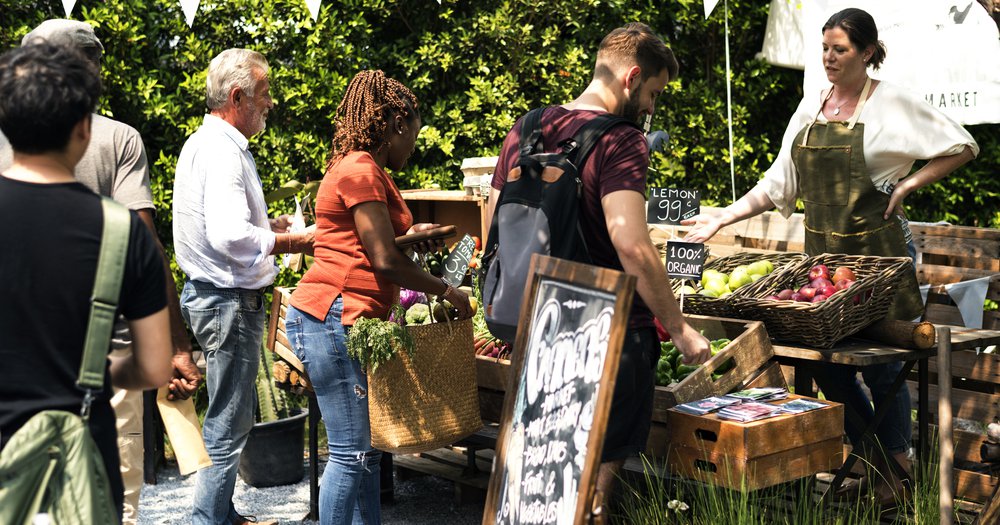
A program in Colorado that allows federal food aid recipients like Tamara Anne to double the amount they spend on locally-grown produce is transforming impoverished families鈥� eating habits. Fittingly, the program is called Double Up Food Bucks.
鈥淢y teenager said to me recently: 鈥淗ey, Mom, I want you to know I really like fruit more now,鈥� recounted Anne, as she plopped reddish-orange Palisade peaches into a cream canvas bag.
鈥淲ith Double Up Food Bucks, we鈥檝e been getting a few starters, and he鈥檚 watching lettuce grow,鈥� she added, as she traversed a farmer鈥檚 market in suburban Denver on a sunny July day. 鈥淚t鈥檚 so crazy. He will even clip it and eat it.鈥�
Anne is one of 5,755 federal-food-assistance recipients who, in 2017, used the program to buy Colorado-grown fruits and vegetables in 96 locations across the state. On top of that, the purchases support local farmers, many of whom grapple with drought and rising costs.聽聽
In the Centennial state, Double Up provides Supplemental Nutrition Assistance Program, or SNAP, recipients $1 for every $1 they spend, up to $20 per market visit per day. Farmer鈥檚 market managers swipe food-aid participants electronic benefit transfer cards and hand them $20 in colorful vouchers and $20 in SNAP benefits to redeem at participating vendors.
鈥淲e鈥檝e seen for rural communities with limited grocery access that the Double Up program works for them to buy at a farm, or pop-up farm stands at head start sites, libraries, or schools,鈥� said Amy Nelms, food access coordinator for LiveWell Colorado, a decade-old nonprofit that runs the Double Up program in Colorado. 鈥淲e鈥檙e getting to a tipping point where local agriculture is accessible to everyone.鈥�
Where did Double Up come from? The Fair Food Network, an Ann Arbor-based nonprofit that strives to increase access to healthy food for low-income families, developed the model for the program after piloting the initiative at Detroit farmer鈥檚 markets in 2009. Today, it鈥檚 available at more than 250 sites across Michigan. In Colorado, the program is two years old. The effort is also offered at hundreds of venues in 25 states that, via support from the network and local partnerships, are helping low-income people choose beets over potato chips.
In addition, both parties in Washington, D.C., also appear to embrace the broader push for produce. The 2014 Farm Bill established the Food Insecurity Nutrition Incentive , or FINI, to help food-aid recipients afford produce, and included $100 million over the course of five years. Both the House and Senate versions of this year鈥檚 farm bill include an expansion of this program, even as some legislators seek to on food aid overall.
Since the United States Department of Agriculture launched FINI, officials have awarded 90 grants to nonprofit organizations and governments nationwide. According to a 2017 by the Farmers Market Coalition, FINI programs generated almost $8聽million in SNAP and incentive purchases of fruits and vegetables at markets in 27 states. The purchases resulted in 16聽million to 32 million additional servings of fresh produce for SNAP households.
Crucially, advocates working to increase access to fruits and vegetables in America鈥檚 report that the growing popularity of Double Up programs is helping curb the $160 billion spent on illnesses related to lack of healthy food like diabetes, obesity, and heart disease.
鈥淪ince 1980 the relative price of fruits and vegetables has gone up 40 percent, and the relative price of processed foods has gone down 20-30 percent,鈥� according to a by the Food Trust, a Philadelphia nonprofit working to improve food access.
鈥淪o while everyone may want to eat well, finances too often limit families鈥� ability to make healthy choices,鈥� the report said.
Of course, this isn鈥檛 to suggest that Double Up has completely extinguished the issue of access to healthy food for low-income families. Despite its success, the program reaches about 640,000 households鈥攁 fraction of the 20 million American that relied on SNAP in fiscal 2018 to provide a safety net against hunger. In Colorado, only one percent of the estimated 475,000 people who rely on food aid benefited last year.
鈥淎 big hurdle for some communities is finding that strong anchor partner who is ready and able to manage the program,鈥� wrote Oran Hesterman, the founder and chief executive of Fair Food Network, in an email.聽鈥淚mplementing incentive programs such as Double Up also requires funding鈥攕o programs can only grow as big and as fast as there are resources available.鈥�
In Colorado, where LiveWell is the anchor partner, dozens of farmer鈥檚 markets and other food outlets are on a waiting list, said Nelms, the nonprofit鈥檚 food policy coordinator. In addition, the program isn鈥檛 offered in more than half of the state鈥檚 64 counties, though the Colorado legislature voted this year to allocate $200,000 to such programs, which could allow them to grow next year, especially if matching grants can be secured, she added.
Despite that, this public-private partnership is a model for others, Hesterman wrote. 鈥淎n exciting trend we鈥檙e also seeing is more states and other local governments coming to the table to add their support to incentives.鈥�
For farmers, Double Up is providing new customers and more money in their pockets from sales at food stalls statewide.
鈥淔armer鈥檚 markets have a reputation of being high priced when compared to stores,鈥� said farmer John Ellis at a local market in Broomfield recently, as the smell of Indian curry wafted through the 100-degree air and a guitarist strummed folk tunes.
鈥淪ometimes prices are higher and sometimes they are not, but the quality is better, it鈥檚 fresher, and you get to talk to the person who grew it,鈥� said Ellis, who added that he will give SNAP recipients an extra peach or extra cherries.
Double Up helped to increase SNAP sales tenfold at the Boulder farmer鈥檚 market, at the base of the Rocky Mountains. Prior to its implementation, SNAP purchases totaled around $10,000 a season, Boulder County Commissioner Cindy Domenico said in a 2017 LiveWell . Now, farmers make more than $100,000 a year in such sales, which benefited 1,000 families.
The program also helps ease the stigma of using food aid at grocery stores, said Dave Carter, a bison rancher who helps manage the all-volunteer Broomfield Farmers Market.
鈥淲e want people when they come here to know there鈥檚 no shame in being on assistance,鈥� he said.
To grow the program, LiveWell is relying in part on participants like Anne who attend community events and visit charitable organizations and other locations where low-income residents come for services to spread the word about Double Up. Anne works as a community food advocate for the nonprofit, as does Laura Molina.
Molina, who is also the market coordinator at the The GrowHaus, a nonprofit indoor farm and education center located in a working-class community in northern Denver, relies on Double Up to feed her three children healthy food.
鈥淚t鈥檚 so great for me鈥擨 can choose organic food for my kids,鈥� she said. 鈥淚鈥檝e tried new things that were too expensive before, like peaches, apricots and cherries.鈥�
For Anne, who works several jobs to pay her bills, Double Up meant that she didn鈥檛 have to rely on the corner store for groceries. There they sell energy drinks and cigarettes, with nary a fresh fruit or vegetable in sight. A vegetarian and single mom, Anne relies on the program to provide the bulk of ingredients in her family鈥檚 diet.
鈥淚 have to go cook! I have a hangry teenager wanting a fresh, healthy meal,鈥� she wrote in an email recounting her visit with a reporter to the Lakewood Farmers Market. 鈥淥n the menu this week, with my purchases from the farmer鈥檚 market: braised taro, sweet potato bruschetta with tomato/avocado topping, taco-stuffed summer squash boats, and cantaloupe juice.聽A feast, for sure!鈥�
Support for this article was provided by RiseLocal, a project of the 国产视频 National Network.
More 国产视频 the Authors
Related
We Live Here

Groundswell: In the Midst of the Pandemic, Pride Perseveres

Groundswell: How to Fight for Black Lives in the Midst of a Pandemic