
Andr茅s Martinez
Future Tense Fellow
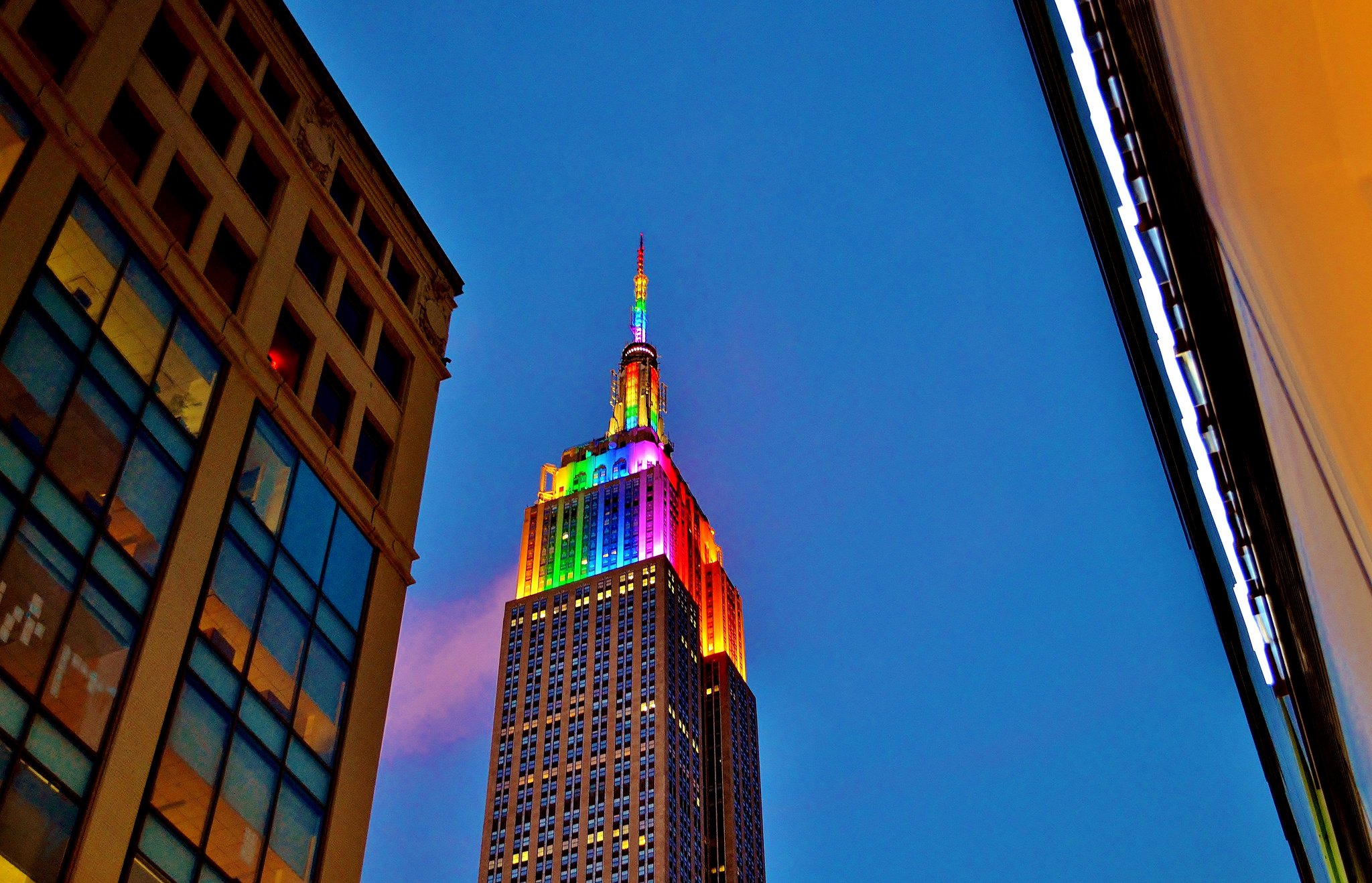
Maybe we would all
benefit if corporations wielded more political power, not less.
Ever since the
Supreme Court鈥檚 Citizens United
decision in 2010, it鈥檚 been fashionable to deplore (with full-on How dare they? indignation) the power of
big business in our political process. But judging from recent events, I鈥檓 more
inclined to regret that corporations don鈥檛 have a greater say in our civic
life.
Seriously. Think
about the recent rash of exhilarating triumphs for once-marginalized
minorities: the U.S. Supreme Court
legalizing gay marriage across the land; South Carolina hastening to lower the
Confederate flag of sedition and racism; a Republican presidential candidate
being ostracized for bashing Latino immigrants.
One of the threads connecting
each of these stories is the presence of corporate America flexing its muscles,
taking a stand against the bullying and discrimination of minorities.
In the landmark
marriage case, a Who鈥檚 Who list of blue-chip companies from Procter &
Gamble to Goldman Sachs signed onto legal briefs urging the justices to strike
down all bans on gay marriage. They argued that such bans conflict with their
own anti-discrimination and diversity policies, and that you can鈥檛 have a
country (and cohesive marketplace) where fundamental rights 鈥� like the right to
尘补谤谤测听
鈥撀犅爒ary from state to聽state.
Even more impressively,
big business mobilized in a number of states over the past two years to defeat
or roll back proposed 鈥渞eligious freedom鈥� laws seen as disingenuous efforts to
legitimize the discrimination of gays. No single company has been more
identified with the effort to stand up to such laws than Walmart, which was
credited with singlehandedly defeating a proposed measure in its home state of
Arkansas. The retailer also joined other prominent businesses in attacking
another such law passed in Indiana, which was subsequently altered.
Business interests
were also instrumental in turning the tide against the Confederacy. The New York Times story on South Carolina
Governor Nikki Haley鈥檚 decision to call for the removal of the Confederate flag
from the State Capitol grounds in the aftermath of the racially-motivated
massacre at the Emanuel Church credited 鈥渋ntensifying pressure from South Carolina
business leaders to remove a controversial vestige of the state鈥檚 past鈥� as one factor
leading to the governor鈥檚 reversal of her previous position.
Arizona is another
state where businesses leaders fought against, and defeated, a religious
freedom law that would have otherwise prevailed. In addition, establishment
Republicans and corporate leaders in the Grand Canyon State have been in full
damage-control mode since the state legislature passed SB 1070, a controversial
anti-immigration measure which proved disastrous to the state鈥檚 brand as a
tourism and investment destination. Subsequently, the business community mobilized
to defeat a number of other, ever more radical, anti-immigrant proposed laws in
the state, and to take on the Tea Party Republicans responsible for them.
At the national
level, the U.S. Chamber of Commerce and other business groups have led the
charge for sensible immigration reform 鈥� though this effort can鈥檛 yet be
checked off as a victory. If only the business lobby had as much power as we
often assume it does! In the meantime, it was gratifying for Latino activists
aligned with business on immigration to watch Donald Trump be fired by corporate
partners like Macy鈥檚, Comcast, Univision, and Disney over his hateful comments
about Mexicans. Turns out, vicious speech denigrating immigrants may be
acceptable speech in certain political circles, but not in the corporate realm.
Some politicians eager
to cater to local prejudices, and capitalize on them, are clearly chafing at
the activism of corporations on behalf of a healthier business climate. This spring,
while pushing for his own religious freedom law, Louisiana Governor Bobby
Jindal practically whined in a New York
Times op-ed: 鈥淎s the fight for religious liberty
moves to Louisiana, I have a clear message for any corporation that
contemplates bullying our state: Save your breath.鈥�
It鈥檚 an interesting line, not
only because he ascribed 鈥渂reath鈥� to companies, doubling down on the
much-mocked pronouncement of then-candidate Mitt Romney that companies are
essentially people, too. Jindal鈥檚 choice of the verb 鈥渂ullying鈥� is deliciously
hypocritical, because in this case (as in the others described above), it was
business rising up to oppose the bullying of people by small-minded politicians.
And
this is the key issue on which I differ from many of my friends and colleagues
in journalism and academia who hold to a reflexively anti-corporate worldview. They
see large, distant corporations as the source of much bullying. I tend to see the
worst forms of bullying arising closer to home: at the hands of local or state
governments, or dominant business interests rooted in one place.
No,
there isn鈥檛 anything inherently virtuous about business leaders. As cynics are
quick to note, the political fights I鈥檝e described here are all about business
wanting what鈥檚 best for business. Companies need to avoid offending existing or
potential customers and they need to be seen as being inclusive and diverse employers
to the best and brightest potential hires out there. I鈥檒l still take those selfish
impulses: If only more governments were similarly motivated, instead of being willing
to marginalize minorities.
Most
business lobbying is admittedly not focused on civic or 鈥渂usiness climate鈥�
issues like the ones I am raising, but rather on narrower, self-interested
agendas of particular companies or industries 鈥� say, to influence the drafting
or application of regulations, or tax laws. Critics resent the billions spent
by corporations and their trade associations in trying to influence the
political process, especially since the amounts they spend dwarf the lobbying
expenditures of everyone else. But lost in the depiction of a monolithic
corporate America pitted against the rest of us, getting its way behind closed
doors, is the fact that a significant portion of those business lobbying
efforts and dollars are essentially engaged in an intramural corporate contest.
It鈥檚 about one industry or company seeking to gain advantage (or a level
playing field, they might say) against a competitor. Those dollars often cancel
each other out. But when the business community does come together to speak
with one voice, on broader issues affecting us all, it tends to play a powerful
and positive role.
Big
business tends to be more enlightened than smaller business interests rooted in
only one place, because the broader your perspective, the bigger your market,
the less tolerant you can afford to be of idiosyncratic regional prejudices. A
company with customers and employees across the country or around the world
won鈥檛 be comfortable choosing as its home a state that embraces symbols
associated with the cause of slavery, or one that passes laws that treat gay
couples as second-class citizens or one perceived to be harassing foreigners. It鈥檚
no accident that commerce across state lines has always been one of the great
motors of progress in this country, and not just economic progress.
That
is also why trade agreements that seek to harmonize norms across borders are as
beneficial to individuals as they are to big multinationals. The prospect of
joining the European Union (and attracting investment by large foreign
companies) forced governments across Eastern Europe to protect the rights of
long-oppressed minorities. As much as Elizabeth Warren and her protectionist
allies have attacked President Obama鈥檚 proposed trade deal with Asia as a sop
to big business, the agreement will help strengthen civil society and
individual rights in these countries for precisely the reasons these critics
attack it 鈥� by standardizing norms of behavior across jurisdictions.
Bigotry,
and the disregard of people鈥檚 rights and dignity that comes with it, don鈥檛
travel well. And they鈥檙e bad for
business.
This article originally appeared in. 聽
Future Tense Fellow


