Maresa Strano
Deputy Director, Political Reform Program

As the last summer heatwaves push DC residents indoors, grateful for air conditioning's cooling relief, it鈥檚 worth remembering that some of the most influential shifts in American politics began with small, almost unnoticeable innovations. , for instance, began as a solution to a specific problem in a Brooklyn printing shop but ultimately reshaped where people lived and how they voted, particularly for the Sunbelt.
Similarly, multiple innovations to our electoral system promising to change the political landscape are gaining traction in the U.S., most prominently, ranked-choice voting (RCV). RCV might seem like a minor tweak at first glance, but it holds the potential to make our elections more civil, our democracy more resilient to extremist threats, and unlock possibilities for more transformative reforms.
In a nutshell, ranked-choice voting (RCV) allows voters to rank candidates in order of preference rather than choosing just one. In its single-winner form, if no candidate wins a majority of first-choice votes, the candidate with the fewest votes is eliminated, and those votes are reallocated to their next choice until a candidate secures a majority. This small change increases the likelihood that the winning candidate has broad support across the electorate and eliminates the "spoiler" problem that villainizes third-party candidates and can lead to less representative outcomes.
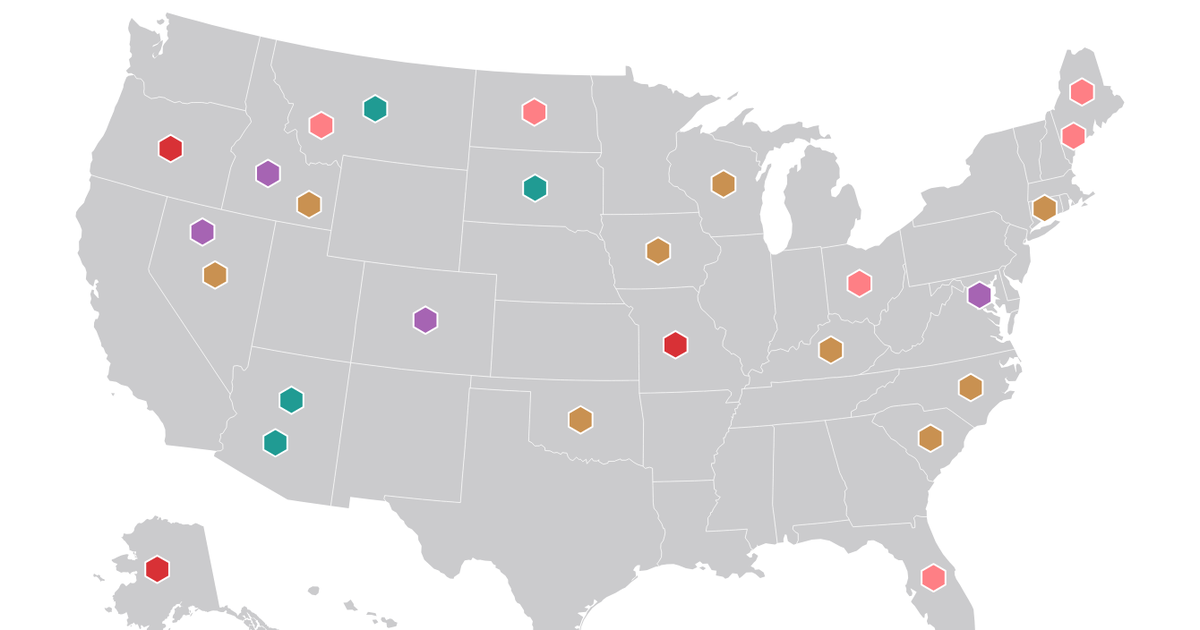
RCV is the hottest voting reform on the scene. It has already been implemented in two U.S. states (Maine and Alaska) and , including New York City, Minneapolis, and San Francisco. (Notably, the proportional form of RCV will be this year.) Trends from RCV jurisdictions include , more and more moderate winners鈥攕uch as Sen. Susan Collins of Maine and Sen. Lisa Murkowski of Alaska鈥攁nd higher turnout in cases where RCV is used in and where primaries and general elections are into one ranked-choice election.
In 2024, the RCV map could , with states like Colorado, Idaho, Nevada, Oregon, and Washington D.C. all considering its adoption. Some of these ballot initiatives will combine RCV with open primaries鈥攁 reform model that has already proven successful in Alaska. Known as Final-Four/Five Voting (FFV), this system allows all voters, regardless of party affiliation, to participate in primaries, with the top-X candidates advancing to a ranked-choice general election. While it鈥檚 still early days, the first few rounds of FFV in Alaska have led to more participation and competition among candidates, and effectively sidelined more extreme candidates like Sarah Palin.
Political reformers see every election as an opportunity to improve how our democracy functions. However, the 2024 election cycle feels particularly pivotal. The U.S. is facing unprecedented levels of political polarization, and, as a growing number of political scientists recognize, America鈥檚 first-past-the-post voting method often exacerbates this division by a binary, zero-sum approach to elections and governance. Much like how air conditioning cooled the American South, including our nation鈥檚 capital, ranked-choice voting offers a way to lower the temperature of over-heated campaigns and promote a more inclusive, less toxic political process.
But for RCV to have a chance of making a significant impact, voters outside of progressive strongholds and additional states must be open to change. The history of American politics is full of examples of once-radical ideas becoming mainstream across the ideological and partisan spectrum, from women鈥檚 suffrage to Social Security to the direct election of senators. First-past-the-post voting, which has long been the default in the U.S., is not in the Constitution, nor is it essential to our political culture; it鈥檚 a system that can and should be reformed if it no longer serves the public good. Despite this and well-established problems with plurality rules, several conservative states have responded to the momentum for RCV by preemptively banning the system, including Louisiana, Alabama, Mississippi, Oklahoma, and Kentucky.
RCV is no panacea, of course, and reformers should be careful to manage voters鈥� expectations. While the RCV promises a vast range of benefits and represents an improvement over our antiquated first-past-the-post rules, its broader impact on U.S. politics remains uncertain. The report What We Know 国产视频 Ranked-Choice Voting, which I co-authored with Lee Drutman, provides a comprehensive overview of the RCV research. We found support for advocates鈥� claims that voters generally understand how to use ranked ballots and appreciate the greater choice, and that RCV may help minority and moderate candidates. Crucially, RCV is designed to incentivize candidates to seek broader support, often leading to and constructive campaigning鈥攊n contrast to the scorched-earth tactics that characterize many elections in this era of hyper-partisan polarization. RCV also appears to be most beneficial when used in partisan primaries (a la New York City), nonpartisan races, and for single offices like president and U.S. senator.
However, RCV鈥檚 impact on political polarization and the quality of governance in the U.S. is still unclear, largely because it has only been implemented in a limited number of places. There are also concerns about perceptions of fairness in instances of 鈥渃ome-from-behind鈥� victories, wherein the winner is not the top vote-getter in the first round of tabulation. This doesn鈥檛 happen frequently, but it can cause frustration and backlash against the system, for example when Jared Golden (D) came from behind to defeat incumbent Bruce Poliquin (R) in the 2018 race for Maine鈥檚 2nd Congressional District. Finally, even without the spoiler risk, RCV has not led to many third-party wins.
Overall, while RCV has many positive effects in theory and in overseas usage, the practical benefits of RCV in the U.S. have been somewhat limited and difficult to measure so far, an obstacle for researchers that could soon be overcome if more states approve the system this November.
As more states and cities consider adopting RCV in 2024, we have the opportunity to embrace (or if you鈥檙e an Alaskan, defend) a modest reform that could make campaigns a little less fraught, and even open the door to more transformative reforms like proportional representation. Just as air conditioning quietly transformed American politics, ranked-choice voting could pave the way for a healthier democracy鈥攚here more votes truly count, and leaders better reflect the will of the majority, not just a passionate minority.
Deputy Director, Political Reform Program