Chayenne Polim茅dio
Fellow, Political Reform Program
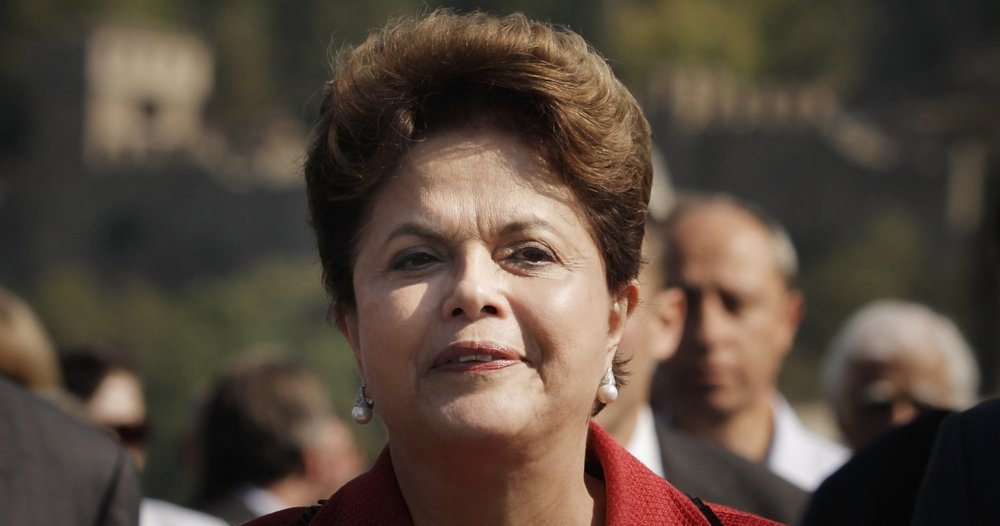
It鈥檚 over. As of August 31, 2016 Dilma Rousseff is no longer president of Brazil. In a vote of 61-20, the Senate decided the fate of the first woman Brazilians ever had as president. For , the impeachment process that removed President Dilma Rousseff from office was legitimate. And her in effort to hide Brazil鈥檚 mounting economic problems was an impeachable offense. For , her removal is conceived as a concerted effort鈥攁 coup, even鈥攂y the Brazilian political elite to remove an innocent and democratically elected president.
Pundits have made their bets on what Rousseff鈥檚 removal means for the future of Brazilian democracy; some are more than . But should we be betting on Brazilian women in shaping political future?
It is almost impossible to overstate the importance of Brazilians electing a woman as their president for the first time ever in 2010. In a highly paternalistic and ultraconservative society, one in which inequality permeates every sphere of a woman鈥檚 life鈥攆rom how she can dress and speak to what jobs she can and should hold鈥攈aving a woman who managed to get past all that and be elected to the highest office in the land was a feat. To put that in context, in the World Economic Forum鈥檚 , which tracks the magnitude of gender-based disparities shows Brazil in 85th place, compared to the United States鈥� 28th. Rousseff defied all the odds: she had never held political office; she did not have a traditional path into her political career; she was divorced. She defied all the traditional musts that one had to have in order to be considered fit to run for office. It almost seemed like she had done it: she had broken the glass ceiling (sound familiar, United States?).
If that had been the case, or that had been the story, you could have stopped reading here. But it wasn鈥檛. Rousseff is out of office, and is so ingloriously. The ceiling still stands. And we are back to where we were before Rousseff.
And where is that? Women have always been underrepresented in Brazilian politics. They face structural barriers and overall prejudice to their participation in politics. They are deemed less capable than men to perform certain tasks, and as lacking the necessary connections to be effective and successful leaders. And while there are many examples of women who have overcome these barriers (some of the most prominent ones include Rousseff herself and , who also ran for president in 2014), the overall picture is still pretty bleak.
Representing roughly 52 percent of Brazil鈥檚 electorate, women makeup of its Congress. This number is comparable to that of , for example鈥攕ome of the countries most unequal in terms of political participation. In an effort to change that, a Constitutional provision established in 1997 has ensured some modicum of gender parity in political participation through affirmative action, requiring that of all candidates in a political party, 30 percent of them ought to be women.
In theory, this is sounds like an acceptable provisory solution to the problem, if it were actually enforced. Sadly, but not surprisingly, when political parties are not able to find loopholes in the legislation so that they do not have to get 30 percent representation, they find stooges鈥攚omen without any real prospect of winning鈥攖o occupy those spots. In addition to this quota never having been filled, women鈥檚 share in the lower house of Congress has gone up by only in the last two decades. According to the , Brazil ranks 143rd in the world women鈥檚 participation in single and lower houses of parliament, below places like Syria and the Democratic Republic of the Congo.
On top of these structural barriers, there is also a remarkable difference in the way the media chooses to portray women in politics, often negatively highlighting characteristics of their personalities that are hardly ever deemed negative when ascribed to a man. Rousseff, for instance, has been as possessing an autocratic persona and a short temper鈥攖raits that could easily be interpreted as 鈥渃onfident鈥� and 鈥渘o-nonsense鈥� if one were speaking about a male politician.
All this is to say that running for office, let alone getting elected and being able to do the job, is a triumph for a woman in Brazil. Brazilian women, than our American counterparts, face considerable barriers to considering running for office and getting their names on the ballot. Unless you are a high profile female candidate, you are unlikely to be able to raise any money on your own. And if you do, then you ought to be able to juggle your work life and your responsibilities of wife and mother鈥攖asks that most male politicians don鈥檛 need to worry about.
This matters because low female representation in Congress tends to lead to policies that fail to reflect and account for the needs of roughly half of the Brazilian population, according to , a researcher at the Universidade de Sao Paulo. Issues that that are currently only being seen through the eyes of a male-dominated Congress would be highly, and positively, impacted by a legislative body more representative of the makeup of Brazil鈥檚 electorate. Over the last couple of years, for example, the National Congress considered bills that would criminalize abortion in all circumstances, threatening to significantly set back women鈥檚 sexual and reproductive rights. In Brazil, a woman can go to prison for if she has an abortion. Interestingly, the pro-choice movement has been in the country, but the policy discussions that are taking place seem to contradict that. Rousseff鈥檚 presidency had the potential to change all of that. But it didn鈥檛. It won鈥檛. And so her supporters have taken to the streets in an attempt to make their voices heard about the unconstitutionality of the impeachment, but also about how her ouster is simply a reflection of that has permeated Brazilian society. Michel Temer, Brazil鈥檚 new president, has already made changes to his cabinet, which now is .
We may never know for certain what really happened with Rousseff, or the extent to which her impeachment was deserved. What we do know, however, is that the slew of barriers that Brazilian women face when entering political life are very much real. And while no one is arguing that we should elect women just because they are women鈥攖he women and the men we elect deserve their office because they were successful in proving themselves to be the best and most competent people for the job鈥攂ut measures that ensure gender equality both structurally and culturally must be put into place and enforced. That way, when Brazilians decide a woman is unfit for office, we will at least know that it is because she failed at her job, and not because we decided she wasn鈥檛 good enough by virtue of her gender.
Fellow, Political Reform Program