
More than turning wrenches: Centralia College uses applied baccalaureate programs to prepare the next generation of diesel technicians
One of only four programs of its type, Centralia's applied bachelor's in diesel technology strikes the right balance of breadth and depth in academic and industry-focused higher education.
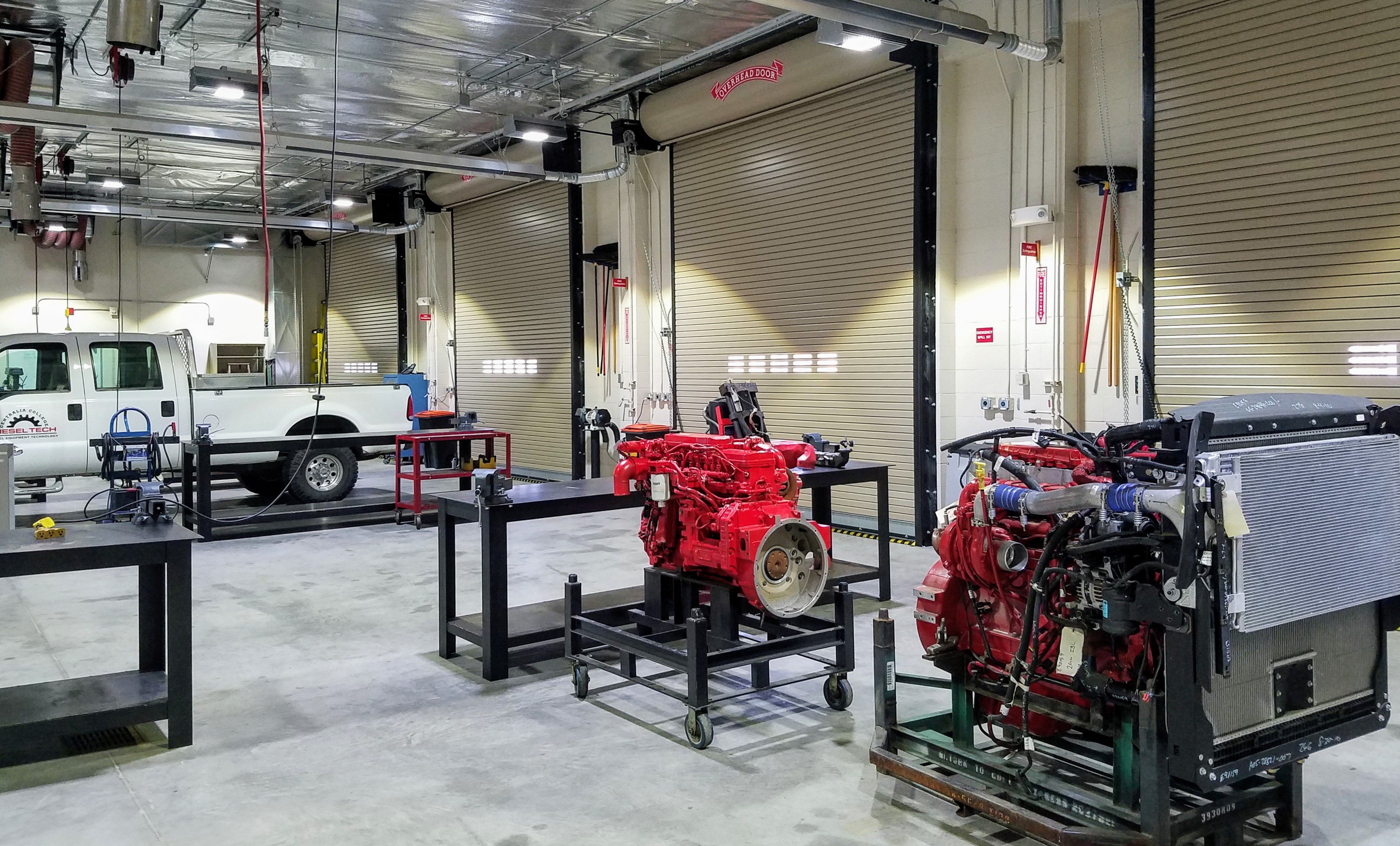
鈥淚鈥檝e had very few moments in my life where it just clicked,鈥� says 23-year-old Taylor Overhoff. 鈥淚t kind of sounds corny, but I knew that this was what I wanted to do in my life.鈥� The moment came when he walked into the diesel technology shop at Spokane Community College in eastern Washington state. 鈥淚t was the smells, the feeling, the atmosphere鈥攁nd the students, they looked like they knew what they were doing,鈥� he says. 鈥淚 knew I wanted to be part of that.鈥�
Diesel engines power much of the heavy machinery that delivers the comforts of modern life. But as widespread as diesel engines are, the average American might struggle to explain their rudiments: how they differ from gasoline engines, for example, or how their two- and four-stroke variants work.
For a diesel technician who knows what they鈥檙e doing, however, these basics are just the tip of the iceberg, especially as diesel technologies expand and evolve. Mechanics can no longer simply 鈥渢urn wrenches鈥�: they must know the ins and outs of emissions standards, electronic engine control modules, and modern biofuels. So must diesel professionals in a wide array of roles in management, sales, and testing and quality assurance.
Now a student in Centralia College鈥檚 Bachelor of Applied Science in Diesel Technology (BASDT), on the other side of Washington state, Overhoff and his classmates will be prepared to move into and between lucrative positions doing any of these jobs. One of only four diesel technology bachelor鈥檚 degree offerings in the United States, Centralia鈥檚 program has distinguished itself among both students and employers, who come from as far afield as Montana and central California to train and recruit.
There are many more diesel technology associate degree programs out there鈥攁t least 300 nationwide, according to the National Center for Education Statistics鈥檚 College Navigator. So why did Centralia create a bachelor鈥檚 program? And why do students like Taylor Overhoff鈥攁nd major diesel tech employers like Caterpillar, Kiewit, and W盲rtsil盲鈥攃hoose it over the others?
A new degree for a changing field
The Great Recession fell hard on many diesel technology companies, and especially on younger technicians in the talent pipeline. 鈥淭hey went and retrained, and found other professions,鈥� says Centralia professor Tyson Lucas. 鈥淭hat left a gap between the senior techs who stayed on and the new techs who came in from 2010 onwards. Just that couple-year gap made a huge impact鈥攜ou鈥檙e talking about a ten- to fifteen-year age difference between junior and senior techs.鈥� Now, like many industries, diesel employers face a human capital crunch ahead of a wave of retirements.
As they work to fill the post-Recession talent gap, employers increasingly want diesel technicians with more advanced educational credentials, namely bachelor鈥檚 degrees. Currently, about three percent of diesel technicians have bachelor鈥檚 degrees, according to Prof. Lucas, but many companies now aim for ten percent.
Prof. Lucas attributes this partly to the evolution of diesel technologies. A Centralia-trained diesel technician himself before beginning his teaching career, Lucas noticed that many similarly trained new hires 鈥渏ust didn鈥檛 have the basics鈥� that his BASDT students learn over their additional two years of study. But broader technical skills aren鈥檛 the only advantage of the bachelor鈥檚 program鈥攇eneral education coursework adds value, too. 鈥淭here鈥檚 a lot of writing involved in our trade, and you need to be able to write fluently and correctly,鈥� says Overhoff. 鈥淚t can鈥檛 just be: 鈥榊our engine blew up.鈥欌��
Located halfway between Seattle, Wash., and Portland, Ore., Centralia College was well-positioned to respond to the surge in demand for highly-trained diesel technicians along the west coast. As required by Washington state law, the diesel technology bachelor鈥檚 program built on an existing applied associate degree. When the program launched in 2014, Centralia already had many of the facilities and instructors necessary to teach more advanced topics in diesel technology.
It had also cultivated a tight-knit, multi-state employer community, which has continued to invest in student success. Montana-based Modern Machinery employs transfer students part-time, and provides tuition reimbursement for their bachelor鈥檚-level coursework at Centralia. Pap茅 Machinery, another large regional employer, recruits BASDT graduates into a fast-track management pathway that starts with a two-year company-wide rotation and a $60,000 salary.
The right pick for a long career in (and out) of the shop
Taylor Overhoff says he looks forward to similar career opportunities once he graduates, and is effusively appreciative of his teachers and classmates. Like many of the other eighteen students in his cohort, he came a long way to pursue the diesel technology bachelor鈥檚 at Centralia.
A Spokane native, Overhoff knew in high school that he wanted a four-year degree. After starting a four-year IT program, though, he realized coding wasn鈥檛 for him, and he switched to Spokane Community College's applied associate in diesel technology following his "click" moment in the diesel shop. A visit from Jake Fay, dean of instruction for healthcare and industrial trades at Centralia, finally led Overhoff to the BASDT.
Centralia is a five-hour drive across the state from Spokane, but was still the closest option for Overhoff. That was an important factor: Overhoff鈥檚 infant son and his girlfriend, who is also finishing college, are still in Spokane. Overhoff returns for weekend visits every second Friday, and plans to move back when he finishes his program in 2020. Though there aren鈥檛 nearly as many jobs for diesel technicians in Spokane, Overhoff is confident that he鈥檒l be able to land one with his BASDT.
He鈥檒l also have a better chance of spending his whole career working in the diesel industry he loves, even if he stops working as a technician. That鈥檚 a reality that aspiring diesel technicians must confront. 鈥淚t鈥檚 common in most shops to see one or two mechanics who are 50 to 60 years old, who can鈥檛 hardly walk but can鈥檛 leave the shop because they don鈥檛 have the skills to do anything else,鈥� Prof. Lucas says. Lucas, who is in his thirties, had his own career as a diesel technician cut short by nerve damage in his right hand鈥攈is wrenching hand.
Whether or not Overhoff and his family move again, and however long he stays turning wrenches, he can rest assured that his bachelor鈥檚 degree will carry him in the job market. With the right mix of general education and in-depth technical knowledge鈥攁nd support from a dedicated community of educators and industry partners鈥擟entralia鈥檚 applied bachelor鈥檚 program is setting up Overhoff and his classmates for career success in diesel technology, wherever or whatever the job may be.
Enjoy what you read? Subscribe to our newsletter to receive updates on what鈥檚 new in Education Policy!
More 国产视频 the Authors
Issues
Programs/Projects/Initiatives
Topics
Related

Gender Equity in High-Quality Youth Apprenticeship: A Deeper Dive into the PAYA Data

21 States Submitted Combined WIOA-Perkins Plans. Will This Lead to Systems Change?

Unraveling the Case for Credentials in High School
