
Waiver Watch: The Real Lessons Learned from the Senate Waiver Hearing

Tuesday was a big night for 听补苍诲 . But what about all the education that happens in between? were mentioned once, but in the context of deficit reduction, not education. No Child Left Behind (NCLB) and fared even worse, with nary a word. But never fear, waiver watchers got all the they needed last week from the Senate HELP Committee and Council of Chief State School Officers (CCSSO). In a and subsequent CCSSO , policymakers and experts debated the from the waivers and implications for a near- or distant-future NCLB reauthorization.
For those following the waivers, however, the hearings were largely a disappointment 鈥� offering few specific insights from year one of implementation. ? Still a possibility. are diluting accountability? Old news. If anything, the discussions mirrored 聽the HELP Committee聽聽over a year ago in its attempt at ESEA reauthorization. In fact, we learned more about reauthorization鈥檚 prospects than we did about the waivers. The hearing may have promised 鈥渓essons learned,鈥� but those lessons depended entirely on who you asked:
Secretary Duncan聽鈥� obviously 鈥� is a big for the , as opposed to working with Congress on a reauthorization: 鈥淢y team and I put in hundreds and hundreds of hours in what proved to be a fruitless effort over the past two years. In all candor, I would like to have gone to waivers earlier.鈥� He highlighted how states are focusing on subjects beyond math and reading, how more schools are being held accountable for student subgroup performance, and how states are promoting teacher quality, instead of credentials.
Although giving states options has benefits, not all states made good choices. As 聽later, what do waivers look like in the hands of not-so-great state chiefs? Many declined to take advantage of new measures of student growth or postsecondary readiness. Worse, states often backtracked on plans to strengthen graduation rate and subgroup accountability, concerns highlighted by the and .
Democratic Senators and their allies, including Education Trust鈥檚 , are no fans of NCLB, but have still with many of the features emerging in states鈥� waivers: super-subgroups, uneven goals that do not close achievement gaps and are not linked to any consequences, toothless school improvement policies, and more. Unfortunately, these groups are pointing out flaws in states鈥� waivers, but offering fewer solutions to fix them.
One option is for the Department to require states to amend their waivers if they don鈥檛 sufficiently meet the needs of vulnerable students (states can also voluntarily do so, with Department approval). But chiefs, like New Jersey鈥檚 Chris Cerf and Kentucky鈥檚 , aren鈥檛 keen on the idea of mid-course corrections and more negotiations with ED. Given their reluctance and about how to monitor waivers, it seems unlikely that states will make significant changes. This doesn鈥檛 mean policymakers won鈥檛 learn anything from the waiver experiment, but it may take years for these lessons to be applied.
Another option is to push strongly for reauthorization. But this carries risks for civil rights groups given the preference for local control and even more state flexibility among Republican legislators, state chiefs, and governors. While HELP members like Senators Tom Harkin (D-IA) and Michael Bennet (D-CO) spoke of reauthorization, they appear unable to offer any new solutions that would present a departure from NCLB, recognize the concerns of the civil rights community, and maintain a strong federal role in education.
State schools chiefs, however, are advocating for reauthorization, but for a variety of reasons. First, they point out that many states do not have waivers. To New York Commissioner , this means there is no 鈥渇loor鈥� for state policy to safeguard against poor decisions. Alternatively, Holliday cited the need for long-term stability, because the waivers are subject to the Secretary of Education鈥檚 priorities. Regardless, would welcome a new NCLB that maintains 鈥� or expands 鈥� flexibility. And most likely, the level of flexibility in the waivers would be the default starting point for any reauthorization right now. Lawmakers would receive incredible pushback if a new NCLB required states to dramatically alter the plans in which they鈥檝e already invested a great deal of time, energy, and resources.
Republican Senators聽appear to be aligning most closely with the chiefs on reauthorization 鈥� less so in supporting waivers. Senator Lamar Alexander (R-TN) equated the waivers to an inside-the-beltway version of ‘Mother May I,鈥� while Senator Pat Roberts (R-KS) lambasted the 鈥渞egulatory purgatory鈥� the Department created. In particular, Alexander was adamant that the government should not require states to adopt teacher evaluations based on student achievement. In one exchange with King, Alexander pressed: 鈥淲e only give you 10 percent of your money. Why do I have to come from the mountains of Tennessee to tell New York that鈥檚 good for you?鈥� But despite Alexander鈥檚 strong opinions, there is no consensus among the minority either 鈥� Senator Johnny Isakson (R-GA) seemed quite pleased with what his state accomplished in their waiver.
In short, reauthorization has not stalled because the waivers are popular. Rather, Republicans cannot make a strong-enough case for the level of local control many in their caucus seek, and Democrats prefer the temporary waiver policy to a decade of local control with little federal oversight. Without a clear alternative to NCLB that also provides a strong, compelling case for federal involvement in education, waivers really are their best choice.
The silver lining, as pointed out, is that with another year, or two, or three of waivers, some actual lessons might emerge that could inform and transform the thinking of those who seek a stronger federal role in K-12 policy 鈥� and those that don鈥檛. We鈥檒l be watching for them. Stay tuned.
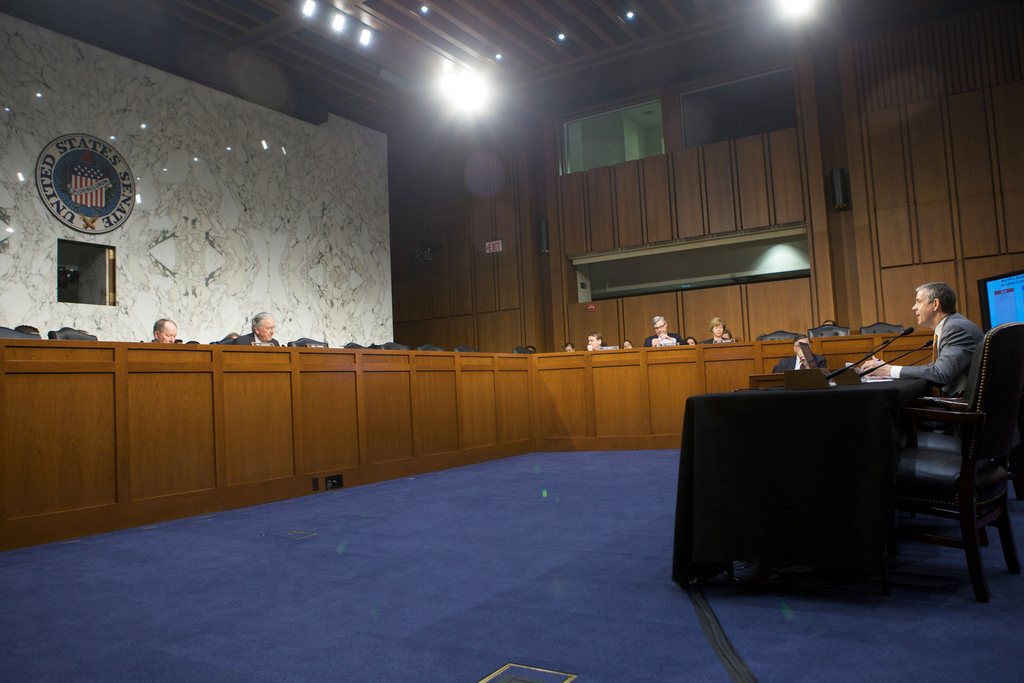
Official photo by Leslie Williams.
Issues
Related

Children Belong in School Learning, Not Left to Languish in ICE Detention

A National Review of Early Childhood Cost Models: Findings on Children with Disabilities and Developmental Delays
