What Does the Teddy Bear Say?
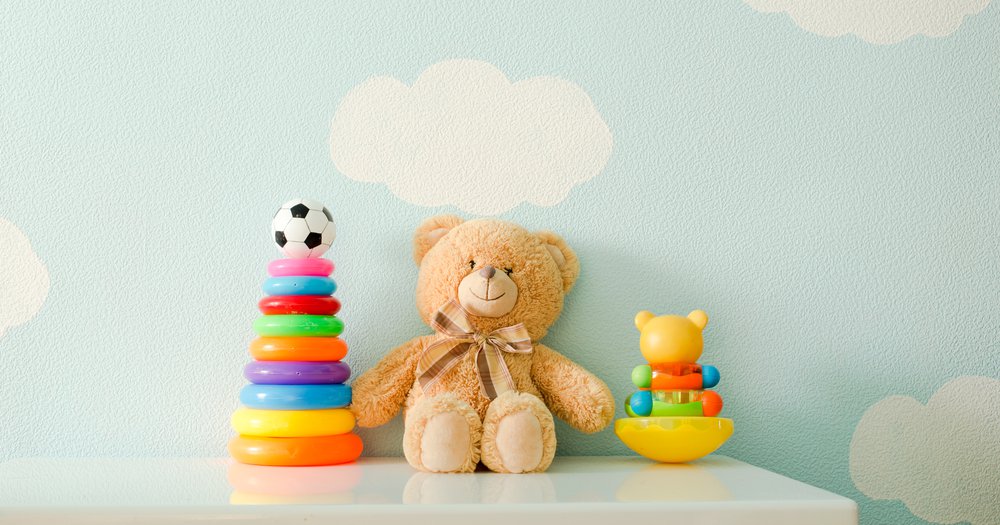
Imagine it鈥檚 the week before Christmas 2016, and you want to buy a gift for your grandchildren. Because you live across the country, you don鈥檛 get to see them very often. But, of course, you don鈥檛 want them to miss out on having you in their lives. Fortunately, you see an advertisement for a teddy bear鈥攖he sort of holiday gift you know that your grandchildren will love.
It looks like a standard-issue teddy bear: furry, brown ears; a soft, round belly; wide, playful eyes; and a big, bright smile. But it differs in one crucial way. This stuffed animal, known as a , connects to Wi-Fi, which allows your grandchildren to hear the exact messages you record for them repeated back each time they squeeze the toy鈥檚 foot.
You don鈥檛 give this feature a second thought until February 2017, when you鈥檙e that nearly 2.2 million voice recordings have been exposed, . You suddenly realize that the messages鈥攖he voices of your young grandchildren鈥攖hat you thought were private are now available to the whole world. But this frightening incident isn鈥檛 unique. Rather, it鈥檚 just one example of the increasing vulnerabilities of insecure Internet of Things (IoT) devices in today鈥檚 connected world; by 2020, these devices are estimated to reach . As a result, it鈥檚 crucial that consumers know what鈥檚 at stake, especially for children, when using even the most mundane of IoT items.
While simple and sweet on the outside, CloudPets, which were discontinued after the breach became public, actually contained some complex technology. Using a mobile app, users were instructed to record messages, stories, lullabies, and songs with their cell phone. A third-party service, MongoDB, stored the messages on a database, and then replayed them through the CloudPet鈥檚 speaker when activated. Children, too, could return messages using this process.
The breach was apparently possible because MongoDB stored the data in a public-facing network鈥攐ne that didn鈥檛 require authentication to access鈥攎aking user information accessible to hackers. On top of that, since a complex password wasn鈥檛 required, hackers could easily guess the most common ones鈥斺�渜werty,鈥� 鈥減assword,鈥� 鈥�12345鈥濃�攁nd log into accounts. While Spiral Toys, CloudPets鈥� parent company, claimed to have been made aware of the breach only in February 2017, Troy Hunt, the researcher who verified the breach, that someone who鈥檇 tipped him off had attempted to contact the company about the breach multiple times but got no response. 鈥淯nfortunately, this one was ridiculously easy,鈥� Hunt said of the incident to the . 鈥淭he company that runs the service left their database public on the internet without a password and people found it. It was that simple.鈥�
For several reasons, attacks against children鈥檚 devices are especially dangerous. First, while security is a serious concern for most parents and many feel confident using parental-control settings, surveys suggest that consumers are they can take to ensure the privacy of their families. Moreover, despite the growing vulnerability of data, the general public still lacks nuanced understanding of IoT鈥檚 , and even what the . This knowledge gap, in turn, puts everyone, particularly children, 聽at risk.
Second, children can鈥檛 grant consent to have their data collected. Under the , companies that direct their online services鈥攕pecifically, services that 鈥渃ollect, use, or disclose personal information from children鈥濃�攖o children under the age of 13 must first obtain verifiable parental consent. But in light of recent privacy breaches, it鈥檚 clear that the government ought to require makers of children鈥檚 products to take additional steps to safeguard children鈥檚 data and privacy.
And third, relatively small and new manufacturers of items like toys are often ill-equipped to securely manage data from internet-connected devices. Connected products are a growing market, and soon everyday devices鈥攖oys, yes, but also irons, microwaves, refrigerators鈥攚ill be able to store terabytes worth of data, from our addresses and phone numbers to conversations we have in these items鈥� proximity. Consumers will undoubtedly have concerns about how companies respond to these technological trends, and it鈥檚 important that they take them seriously.
As I mentioned above, the galling truth is that CloudPets scenario isn鈥檛 a unique one. There have been multiple examples of connected toys that have had similar security vulnerabilities, which have typically been made possible via unsecured wireless and Bluetooth connections, poor data privacy policies and protections, and sharing data with third-parties.
For instance, in 2015, researchers that Mattel鈥檚 latest version of the Barbie doll, , was easily hackable for surveillance purposes. Hello Barbie converted voice requests into text via a third-party and then submitted this data to a search engine to generate responses. When connected to the internet, researchers found that hackers could access users鈥� account information, stored audio files, and the microphone to communicate with and listen to the child.
More recently, and much like Hello Barbie, German authorities in 2017 learned that , a popular internet-connected doll, any Bluetooth-enabled device within 10 meters to access the doll鈥檚 microphone and speaker. This gave anyone within that range the ability to electronically interact with the child using the doll. My Friend Cayla would respond to user requests and questions using voice-recognition technology. The third-party voice recognition software, Nuance Communication, would convert voice into text, and then transmit these requests to Google Search, Wikipedia, and Weather Underground.
In all that is an important warning: that consumers, in profound ways, ought to be careful when evaluating the privacy and security of the internet-connected devices they bring into their homes. The , an open-source testing regimen created to evaluate these aspects of these devices, is one tool to help with that. The ratings magazine, Consumer Reports (which helped develop the Digital Standard), has used it to test a series of smart TVs for security vulnerabilities, like those that were found in CloudPets and My Friend Cayla. The goal is to provide consumers with information about the security and privacy of new products so that they can make safe buying decisions, and to encourage companies to follow best practices.
Or, to put it back in terms of toys, the next time you think about getting your grandchildren a teddy bear, you should be able to feel a bit more confident that your gift doesn鈥檛 unknowingly allow others to eavesdrop on the conversations you鈥檙e having in the privacy of your home.
This piece is from 鈥�Raising the Standard,鈥� the Open Technology Institute鈥檚 project aimed at helping to address patterns of connected device insecurity, and collecting feedback about the Digital Standard.
More 国产视频 the Authors
Issues
Programs/Projects/Initiatives
Related

Take Back Tech鈥擴nderstanding How Surveillance Culture Impacts Advocacy