
White Parents, It’s Your Turn to Carry This Burden
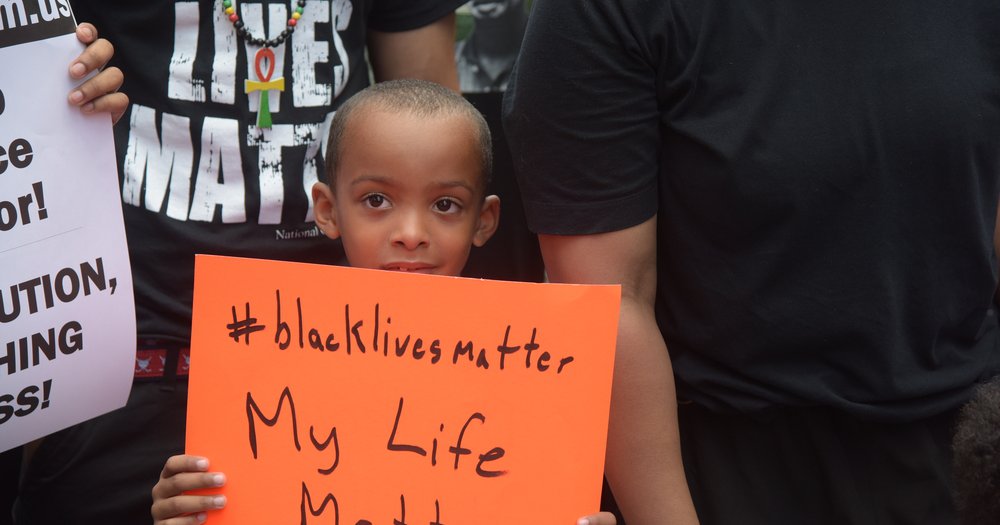
I date myself with a reference to Rodney King, and I do so intentionally. I was fourteen when he was brutally beaten by LAPD officers; I had no thoughts of kids, or how a parent protects them. But in households around the country, Black parents were having 鈥溾�� with their children鈥� an intense, high-stakes training on the realities of racism鈥� in the hopes of inoculating them against disproportionate police targeting and brutality.
My oldest child is now seven years old. A few nights ago, we discussed George Floyd鈥檚 death. Even with my high-level, simplistic explanation, he understood and was brought to tears. He thought at first that I was speaking of the past, and I could see the fear on his face when I explained that this wasn鈥檛 鈥渂ack then.鈥� He asked a lot of tough questions about hate and racism, and ended by telling me he wants to leave the United States. He was terrified.
Like my son, I am deeply afraid鈥攁nd it鈥檚 based on a lifetime of experience. The week that California schools closed to accommodate shelter-in-place orders, parents in my son鈥檚 class were scheduled to meet with the teacher, principal, and district leaders to discuss four instances of the use of the N-word in my second grader鈥檚 classroom. A 鈥渇riend鈥� once told my son that he was his slave. And when he was just four, another parent at soccer practice called my son 鈥渧iolent and hostile鈥� for raising his voice slightly鈥攚hile his blonde-haired teammate, who was speaking in the same way, was simply 鈥渙vertired.鈥�
I try not to let my anger in these instances or fear for my son鈥檚 future paralyze me; instead, I do my best to find solutions. But as I shared ways he could appear less threatening to cops and other people, I found myself tearing up. Here I was, telling a little boy to be submissive in the interest of his survival鈥攚hile , in government buildings and be afforded unending patience by law enforcement.
I shouldn鈥檛 have to have this conversation, and my son shouldn鈥檛 need to hear it. The time has come for this burden to be shared by those who make it necessary in the first place鈥攅ither deliberately or through silent complicity. White parents, you need to start having the Talk with your children. Your 鈥渁llyship鈥� can no longer be confined to retweets, sad faces on Facebook, or thoughts and prayers. When you talk to your kids about racism, don鈥檛 just frame it as an abstract concept divorced from lived reality; instead, engage in thoughtful, intentional training on what to do and how to behave. Racism is a virus鈥攊f you're not actively vaccinating your children against it, it will infect their hearts and spread, harming all who come in contact with it.
We can鈥檛 rely on the education system to do this work for us: A friend in the education space told me about white teenagers she鈥檚 come across who didn鈥檛 learn about slavery or the civil rights movement until high school. She recounted her white sisters-in-law, who didn鈥檛 want their teenage daughters to see the film Hidden Figures because it 鈥渕ight make them feel bad.鈥� A that white children who attend predominantly white schools and grow up in predominantly white neighborhoods are less likely to take racism seriously than children who grow up in more diverse settings; many of them have a limited understanding of our country鈥檚 sordid history. A quote from an 11-year-old in a says it all: 鈥淩acism was a problem when all those slaves were around and that like bus thing 鈥� like Eleanor Roosevelt, and how she went on the bus. And she was African American and sat on the white part 鈥� but after the 1920s and all that, things changed.鈥�
What did that 11-year-old child learn, I wonder, about the white supremacists who marched in Charlottesville? Those 鈥溾�� hailed from and returned to their jobs and communities after the rallies鈥攁 from Berkeley, a. White parents, teach your children that racism is alive and well, and that it wears a human face: your dentist, your mail carrier, your police officer, your teacher, your friend. If you鈥檙e not actively training your kids to recognize and combat it, you shouldn鈥檛 be surprised if you end up hearing it one day from their lips.
I can鈥檛 tell white parents how they should approach the Talk with their children; I鈥檓 not even sure how to have that conversation with my own. It鈥檚 hard as hell, and none of us are sure we鈥檝e got it right. But I鈥檇 recommend, for a start, reading and this entire 鈥攁nd bucking yourself up with the from the 1996 film A Time to Kill. Avoid using the word 鈥渢olerance,鈥� and don鈥檛 try to teach your kids to be 鈥渃olor blind鈥濃�攖hat鈥檚 not a real thing. Our identity isn鈥檛 something to be put up with or ignored; it鈥檚 to be respected and celebrated. And it鈥檚 not enough to simply insist that they 鈥渁cknowledge鈥� their privilege. That privilege must be actively for Black lives鈥攏ot weaponized against them, as.
Start young, and don鈥檛 just limit the conversation to a single talk. Your child鈥檚 sense of right and wrong stems from what they observe in your everyday behavior鈥攖he jokes you laugh at, what you show fear toward, when you roll your eyes, and what you discuss at the dinner table. In choosing who they will become, your children will first look to you鈥攚hat you stand for, and the injustices you refuse to accept.
Three days after my conversation with my son, I walked into our living room and found him on a Zoom call with a few other classmates. He looked up, his headphones still on, and told me, 鈥淭he reason that happened to that man was because he was using fake money. That鈥檚 why it happened.鈥� It was a gut punch. In spite of our talk, a white child had, in mere moments, made my son question the extent to which George Floyd鈥檚 life mattered鈥攁nd, perhaps, even his own sense of self-worth.
I can鈥檛 write this without crying, but I don鈥檛 have the luxury of shying away from it. My husband and I will talk to our son again, and again, and again. It鈥檚 hard to find the words, but white parents need to step into this discomfort and start trying. No one ever feels ready for the Talk鈥攂ut the sooner you have it with your children, the sooner mine can start living in a country where their lives truly matter.
More 国产视频 the Authors
Related

The Iran War: Ten Key Questions for Understanding the Current Moment

鈥淧eace Through Strength鈥� Is Hard to Read

“Getting the Golden Ticket”: Participants’ Perspectives on Lexington’s First Assembly
