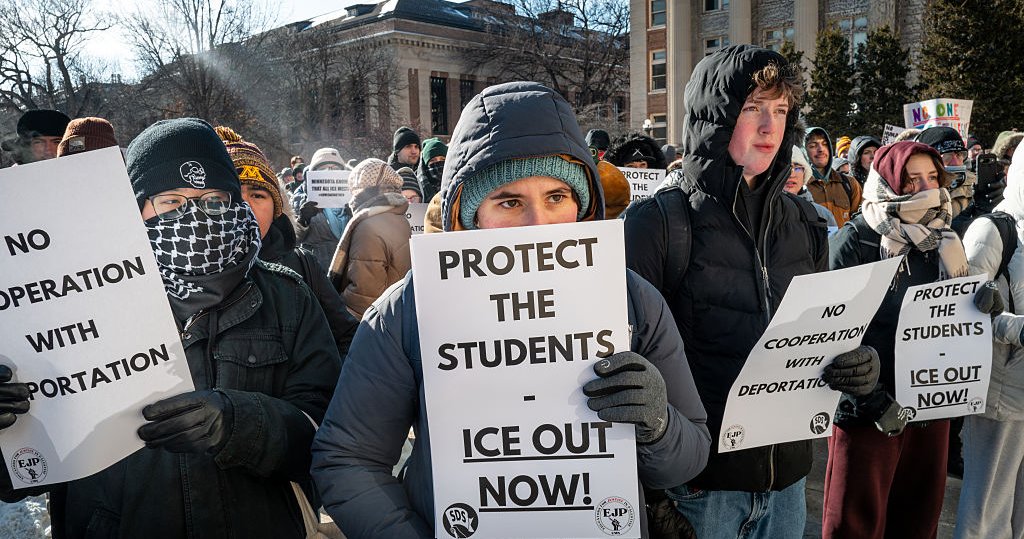
Youth at Risk: The Neglected Education of Incarcerated Juveniles
Accountability at the intersection of education and justice reform is crucial for our most vulnerable populations.
In late February, Attorney General Jeff Sessions to roll back restrictions from the Obama Administration that called for the reduction of private prison use. According to Sessions, the move would provide 鈥渇lexibility鈥� and allow the Bureau of Prisons to be more effective. In keeping with the Trump Administration, Sessions has taken a strict stance on 鈥溾�� in the country, and this includes dealing with incarcerated .
Sessions has been a longtime supporter of youth incarceration as a means to deal with crime, which he and President Trump have claimed is on the rise (despite to the contrary). As the Attorney General of Alabama in 1994, Sessions was an advocate for increasing federal funds to create youth detention facilities, as well as strict forms of discipline for incarcerated youth. In 1999, as chairman of the Senate鈥檚 Youth Violence Subcommittee, Sessions pushed to , stating that the juvenile court system worked better in reducing rates of crime. It seems that Sessions, as Attorney General, hasn鈥檛 changed his tune on youth incarceration in almost 20 years.
And just what does Session鈥檚 stance mean for incarcerated youth today? While little is known about what specific policies the new Attorney General may enact regarding youth facilities, his decision to re-expand the private prison industry is telling. In 2013, there were about 36,000 incarcerated youth, and about . In 2014 , the lowest it had been since 1999–but it is now likely to rise again.
That same year, the Obama Administration released its . The guidance, which was released jointly by the Department of Education and the Department of Justice, was meant to improve the education of incarcerated youth in secure care facilities in order to allow them to better transition back into school and society upon their release. Recommendations for these secure care facilities鈥攙ia five guiding principles鈥攃alled for better emotional and developmental support, as well as ensuring that curricula aligned with state academic and career standards.
Unfortunately, indicated that there were still 15 states that did not include juvenile justice facilities in their State Education Accountability system. Thus, these facilities are not being held to the same accountability standards as public schools in how well they serve students. Moreover, many states did not hold justice facility educators to the same accountability standards as public school teachers, and only 30 states required juvenile facility schools to be accredited. Given that incarcerated youth are more likely to be and , the lack of state accountability in juvenile facilities presents a problem for ensuring that they are receiving quality, meaningful education.
It is also likely that the problem is exacerbated in private facilities. While most states do collect educational outcome data for state-run facilities, only 20% of states collected the same data across both for privately-run facilities. 60% of states do not know what outcome data is collected in privately-run facilities, meaning that many privately-run facilities are free to operate their educational systems as they please. In fact, their incarcerated youth during their stay. Without either accountability or transparency, policymakers and the public have no way to even know how poorly prison education programs are performing.
Given that the average length of stay for incarcerated youth is about 3 to 12 months, the lack of consistent education, accountability, and evaluation鈥攑articularly in private facilities鈥攎eans that students are likely to fall even further behind in coursework. This sets them up for failure when trying to integrate back into the public school system; many incarcerated youth are more likely to end up back in jail or .
In the same 1999 speech where Sessions advocated for increasing funding for juvenile detention centers, he stated that juvenile court systems were never designed for punishment. This, he stated, was a 鈥渇alse myth鈥�. 聽鈥淚n fact,鈥� Sessions insisted, 鈥淚t was always designed to intervene to reduce delinquency and try to turn the lives of young people around.鈥� If Sessions truly believes that juvenile detention centers are intended to help youth, private facilities will need to be held to the same educational accountability standards as state-run facilities. In turn, the entire system will need to be aligned with state education accountability standards.
Given all the talk of education reform on the Hill, little is mentioned about the education of incarcerated youth. However, given the Trump Administration鈥檚 , it is likely that we will see an uptick in the number of incarcerations鈥攊ncluding . 聽As such, it will be more crucial than ever to pay attention to the juvenile justice education system to ensure that every single student鈥攊ncluding incarcerated ones鈥攁re receiving quality education.
More 国产视频 the Authors
Related

Prioritizing Students with Disabilities in AI Policy

From the Science of Learning and Development to the Promise of Ecosystems

Meet the Commissioners