A Chapter of: America鈥檚 Endless Counterterrorism War in Yemen
2. A Theory of Endless War and its Applicability in Yemen
Labeling the counterterrorism war in Yemen an endless war requires defining endlessness. This section defines 鈥渆ndless war鈥� and presents a framework for the analysis that follows. It defines key terms used throughout this report and explains why the combination of jihadist weakness, expansive and/or unclear American objectives, and poor war termination planning promoted endlessness in the war in Yemen and America鈥檚 counterterrorism wars more broadly. The definitions and framework used here were first presented and are described in greater detail in the author鈥檚 prior report, Defining Endless Wars. 1
The Counterterrorism War in Yemen as an Endless War
Some commentators argue that 鈥渆ndless war鈥� is a meaningless political talking point, a conclusion this report rejects.2 This report defines war as having an endless character when two conditions exist: The first condition is that a belligerent adopts objectives that it lacks the capability to achieve; the second condition is that despite the inability to achieve its objectives, the belligerent is also not at risk of being defeated or otherwise denied access to the battlefield and thus the ability to pursue its objectives remains.
Endlessness is best assessed by evaluating objectives and the balance of power in a war鈥攖he two core facets of its definition. However, other, more easily compared markers can inform assessments of whether a war has taken on an endless character. War duration is a particularly useful marker. But because duration is not dispositive as to whether a war is an endless war, it must be followed up with further analysis to determine whether a war has an endless character or is simply lengthy in duration.3
The counterterrorism war in Yemen has taken on an endless character. While the United States鈥� objectives have varied over time, the United States has sought objectives like the defeat and destruction of al-Qaeda in Yemen, eventually known as Al-Qaeda in the Arabian Peninsula, that appear to be beyond the capability of the United States to achieve. At the same time, AQAP is not capable of defeating the United States. Nor can AQAP deny the United States the capability to conduct strikes inside Yemen. There is little evidence that these conditions will soon change.4
When not pursuing unlimited objectives of defeating and destroying AQAP, the United States has sought to degrade and disrupt AQAP鈥檚 activities, particularly, to deny it territory, but it has rarely framed its limited objectives in a way that envisions and prepares for an end to the war. As a result, objectives that might have been achievable, have also proven beyond the United States鈥� capabilities.
The war鈥檚 long duration bolsters the claim that it has taken on an endless character. The United States has waged its counterterrorism war in Yemen for more than 12 years; more than 19 years, if one begins counting with the first strike in 2002.5 This means the war has gone on for about as long as the U.S. war in Vietnam, a case that was described as endless in contemporaneous discussions.6
While there has been some discussion of the war in Yemen as an endless or forever war, debate has focused primarily upon the U.S. support for the Saudi-led war against the Houthis and not the counterterrorism war. Legislative efforts to end U.S. support for the Saudi-led coalition鈥檚 war against Houthi rebels in Yemen have tended to exclude America鈥檚 counterterrorism strikes from their purview.7 Although the two wars are intertwined, this report focuses upon the U.S. counterterrorism war on AQAP and other jihadist groups.
What Drives Endlessness in American Counterterrorism Warfare?
Four factors have been particularly important in generating endlessness in the United States鈥� counterterrorism wars.8 They are:
1. The weakness of jihadist groups. Jihadist groups are incapable of militarily defeating the United States, either by destroying it, or by denying it access to the battlefield. Were jihadists capable of posing such a threat, America鈥檚 wars might end with jihadists achieving victory against American wishes.9 As the United States鈥� jihadist enemies lack such capabilities, the United States is the primary power capable of determining the location and character of its wars. Jihadists can use violence to influence and coerce that decision process but cannot militarily defeat the United States.
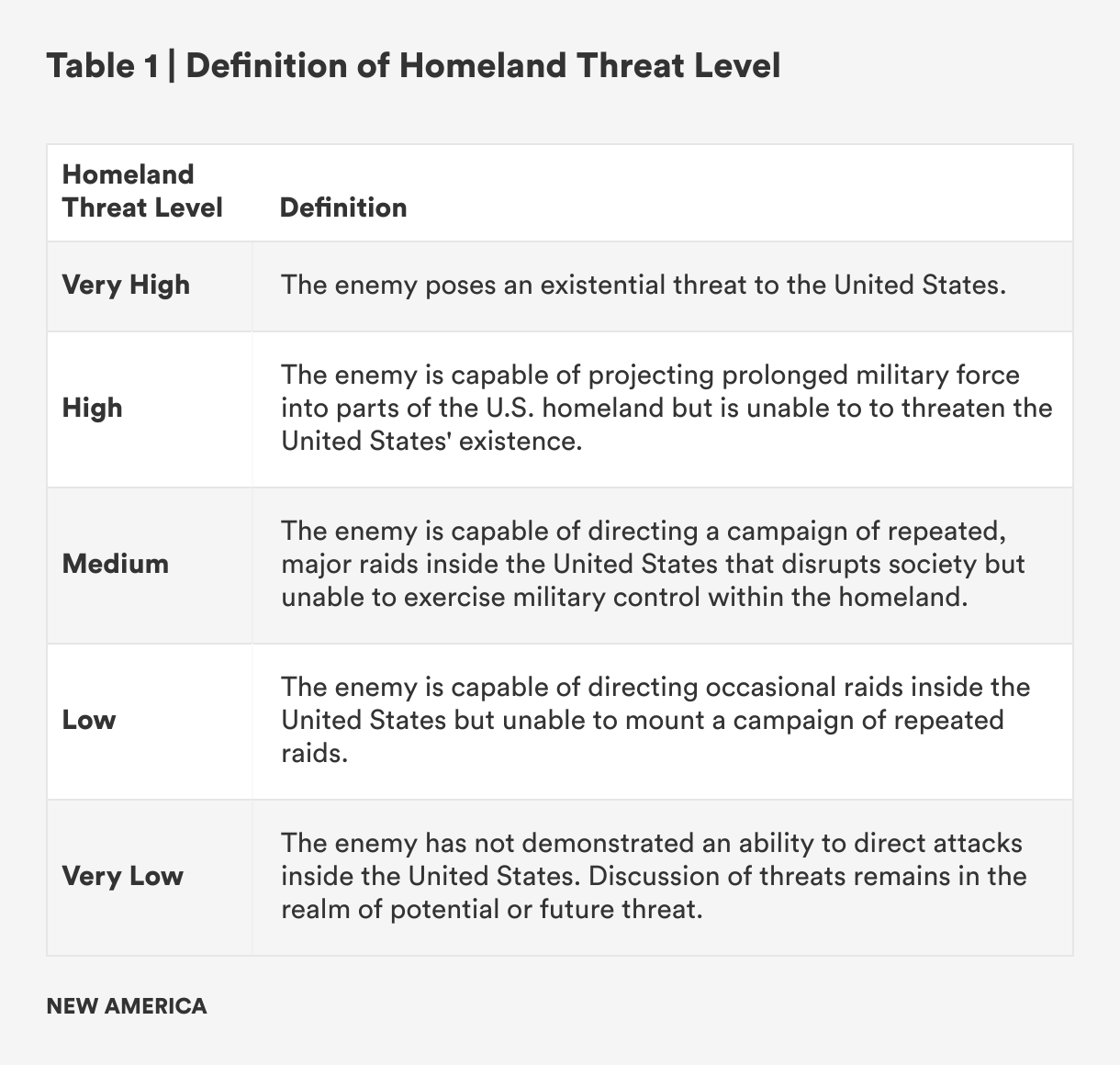
Moreover, most jihadist groups do not pose threats that force stark choices for the United States.10 Instead, the threat has tended to be similar to such accepted risks as industrial accidents or people dying in bathtubs.11 Even on the battlefield far from the United States, the U.S. way of war insulates the American military from violence, imposing a radical asymmetry.12 The level of threat that jihadist groups pose to the U.S. homeland can be placed on a spectrum ranging from a very high level of an existential threat through a medium level of a group incapable of taking territory but capable of highly disruptive campaigns of repeated attacks to a very low level where a group has not demonstrated a capability to direct attacks inside the United States (See Table 1).
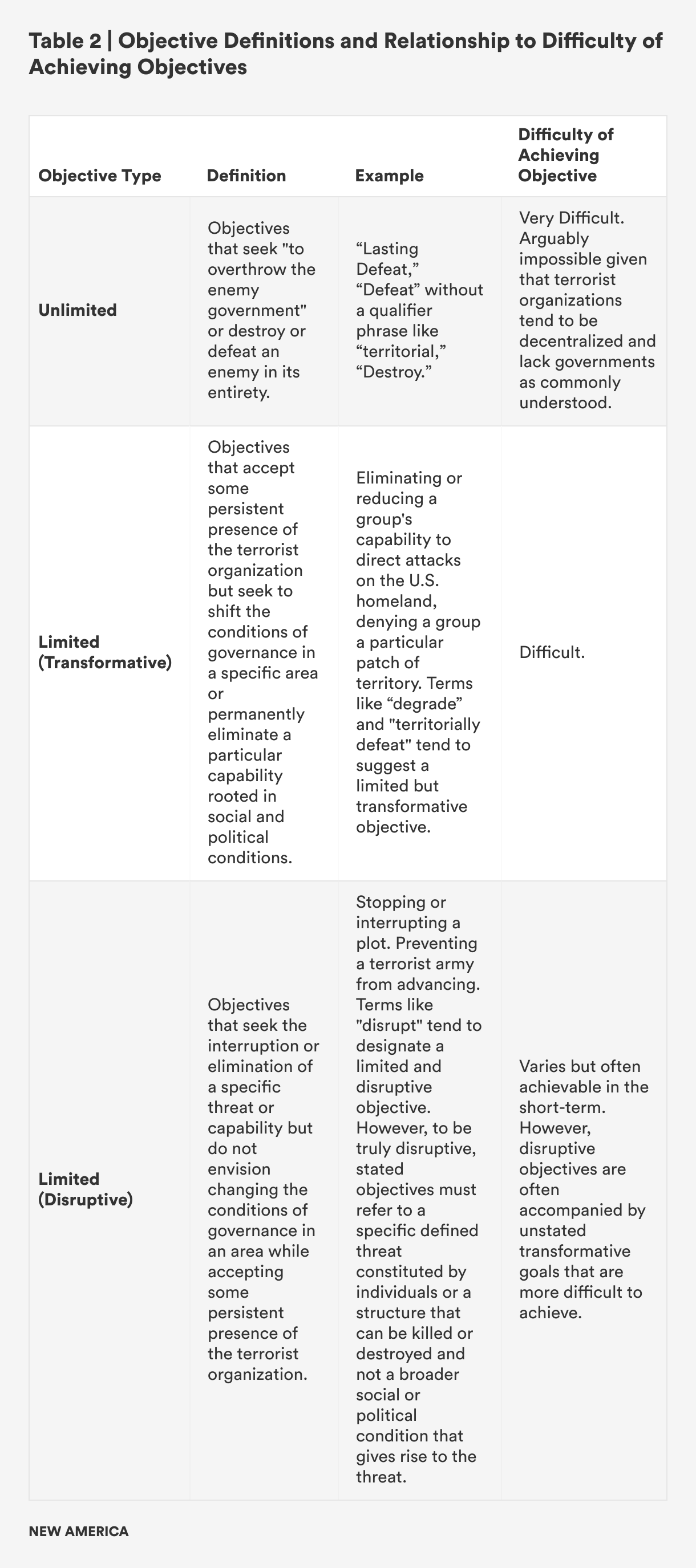
2. The United States鈥� expansive and often unlimited objectives. The United States has tended to select expansive objectives鈥攎ost notably, unlimited objectives (objectives that seek the total destruction and defeat of the enemy).13 Even where the United States has chosen limited objectives (objectives that pursue something other than total defeat), it has often selected difficult-to-achieve objectives that still involve expansive visions of transforming governance. Where the United States has selected limited and disruptive objectives regarding specific threats, it has often found its objectives achievable but unsatisfying, revealing the continued existence of limited but transformative or unlimited objectives. In evaluating the existence of this factor, it is useful to identify whether a war鈥檚 objectives are unlimited, limited and transformative, or limited and disruptive, which tend to vary in their difficulty (See Table 2).
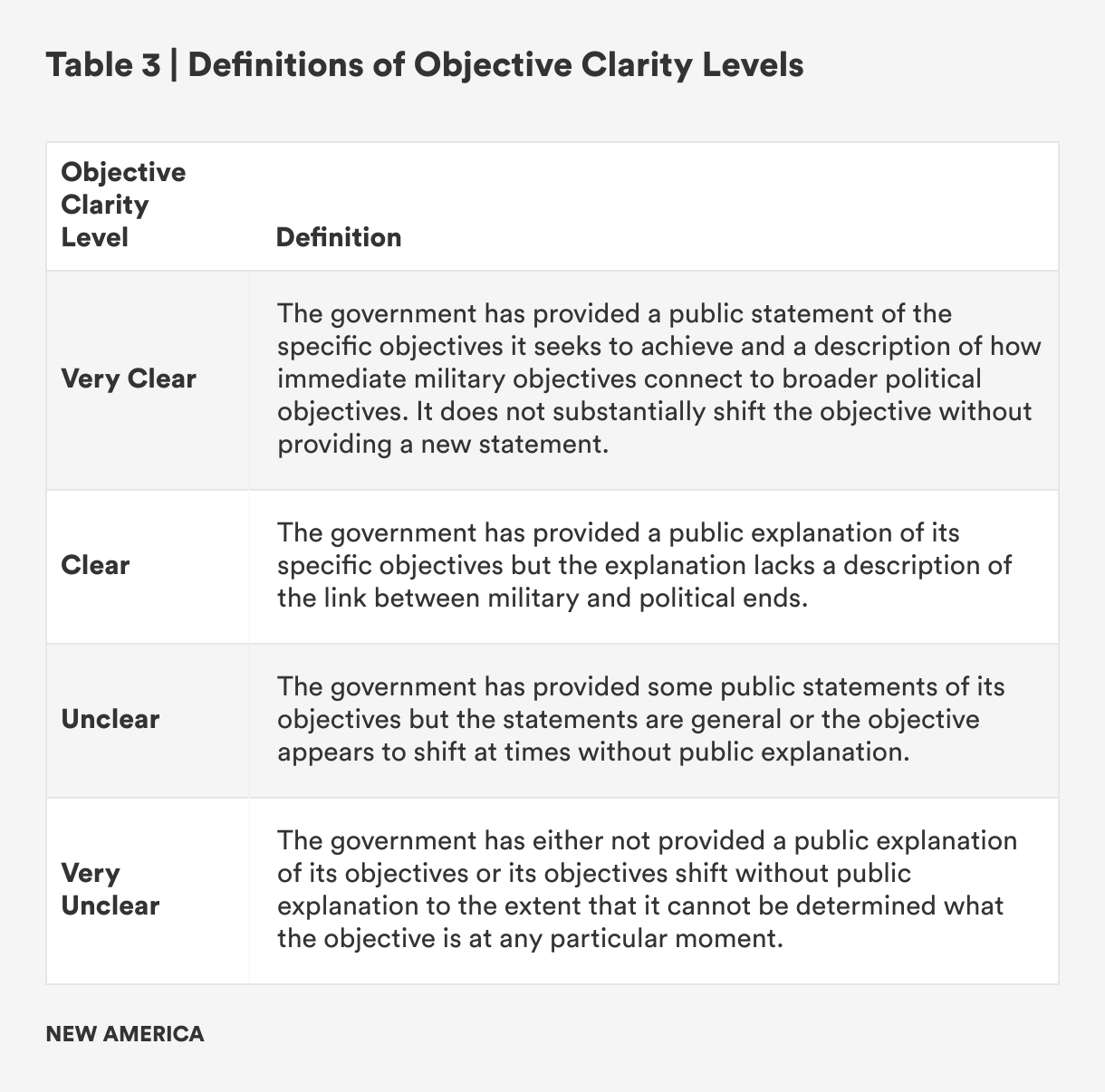
3. The United States鈥� pursuit of unclear or unstable objectives. The United States has failed to maintain stable and clear objectives in its wars. It is difficult to end a war if one cannot determine whether one鈥檚 objectives were accomplished because they were never clearly stated or because new objectives emerge as older objectives are accomplished.14 One way to measure the extent to which a war鈥檚 objectives are clear and stable is to look at whether the government provides a consistent public explanation of what it desires the war to produce, which can be evaluated on a spectrum from Very Clear to Very Unclear (See Table 3).
4. The United States鈥� lack of preparation and planning for war termination. The United States has also often failed to plan for war termination.15 As a result, the U.S. may appear to have achieved its objectives, but only insofar as the U.S. continues to apply military force. A failure to adequately develop plans for war termination can result in the U.S. failing to exit or exiting only to return later.16
Efforts to terminate the United States鈥� counterterrorism wars pose a particular set of challenges. A belief in the importance of achieving unlimited or decisive military defeat of enemies has stunted planning for war termination.17 Christopher Kolenda argues that the Department of Defense 鈥渉as no definition or doctrine for this seemingly critical aspect of war. Options other than decisive victory do not exist in the national security lexicon.鈥�18 Traditionally, a peace agreement is the gold-standard of war termination whether achieved after a decisive military triumph or as a result of negotiation.19 This is for good reason, and the United States should not automatically dismiss negotiation with even its most radical terrorist enemies.20
However, governments are loathe to negotiate peace agreements with groups that embrace terrorism as a tactic, in part because the tactic contributes to a perception鈥攐ne that is not necessarily false鈥攖hat such groups have maximal aims and won鈥檛 actually end their use of violence.21 Moreover, the decentralized character of many of the United States鈥� current rivals means that, even if a deal were struck, it might not be enforceable. War termination via a peace deal between the United States and al-Qaeda is thus unlikely.
This does not mean war termination is impossible. The extensive focus on a peace agreement as the only way to terminate a war reflects the peculiar role that wars between continental European states, who could not effectively deny their rivals access to the battlefield, played in generating conceptions of war termination.22 In contrast, the United States, like many other maritime powers, is capable of effectively denying an enemy the ability to turn its own territory into a battlefield. Kolenda terms such an approach transition as contraposed to decisive victory, in which the enemy is either militarily annihilated or surrenders, and negotiated outcome, in which no power surrenders but both come to an agreement to end the war (or at least direct hostilities).23 In the absence of a peace agreement, the United States can terminate a war by handing responsibility for security over to a partner or other authority.24
Some contend that such a handover is not a true end to the war, arguing that al-Qaeda will continue to pursue its 鈥渆ndless jihad鈥� regardless of U.S. action.25 This, however, is a misreading of what war is. War, at least in most Western philosophical traditions, requires some level of reciprocal threat or implied agreement to combat in the form of war.26 If one side does not fight and another does, that is traditionally viewed as murder, massacre, or other forms of one-sided violence.27 The United States can also bolster its war termination capabilities by improving its already strong defensive measures, including law enforcement and intelligence work, and its efforts to address the systemic crises and grievances that empower jihadist groups.28
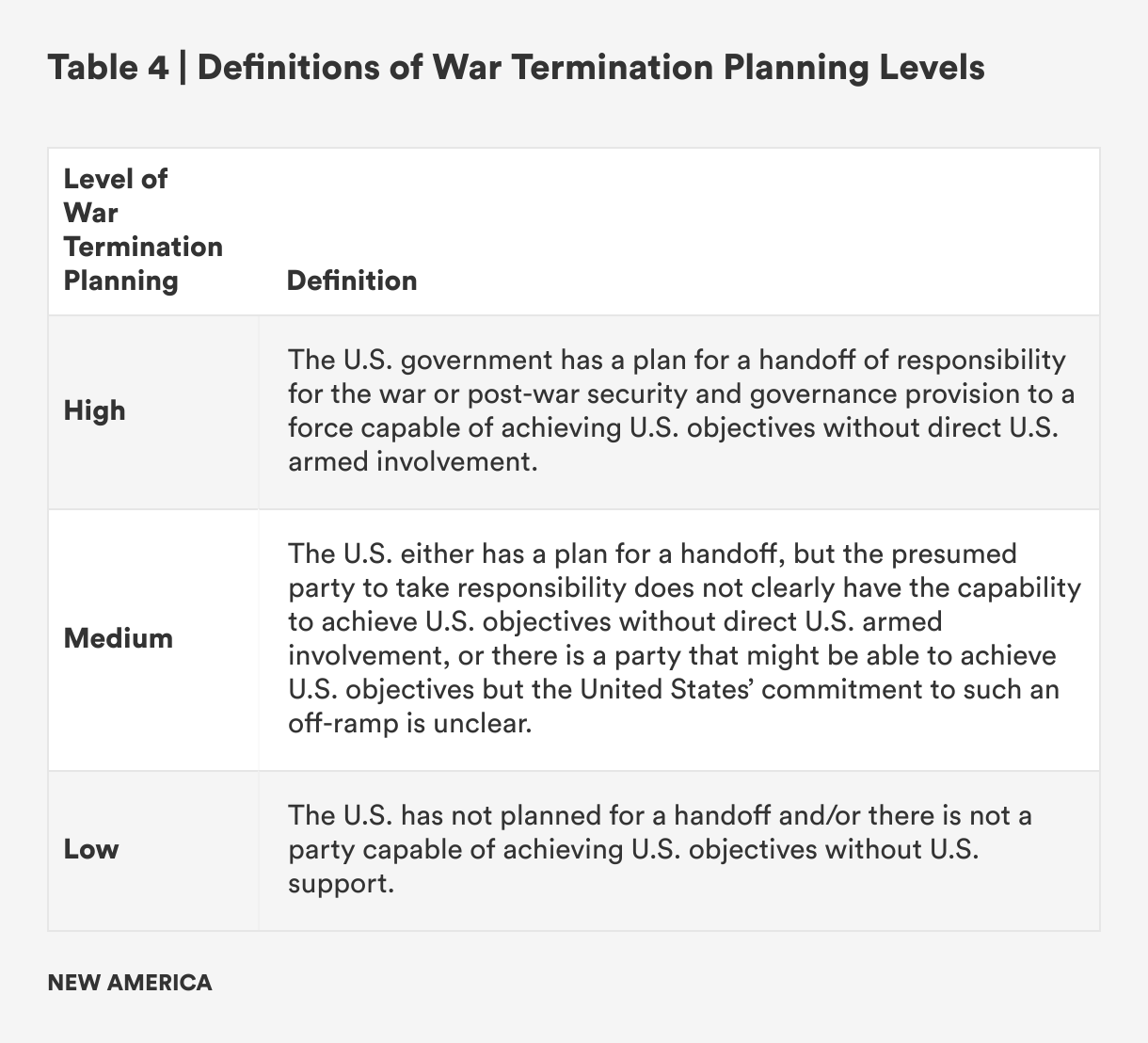
A handover of responsibility combined with clear renunciation of a war footing is likely to be the nature of war termination in the United States鈥� counterterrorism wars. The extent of development of war termination plans can thus be assessed as being at a low, medium, or high level depending on the amount of preparation for such a handover and the ability of the newly responsible actor to maintain a level of security that does not depend on the continued use of direct American force or a continued war-footing that enables rapid re-escalation without renewed debate and the authorization of a new war (See Table 4).
Four Types of Endless War: Why the Factors Driving Endlessness Matter
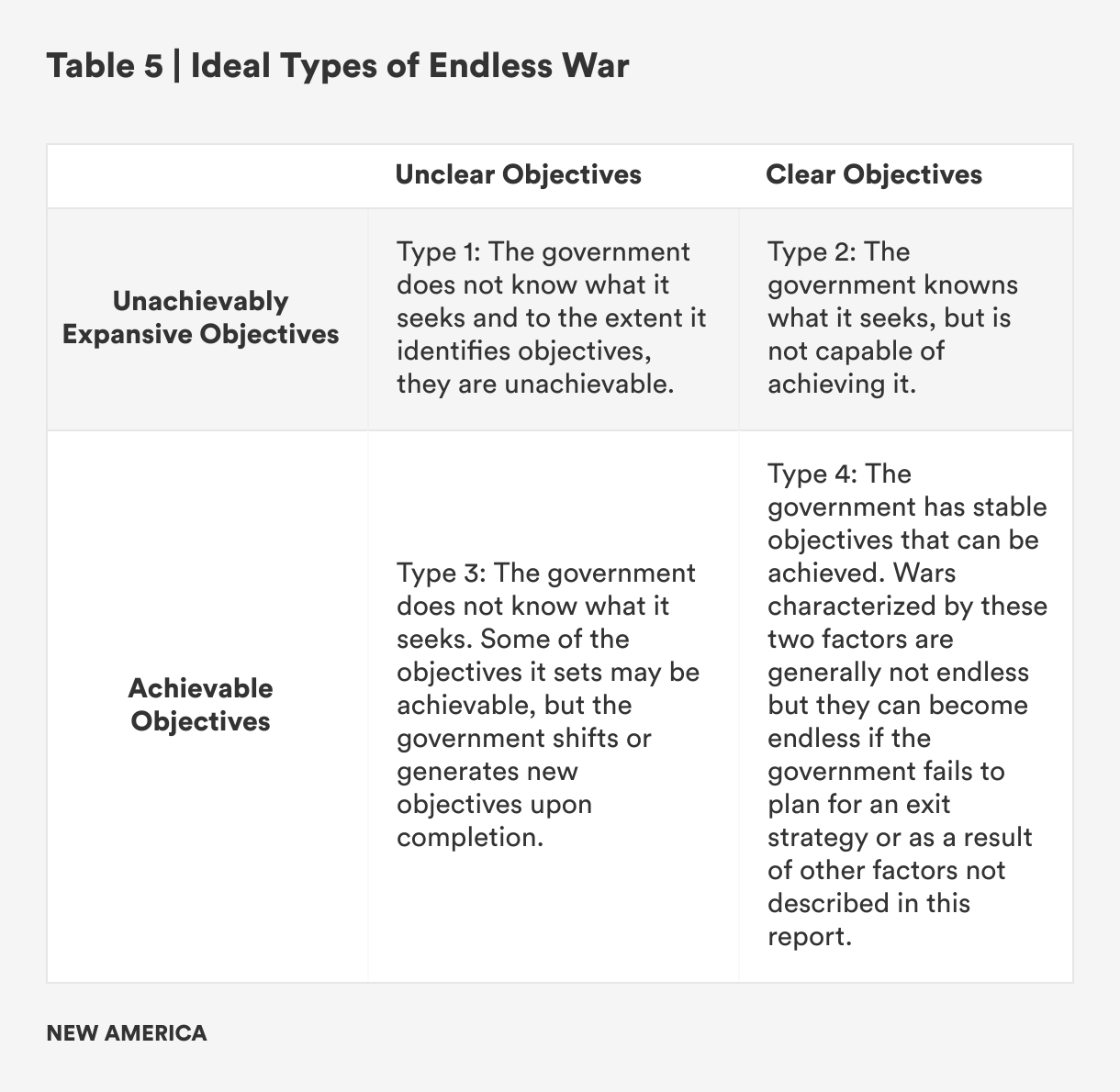
By focusing on the interaction between achievability and clarity of objectives while assuming a context in which the enemy is incapable of ending the war on its own terms, we can identify four distinct types of endless war (See Table 5). No war is likely to fall entirely within any of these types. However, positing these types warns against an overemphasis on any single policy approach that might be useful in ending some wars but not others.
Type 1: The first type are wars that take on an endless character because the government does not set stable and clear objectives and is also not capable of achieving the objectives it sets out because they are so expansive. Efforts to bring such wars to an end require both clarifying the objectives and ensuring that the newly clarified objectives are achievable. Efforts that prioritize only one strand of policy will simply move the war into a different type of endlessness.
Type 2: The second type are wars where the government is clear about what objective it seeks but has selected an objective that is so expansive as to be unachievable. In these wars, endlessness is primarily driven by expansive objectives, requiring the government to limit what it seeks in order to end the war. In contrast, efforts to improve the clarity of objectives, for example by expanding transparency, will have little success as a tool for bringing such wars to an end because their endlessness is not rooted in unclear or opaque objectives but in the willful decision to pursue difficult-to-achieve objectives. A focus on increasing transparency and clarity as the leverage point in such wars risks undermining efforts to end the war by deemphasizing questions about the political objective in favor of legalistic criticism.29
Type 3: The third type are wars where the government does not know what its objectives are and often shifts objectives, but those shifting objectives are achievable. In such a war, the key leverage point for ending the war is clarifying what the United States鈥� true objectives are. Whereas in a Type 2 endless war, a focus on transparency is unlikely to bring an end to war and can risk prolonging it, in this kind of endless war, it is essential while focusing criticism on the achievability of specific ends is likely to lead to poor analysis.
Type 4: The fourth type occurs when the government has achievable and clear objectives. Under such conditions, endless war should be rare. However, endlessness may still emerge for other reasons. For example, the war might take on an endless character if the government fails to adequately prepare for and develop war termination plans.30
What Type of Endless War is the War in Yemen?
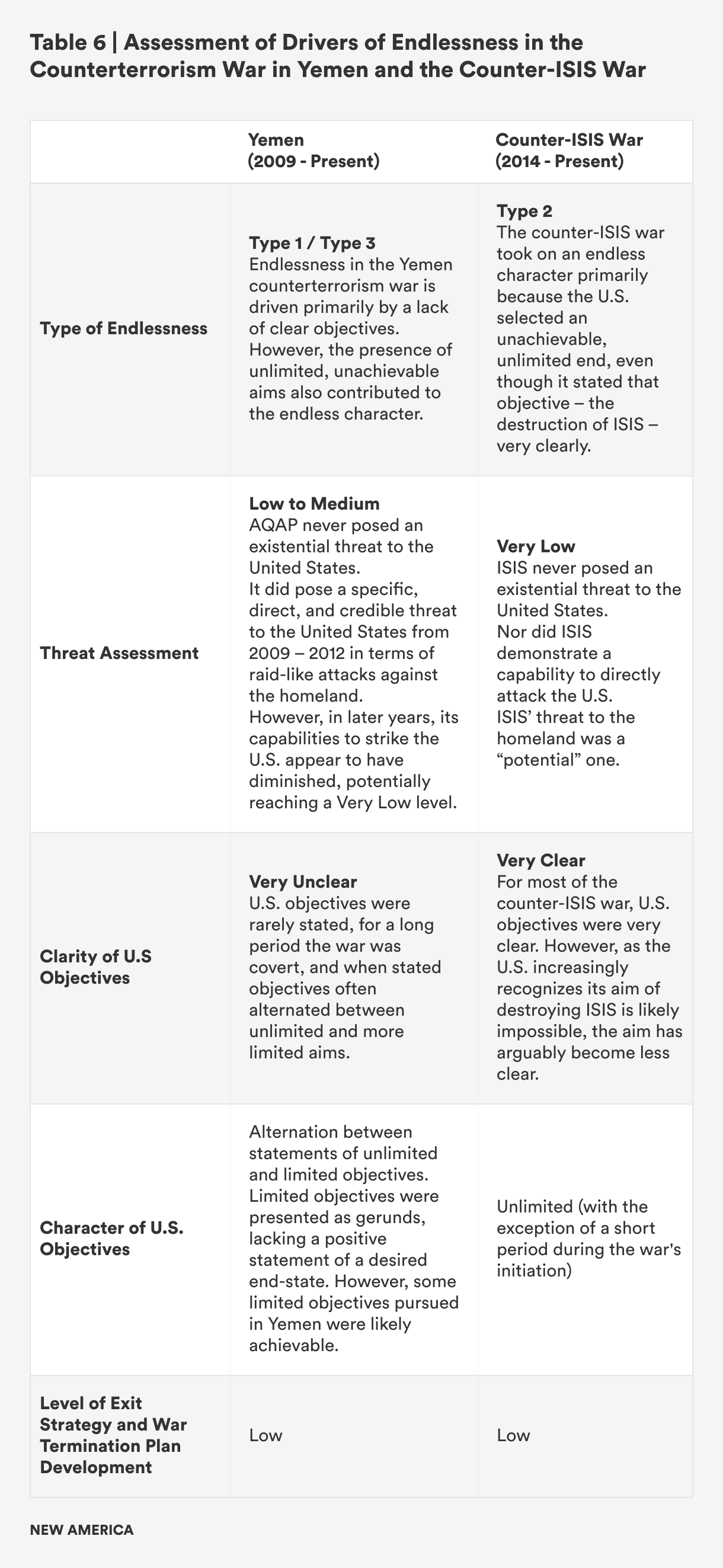
This report assesses the Yemen war to be somewhere between a Type 1 endless war (with endlessness driven both by a failure to clearly define objectives and by the presence of unachievable expansive objectives) and a Type 3 endless war (with endlessness driven by a lack of clear and stable objectives but where objectives鈥攚hen stated鈥攖end to be achievable).
The character of endlessness in Yemen can be illuminated by comparison with the counter-ISIS war (See Table 6). The counter-ISIS war is best understood as Type 2 endless war driven by the pursuit of an unlimited and unachievable objective that was stated very clearly.
For most of the counter-ISIS war, the United States clearly and publicly explained its objective. For example, on September 10, 2014, Obama described the objective in the counter-ISIS war, saying: 鈥淥ur objective is clear: We will degrade, and ultimately destroy, ISIL through a comprehensive and sustained counterterrorism strategy.鈥�31
In contrast, the counterterrorism war in Yemen was born in secrecy. The United States denied it was even waging a war. Once the United States acknowledged it was waging a war in Yemen, it did not provide a specific explanation of the objective in the way that Obama did as he initiated the war against ISIS. Instead, the United States alternated between a range of objectives.
In the counter-ISIS war, the unlimited objective of destroying ISIS has proven unachievable. The United States destroyed ISIS鈥檚 territorial expression in Syria and Iraq (best understood as a limited but transformative objective of denying ISIS territory), but the group continues to operate.32
In contrast, the United States often embraced limited objectives in its counterterrorism war in Yemen, including killing specific AQAP operatives and disrupting external attack plotting. The United States at times, has contended that it is not pursuing a larger military campaign to transform governance in Yemen or destroy AQAP. Many of the limited objectives in Yemen were, at least theoretically, achievable. Some, like killing Anwar Awlaki, were achieved. Yet the United States also maintained a broader and unstable definition of what else it was pursuing, including an unlimited objective of destroying AQAP.
The distinction between the two wars鈥� objectives is not a bright line. As the United States finds itself stuck in Syria and Iraq unable to fully destroy ISIS as a movement or group, the counter-ISIS war may be moving towards a confused jumble of re-defined objectives that may be more limited but that are not as clearly stated.33 This is a shift from a Type 2 endless war to a Type 1 or 3 endless war, depending on the extent to which 鈥渄efeat鈥� remains an objective. In essence, it has come to look more like the war in Yemen.
Regarding the level of threat, the counter-ISIS war and the war in Yemen also had important similarities. Neither ISIS nor AQAP held the capability to defeat the United States or deny it military access to the battlefield. Thus, both wars held the potential for endlessness, assuming the United States did not carefully define achievable objectives.
However, unlike ISIS, whose threat to the homeland was very low and framed in terms of preventive war logic, AQAP demonstrated an existing capability to directly attack the United States. The strategic context of U.S. choices鈥攊n terms of homeland security鈥攚as thus starker than it was during the initiation of the war against ISIS.
In both wars the United States also showed a low level of preparation and planning for war termination. In the counter-ISIS war, the United States eventually developed effective partnerships with the Iraqi government and the largely Kurdish Syrian Democratic Forces (SDF) while mitigating many of the technical challenges of these partnerships.34 Yet these mitigation strategies often relied on close U.S. involvement. In particular, the United States has struggled to develop a clear vision of how the SDF will fit into Syrian politics in the absence of a protective U.S. shield.35
In Yemen, the United States has had little success managing tensions with and among its partners, saw its Yemeni-government partner collapse, and today relies largely upon the Saudis and Emiratis, whose efforts face substantial limitations. In both wars, the United States demonstrated only limited efforts and capability to resolve underlying systemic socio-economic crises that hold the potential to fuel resurgences in the threat to U.S. interests that could shift policymaker and public perceptions and motivate a return to war.
It is important to identify the roots of the Yemen war鈥檚 endlessness because it involves more than just the adoption of expansive objectives. In addition to abandoning the mirage of destroying AQAP, the United States will also need to clarify its limited objectives and improve war termination planning processes. Restraint-oriented policymakers should take heed that only embracing parts of this agenda could merely shift the war in Yemen into a different type of endlessness.
America鈥檚 Endless Counterterrorism War in Yemen
- Executive Summary
- 1. Introduction
- 2. A Theory of Endless War and its Applicability in Yemen
- 3. Evaluating the Threat from AQAP
- 4. Assessing the Clarity and Character of American Objectives
- 5. Assessing the Achievability of American Objectives
- 6. Assessing the Level of War Termination Planning
- 7. Conclusion: Towards A Path Out of Endlessness
- Appendix 1: U.S. Intelligence Community Threat Assessments
- Appendix 2: Presence of Unlimited Objectives in CENTCOM Press Releases Under the Trump Administration
Citations
- See: David Sterman, 鈥淒efining Endless Wars: The First Step Towards Ending Them鈥� (国产视频, January 26, 2021), source.
- Noah Rothman, 鈥淐an We Dispense with the Childish 鈥楩orever Wars鈥� Nonsense Now?,鈥� June 28, 2021, ; Steven Cook, 鈥淓nd the 鈥楩orever War鈥� Clich茅,鈥� Foreign Policy, April 22, 2021, ; Kori Schake et al., 鈥淒efense in Depth,鈥� Foreign Affairs, November 23, 2020, ; Thomas Joscelyn, 鈥淓ndless Jihad: The Problem with Pledging to End Our 鈥楨ndless Wars,鈥欌�� The Dispatch, August 20, 2020, ; Paul Miller, 鈥淓nding the 鈥楨ndless War鈥� Trope,鈥� Atlantic Council, March 26, 2020, ; Dakota Wood, 鈥淭he Myth of Endless Wars,鈥� The National Interest, October 31, 2020, ; Max Molot, 鈥淏ad Idea: Calling U.S. Operations in Afghanistan, Iraq, and Syria 鈥楨ndless Wars,鈥欌�� CSIS Defense360, January 7, 2020, .
- On the problems with equating endlessness and duration see: Jonah Schulhofer-Wohl, Quagmire in Civil War, 2020, Kindle Location 444. Also see: David Sterman, 鈥淎voiding the Time Trap,鈥� Fellow Travelers, December 6, 2021, ; Sterman, 鈥淒efining Endless Wars: The First Step Towards Ending Them.鈥�
- Even analysts who are skeptical of critics of endless war acknowledge the basic character of American counterterrorism warfare as stuck with the United States unable to be defeated but also not able to achieve all of its objectives and declare victory. For example, Hal Brands and Michael O鈥橦anlon write, 鈥渢he strategy remains an intuitively unsatisfying 鈥榤owing the grass鈥� approach,鈥� adding, 鈥淏y design, it must therefore be continued indefinitely, until local politics or other indigenous factors deprive future terrorists of the ability to train, recruit and organise.鈥� They also write, 鈥淎merica is nowhere close to achieving the objective that key policymakers identified early on: pushing terrorism to the margins, cutting off the flow of recruits, and otherwise creating conditions that would allow Washington to declare victory and come home.鈥� Hal Brands and Michael O鈥橦anlon, 鈥淭he War on Terror Has Not Yet Failed: A Net Assessment After 20 Years,鈥� Survival 63, no. 4 (July 4, 2021): 33鈥�54, . See also: Michael O鈥橦anlon, 鈥淩esigned to Endless War,鈥� Wall Street Journal, July 27, 2018, .
- Whether one views the 2002 to late 2009 period as a period of war is a complex question reflecting the issues that arise in wars carried out under open-ended, non-geographically limited authorizations as well as the general challenge of defining and dating when a war begins. The U.S. asserted authority to carry out strikes, and it acted upon that authority in 2002, but the U.S.-Yemeni relationship was largely of one assistance and cooperation without direct U.S. military action in the following years with the 2009 escalation constituting a real shift. Helen Lackner suggests that many Yemenis did not see the 2002-2009 period as continuous with the late 2009 escalation, writing, 鈥渉aving considered the 2002 airstrike a unique event, a repetition of direct US attacks aroused considerable anger throughout Yemen due to the large number of civilians killed.鈥� Helen Lackner, Yemen in Crisis: The Road to War, U.S. edition (London; New York: Verso, 2019), 140. In its propaganda, al-Qaeda emphasizes the continuity of a longer war, presenting the Yemeni government as an agent of the United States. However, al-Qaeda still notes a shift in the overtness of the war. See: 鈥淎bu-Yahya Al-Libi Condemns US Involvement in Yemen, Yemeni Government,鈥� February 23, 2010, Al Qaeda Statements Index, ; 鈥淎l-Qa鈥檌da in Arab Peninsula Secretary General Calls For Attacks in Yemen, Somalia,鈥� April 19, 2009, Al Qaeda Statements Index, ; 鈥淎l-Qai鈥檇a in Arabian Peninsula Leader Urges Yemeni Tribes to Fight Government,鈥� February 20, 2009, Al Qaeda Statements Index, .
- Establishing the beginning of the U.S. war in Vietnam is difficult. For example, one might date the war to the U.S. assumption of responsibility from France and the Department of Defense鈥檚 earliest date for inclusion in the Vietnam Veterans Memorial (November 1955), or the first U.S. death (June 1956), or North Vietnam鈥檚 declaration of war on the South (January 1959), or the Gulf of Tonkin resolution (August 1964) or the first arrival of official U.S. combat troops (March 1965). If one begins with the earliest date for inclusion on the memorial, that would constitute a little over 19 years between the war鈥檚 start and the fall of Saigon. If one begins with the Gulf of Tonkin resolution it would be about eleven years. On this range of possible dates and discussion of comparisons of length to America鈥檚 counterterrorism wars see: Daniel DeFraia, 鈥淲hich Is America鈥檚 Longest War, Afghanistan or Vietnam?,鈥� GlobalPost, October 19, 2012, ; Adam Taylor, 鈥淭hese Are America鈥檚 9 Longest Foreign Wars,鈥� Washington Post, May 29, 2014, . On the difficulty of dating the beginning and endings of wars generally see: Mary L. Dudziak, War Time: An Idea, Its History, Its Consequences (Oxford: Oxford Univ. Press, 2012). On contemporaneous descriptions of the Vietnam war as endless see: Leslie H. Gelb, 鈥淐auses, Origins, and Lessons of the Vietnam War,鈥� 搂 Senate Committee on Foreign Relations (1972), ; Paul M. Sweezy, 鈥淰ietnam: Endless War,鈥� Monthly Review 20, no. 11 (April 1, 1969): 1, .
- 鈥淐ongress and the War in Yemen: Oversight and Legislation 2015-2020鈥� (Congressional Research Service, June 19, 2020), 12, ; William Roberts, 鈥淯S House Approves Resolution to End US Role in Yemen War,鈥� Al Jazeera, April 4, 2019, ; Lackner, Yemen in Crisis, xxv鈥搙xvi.
- For more detail see: Sterman, 鈥淒efining Endless Wars: The First Step Towards Ending Them.鈥�
- On the general inability of jihadists to pose such a threat see: Peter L. Bergen, United States of Jihad: Investigating America鈥檚 Homegrown Terrorists, First edition (New York: Crown Publishers, 2016); John E. Mueller and Mark G. Stewart, Chasing Ghosts: The Policing of Terrorism (Oxford鈥�; New York: Oxford University Press, 2016); John Mueller and Mark G. Stewart, 鈥淢isoverestimating ISIS: Comparisons with Al-Qaeda,鈥� Perspectives on Terrorism 10, no. 4 (August 2016), ; 鈥淩emarks by National Security Advisor Susan Rice on the 2015 National Security Strategy鈥� (White House Office of the Press Secretary, February 6, 2015), .
- Lawrence Freedman, 鈥淥n War and Choice,鈥� The National Interest, May/June, 2010, .
- John Mueller and Mark G. Stewart, 鈥淭errorism and Bathtubs: Comparing and Assessing the Risks,鈥� Terrorism and Political Violence, October 29, 2018, 1鈥�26, .
- Neil C. Renic, Asymmetric Killing: Risk Avoidance, Just War, and the Warrior Ethos (New York, NY: Oxford University Press, 2020).
- On defining unlimited vs. limited objectives, see: Donald J. Stoker, Why America Loses Wars: Limited War and US Strategy from the Korean War to the Present (Cambridge, United Kingdom; New York, NY, USA: Cambridge University Press, 2019).
- See for an example: Craig Whitlock, 鈥淪tranded Without a Strategy,鈥� Washington Post, December 9, 2019, .
- Stoker, Why America Loses Wars, 173; Nate Rosenblatt and David Kilcullen, 鈥淭he Tweet of Damocles: Lessons for U.S. Proxy Warfare鈥� (国产视频, April 6, 2020), source.
- David Sterman, 鈥淒ecision-Making in the Counter-ISIS War: Assessing the Role of Preventive War Logic鈥� (国产视频, November 15, 2019), source; Mary L. Dudziak, 鈥淭his War Is Not Over Yet,鈥� New York Times, February 15, 2012, .
- These two concepts are similar but not necessarily the same. One could envision a decisive military defeat in the context of objectives that are limited, where the enemy loses the ability to continue to fight in a particular area and is unable to escalate in other areas but whose government persists undefeated. Though perhaps unlikely, one could also imagine a government choosing to dissolve itself (thus achieving an unlimited objective of its enemy) despite being militarily capable of continuing to resist because it determined the costs of war were not worth it.
- Christopher D. Kolenda, Zero-Sum Victory: What We鈥檙e Getting Wrong about War (Lexington, Kentucky: The University Press of Kentucky, 2021), 23.
- Carl von Clausewitz, Michael Eliot Howard, and Peter Paret, On War, First paperback printing (Princeton, N.J: Princeton University Press, 1989), 90.
- Jonathan Powell, Terrorists at the Table: Why Negotiating Is the Only Way to Peace, First Palgrave Macmillan Trade edition (New York: Palgrave Macmillan Trade, 2015).
- For discussion of the importance of and challenges to negotiated ends to conflicts with terrorist groups see: Stoker, Why America Loses Wars; Powell, Terrorists at the Table; Max Abrahms, 鈥淭he Political Effectiveness of Terrorism Revisited,鈥� Comparative Political Studies 45, no. 3 (March 2012): 366鈥�93, ; Erica Chenoweth et al., 鈥淲hat Makes Terrorists Tick,鈥� International Security 33, no. 4 (April 2009): 180鈥�202, ; Max Abrahms, 鈥淲hy Terrorism Does Not Work,鈥� International Security 31, no. 2 (Fall 2006), .
- Julian Stafford Corbett, Principles of Maritime Strategy (Project Gutenberg, 2005), . Kolenda makes a similar argument, drawing from Clausewitz. Kolenda, Zero-Sum Victory, 25, 52.
- Kolenda, Zero-Sum Victory, 52鈥�54.
- Stoker, Why America Loses Wars, 170. Such a conception has its own Eurocentric biases, rooted in part in the challenges of defining what constitutes war and the tendency to divide its participants into clearly delineated nation-states. The endless and global character of the war on terror itself points to the dangers of putting too much confidence in the strength of such separations. For argument along these lines see: Tarak Barkawi, 鈥淒ecolonising War,鈥� European Journal of International Security 1, no. 2 (July 2016): 199鈥�214, .
- Joscelyn, 鈥淓ndless Jihad: The Problem with Pledging to End Our 鈥楨ndless Wars.鈥欌��
- Renic, Asymmetric Killing.
- Renic, 37.
- Jennifer Walkup Jayes, 鈥淏eyond the War Paradigm: What History Tells Us 国产视频 How Terror Campaigns End鈥� (Costs of War Project, February 8, 2022), ; Luke Hartig, 鈥淧laying Defense Is Totally Fine,鈥� Atlantic, September 26, 2021, .
- Samuel Moyn, Humane: How the United States Abandoned Peace and Reinvented War, First edition (New York: Farrar, Straus and Giroux, 2021); Samuel Moyn, 鈥淏eyond Humanity: How to Control America鈥檚 Use of Force鈥� (Quincy Institute, July 2020), ; Anand Gopal, 鈥淎merica鈥檚 War on Syrian Civilians,鈥� New Yorker, December 14, 2020, . This is not, however, to contend that transparency is not important in its own right and to avoid reversion to the first type of endlessness.
- Kolenda, Zero-Sum Victory.
- 鈥淪tatement by the President on ISIL,鈥� White House Office of the Press Secretary, September 10, 2014, .
- 鈥淟ead Inspector General for Operation Inherent Resolve Quarterly Report to the United States Congress | July 1, 2021 鈥� September 30, 2021鈥� (Department of Defense Office of the Inspector General, November 3, 2021), .
- For a useful discussion of the lack of clarity and the problems deriving from it beyond the stated objective of defeating ISIS see: Mark Kimmit, 鈥淐larity on Afghanistan, Confusion on Iraq,鈥� Defense One, July 19, 2021, .
- Rosenblatt and Kilcullen, 鈥淭he Tweet of Damocles: Lessons for U.S. Proxy Warfare.鈥�
- Rosenblatt and Kilcullen.