Sabia Prescott
Policy Analyst, Education Policy
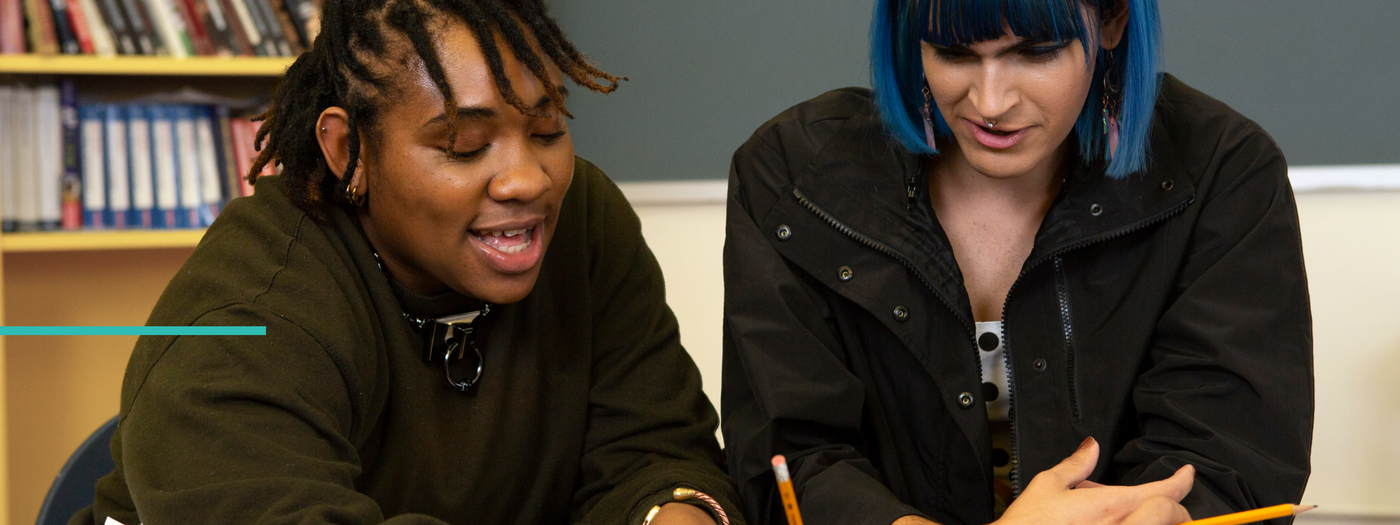

Four months into the pandemic, Sarah Milianta-Laffin saw a new problem. The LGBTQ students in her middle school had become isolated from the most supportive community they had鈥攖he gay-straight alliance, or GSA. These groups exist at many schools to support and provide community for queer, trans, and nonbinary students. Milianta-Laffin, known affectionately by students as Ms. Milli, leads the GSA at the school in Ewa Beach, Hawaii where she is a 7th and 8th grade STEM teacher. Noticing that her students were not only missing their friends and community but that it was taking a serious toll on their mental health, Ms. Milli took action.
After gathering input from students, Ms. Milli partnered with the Coalition for Drug-Free Hawaii, a local community nonprofit. Together, they compiled Pride at Home boxes, filled with pride flag stickers, pins, a unicorn plushie, and self-care activity books.
Ms. Milli says the boxes were not only a way to celebrate students and lift their spirits but also to let them know that they鈥檙e still valued and supported. 鈥淚 wanted to do something to remind them that even if they can鈥檛 鈥榮ee鈥� community right now, it鈥檚 still there for them.鈥�
The challenges felt in Ewa Beach aren鈥檛 unique, and some of them aren鈥檛 new. Even before the pandemic, LGBTQ students faced higher rates of bullying and harassment than their non-LGBTQ peers. They rarely saw themselves reflected or represented in the curriculum, and they experienced higher rates of suicide, depression, and substance abuse. The landscape was unwelcoming to these students long before a global pandemic made it worse.
Over the last year, many LGBTQ students at school that provided critical social and mental health support. While some GSAs, such as in Ewa Beach, have shifted programming online, some students cannot participate. For those who aren鈥檛 yet out to their families or who live in an unsupporting environment, participating in GSA meetings from home can be difficult at best, and create a dangerous situation for them at worst.
On top of pandemic-related challenges, a has created a backdrop of collective trauma that many students, particularly transgender students and students of color, feel the effects of deeply. The past year has seen a record number of anti-trans bills, with proposing legislation to prevent trans students from playing sports and additional states attempting to restrict trans-inclusive and . In short, it鈥檚 an extremely difficult time to be a queer or trans young person.
Recognizing this deep need to support students, some regions have established personnel at the district level to coordinate a response. Denver Public Schools (DPS), for instance, in 2019 established Levi Arithson as the district鈥檚 first . Arithson facilitated the development of an and most recently led an effort to allow transgender and nonbinary students to provide their chosen name and gender identity in Infinite Campus鈥擠PS鈥檚 student data management system鈥�. This is an essential step in classroom that affirms LGBTQ identities.
At the start of the pandemic, some teachers were concerned that trans and nonbinary students had to see their deadname鈥攖he name someone was assigned at birth that they no longer use鈥攅very day when they were logged on for class. For many trans and nonbinary people, association with a deadname can cause dysphoria, discomfort, and contribute to mental health issues. DPS students called for expanding gender identities on the Infinite Campus system and wanted their names and pronouns to be honored.
Providing this option became even more important for transgender and nonbinary students who were shifting to virtual learning spaces and faced with using multiple online learning platforms that could potentially display their legal name from Infinite Campus.
I felt seen. I felt represented.
Arithson saw the relief students felt when their school district actively took steps to support their LGBTQ student body. From the moment LGBTQ students enter the classroom, whether in-person or virtual, teachers have the opportunity to ensure that they feel seen and celebrated.
Christine Rockwell-Wardlow, a high school English teacher in New Jersey, says that it is essential to be explicit about your expectations for mutual respect in the classroom from day one. In the first weeks of virtual instruction in Fall 2020, Rockwell-Wardlow tasked her students to develop class rules and norms that she then built into a classroom social contract. 鈥淭his is a time when I explicitly state my expectation that LGBTQ+ students鈥攁nd students who are members of other traditionally marginalized populations鈥攚ill be seen and valued in my classroom,鈥� says Rockwell-Wardlow. Creating this foundation is paramount to inclusive teaching and learning.
Rockwell-Wardlow also emphasizes the importance of students鈥� seeing themselves reflected in the material they are learning from. She intentionally includes LGBTQ people in her lessons; one of the most recent reading assignments was A Queer History of the United States for Young People. Including LGBTQ lives in the course curriculum sends the message that LGBTQ people have positively impacted society, politics, and culture. For LGBTQ students seeing that representation could promote better academic and mental health outcomes.
Even amid historic levels of harm and political violence, LGBTQ students and educators around the country are expanding the narrative for queer and trans people beyond trauma. They鈥檙e finding solutions in the areas where policy has failed and creating community where it is most threatened. The effects of this work are life-affirming for students as one student told Rockwell-Wardlow, 鈥淣o one laughed at the word 鈥榞ay,鈥� no one felt weirded out by the topic, and it was finally a normal conversation in a classroom. I felt seen. I felt represented. I was finally looking in that mirror.鈥�
Policy Analyst, Education Policy
Intern, PreK-12 Education Policy