Chayenne Polim茅dio
Fellow, Political Reform Program
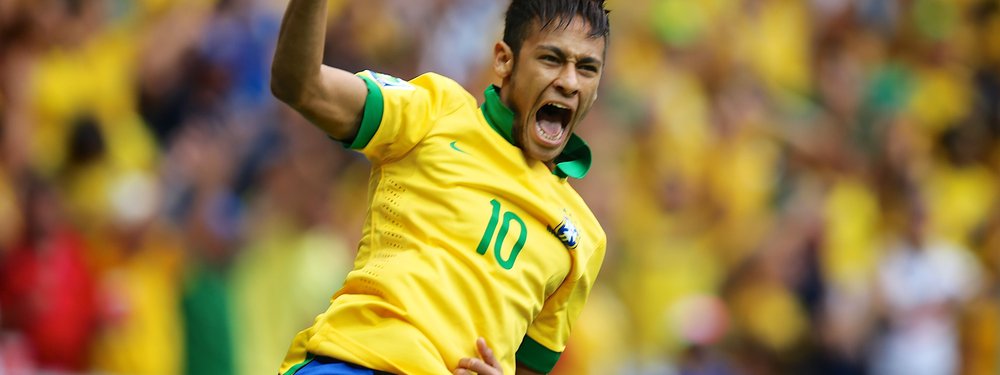
Normally, Brazilians would be ignoring politics this summer. And that鈥檚 largely because the World Cup gives them a quadrennial opportunity to outperform their country鈥檚 geopolitical stature, lording its storied 鈥淏eautiful Game鈥� over world powers such as Germany and, well, Germany (the United States didn鈥檛 qualify for this World Cup).
But this time around, something is different. Both on the pitch and in politics, Brazilians are less willing to sit back, relax, forget about their problems, and watch Neymar work his magic on the field.
The story of how Brazilians have become increasingly disenchanted with soccer parallels a much more important one. It鈥檚 a story of a people who have grown tired of politicians and institutions that don鈥檛 represent them. It鈥檚 the story of a country that鈥檚聽been grappling with its largest corruption probe yet and its serious economic consequences.聽聽
For the first time ever, more than half of Brazilians aren鈥檛聽enthusiastic about the World Cup. According to released earlier this month, 53 percent of Brazilians say that they have no interest in the championship. These are the worst results since people were first asked that question in 1994, when only 24 percent of Brazilians claimed to have no interest in the games.
Some of this resentment toward the tournament began in 2014. That year, the Brazilian government decided to foot 90 percent of the $15 billion bill to host the tournament, which at the time was its most expensive iteration. Despite the government鈥檚 claims that the returns would be worth the investment, for many Brazilians, that money should鈥檝e聽gone toward the schools, hospitals, and highways that were falling apart. Others worried about politicians and businesses that might be inclined to use the new investments in infrastructure as an opportunity to siphon off money into their own pockets. After all, corruption in Brazil is almost as commonplace as boys playing soccer on the side of the road.
Around the same time, a massive probe, led by the country鈥檚 judiciary, began to dig deep into shady deals between politicians, their respective parties, Petrobras (Brazil鈥檚 state-owned oil company), and some of the country鈥檚 most prominent construction companies. Through a system that awarded construction companies contracts in exchange for kickbacks and political donations, Brazilians saw nearly all their country鈥檚 political class implicated in what became聽. A while later, confirming that certain stadiums that had been built for the 2014 World Cup were also linked to the same construction companies investigated in the corruption probe, which explained their inflated budgets.
The purity of soccer became tainted by the grime of corruption.
As Brazil鈥檚 economic and political chaos unraveled, its national team made headlines across the globe when it suffered an embarrassing 7-1 defeat to Germany at the 2014 World Cup semi-finals. But beyond being the end for Brazil in its pursuit for its sixth title, that loss took on a symbolic role for many Brazilians: Their low wages, ballooning bills, precarious public transportation, and violence made them feel that they were losing on more than just the sports front.
Brazilians鈥� mood continued to sour as a major rampaged through FIFA in 2015. 鈥攁n investigation conducted by the FBI鈥攆ound 鈥渞ampant, systemic, and deep-rooted鈥� corruption. Among those involved in the scandal was Ricardo Teixeira鈥攖he former Brazil football federation chief鈥攚ho was accused of being 鈥渋nvolved in criminal schemes involving well over $200m in bribes and kickbacks.鈥�
Once again, corruption stalked Brazilians鈥� most-loved pastime.
In turn, Brazil鈥檚 reputation within the international community has gone from being and, most importantly, a rising economic star in Latin America and the world stage, to the country of economic crises and political scandals. As Brazil struggled in 2016 to overcome its worst economic recession in history, then-President Dilma Rousseff was impeached, politicians were sentenced to a combined 1,900-plus years of jail time, and unemployment reached of the population. It went from having its largest GDP growth (7.5 percent) in 20 years, to reaching a between 2010 and 2016.
Since then, Brazil has continued to endure its share of political and economic crises. More recently, Brazilians saw their beloved former president, Lula, sentenced to 12 years in prison for accepting a beachfront apartment plus $1.1 million-worth of improvements from a construction company, in exchange for helping the company obtain contracts from Petrobras.
Even Brazil鈥檚 victory鈥攖oilsome and agonizing鈥攐ver Costa Rica last Friday seemed like an allegory for the country鈥檚 overall tenuous state of affairs. Known for the ease with which it used to play, its former level of comfort with the soccer ball, and the joy it once brought fans all around the world, the team has continued to disappoint. Likewise, the promise of Brazil, as the economic darling of Latin America, is, at least for the time being, no more.
As the October elections loom, Brazilians are thinking hard about who can get the country out of its funk. More specifically, they鈥檙e readying themselves for what may be be one of the most consequential elections of a generation. For , the fight against corruption is their No. 1 concern. But even though of voters believe that Lula鈥攚hose televised trial was than any telenovela simultaneously airing鈥攃ould be Brazil鈥檚 savior, it鈥檚 still unclear whether the former president will be able to run.
And yet: Brazilians don鈥檛 want their 鈥渞eality respite鈥� to come from politics. And yet, and yet: It seems that they don鈥檛 want it to come from soccer, either. In fact, some Brazilians take pride in their national team. Beyond the lost pride as a consequence of the team鈥檚 poor performance in the last two tournaments, Brazilians are also fed up with the 鈥渙ut-of-touch-ness鈥� of the many players who, after many years living abroad and , don鈥檛 seem willing to work hard when they鈥檙e wearing 鈥淥 Canarinho鈥濃�攖he yellow jersey that . Others root against the national team as a form of protest against the聽鈥溾�漮f the sport, with expensive ticket prices that send the message that soccer isn鈥檛聽for the poor. And still others鈥攎ost, actually鈥� believe that the World Cup is nothing more than a distraction from what really matters: their country鈥檚 political situation and the October elections.
While Brazilians still appreciate the opportunity to escape their daily struggles, a World Cup victory isn鈥檛 the kind of victory that their country needs, or that its residents necessarily want. And even though fans yesterday got a glimpse of what Brazil鈥檚 鈥淏eautiful Game鈥� can look like via the team鈥檚 victory against Serbia, pushing it forward on its path to a sixth title, Brazilians鈥� priorities are changing.
After every match, the World Cup moves closer to its end, and Brazilians move closer to to the polls. And they鈥檙e playing no games.
Fellow, Political Reform Program