Mark Schmitt
Senior Director, Political Reform Program
On a recent muggy Wednesday morning, I reported to Superior Court in the District of Columbia for jury duty. The court was quiet, and after the welcome video ran six times, a clerk announced that it was likely we would all be excused since they weren鈥檛 sure any judges would need a jury that day. But minutes later, 44 of us were called to a courtroom, and within a few hours, I was selected for a jury, where I spent most of the next few days.
This was the fourth jury I鈥檝e served on in criminal cases in DC, including a week-long federal trial three summers ago. I鈥檝e always found jury service rewarding and a privilege, though I know that it can be burdensome for those with less flexible work or caregiving responsibilities than mine鈥攁nd sometimes even traumatic.
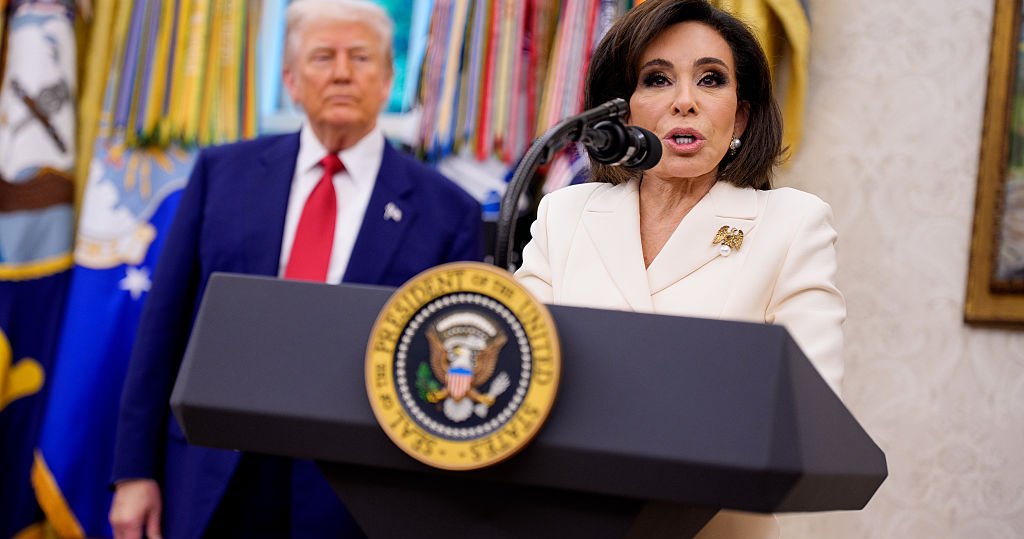
But this civic responsibility felt different on days when , along with officers from Mississippi and Ohio, were loitering menacingly near the courthouses and in the Metro, weighed down by layers of Kevlar and tactical gear, on the pretext of stopping crime. Meanwhile, the newly confirmed U.S. Attorney for the District of Columbia Jeanine Pirro as he talked about people he wanted arrested.
Each time I鈥檝e had the privilege of serving on a jury, including this particular week, I鈥檝e been inspired by how seriously people usually take their civic duty. I won鈥檛 say much about this week鈥檚 case, except that it was quite minor: a 3 am scuffle outside a nightclub in which no one was hurt or armed. It was the first jury I鈥檝e served on that acquitted the defendant of the main charges.聽
A previous I served on was remarkably more complicated, involving a Navy employee in South Korea who accepted bribes from a company providing services to visiting U.S. ships. (This was a small-potatoes variation on the case that has been the subject of and .) The case could be hard to follow. None of us were familiar with the lucrative business of 鈥渉usbanding鈥濃�攕upplying ships in port with goods and services from bottled water to cranes鈥攐r could easily keep straight the nearly identical names of the companies involved. But all of us kept up, as did the 80-year-old, Reagan-appointed judge. By deliberations, it seemed like all 12 of us fully understood the charges, the evidence, and the arguments for doubt.
Experiences like that trial not only lift my appreciation of juries but also shape some of my optimism about other democratic possibilities. They鈥檝e made me more enthusiastic about innovations such as citizens鈥� assemblies, which resemble juries as a process for resolving complex policy questions and have been a focus of 国产视频鈥檚 Political Reform Program. Our interest in expanding ballot initiatives also rests on the belief that when trusted, people can solve complex problems鈥攏ot always, but often enough.
Democracy, like jury duty, relies on trust: in ordinary people, yes, but also in the fairness of the system itself. We count on judges, prosecutors, and police to act without bias, follow the law, and disclose all relevant evidence.
That trust isn鈥檛 always rewarded. The system often fails, either systematically or intermittently, due to overworked defense attorneys, biased policing, and withheld evidence. But in my experience serving on DC Superior Court juries, prosecutors have generally appeared well-prepared, careful, and ambitious. That鈥檚 no small thing in a city where local felonies are prosecuted by the prestigious U.S. Attorney鈥檚 Office, not an elected local DA.聽
That project now feels fundamentally changed. Beyond the oppressive symbolic presence of federal law enforcement and National Guard troops around tourist-heavy parts of the city, it was hard not to think about the fact that these prosecutors now report to U.S. Attorney Jeanine Pirro, who was and whose qualifications are that she was a county-level prosecutor in New York two decades ago, who since then has made her living as a particularly and host.聽
In the five business days of my jury service alone, Pirro and the Department of Justice announced that, despite the District鈥檚 strict laws on gun possession, she anyone for possession of a long gun鈥攁 shotgun or rifle鈥攚hile continuing to prosecute handgun possession, a charge brought frequently against young Black men. She announced that she would bring on military lawyers (who are trained in a judicial system with different rules) to fill in for the because they had worked on prosecutions of January 6 insurrectionists. She promised, with the president at her side, to bring the maximum possible charges in every case. Trump himself demanded that anyone convicted of murder in DC receive the , and Pirro demanded that she , who mostly fall outside of her jurisdiction.聽
In a test of that maximalist strategy, all in the same few days, a grand jury to indict a defendant charged with assaulting an FBI agent; another grand jury refused to indict the man charged with throwing a Subway sandwich at a federal agent; and a judge said that an arrest was based on 鈥渢he most illegal search I鈥檝e seen in my life.鈥�
None of that came up in the jury room where I served recently, and I didn鈥檛 let it shape my view of the case. The incident occurred in early 2024 with most of the legal machinations leading up to trial taking place months earlier. It was a weak case, but probably not a result of Pirro鈥檚 antics.
Going forward, however, it鈥檚 hard to imagine devoting nearly a full week to the civic duty of jury service while knowing that prosecutors are being fired for doing their jobs, replaced by others hired for their loyalty to the president; prosecution decisions are made based on directives from the president; and charges can be brought in blatantly discriminatory ways. It鈥檚 hard to ask citizens to step back, set aside their feelings, and dedicate their time in good faith when the system itself doesn鈥檛 play by the same rules.聽
And these same challenges of civic trust will appear across other aspects of democratic or collective decision-making. Authoritarian, vindictive government erodes the very foundation that makes fair systems of justice and deliberation possible. Jury service, elections, or community engagement in DC鈥攁nd perhaps around the nation鈥攎ight never feel the same again.
Senior Director, Political Reform Program