A Chapter of: The Digital Deciders
Conclusion
This report is meant to provide a framework for empirically analyzing the state of internet governance around the globe. The metrics鈥攁nd therefore the analysis鈥攚ill require periodic updates as new information becomes available. However, the timing of this particular iteration is no coincidence.
It is impossible to ignore the context at the time of publication in late October 2018. ICANN is currently hosting ICANN63, its annual meeting, where it will draft its next Five-Year Strategic Plan.1 In mere days, the ITU鈥檚 Plenipotentiary kicks off in Dubai, where government officials will likely once again argue about whether the internet falls under the ITU鈥檚 mandate.2 In early November, the Internet Governance Forum will host its annual meeting in Paris, where some governments, industry, and civil society will seek to rekindle interest in a multistakeholder 鈥淚nternet of Trust鈥�.3 All the while, in the background, rumors swirl of an impending proposal for a treaty codifying greater internet governance authority in the hands of states from Russia and possibly others.4
The conflict described in this paper will continue to play out in these engagements, but all of this comes at a time when the internet is changing as rapidly as it is growing. The next generation of telecommunications equipment (5G), artificial intelligence, the cloud computing revolution, advances in computing power, and the prospect of quantum computing just over the horizon usher in an era of vast change and growth potential. But they also usher in an era of intense competition for ideas, market access, information, and innovation.
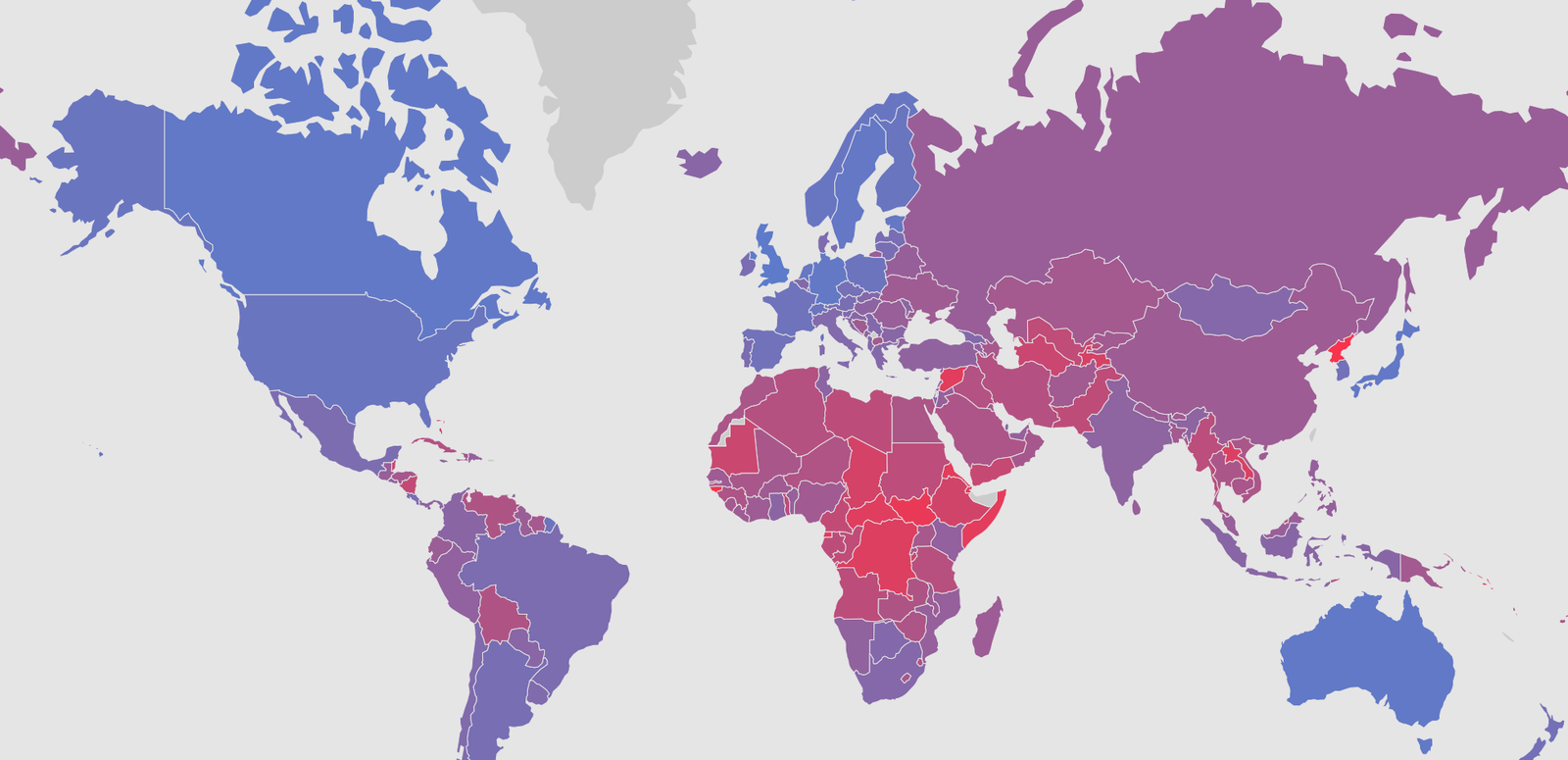
Proponents of a global and open internet will need to provide the tools, confidence, and pathway to allow those in the Digital Deciders to drift towards the global and open end of the spectrum and resist the anchor pull of the sovereign and controlled approach.
Those countries that have not reached a path dependent state with regard to the character and governance of their internets鈥攚hat we refer to in this paper as the Digital Deciders鈥攁re in a moment of immense importance. Their actions now and into the future are influenced by one another, by great powers, and鈥攊n many cases鈥攂y corporate or civil society stakeholders.
Amidst the turbulence, are some constants. How the internet functions and is controlled implicates the future of democracy and freedom of individuals. It enables or constricts the ability of liberal democrats to message to the public鈥攂oth their own and that of the globe. It dictates the opportunity for companies around the world and the security with which we conduct commerce and communication over the internet.
As Eric Schmidt observed, "I think the most likely scenario now is not a splintering, but rather a bifurcation into a Chinese-led internet and a non-Chinese internet led by America.鈥�5 Fragmentation, to the extent that we鈥檝e witnessed it thus far, has taken place mostly at the 鈥淕overnance Tier鈥� of the internet or has consisted of alterations on rather than of the architecture itself.6 This is positive for those who wish to鈥攄epending on your perspective鈥攑rotect, retain, or regain the global Internet. These forms of fragmentation are reversible. However, while the underlying architecture of networked computing has not been altered at a national level, the possibility that it will be cannot be ruled out. The Russian government鈥檚 commitment to build its own Domain Name System comes closest to doing so to date.
In 2015, Jason Healey and Barry Hughes used the International Futures forecasting system to project the potential impact of different internet futures. In their models, the Leviathan Internet鈥攖he scenario in which a series of national or regional networks are dominated by national governments鈥攈as a 鈥渕odest鈥� impact on the economy. In parallel, ICT inequality would increase, as smaller nations with fewer resources would 鈥渟truggle to build enough sovereign infrastructure,鈥� while larger nations have 鈥渆nough scale to succeed.鈥�7
The global and open model is under pressure. One of the biggest challenges for states going forward, regardless of which cluster they fit into, will be managing security鈥攂oth in relation to LikeWars and cybersecurity鈥攚hile maintaining openness. Proponents of a global and open internet will need to provide the tools, confidence, and pathway to allow those in the Digital Deciders to drift towards the global and open end of the spectrum and resist the anchor pull of the sovereign and controlled approach. Furthermore, these proponents must prove and present the merits of their approach. Every day they do not, Schmidt鈥檚 splintering and Healey and Hughes鈥� Leviathan inch closer and closer to reality.
Citations
- ICANN, 鈥淯pdate on ICANN鈥檚 Strategic Planning Process,鈥� The Internet Corporation for Assigned Names and Numbers, August 8, 2018, .
- Dominique Lazanski, 鈥淲hat to Expect at the 2018 Plenipotentiary Meeting,鈥� Net Politics, October 1, 2018, .
- Internet Governance Forum, 鈥淚GF 2018: Internet of Trust,鈥� Internet Governance Forum, 2016, .
- David Ignatius, 鈥淩ussia is pushing to control cyberspace. We should all be worried.鈥� Washington Post, October 24, 2017, .
- Lora Kolodny, 鈥淔ormer Google CEO predicts the internet will split in two鈥攁nd one part will be led by China,鈥� CNBC, September 20, 2018, .
- Robert Morgus and Justin Sherman, 鈥淕overnance Tier,鈥� The Idealized Internet vs. Internet Realities (Version 1.0) (Washington, DC: 国产视频, 2018), source.
- Jason Healey and Barry Hughes, Risk Nexus: Overcome by cyber risks? Economic benefits and costs of alternate cyber futures (Washington, DC: Atlantic Council, 2015), 20, .