
Gentrification Is Threatening聽to Displace Austin’s Low-Income Residents and Communities of Color
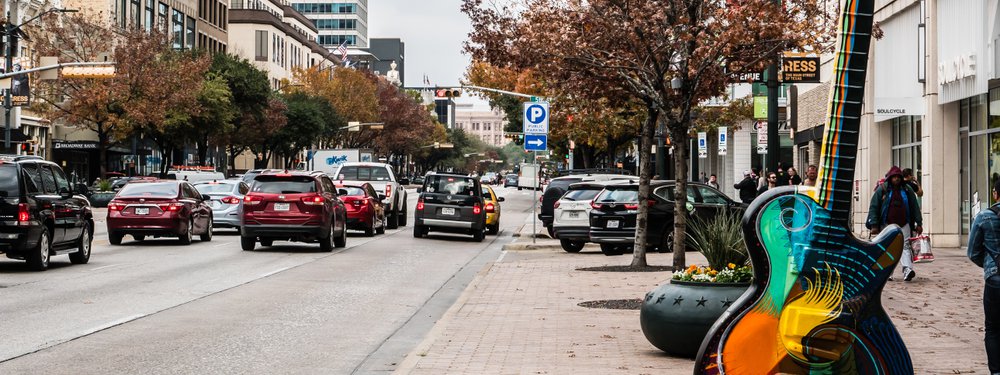
Revitalized neighborhoods surrounding Austin鈥檚 urban core provide affluent residents more housing options closer to downtown, increase developers鈥� profits and fetch city hall additional property tax revenue.
But all that infill redevelopment is also pushing the city鈥檚 low-income residents, who are often people of color, farther from the jobs and public services that help people climb the socioeconomic ladder.
That鈥檚 one of several conclusions from 鈥淯prooted,鈥� a University of Texas at Austin that is scheduled to be presented to the Austin City Council on Tuesday.
鈥淎bsent major interventions by the City of Austin and other stakeholders, these residents鈥攚ho are largely low-income persons of color鈥攚ill be pushed out farther away from opportunity and dislocated from their communities,鈥� the report says. 鈥淚n the process, neighborhoods that have historically been home to African-American and Hispanic residents will lose their cultural character and become enclaves for largely white and wealthier residents.鈥�
The council commissioned the report last year as the city, like many in the United States, grapples with several factors . The report focuses on gentrification, which generally refers to redevelopment that attracts residents with higher incomes and educations in such large numbers that property costs increase and the physical and cultural attributes of a neighborhood change.
鈥淲hile there is disagreement about the potential benefits of rising property values and building upgrades and who receives these benefits, there is broad consensus that displacement is an undesirable side effect,鈥� the report says.
Fred McGhee, a historical archaeologist and community activist, has seen the displacement of residents in the the city鈥檚 Montopolis neighborhood as the East Riverside Drive corridor has redeveloped in recent years. He said the historically low-income neighborhood has transformed as developers built housing for higher-income newcomers.
鈥淭hey鈥檙e young, they鈥檙e professional, they鈥檙e clearly here to work in tech,鈥� he said. 鈥淭hey鈥檙e here to make a real estate investment. They鈥檙e not interested in playing a role in the community.鈥�
That neighborhood is one of several areas highlighted in Tuesday鈥檚 report, which was compiled by three professors in the UT architecture school鈥檚 Center for Sustainable Development and UT law school鈥檚 Entrepreneurship and Community Development Clinic. Along with the report, the authors on Tuesday also unveiled that identify areas that are experiencing or are vulnerable to gentrification. The neighborhoods identified largely fall in an area dubbed the 鈥渆astern crescent,鈥� which starts north of the UT campus along U.S. Highway 183, runs east of Interstate 35 and arcs back toward neighborhoods south of downtown.
Three council members whose districts include the areas identified as vulnerable to gentrification 鈥� Greg Casar, Ora Houston and Pio Renteria 鈥� could not be reached for comment Monday. Officials with the Greater Austin Black Chamber of Commerce, the Austin chapter of the League of United Latin American Citizens and Friends of Austin Neighborhoods also could not be reached.
The study comes weeks after Austin City Council hit the pause button on an attempted overhaul of Austin鈥檚 land-use regulations, an initiative called CodeNEXT. One of its goals was stemming the city鈥檚 rising housing costs.
Tuesday鈥檚 report from UT identifies several policies and programs meant to minimize displacement of low-income and existing residents from gentrifying neighborhoods. But UT School of Law clinical professor Heather Way, one of the authors, said the most successful initiatives will likely be neighborhood specific. And, she said, the study is not intended to be a 鈥渞ehash鈥� of CodeNEXT.
鈥淭here鈥檚 no cookie cutter solutions,鈥� she said.
The study does highlight ways in which the Texas Legislature has contributed to housing unaffordability with laws that block cities from implementing policies and programs available in other states.
Texas lawmakers have forbidden citywide wage increases above the federal minimum wage, fees on new market-rate developments that are used to fund affordable units and ordinances that bar landlords from discriminating against residents who have federally subsidized housing vouchers.
The myriad policies and actions weighed as potential solutions in the study include disincentivizing redevelopment and demolition of existing affordable homes, offering tax breaks to apartment owners who provide affordable units and giving residents at risk of displacement higher priority on waiting lists for affordable housing programs.
One key thing that could help is putting plans to combat displacement in place before particular areas are too far along in the gentrification process. That includes having the city buy and hold land in specific neighborhoods to relieve free-market pressure. But that, like many other initiatives, could come at taxpayer cost.
鈥淢aking a difference will require a considerable investment of dollars 鈥� much more than Austin voters have been accustomed to allocating towards affordable housing and anti-displacement,鈥� the report says. 鈥淥ther cities seeking to have a major impact are regularly investing tens of millions of dollars in anti-displacement programs and policies.鈥�
Austin voters in November will decide seven bond measures worth a collective $925 million. One of the measures would set aside $250 million for affordable housing. McGhee, a Montopolis resident, is among several activists who have presented city leaders with their own ideas about how to stem displacement from gentrification. Dubbed the 鈥淧eople鈥檚 Plan,鈥� it also calls for the city to build low-income housing on government-owned land. It also calls for the creation of an affordable housing trust fund and that 20 percent of all future bond elections be earmarked for low-income homes.
McGhee said that politicians have historically ignored the needs of low-income residents and people of color and instead supported the wishes of white voters and profit-driven developers.
鈥淕entrification is a question of real estate,鈥� he said. 鈥淎nd real estate interests dominate city hall.鈥�
This article in The Texas Tribune.
More 国产视频 the Authors
Related

Disability in the United States at 250

From 鈥楻isky Business鈥� to 鈥楳ission: Possible鈥�: Why ECE Learning Cohorts Work

State Education Budgets in Turbulent Times
