A Chapter of: Democracy Beyond COVID-19
COVID-19 Hits Local Democracy Where It Hurts
The pandemic is magnifying a decade-long power struggle between conservative states and progressive cities.
Maresa Strano
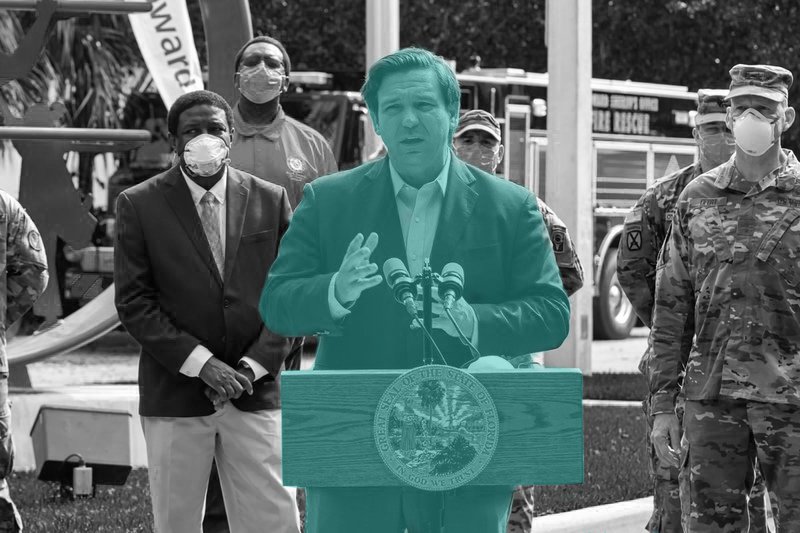
Since COVID-19 arrived on the United States' shores, many red-state mayors鈥擱epublicans and Democrats alike鈥攈ave struggled to coordinate their responses with their state officials. We鈥檝e watched mayors and local health authorities beg grudging governors to impose strict statewide social distancing mandates鈥攐nly to be dismissed, overruled, or burdened with contradictory orders that make it difficult for localities with some of the most vulnerable citizens to enforce life-saving measures.
In Georgia, for instance, Tybee Island鈥檚 beach closures were overturned two weeks later by Republican Gov. Brian Kemp鈥檚 much-delayed statewide shelter-in-place order, which and allowed beaches to reopen. Tybee Island Mayor Shirley Sessions was one of many coastal city mayors and associated resumption of certain activities, noting that the island鈥攚hich has two nursing homes and no hospitals鈥攃an鈥檛 afford any relaxation of social distancing.
Shocking as these disputes may be for Americans in general, longtime observers of state-local relations will be the first to say, 鈥淵eah, that checks out.鈥� The intergovernmental conflicts we see today mark a predictable extension of a decade-long, woefully underreported power struggle between conservative states and progressive-leaning cities鈥攐ne which has significantly limited cities鈥� ability to solve problems for their residents.
While the need to correct this imbalance has been evident for a long time, the coronavirus pandemic has magnified both the health-related challenges cities face and the unique political obstacles they must often confront to address these challenges. U.S. cities are the primary engines of their respective state economies and, to a large extent, the world economy. According to , metro economies provided 99.5 percent of the United States' real GDP growth in 2017. Their combined output surpassed every non-U.S. nation except China, and the economic value generated by the 10 most productive metro economies exceeded that of 37 states.
Yet, , wealth alone doesn鈥檛 confer governing power. Whether cities are able translate economic success into policies equal to today鈥檚 most pressing issues depends on or 鈥渉ome rule鈥濃�攚hich has unfortunately been collecting dust since 1953.
So, what is 鈥渉ome rule鈥�? To understand, we need to go back to the U.S. Constitution. , state powers derive from the 10th Amendment of the Constitution; meanwhile, there鈥檚 no mention of local governments, leaving local authority entirely in states鈥� hands. Home rule鈥攁 Progressive-Era innovation created to protect localities from excessive and counterproductive state interference鈥攄enotes a variety of state constitutional and statutory provisions that give local governments the authority to govern matters of local concern. But home rule provisions vary, reserving significant affirmative power to certain municipalities while requiring specific authorization from the state in others. Either way,
Local authority has always been legally and politically vulnerable to the whims of the state. But as the gap between GOP- and rural-controlled state governments and Democratic-leaning city governments has widened over the last decade, the old home rule model no longer passes muster. One reason is the well-documented rise and spread of state 鈥渃eiling preemption鈥濃�攚here the state government sets a statewide maximum standard that its subdivisions cannot exceed鈥攁nd 鈥減unitive preemption,鈥� when preemption laws expose local officials or governments to penalties (such as fines, removal from office, or withholding of state funds) for noncompliance. These preemption laws often pass in reaction to the emergence of progressive city policies aimed at improving public health in denser, more diverse populations.
For example, have preempted local paid sick time ordinances (22 of them within the last decade). Forty-four states have banned local regulations of ride-sharing networks; eight states bar local control over nutrition, such as portion sizes and promotional games and toys; 10 states bar local regulation of e-cigarettes; 20 states preempt municipal broadband networks; 43 states currently outlaw local regulation of firearms; and 31 states prohibit local rent-control. As Kim Haddow, executive director of the Local Solutions Support Center, , many of the most popular preemption laws鈥攕uch as those barring local rent control, paid sick days, and broadband鈥攁re 鈥渢he policies that are most needed right now.鈥�
In this time of peak partisanship, and without modern home rule provisions, it鈥檚 common for state preemption laws (and the local laws that inspired them) to end up in the courts鈥攁 trend that reinforces Alexis de Tocqueville鈥檚 1835 observation that 鈥渟carcely any political question arises in the United States that is not resolved, sooner or later, into a judicial question.鈥� Preemption-related legal battles frequently drag on for months or years, leaving localities paralyzed by confusion over the laws鈥� validity and enforceability. State lawmakers and their special interest benefactors profit from this confusion.
Recently, the pandemic has presented new opportunities for Republican state governments to deploy preemption, intentionally or not, as an instrument of confusion. With so many red state mayors taking action in advance of their governors, late-arriving statewide orders have sent local authorities scrambling.
On top of general confusion, local governments fear the possibility of legal action if they maintain measures stricter than the state鈥檚. On April 2, Florida Gov. Ron DeSantis, a Republican, reversed his position and to combat the coronavirus. But the relief felt by city officials who had spent weeks urging him to take more aggressive action was short-lived. That same evening, any conflicting local measures鈥攑erhaps by accident. While the language of the second order typifies ceiling preemption, the governor the order merely 鈥渟et a floor鈥� that mayors could choose to go beyond.
Orders from some of DeSantis鈥檚 peers posed similar issues, but with the addition of specific caveats and exemptions that governors claim in the sole interest of tackling the coronavirus. Critics point out that red state governors ( 翱丑颈辞鈥檚 Mike DeWine) are using the crisis as a pretext to impose partisan or ideological preferences. Mississippi Governor Tate Reeves, for instance, issued an executive order on March 24 preempting local governments鈥� social distancing measures and redefining "essential business or operation鈥� to cover gun stores, houses of worship, department stores, bars, Uber, car dealerships, construction services, and more.
Reeves鈥檚 order has drawn sharp criticism from local leaders, including Mayor Mario King of Moss Point. 鈥淚 definitely think that he is 100 percent putting economic interests before people鈥檚 health,鈥� of the governor.
Cities can attempt to fight back against ceiling and punitive preemption laws, which limit their ability to effectively address today鈥檚 most pressing economic and cultural issues. But obstacles abound. In addition to the confusion these laws leave in their wake, obsolete home rule protections give cities few reliable options.
Affirming de Toqueville鈥檚 insight about political issues inevitably becoming legal ones, the National League of Cities determined last year that the political problem of modern preemption called for an update to its 1953 鈥淢odel Constitutional Provisions for Municipal Home Rule.鈥� This round, the legal question was how to best reframe the state-local relationship for the modern era. The resulting report, presents four principles of constitutional home rule reform that can stand up to the contemporary needs of local government, and which merit serious consideration from the democracy reform community writ large.
First, the Local Authority Principle reaffirms localities鈥� initiative power (i.e., the power to enact local policy without prior state authorization). This gives local governments more freedom and agility as policy innovators.
Second, the Local Fiscal Authority Principle recognizes local governments鈥� power to tax and manage spending in ways that make sense for their communities (for instance, taxes on sugar-sweetened beverages, plastic bags, and e-cigarettes).
Third, the Presumption Against State Preemption Principle asserts that states seeking to preempt local authority should have a solid, general reason to do so, rather than targeting certain jurisdictions because a city law clashes with the state鈥檚 political or ideological preferences.
Lastly, the Local Democratic Self-Governance Principle defends a local government鈥檚 right to manage its own property and personnel. This principle addresses 鈥減unitive preemption,鈥� whereby local officials can be held personally liable or removed from office because of a state-local conflict. It also extends state 鈥渟peech or debate鈥� immunity, currently guaranteed to state lawmakers, to local officials.
Today, partisan differences over social distancing underscore several familiar flaws in our political system, from gerrymandering to the rural-urban divide. But for those who have spent the last decade or more tracking the rise and spread of state preemption, the above failures of federalism also reveal the urgent need for a home rule makeover. City governments aren鈥檛 just America鈥檚 frontline defense against public health disasters; as , they also represent the most effective offensive force for positive change. In short, our cities can do better, and their residents鈥攅specially the marginalized communities of color most impacted by crises鈥攄eserve better.
Democracy Beyond COVID-19
- What Comes After the Pandemic?
- COVID-19 Hits Local Democracy Where It Hurts
- This Pandemic Will Transform Our Democracy鈥擯erhaps for the Better
- COVID-19 Is This Generation's 9/11. Let's Make Sure We Apply the Right Lessons.
- The Only Thing We Have to Fear Is Fear-Based Politics
- In the Wake of Its COVID-19 Failure, How Do We Restore Trust in Government?