A Chapter of: Punching Down
Part One: State Preemption Unleashed
Preemption 101
What is preemption? The Public Health Law Center provides a helpful definition: 鈥淧reemption is a legal concept where a higher level of government has the authority to limit, or even eliminate, the power of a lower level of government to regulate a certain issue.鈥�1 This means that if a city council or other local government entity passes an ordinance or regulation that conflicts with a state law, the state law generally trumps the local law. State authority to invalidate local law derives from each state鈥檚 constitution and statutes, which also set the parameters of local authority. In terms of policies affected, the National League of Cities鈥� 2018 preemption report found that states have consistently targeted four areas of local governance: economics, social policy, health, and safety.2
State preemption comes in two basic flavors. Floor preemption, which arguably is not preemption at all, denotes when the state sets a minimum standard of protection that localities can build upon. Ceiling preemption, which is the more problematic of the two, is when the state sets a maximum standard of protection that localities cannot exceed and often cannot differ from. Ceiling preemption can be subdivided into two other varieties: preemptive/proactive preemption, in which states bar local action on an issue in anticipation of local action being taken, and vacuum/void preemption, in which states override a local standard and/or prohibit one from being set without replacing it or setting a new statewide standard with the intention to create a regulatory vacuum.3 Both have become popular in the last decade.
State-Local Relationship: Home Rule v. Dillon鈥檚 Rule
The surge in state preemption activity has provoked a set of legal and normative debates about the balance of state and local powers, and the degree to which local autonomy is helpful or harmful to a democratic society.
Any serious legal debate concerning the distribution of government powers begins with the U.S. Constitution. America鈥檚 preeminent legal document specifies a national-state power structure and provides the basis for the doctrine of preemption, but it 鈥渋s silent about the powers allocated to local governments. Simply put, there are none.鈥�4 Local authority has therefore been left to the states to decide.
While each state defines for itself what powers it will confer to local governments, there are two master configurations of the American state-local relationship to be aware of: "Dillon鈥檚 Rule" (named in the late nineteenth century for Iowa Supreme Court Chief Justice John Forest Dillon) or the "creature of the state doctrine,鈥� and "Home Rule," or "local autonomy." Then there are hybrid arrangements in which states that follow Dillon鈥檚 Rule also allow home rule for certain jurisdictions.
First, Dillon鈥檚 Rule represents a top-down organizational structure in which municipal decision-making is almost entirely subject to state oversight and specific questions of local government authority are decided by the courts. Dillon鈥檚 Rule holds that local governments 鈥減ossess only those powers indispensable to the purposes of their incorporation, as well as any others expressly bestowed upon them by the state.鈥�5 On state supremacy over cities, Dillon wrote, 鈥淚t breathes into them the breath of life, without which they cannot exist. As it creates, so may it destroy. If it may destroy, it may abridge and control.鈥�6
Home rule represents a variety of state constitutional and statutory provisions that delegate authority to local governments, where 鈥減ower is limited to specific fields, and subject to constant judicial interpretation."7 By creating local autonomy in respect to deciding how to conduct local affairs, home rule limits excessive and counterproductive state interference.
Home rule has two valences: initiative (the power to enact local policy without prior state authorization) and immunity (the power to protect local decisions addressing local issues from state override).8 In the United States, at least 40 states delegate some degree of initiative power to cities, whereas immunity power is much more elusive. In the last decade, states have become increasingly antagonistic toward home rule. In states where certain localities are expressly permitted to legislate on their own behalf, state lawmakers are now testing the boundaries of their supremacy by aggressively preempting local action on a wide variety of issues that have traditionally fallen within the purview of the municipal government authority, such as zoning and public safety. In other words, both initiative and immunity powers are under attack.
鈥淣ew鈥� Preemption v. 鈥淥ld鈥� Preemption
The differences between new preemption and old preemption are substantial. Indeed, the two bear little resemblance. In a nutshell, old preemption 鈥渃onsisted of a judicial determination of whether a local law is inconsistent with pre-existing state law.鈥�9 It was a mechanism for resolving episodic legal disputes between state and local regulatory powers, and for managing the relationships between those powers. While state law still took precedence, preemption analysis was underpinned by the belief that 鈥渟tate policies could coexist with local additions or variations.鈥�10 Old preemption decisions considered to what extent such local additions and variations made sense; new preemption considers whether they should exist at all.
For instance, in 1982 there was a dispute over whether a Texas home rule city had power to regulate drilling within its borders in light of the state鈥檚 delegation of oil and gas authority to the Texas Railroad Commission, a statewide agency. The case was brought by a citizen who had been convicted of violating a local drilling ordinance. He appealed the decision on state preemption grounds. Ultimately, the Texas Court of Appeals in Fort Worth found that municipalities do have the authority鈥攖o the extent that they do not directly contravene state regulations. This decision, then, affirmed the state鈥檚 local autonomy norm.11 Texas subsequently permitted localities to self-regulate drilling unencumbered until 2014, when, in response to the city of Denton鈥檚 successful citizen initiative to ban local fracking, the state passed a law banning all local regulation of oil and gas鈥攅ffectively banning Denton鈥檚 ban. Multiple states followed Texas鈥檚 example.12
Old state preemption typically occurred organically and played out almost entirely in state courts. These cases are not extinct, but they have been far outstripped by instances of this new, strategic incarnation of preemption that tend to be initiated in closed-door statehouse meetings with lobbyists and within a context of other states passing similar preemption legislation.
Over the last decade, preemption became a broad tool for policy change. State lawmakers have proven increasingly comfortable with preempting local government action when it does not suit their political, social, or economic beliefs or agendas. This may appear to be a brazen power grab, or at least a misuse of authority, but from a legal perspective the distinction is not as clear cut.
鈥淚nsofar as states have sometimes granted cities leeway to enact policy in the past, that forbearance has been the result of political norms, not legal structures. Once those norms crumble, and state legislatures decide to assert their authority, cities will have very little recourse,鈥� reflected Atlantic writer David Graham.13
Even localities that have been granted broad authority by the state to pass laws are rarely immune to the law of preemption.
In contrast with old preemption, in which the state adopts a uniform standard (frequently a minimum standard or 鈥渇loor鈥�) for exclusive statewide application, the new preemption has been used to enforce a deregulatory ideology and targets cities to invalidate existing progressive laws and bar future enactment of such laws. It has also been used to strip all authority from substate governments, including counties, municipalities, towns, and villages. Notably, preemption is now being used to void local standards without adopting new standards to take their place, creating a regulatory vacuum. The old preemption goal of a uniform standard that coordinates between state and local regulation has, in many cases, given way to the desire to prevent 鈥渁ny regulation at all.鈥�14 In so doing, the new preemption is making it hard for many cities and other localities to meet the needs of their communities, harming local democracy.
Preemption is used both as a scalpel to carve out specific local laws and as a nuclear bomb to decimate, via 鈥渘uclear preemption," a locality鈥檚 ability to regulate whole sectors of the government. For instance, in 2015, the Michigan Legislature passed the 鈥淒eath Star bill鈥� (officially H.B. 4052, the Local Government Labor Regulatory Limitation Act), which bars local governments from "adopting, enforcing or administering local laws or policies concerning employee background checks, minimum wage, fringe benefits, paid or unpaid leave, work stoppages, fair scheduling, apprenticeships, or remedies for workplace disputes.鈥� In essence, the act stripped local governments of nearly all power to regulate employers. 鈥淪tates aren鈥檛 merely overruling local laws,鈥� Emily Badger wrote for the New York Times, 鈥渢hey鈥檝e walled off whole new realms where local governments aren鈥檛 allowed to govern at all.鈥�15
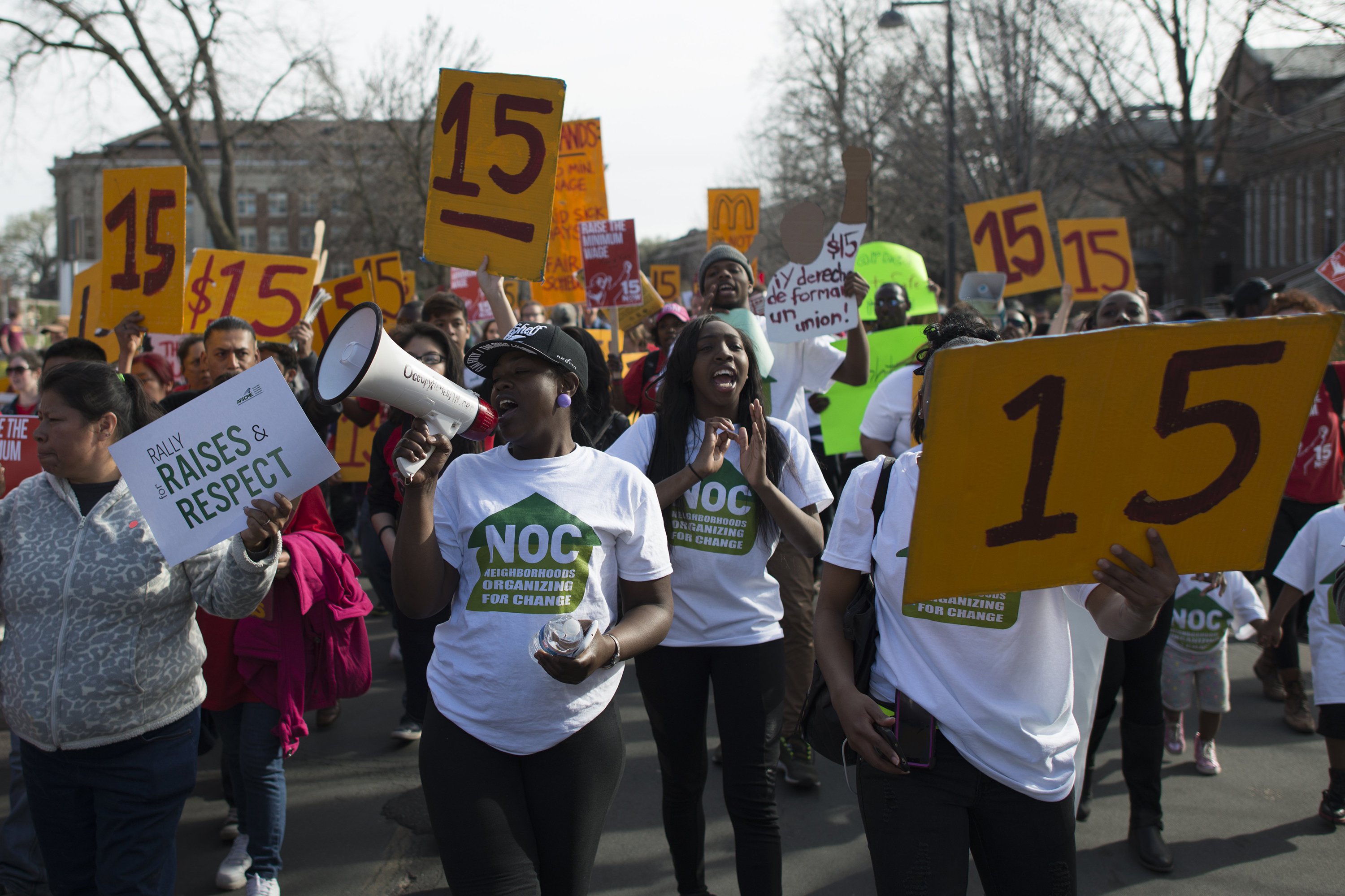
In addition to vacuum preemption, proactive or preemptive preemption is also on the rise, and likewise has had marked impacts on labor and employment law. The trend of states blocking labor laws has accelerated since 2013. As of 2019, 25 states have passed laws preempting local minimum wage ordinances (up from 11 states in 2012), 22 states have banned paid sick days (up from three states), and 20 have banned both (also up from three).16 Although most of these bills were triggered in response to local regulations, some states adopted the preemption laws preemptively, or before any local governments had the chance to act. For example, the Ohio state legislature passed a bill to preempt local governments from enacting their own minimum wage a full six months before the Cleveland City Council was scheduled to hold a public vote on whether or not to increase the minimum wage to $15.17
Why is the New Preemption Happening Now?
There are three chief reasons why the new preemption is happening now. The first is state capture by conservative organizations partnered with corporate interests and an explosion of ideological, mostly conservative, money into state legislative elections. The second is the growing spatial and regional divide between progressive urban and conservative non-urban jurisdictions. The third reason is national-level polarization, which is pushing conflict down to states and localities.
State Capture
The high number of Republican 鈥渢rifectas鈥� is one explanation for the new preemption. Although the seeds of modern, industry-backed preemption were planted in the 1980s when the tobacco industry began to push for state laws barring anti-smoking ordinances, 鈥渢he era of preemption鈥�18 came immediately on the heels of the Republican wave election of 2010. Further, the majority and the more egregious instances of the new preemption have occurred in Republican-majority states.
But partisanship is only one side of the story. Most GOP legislators are elected with the indispensable support of socially conservative interest groups and special interests with strong deregulation agendas. These interest groups further supply policy advice and expertise to state lawmakers who are often under-resourced, underinformed, overextended, and, therefore, susceptible to assistance. Illinois State University professor Lori Riverstone-Newell underlined the connection, concluding that 鈥渞ising conservative dominance of state legislatures has provided the opportunity to thwart progressive local policies, and these efforts have been aided by various industry and conservative organized groups.鈥�19
These industry- and conservative-organized groups refer to a cross-state coalition of socially conservative and economically libertarian special interests, consultants, and politicians. This coalition, masterminded and run by three networks, the American Legislative Exchange Council, the State Policy Network, and Americans for Prosperity20鈥攚丑补迟 State Capture author Alex Hertel-Fernandez dubbed the 鈥渞ight-wing troika鈥濃�攕erves an anti-regulatory and culturally white, Christian, and conservative policy agenda.21 According to Vanessa Zboreak, 鈥渢he overarching sentiment stressed by ALEC, that conservative causes will be best (and most swiftly) served by eliminating local control, has permeated the last two years of legislative sessions in many of the states in which the legislature switched party control in 2012.鈥�22
Model or 鈥渃opycat鈥� bills have been key to the troika鈥檚 success,23 and they have been equally important to the emergence and spread of the new preemption. Special interests can stuff their anti-regulatory policies into model legislation thanks to their alliance with the ubiquitous ALEC. ALEC鈥檚 local government counterpart, the American City County Exchange (ACCE), provided the template for many preemption laws.24 In some cases, the language of model bills, in particular those that undercut labor workplace equity and local economic regulation, are deliberately crafted to conceal their true origin and purpose. As a consequence, legislators can end up voting against their own policy preferences on preemption matters and otherwise.25
Yet the new preemption is not confined to Republican-controlled states, nor is it a distinctly Republican Party strategy. States with Democratic-majority legislatures and governors are executing the new preemption, too, although the targeted policies are different. In Republican states, preemptive action is about both economic deregulation and social conservatism, while in Democratic states, the new preemption is enabled by legislators trading away local democracy as a bargaining chip. Both Democratic and Republican-held state capitals are awash in business lobbyists pressing for bans on local regulation. For instance, the state of New York preempted New York City鈥檚 plastic bag tax, a move strongly encouraged by the American City Council Exchange in the name of 鈥渂usiness and consumer choice.鈥�26 In 2018, California passed a law to preempt local soda taxes that was engineered by the beverage industry in response to multiple communities raising taxes on sugary drinks. In that case, California lawmakers were opposed to the law on the grounds that these local taxes promoted public health and raised revenue for public services, so the American Beverage Association and other interested parties had to resort to unseemly tactics (the terms extortion and blackmail abounded in the surrounding news coverage) to leverage a win for their preemption bill.27
In sum, conservative state power only created the opportunity for the new preemption; corporations and special interests provided the money and infrastructure to realize it.
Partisan Geographic Polarization
Geographic polarization between progressives in blue cities and conservatives in the rest of the state helps explain how the new preemption came to be. By the time the right-wing troika emerged, Democrats and Republicans had already sorted themselves into urban and non-urban areas, respectively, and were primed for the gerrymandering to come.28
By 2010, the spatial, regional divide between urban and inner-suburban areas mapped directly onto partisan divisions.29 In the years that followed the far-right takeover of the Republican Party, conservative legislators exploited these divisions and their redistricting authority to marginalize Democratic-controlled cities in red state legislatures and Congress鈥攊n effect disenfranchising millions of city-dwelling Democratic voters. This coordinated, cross-state gerrymandering effort tainted the growing urban-rural divide with a distinctly negative partisan character. In Congress and statehouses across the country, bipartisan values underlying good governance broke down. As political scientist Dennis Goldford opined in 2015, 鈥渋f you make one move in the direction of your opponents, that鈥檚 treason.鈥�30 The intense interparty hostility wreaking havoc in the halls of government have reverberated through an increasingly polarized and fractured civil society.
Since 2011, conservative lawmakers have continued to pass laws to minimize the state power of progressive voters concentrated in metropolitan areas. As Republicans鈥� state dominance has increased, so has the number of state legislative bills to undercut city power. In the face of this state antagonism, liberal and progressive activism has swelled in cities across the U.S., most notably in blue cities in red states.31
But self-sorting is not entirely a story of red states versus blue cities. Since 2011, state legislative gerrymandering, combined with Democratic clustering in urban areas and along the coasts, has produced a steady increase in the number of single-party state governments (or "trifectas"), and correspondingly historic low numbers of divided party governments. United party governments possess high legislating potential. Trifecta states, both Republican and Democrat, are lightning rods for corporate lobbyists and organized conservative groups like ALEC, for whom these states鈥� lawmakers represent the optimal blend of policymaking power and lack of resources and expertise.32 Therefore, one could argue that the higher volume of state preemption laws in Republican-controlled states is a function of Republicans having more trifectas than Democrats.
Polarization at the Federal Level Is Pushing Conflict Down
Gridlock at the federal level has caused a number of knock-on effects relevant to state preemption. For one, it has often left state governments with more to do and less functioning or fiscal capacity. States, in turn, passed the buck to localities, which have often fended for themselves anyway. Rather than wither under the neglect, localities adapted and, by all accounts, thrived. Cities in particular have become extremely innovative, self-sufficient, and professional,33 but are simultaneously less empowered to exercise those skills due to aggressive state interference. Even without the threat of preemption, greater governing capabilities do not earn cities greater power and autonomy. They still operate inside a power structure that privileges states.
Meanwhile, special interests, recognizing the extreme difficulty of getting bills through a gridlocked Congress, have shifted their lobbying activities from the nation鈥檚 capital to state capitals. Alan Kemp, executive director of the Iowa League of Cities, explains how this shift has impacted state legislative decisions regarding preemption. 鈥淎 lot of power has devolved from the federal government down to the state level, and so legislators are in the position where they鈥檙e being approached by interest groups that are proposing changes that are beneficial to them,鈥� Kemp said.34 Underlining this point and the point above about single-party controlled statehouses being targets for special interests is a recent project by USA Today, the Arizona Republic, and the Center for Public Integrity that found that more than 10,000 bills introduced in statehouses between in 2010-2018 were almost entirely copied from bills written by special interests, with over 20 percent becoming law.35
Preemption Is Not the Problem, Abusing It Is the Problem
Is Preemption Inherently Bad?
There is no such thing as a one-size-fits-all model for allocating powers between the federal, state, and local levels of government, nor is there a one-size-fits-all approach to intrastate legislating or public service delivery. In practice, policy implementation almost always requires the cooperation of two or more levels of government and a certain degree of local customization, a process that creates opportunities for local governments to communicate local priorities and problems to their state and federal counterparts. This interactive structure, which allows for information to flow from the bottom up instead of only top-down, is a pillar of democratic stability. Therefore, if experience shows (and the consensus agrees) that cooperative intergovernmental policy implementation is more effective and more democratic, then bad preemption is the kind that undermines localities鈥� governing capability by stifling their vital contribution to the intergovernmental network.
In principle, local autonomy does not have a political valence. In practice, however, opinions on local autonomy are subject to changing power dynamics at the local and state levels. Localism was sacrosanct to conservatives when progressive critics saw it as cover for ultra-conservative provincialism, but today, progressives champion the fundamental rights of home rule while conservatives see localism as shorthand for progressive city power run amok. Thus, it is all the more important to identify the mutual benefits and drawbacks of localism.
First, local decision-making has a number of benefits for democracy that transcend partisan divides, such as economic efficiency, greater political participation, and policy experimentation and innovation. This last item, the idea of both localities and states as laboratories of democracy, epitomizes the federal system. But there are also valid reasons for preempting local decisions. Unconstrained local autonomy does not have a spotless record, after all, especially where civil rights are concerned. Preemption scholars offer multiple examples of 鈥済ood鈥� uses for preemption, such as in response to a local policy that carries demonstrable negative externalities, or when local policies violate state or federal laws concerning fundamental rights, like equal protection. For example, preemptive action against Sundown Towns, exclusionary zoning, and other systemic discrimination can be considered justified.
Based on these areas of potential political consensus鈥攖he idea that localism has democratic merits but should not be unlimited, and that strong cooperation between different levels of government produces better results鈥攑reemption can be labeled 鈥渂ad鈥� when it threatens a local government鈥檚 ability to make effective policies, on the condition that said local policies can be 鈥渓argely absorbed within the regulating community and don鈥檛 implicate fundamental rights or constitutional norms.鈥�36
The prevailing normative argument for what constitutes bad preemption goes one step further. That argument asserts that preemptive action to undermine a locality鈥檚 ability to advance or protect racial, gender, economic, and health equity should also be denounced by both progressives and conservatives on the grounds that equity is a core value of democracy. Indeed, an interactive mapping tool set up by the Partnership for Working Families to track preemption shows that 鈥渟tate preemption follows a pattern of mostly white, male legislatures ignoring or overriding concerns of the women and people of color who are more likely to suffer harm because of states preempting local laws and regulations, such as those that would strengthen gun control.鈥�37
Until recently, preemption was regarded more as a tool of liberal federal governments wanting to protect marginalized communities against local provincialism, while local autonomy was at the top of the list of far-right conservative values. But norms have shifted: localism is now associated with progressive causes and Democratic Party politics. Today, many conservative politicians view both local and federal government as threats to liberty, seeing states as the right level to govern. Conveniently, the state level is also where conservatives hold the most power.38 As one of the Republican lawmakers in Ohio who voted to preempt Cleveland鈥檚 $15 minimum wage ordinance put it, 鈥淸W]hen we talk about local control, we mean state control.鈥�39 In light of the cultural, intellectual, and financial dominance of progressive cities, the new conservative strategy is to co-opt state preemption to disenfranchise Democratic voters, deregulate industry, demobilize labor, and perpetuate systemic racism in subtler and more publicly palatable ways.
Preemption is a legal doctrine; it has no inherent political agenda or political valence, as Heather Gerken wrote in 鈥淎 User鈥檚 Guide to Progressive Federalism.鈥�40 Preemption is a tool to help resolve the inevitable conflicts that arise between different levels of government in a federal system. Like any tool, it can be used to build or destroy, and whether either is good or bad is in the eye of the user. Yet there are still conditions under which progressives and conservatives ought to be able to see eye to eye.
The Dangers of Modern Preemption
There is nothing inherently objectionable about preemption. Until recently, state governments exercised preemption mainly in accordance with its original purpose: enforce balance and efficiency in our multi-tiered system of government. That old or classic version of preemption is not at issue here. Instead, this report addresses the new preemption, which is wielded by state officials interested less in resolving intergovernmental conflicts than in precluding them by stifling local regulatory powers鈥攑articularly those used to advance progressive social and economic policies.
There are many adverse effects of this aggressive, politicized form of preemption. Some are more tangible, such as punishments and threats against city funds and individual elected officials, while others are hard to measure, like preemption鈥檚 chilling effect on local policy innovation. Either way, 鈥渘ow almost every issue that matters to American voters is at risk of being preempted,鈥� and 鈥減reemption is being used as a blunt instrument to destroy local democracy, and that's new.鈥�41
States are passing preemption laws that 鈥渄o not merely nullify inconsistent local rules but rather impose harsh penalties on local officials or governments.鈥�42 Local officials deemed to be in defiance of a preemption law, either through vote, speech, or failure to remove a preempted ordinance or regulation from the books, face removal from office, massive fines and legal fees, and even criminal liability.
For example, in 2011 Florida passed an NRA-backed law that gave sharper teeth to the state鈥檚 existing preemption of local gun ordinances.43 The law, currently in effect, imposes harsh penalties on local officials, including a $5,000 fine, personal liability, and possible removal from office, for enacting new or enforcing previous gun ordinances. In 2014, two gun rights organizations sued the City of Tallahassee for leaving two decades-old city laws that prohibited the use of firearms in public parks on the books. Because this 鈥渟uper-preemption鈥�44 law also forbids the use of public funds (i.e., the City鈥檚 legal department) in defending officials in gun ordinance cases, former Tallahassee Mayor Andrew Gillum had to secure pro-bono legal representation.45

Penalties and threats also loom large for so-called 鈥渟anctuary cities鈥� in red states across the country.46 Texas鈥� preemption law banning sanctuary cities in the state, which passed in 2017, threatens officials who 鈥渁dopt, enforce, or endorse鈥� a sanctuary city policy with fines of up to $25,500 per day and removal from office.47
Finally, there鈥檚 the 鈥渢he mother of all local preemption bills:鈥� Arizona鈥檚 S.B. 1487, which passed in 2016 and allows for the withholding of state funding from localities that pass any regulations that deviate from state law.48
Forty-three state constitutions include a speech or debate immunity provision to protect state legislators from being held liable for their legislative acts. Local legislators enjoy no such express immunity. Meanwhile, preemption is being used to punish cities by cutting or threatening to cut state funds. In any case, the threat of state intervention and the potential penalties that can accompany preemption are suspected to be having a chilling effect on local policy innovation.49 As Gillum put it, 鈥淚t is intended to put everyone across this state and across this country where these efforts are taking place on notice: Don鈥檛 come near it…And if you do, we鈥檒l come after you personally, we鈥檒l come after your government, we鈥檒l come after the very survivability of your community by cutting off resources to you.鈥�50
In addition to the grand scale of the new preemption, the scope of preemptive action is also much greater than it was traditionally, which further signifies a departure from its intended usage. Two of the more troubling drivers of the recent broadening of the scope of preemption bills are 1) conservative control of state legislatures and 2) the infiltration of industry and special interests into state policymaking.
The first is an ideological and cultural matter: state interference in city governing has risen in tandem with conservative state-level dominance. Conservative state lawmakers predominantly represent constituencies who are far removed physically and ideologically from city life and city challenges, and therefore are 鈥渓ikely to be opposed to the progressive social policies favored by most鈥� who reside there.51 Republican legislators are, of course, sensitive to the preferences of those they represent, and their preemption efforts against progressive city values reflect that.
But the incentive to preempt progressive ordinances and regulations that promote labor and employment rights鈥攑aid sick time, minimum wage increases, predictive scheduling, and others鈥攃ome more from donors and business interests than from non-urban voters. For example, local control on economic justice issues is broadly popular in Texas, with over 60 percent of Republican voters supporting a city鈥檚 right to pass paid sick time. Sixty-seven percent of Texas Republicans believe that local government most accurately expresses the values and needs of local residents, while only 24 percent of Texas Republicans agree that 鈥渨hen local governments each pass their own laws and policies, it creates a patchwork of laws across the state, which creates confusion and more red tape or paperwork for businesses that state officials should stop.鈥�52 That points to the second driver of the rise of the new preemption, the incursion of economic libertarianism into state policy-making. Industry groups and trade associations leverage their position in the organized conservative infrastructure to push preemption bills that create friendlier environments in which to do business.
The new preemption is not just identifiable by its scale but also by the scope of issues it seeks to affect, as well as the scope of stratagems states use to pass preemption legislation. In addition to modern preemption classics like fracking, smoking, firearms, tax and expenditure limitations, nutrition issues, LGBTQ+ rights, and minimum wage, recent laws have prohibited local regulation of issues as specific as sprinkler systems, municipal broadband, wireless alarm systems, Styrofoam products, milk and frozen desserts, and even beekeeping. Beyond the issues themselves, Michigan鈥檚 Death Star bill, North Carolina bathroom bill, Texas鈥檚 ban on sanctuary cities, California鈥檚 soda tax preemption, Ohio鈥檚 preemption of local minimum wage hikes, and Florida鈥檚 ban on local gun ordinances exemplify the spectrum of state legislative approaches to the new preemption. Moreover, these examples represent different ways that preemption has been used to undercut the will of communities nationwide and erode public trust in American democratic institutions.
Part One Summary
The last decade has seen a sharp uptick in state legislation to override or ban future local ordinances and regulations. Much of that preemption activity has been initiated in response to the enactment or anticipated enactment of progressive decisions that conflict with the preferences of ideologically conservative lawmakers and economically libertarian special interest groups. The actions of these lawmakers and influencers have had significant implications for a vast range of social, and health and safety policies.
At the macro level, the modern escalation of state preemption has upended many norms and assumptions about the role of local democracy and autonomy within America鈥檚 intergovernmental power structure. It has also brought the broader issues of hyperpartisanship and polarization down to the city level, where policymakers and policy advocates are finding themselves under greater internal strain from their growing and more diverse populations, as well as simultaneously greater external strain from increasingly adversarial and 鈥渃aptured鈥� state legislators.
Three key challenges have been identified: Local regulations are being targeted by industries in all 50 states, regardless of partisan composition, that wish to create regulatory vacuums; Democratic-majority cities are being targeted by Republican-majority legislatures that seek to erase or at least slow the spread of progressive policies across the board; and states are strategically deterring or 鈥渃hilling鈥� local policy innovation through the enactment of onerous penalties for violating preemption laws. Each of these hinders local officials鈥� abilities to meet the evolving needs of their communities, and each represents a separate threat to democracy.
If increases in special interest lobbying, state government trifectas, gerrymandering, and spatial, regional sorting of political preferences between urban and non-urban areas are the root causes of the new preemption, then the antidote cannot only be campaigns against preemption or for the reinstatement of individual preempted local ordinances or regulations. Ultimately, it will likely take a theory of change of state power. The new preemption is a symptom of a lack of progressive state power and a coalition too narrow to govern at the state level.
Citations
- National Policy & Legal Analysis Network, 鈥淔undamentals of Preemption鈥� (Public Health Law Center at William Mitchell College of Law, 2010), 1, .
- DuPuis et al., 鈥淐ity Rights,鈥� 1.
- National Policy & Legal Analysis Network, 鈥淔undamentals of Preemption,鈥� 2.
- David Swindell, James Svara, and Carl Stenberg, 鈥淟ocal Government Options in the Era of State Preemption,鈥� LGR: Local Government Review (UNC School of Government, 2018), 1, .
- Paul Diller, 鈥淚ntrastate Preemption,鈥� Boston University Law Review 87 (2007): 1122鈥�23.
- David A. Graham, 鈥淩ed State, Blue City,鈥� March 2017, .
- 鈥淐ities 101 — Delegation of Power,鈥� National League of Cities, December 13, 2016, .
- Richard Briffault and Laurie Reynolds, Cases and Materials on State and Local Government Law, 8 edition (St. Paul, MN: West Academic Publishing, 2016), 346.
- Briffault, 鈥淣ew Preemption,鈥� 1997.
- Briffault, 1997.
- 鈥淯NGER v. STATE | 629 S.W.2d 811 (1982),鈥� Leagle, .
- Riverstone-Newell, 鈥淩ise of State Preemption.鈥�
- David A. Graham, 鈥淩ed State, Blue City,鈥� March 2017, .
- Briffault, 鈥淣ew Preemption,鈥� 1997.
- Emily Badger, 鈥淏lue Cities Want to Make Their Own Rules. Red States Won鈥檛 Let Them,鈥� New York Times, July 6, 2017, .
- 鈥淲orker rights preemption in the U.S.,鈥� Economic Policy Institute, .
- Leila Atassi, 鈥淪pecial Election for Phased-in $15 Minimum Wage Proposal Set for May 2 in Cleveland,鈥� Cleveland.Com, September 13, 2016, .
- DuPuis et al., 鈥淐ity Rights.鈥�
- Riverstone-Newell, 鈥淩ise of State Preemption.鈥�
- As Alex Hertel-Fernandez summarizes: 鈥淎LEC, encompassing state legislators; the State Policy Network (SPN), coordinating state-level think tanks; and Americans for Prosperity (AFP), a federated advocacy group combining millions of grassroots volunteers with a large campaign war chest.鈥� Alex Hertel-Fernandez, 鈥淲hat liberals get wrong about conservative state dominance 鈥� and why it matters,鈥� Vox, April 1, 2019, .
- Alexander Hertel-Fernandez, State Capture: How Conservative Activists, Big Businesses, and Wealthy Donors Reshaped the American States – and the Nation (Oxford University Press, 2019).
- Vanessa Zboreak, 鈥淵es, in Your Backyard – Model Legislative Efforts to Prevent Communities from Excluding CAFOs,鈥� Wake Forest Journal of Law & Policy 5 (2015): 147.
- Rob O鈥橠ell and Nick Penzenstadler, 鈥淎bortion, Gun Control: How Special Interest Groups Push Legislation,鈥� USA Today, June 19, 2019, .
- Briffault, 鈥淣ew Preemption.鈥�
- O鈥橠ell and Penzenstadler, 鈥淎bortion, Gun Control: How Special Interest Groups Push Legislation.鈥�
- See 鈥淩egulating Containers to Protect Business and Consumer Choice,鈥� American Legislative Exchange Council, .
- Anahad O鈥機onnor and Margot Sanger-Katz, 鈥淐alifornia, of All Places, Has Banned Soda Taxes. How a New Industry Strategy Is Succeeding.,鈥� New York Times, June 27, 2018, .
- See generally Bill Bishop and Robert G. Cushing, The Big Sort: Why the Clustering of Like-Minded America Is Tearing Us Apart (Houghton Mifflin, 2008).
- For a long-term view on political polarization and the rural-urban divide, see Jonathan A. Rodden, Why Cities Lose: The Deep Roots of the Urban-Rural Political Divide (Basic Books, 2019).
- Alan Greenblatt, "Divided Legislatures Produce Gridlock, Not Compromise," quoting Dennis Goldford, Governing, June 2, 2015, .
- Riverstone-Newell, 鈥淩ise of State Preemption.鈥�
- David Swindell, James Svara, and Carl Stenberg, 鈥淚s Dillon Trumping Home Rule? Local Governments and the Rise of State Preemption鈥� (March 14, 2019), .
- Jerome Hodos, 鈥淎gainst exceptionalism: Intercurrence and intergovernmental relations in Britain and the United States,鈥� in The City in American Political Development, ed. Richardson Dilworth (New York: Routledge, 2009): 58.
- Scott Stewart, 鈥淚owa Part of National Trend Placing Limits on Local Control,鈥� Associated Press, June 24, 2018, .
- Rob O鈥橠ell and Nick Penzenstadler, 鈥淎bortion, Gun Control: How Special Interest Groups Push Legislation,鈥� USA Today, June 19, 2019, .
- Briffault, 鈥淣ew Preemption,鈥� 2027.
- Rachel Dovey, 鈥淔lorida Cities Sue State Over Gun Preemption,鈥� Next City, April 12, 2018, .
- Briffault, 鈥淣ew Preemption.鈥�
- Quoted in Richard Florida, 鈥淐ity vs. State: The Story So Far,鈥� City Lab, June 13, 2017, .
- Heather K Gerken, 鈥淒istinguished Scholar in Residence Lecture: A User鈥檚 Guide to Progressive Federalism,鈥� Hofstra Law Review 45 (2017): 1087.
- Interview with Mark Pertschuk, director of Grassroots Change and Preemption Watch: Don Hazen and Steven Rosenfeld, 鈥淭he Other Right-Wing Tidal Wave Sweeping America: Federal and State Preemption of Local Progressive Laws,鈥� Salon, February 28, 2017, .
- Briffault, 鈥淣ew Preemption.鈥�
- Dovey, 鈥淔lorida Cities Sue State Over Gun Preemption.鈥�
- Riverstone-Newell, 鈥淩ise of State Preemption.鈥�
- Kriston Capps, 鈥淔lorida鈥檚 鈥楽uper Preemption鈥� Law Lands a Mayor in Court,鈥� City Lab, January 6, 2017, .
- Jasmine C. Lee, Rudy Omri, and Julia Preston, 鈥淲hat Are Sanctuary Cities?,鈥� New York Times, February 6, 2017, .
- 鈥淧reserving Local Legislative Immunity: How to Protect Local Legislators from Punitive State Laws,鈥� Defending Local Democracy (Local Solutions Support Center and a better balance), .
- Elizabeth Daigneau, 鈥淲ill States Stop Cities From Combating Climate Change?,鈥� Governing, January 2017, .
- Riverstone-Newell, 鈥淩ise of State Preemption.鈥�
- Badger, 鈥淏lue Cities Want to Make Their Own Rules. Red States Won鈥檛 Let Them.鈥�
- Riverstone-Newell, 鈥淩ise of State Preemption.鈥�
- Baselice & Associates, Inc., 鈥淭exas Voter Survey鈥� (Center for Public Policy Priorities, February 13, 2019), .