Punching Down
Abstract
Preemption is a legal and political doctrine that allows a higher level of government to overrule authority at a lower level. Until recently, states used their preemptive authority over localities primarily to prevent complicated or harmful regulatory patchworks that can arise in a federal system. That kind of preemption was, and is, a healthy way for states to exercise their considerable power. But there has been a dramatic shift in the way states use preemption—from a legal precedent to a political weapon. Since 2011, state lawmakers have frequently used preemption to increase their majority’s power and diminish the power of those who threaten it, even when it defies the will of the people. This form of preemption, the so-called “new preemption,” is not neutral, and it falls in the same category of democracy-inhibitors as gerrymandering, voter suppression, and dark money.
Though “new preemption” presents a formidable obstacle, local public officials and community advocates should not be deterred from pursuing policy solutions in the face of state opposition. City advocates have multiple tools at their disposal to push against this new form of preemption, if they choose. In addition to (1) legal remedies, advocates can (2) build coalitions for local democracy across issue silos, (3) educate public officials, judges, and city attorneys about preemption, (4) bring the fight against preemption into the public square, (5) engage voters around the impacts of preemption to hold elected officials accountable or use the ballot initiative process, and (6) reform home rule. This report provides a landscape review of state preemption today and summarizes the range of tactics available to those who aim to challenge it.
Acknowledgments
The authors of this report would like to thank Mark Schmitt and Chayenne Polimédio for their insights and guidance throughout the production of this report, and Maria Elkin and Joanne Zalatoris for their communications and editorial support. We are also grateful to Kim Haddow, Katie Belanger, Nestor Davidson, and Jeff Rotkoff for speaking with us and providing feedback on drafts of this document. Our thinking on preemption was also enriched through conversations with Alexander Hertel-Fernandez, Solomon Greene, Moises Serrano, Ann Beeson, and Mia Ibarra. Any errors in facts or analysis are ours alone.
Finally, we would like to acknowledge and thank the Ford Foundation for its generous support of the Political Reform program and our work on state policy.
Downloads
Introduction
A healthy representative democracy requires a balanced distribution of power across different levels of government. Since the time of the Founding Fathers, one major debate around the American democratic model has centered on potential overreach by the national government. But while questions about federal interference in state action have spanned centuries, the issue of state interference in local matters is a relatively modern one.
In contrast to the balance between federal and state power, state power over localities was not enshrined in the Constitution. In fact, localities receive no mention in the Constitution. Instead, states were delegated the authority to establish local governments by the 10th Amendment. Then in the late nineteenth century, as more and more states agitated for a formal check on local government corruption, the principle of state supremacy over local governments known as "Dillon’s Rule" or the “creature of the state doctrine” emerged. Meanwhile, progressive reformers were advocating for a counterweight that would address their concerns about state-level (not municipal) corruption and the inefficiency and rigidity of pure Dillon’s Rule regimes. They also wanted to codify their belief that “citizens had a ‘moral’ right to self-government” on the premise that “they had the best understanding of local needs.”1 The concept of "Home Rule," or "local autonomy," was thus born alongside other Progressive Era reforms. From there, the relationship between many state and local governments became more complex, and more similar to the relationship between federal and state governments.
Beginning in the Prohibition era, those similarities evolved to include the application of the doctrine of preemption. Related to federalism, preemption allows a higher level of government to overrule authority at a lower level. Until recently, states used their preemptive authority over localities primarily to avoid the type of complicated or harmful regulatory patchworks that can arise in a federal system. That kind of preemption was, and is, a healthy and natural way for states to exercise their considerable power. But there has been a dramatic shift in the way states use preemption—from a legal precedent to a political weapon. Since 2011, state lawmakers have frequently employed preemption to increase the power of their own legislative majority and their allies, and to diminish the power of those who threaten it, even when it means that “the mandate of the people is undermined.”2 This form of preemption, the so-called “new preemption,” is rarely neutral about policy outcomes, and it falls in the same category of policy strategies that impede democracy as gerrymandering, voter suppression, and dark money.
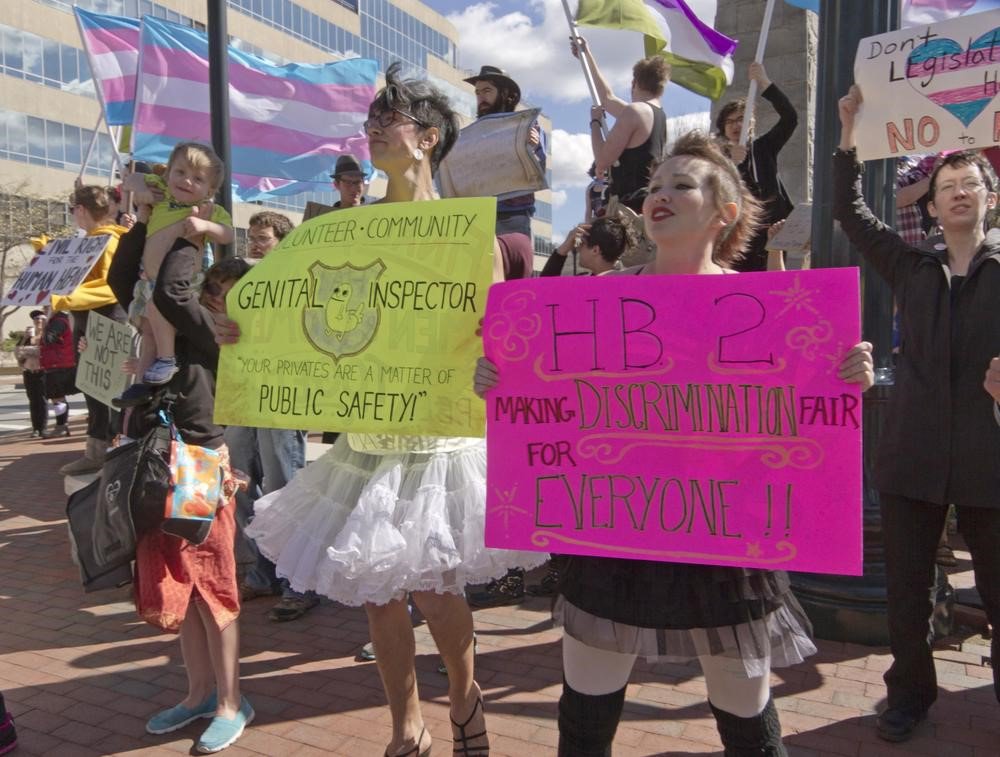
For example, in 2016, the North Carolina state legislature set off a national media frenzy when it passed H.B. 2, otherwise known as the “bathroom bill.” The bill demanded that individuals use the bathroom corresponding to the gender assigned to them at birth. It was a direct attack on supporters of the transgender community, and it was passed in retaliation against the City of Charlotte’s move to increase its legal anti-discrimination protections. The same bill also explicitly preempted local regulation of employment standards, such as increasing the minimum wage and mandatory paid sick days. Though few state preemption bills attract the level of attention that H.B. 2 did, the bill in many ways typifies this form of politically motivated state encroachment into local democracy.3
In the era of preemption, context is everything.4 To confront runaway state preemption, practitioners must first understand the spatial and regional political divides between Democrat-led cities and Republican-led state legislatures that have enabled its rise.5 The new preemption is not confined to Republican-controlled states, but red states have been especially hawkish in their efforts to curtail the authority of blue cities like Charlotte. The National League of Cities reports a surge in preemption conflicts that have “pitted rural- and suburban-dominated state legislatures against cities with large populations of low wage earners and ethnic minorities.”6 With approximately 80 percent of Americans residing in cities today,7 preemption has only intensified the challenges of governing increasingly populous and diverse metropolitan areas—in red and blue states alike.
The new preemption is marked by “new sweeping state laws that clearly, intentionally, and at times punitively bar local efforts to address a host of problems.”8 Its large-scale emergence over a decade of heightening polarization between cities and state legislatures has prompted a reevaluation of the relationship between state and local power from both legal and normative perspectives. Alongside this reevaluation, local officials, organizers, and issue activists continue to fight an uphill battle to defend a broad scope of progressive policy areas—like workplace and health equity, environmental protections, non-discrimination ordinances, and firearms regulations, among others—against the rising tide of state interference.9
This report will shed light on stakeholders’ ongoing struggle against abusive state preemption in a period of conservative and corporate state capture. Part One will provide an overview of state preemption and situate it in the current political landscape. Once it is established that there is such a thing as bad preemption—the kind that damages the intergovernmental power structure, deters policy innovation, and undermines basic principles of democracy—Part Two of this report will provide practical guidance on how to tackle it—or at least attempt to work around it.
Citations
- Adam Coester, “Dillon's Rule or Not?," National Association of Counties, January 2004, .
- Nicole DuPuis et al., “City Rights in an Era of Preemption: A State-by-State Analysis” (Washington, D.C: National League of Cities, 2018), 1,
- Richard Briffault, “The Challenge of the New Preemption,” Stanford Law Review 70, no. 6 (June 2018): 2001, .
- DuPuis et al., “City Rights.”
- “Preemption Conflicts between State and Local Governments,” Ballotpedia, .
- DuPuis et al., “City Rights,” 3.
- Christopher Ingraham, “Americans say there’s not much appeal to big-city living. Why do so many of us live there?,” Washington Post, December 18, 2018,..
- Briffault, “New Preemption,” 1997.
- Lori Riverstone-Newell, “The Rise of State Preemption Laws in Response to Local Policy Innovation,” Publius: The Journal of Federalism 47, no. 3 (July 2017): 403–25, .
Part One: State Preemption Unleashed
Preemption 101
What is preemption? The Public Health Law Center provides a helpful definition: “Preemption is a legal concept where a higher level of government has the authority to limit, or even eliminate, the power of a lower level of government to regulate a certain issue.”1 This means that if a city council or other local government entity passes an ordinance or regulation that conflicts with a state law, the state law generally trumps the local law. State authority to invalidate local law derives from each state’s constitution and statutes, which also set the parameters of local authority. In terms of policies affected, the National League of Cities’ 2018 preemption report found that states have consistently targeted four areas of local governance: economics, social policy, health, and safety.2
State preemption comes in two basic flavors. Floor preemption, which arguably is not preemption at all, denotes when the state sets a minimum standard of protection that localities can build upon. Ceiling preemption, which is the more problematic of the two, is when the state sets a maximum standard of protection that localities cannot exceed and often cannot differ from. Ceiling preemption can be subdivided into two other varieties: preemptive/proactive preemption, in which states bar local action on an issue in anticipation of local action being taken, and vacuum/void preemption, in which states override a local standard and/or prohibit one from being set without replacing it or setting a new statewide standard with the intention to create a regulatory vacuum.3 Both have become popular in the last decade.
State-Local Relationship: Home Rule v. Dillon’s Rule
The surge in state preemption activity has provoked a set of legal and normative debates about the balance of state and local powers, and the degree to which local autonomy is helpful or harmful to a democratic society.
Any serious legal debate concerning the distribution of government powers begins with the U.S. Constitution. America’s preeminent legal document specifies a national-state power structure and provides the basis for the doctrine of preemption, but it “is silent about the powers allocated to local governments. Simply put, there are none.”4 Local authority has therefore been left to the states to decide.
While each state defines for itself what powers it will confer to local governments, there are two master configurations of the American state-local relationship to be aware of: "Dillon’s Rule" (named in the late nineteenth century for Iowa Supreme Court Chief Justice John Forest Dillon) or the "creature of the state doctrine,” and "Home Rule," or "local autonomy." Then there are hybrid arrangements in which states that follow Dillon’s Rule also allow home rule for certain jurisdictions.
First, Dillon’s Rule represents a top-down organizational structure in which municipal decision-making is almost entirely subject to state oversight and specific questions of local government authority are decided by the courts. Dillon’s Rule holds that local governments “possess only those powers indispensable to the purposes of their incorporation, as well as any others expressly bestowed upon them by the state.”5 On state supremacy over cities, Dillon wrote, “It breathes into them the breath of life, without which they cannot exist. As it creates, so may it destroy. If it may destroy, it may abridge and control.”6
Home rule represents a variety of state constitutional and statutory provisions that delegate authority to local governments, where “power is limited to specific fields, and subject to constant judicial interpretation."7 By creating local autonomy in respect to deciding how to conduct local affairs, home rule limits excessive and counterproductive state interference.
Home rule has two valences: initiative (the power to enact local policy without prior state authorization) and immunity (the power to protect local decisions addressing local issues from state override).8 In the United States, at least 40 states delegate some degree of initiative power to cities, whereas immunity power is much more elusive. In the last decade, states have become increasingly antagonistic toward home rule. In states where certain localities are expressly permitted to legislate on their own behalf, state lawmakers are now testing the boundaries of their supremacy by aggressively preempting local action on a wide variety of issues that have traditionally fallen within the purview of the municipal government authority, such as zoning and public safety. In other words, both initiative and immunity powers are under attack.
“New” Preemption v. “Old” Preemption
The differences between new preemption and old preemption are substantial. Indeed, the two bear little resemblance. In a nutshell, old preemption “consisted of a judicial determination of whether a local law is inconsistent with pre-existing state law.”9 It was a mechanism for resolving episodic legal disputes between state and local regulatory powers, and for managing the relationships between those powers. While state law still took precedence, preemption analysis was underpinned by the belief that “state policies could coexist with local additions or variations.”10 Old preemption decisions considered to what extent such local additions and variations made sense; new preemption considers whether they should exist at all.
For instance, in 1982 there was a dispute over whether a Texas home rule city had power to regulate drilling within its borders in light of the state’s delegation of oil and gas authority to the Texas Railroad Commission, a statewide agency. The case was brought by a citizen who had been convicted of violating a local drilling ordinance. He appealed the decision on state preemption grounds. Ultimately, the Texas Court of Appeals in Fort Worth found that municipalities do have the authority—to the extent that they do not directly contravene state regulations. This decision, then, affirmed the state’s local autonomy norm.11 Texas subsequently permitted localities to self-regulate drilling unencumbered until 2014, when, in response to the city of Denton’s successful citizen initiative to ban local fracking, the state passed a law banning all local regulation of oil and gas—effectively banning Denton’s ban. Multiple states followed Texas’s example.12
Old state preemption typically occurred organically and played out almost entirely in state courts. These cases are not extinct, but they have been far outstripped by instances of this new, strategic incarnation of preemption that tend to be initiated in closed-door statehouse meetings with lobbyists and within a context of other states passing similar preemption legislation.
Over the last decade, preemption became a broad tool for policy change. State lawmakers have proven increasingly comfortable with preempting local government action when it does not suit their political, social, or economic beliefs or agendas. This may appear to be a brazen power grab, or at least a misuse of authority, but from a legal perspective the distinction is not as clear cut.
“Insofar as states have sometimes granted cities leeway to enact policy in the past, that forbearance has been the result of political norms, not legal structures. Once those norms crumble, and state legislatures decide to assert their authority, cities will have very little recourse,” reflected Atlantic writer David Graham.13
Even localities that have been granted broad authority by the state to pass laws are rarely immune to the law of preemption.
In contrast with old preemption, in which the state adopts a uniform standard (frequently a minimum standard or “floor”) for exclusive statewide application, the new preemption has been used to enforce a deregulatory ideology and targets cities to invalidate existing progressive laws and bar future enactment of such laws. It has also been used to strip all authority from substate governments, including counties, municipalities, towns, and villages. Notably, preemption is now being used to void local standards without adopting new standards to take their place, creating a regulatory vacuum. The old preemption goal of a uniform standard that coordinates between state and local regulation has, in many cases, given way to the desire to prevent “any regulation at all.”14 In so doing, the new preemption is making it hard for many cities and other localities to meet the needs of their communities, harming local democracy.
Preemption is used both as a scalpel to carve out specific local laws and as a nuclear bomb to decimate, via “nuclear preemption," a locality’s ability to regulate whole sectors of the government. For instance, in 2015, the Michigan Legislature passed the “Death Star bill” (officially H.B. 4052, the Local Government Labor Regulatory Limitation Act), which bars local governments from "adopting, enforcing or administering local laws or policies concerning employee background checks, minimum wage, fringe benefits, paid or unpaid leave, work stoppages, fair scheduling, apprenticeships, or remedies for workplace disputes.” In essence, the act stripped local governments of nearly all power to regulate employers. “States aren’t merely overruling local laws,” Emily Badger wrote for the New York Times, “they’ve walled off whole new realms where local governments aren’t allowed to govern at all.”15
In addition to vacuum preemption, proactive or preemptive preemption is also on the rise, and likewise has had marked impacts on labor and employment law. The trend of states blocking labor laws has accelerated since 2013. As of 2019, 25 states have passed laws preempting local minimum wage ordinances (up from 11 states in 2012), 22 states have banned paid sick days (up from three states), and 20 have banned both (also up from three).16 Although most of these bills were triggered in response to local regulations, some states adopted the preemption laws preemptively, or before any local governments had the chance to act. For example, the Ohio state legislature passed a bill to preempt local governments from enacting their own minimum wage a full six months before the Cleveland City Council was scheduled to hold a public vote on whether or not to increase the minimum wage to $15.17
Why is the New Preemption Happening Now?
There are three chief reasons why the new preemption is happening now. The first is state capture by conservative organizations partnered with corporate interests and an explosion of ideological, mostly conservative, money into state legislative elections. The second is the growing spatial and regional divide between progressive urban and conservative non-urban jurisdictions. The third reason is national-level polarization, which is pushing conflict down to states and localities.
State Capture
The high number of Republican “trifectas” is one explanation for the new preemption. Although the seeds of modern, industry-backed preemption were planted in the 1980s when the tobacco industry began to push for state laws barring anti-smoking ordinances, “the era of preemption”18 came immediately on the heels of the Republican wave election of 2010. Further, the majority and the more egregious instances of the new preemption have occurred in Republican-majority states.
But partisanship is only one side of the story. Most GOP legislators are elected with the indispensable support of socially conservative interest groups and special interests with strong deregulation agendas. These interest groups further supply policy advice and expertise to state lawmakers who are often under-resourced, underinformed, overextended, and, therefore, susceptible to assistance. Illinois State University professor Lori Riverstone-Newell underlined the connection, concluding that “rising conservative dominance of state legislatures has provided the opportunity to thwart progressive local policies, and these efforts have been aided by various industry and conservative organized groups.”19
These industry- and conservative-organized groups refer to a cross-state coalition of socially conservative and economically libertarian special interests, consultants, and politicians. This coalition, masterminded and run by three networks, the American Legislative Exchange Council, the State Policy Network, and Americans for Prosperity20—w³Ù State Capture author Alex Hertel-Fernandez dubbed the “right-wing troika”—serves an anti-regulatory and culturally white, Christian, and conservative policy agenda.21 According to Vanessa Zboreak, “the overarching sentiment stressed by ALEC, that conservative causes will be best (and most swiftly) served by eliminating local control, has permeated the last two years of legislative sessions in many of the states in which the legislature switched party control in 2012.”22
Model or “copycat” bills have been key to the troika’s success,23 and they have been equally important to the emergence and spread of the new preemption. Special interests can stuff their anti-regulatory policies into model legislation thanks to their alliance with the ubiquitous ALEC. ALEC’s local government counterpart, the American City County Exchange (ACCE), provided the template for many preemption laws.24 In some cases, the language of model bills, in particular those that undercut labor workplace equity and local economic regulation, are deliberately crafted to conceal their true origin and purpose. As a consequence, legislators can end up voting against their own policy preferences on preemption matters and otherwise.25
Yet the new preemption is not confined to Republican-controlled states, nor is it a distinctly Republican Party strategy. States with Democratic-majority legislatures and governors are executing the new preemption, too, although the targeted policies are different. In Republican states, preemptive action is about both economic deregulation and social conservatism, while in Democratic states, the new preemption is enabled by legislators trading away local democracy as a bargaining chip. Both Democratic and Republican-held state capitals are awash in business lobbyists pressing for bans on local regulation. For instance, the state of New York preempted New York City’s plastic bag tax, a move strongly encouraged by the American City Council Exchange in the name of “business and consumer choice.”26 In 2018, California passed a law to preempt local soda taxes that was engineered by the beverage industry in response to multiple communities raising taxes on sugary drinks. In that case, California lawmakers were opposed to the law on the grounds that these local taxes promoted public health and raised revenue for public services, so the American Beverage Association and other interested parties had to resort to unseemly tactics (the terms extortion and blackmail abounded in the surrounding news coverage) to leverage a win for their preemption bill.27
In sum, conservative state power only created the opportunity for the new preemption; corporations and special interests provided the money and infrastructure to realize it.
Partisan Geographic Polarization
Geographic polarization between progressives in blue cities and conservatives in the rest of the state helps explain how the new preemption came to be. By the time the right-wing troika emerged, Democrats and Republicans had already sorted themselves into urban and non-urban areas, respectively, and were primed for the gerrymandering to come.28
By 2010, the spatial, regional divide between urban and inner-suburban areas mapped directly onto partisan divisions.29 In the years that followed the far-right takeover of the Republican Party, conservative legislators exploited these divisions and their redistricting authority to marginalize Democratic-controlled cities in red state legislatures and Congress—in effect disenfranchising millions of city-dwelling Democratic voters. This coordinated, cross-state gerrymandering effort tainted the growing urban-rural divide with a distinctly negative partisan character. In Congress and statehouses across the country, bipartisan values underlying good governance broke down. As political scientist Dennis Goldford opined in 2015, “if you make one move in the direction of your opponents, that’s treason.”30 The intense interparty hostility wreaking havoc in the halls of government have reverberated through an increasingly polarized and fractured civil society.
Since 2011, conservative lawmakers have continued to pass laws to minimize the state power of progressive voters concentrated in metropolitan areas. As Republicans’ state dominance has increased, so has the number of state legislative bills to undercut city power. In the face of this state antagonism, liberal and progressive activism has swelled in cities across the U.S., most notably in blue cities in red states.31
But self-sorting is not entirely a story of red states versus blue cities. Since 2011, state legislative gerrymandering, combined with Democratic clustering in urban areas and along the coasts, has produced a steady increase in the number of single-party state governments (or "trifectas"), and correspondingly historic low numbers of divided party governments. United party governments possess high legislating potential. Trifecta states, both Republican and Democrat, are lightning rods for corporate lobbyists and organized conservative groups like ALEC, for whom these states’ lawmakers represent the optimal blend of policymaking power and lack of resources and expertise.32 Therefore, one could argue that the higher volume of state preemption laws in Republican-controlled states is a function of Republicans having more trifectas than Democrats.
Polarization at the Federal Level Is Pushing Conflict Down
Gridlock at the federal level has caused a number of knock-on effects relevant to state preemption. For one, it has often left state governments with more to do and less functioning or fiscal capacity. States, in turn, passed the buck to localities, which have often fended for themselves anyway. Rather than wither under the neglect, localities adapted and, by all accounts, thrived. Cities in particular have become extremely innovative, self-sufficient, and professional,33 but are simultaneously less empowered to exercise those skills due to aggressive state interference. Even without the threat of preemption, greater governing capabilities do not earn cities greater power and autonomy. They still operate inside a power structure that privileges states.
Meanwhile, special interests, recognizing the extreme difficulty of getting bills through a gridlocked Congress, have shifted their lobbying activities from the nation’s capital to state capitals. Alan Kemp, executive director of the Iowa League of Cities, explains how this shift has impacted state legislative decisions regarding preemption. “A lot of power has devolved from the federal government down to the state level, and so legislators are in the position where they’re being approached by interest groups that are proposing changes that are beneficial to them,” Kemp said.34 Underlining this point and the point above about single-party controlled statehouses being targets for special interests is a recent project by USA Today, the Arizona Republic, and the Center for Public Integrity that found that more than 10,000 bills introduced in statehouses between in 2010-2018 were almost entirely copied from bills written by special interests, with over 20 percent becoming law.35
Preemption Is Not the Problem, Abusing It Is the Problem
Is Preemption Inherently Bad?
There is no such thing as a one-size-fits-all model for allocating powers between the federal, state, and local levels of government, nor is there a one-size-fits-all approach to intrastate legislating or public service delivery. In practice, policy implementation almost always requires the cooperation of two or more levels of government and a certain degree of local customization, a process that creates opportunities for local governments to communicate local priorities and problems to their state and federal counterparts. This interactive structure, which allows for information to flow from the bottom up instead of only top-down, is a pillar of democratic stability. Therefore, if experience shows (and the consensus agrees) that cooperative intergovernmental policy implementation is more effective and more democratic, then bad preemption is the kind that undermines localities’ governing capability by stifling their vital contribution to the intergovernmental network.
In principle, local autonomy does not have a political valence. In practice, however, opinions on local autonomy are subject to changing power dynamics at the local and state levels. Localism was sacrosanct to conservatives when progressive critics saw it as cover for ultra-conservative provincialism, but today, progressives champion the fundamental rights of home rule while conservatives see localism as shorthand for progressive city power run amok. Thus, it is all the more important to identify the mutual benefits and drawbacks of localism.
First, local decision-making has a number of benefits for democracy that transcend partisan divides, such as economic efficiency, greater political participation, and policy experimentation and innovation. This last item, the idea of both localities and states as laboratories of democracy, epitomizes the federal system. But there are also valid reasons for preempting local decisions. Unconstrained local autonomy does not have a spotless record, after all, especially where civil rights are concerned. Preemption scholars offer multiple examples of “good” uses for preemption, such as in response to a local policy that carries demonstrable negative externalities, or when local policies violate state or federal laws concerning fundamental rights, like equal protection. For example, preemptive action against Sundown Towns, exclusionary zoning, and other systemic discrimination can be considered justified.
Based on these areas of potential political consensus—the idea that localism has democratic merits but should not be unlimited, and that strong cooperation between different levels of government produces better results—preemption can be labeled “bad” when it threatens a local government’s ability to make effective policies, on the condition that said local policies can be “largely absorbed within the regulating community and don’t implicate fundamental rights or constitutional norms.”36
The prevailing normative argument for what constitutes bad preemption goes one step further. That argument asserts that preemptive action to undermine a locality’s ability to advance or protect racial, gender, economic, and health equity should also be denounced by both progressives and conservatives on the grounds that equity is a core value of democracy. Indeed, an interactive mapping tool set up by the Partnership for Working Families to track preemption shows that “state preemption follows a pattern of mostly white, male legislatures ignoring or overriding concerns of the women and people of color who are more likely to suffer harm because of states preempting local laws and regulations, such as those that would strengthen gun control.”37
Until recently, preemption was regarded more as a tool of liberal federal governments wanting to protect marginalized communities against local provincialism, while local autonomy was at the top of the list of far-right conservative values. But norms have shifted: localism is now associated with progressive causes and Democratic Party politics. Today, many conservative politicians view both local and federal government as threats to liberty, seeing states as the right level to govern. Conveniently, the state level is also where conservatives hold the most power.38 As one of the Republican lawmakers in Ohio who voted to preempt Cleveland’s $15 minimum wage ordinance put it, “[W]hen we talk about local control, we mean state control.”39 In light of the cultural, intellectual, and financial dominance of progressive cities, the new conservative strategy is to co-opt state preemption to disenfranchise Democratic voters, deregulate industry, demobilize labor, and perpetuate systemic racism in subtler and more publicly palatable ways.
Preemption is a legal doctrine; it has no inherent political agenda or political valence, as Heather Gerken wrote in “A User’s Guide to Progressive Federalism.”40 Preemption is a tool to help resolve the inevitable conflicts that arise between different levels of government in a federal system. Like any tool, it can be used to build or destroy, and whether either is good or bad is in the eye of the user. Yet there are still conditions under which progressives and conservatives ought to be able to see eye to eye.
The Dangers of Modern Preemption
There is nothing inherently objectionable about preemption. Until recently, state governments exercised preemption mainly in accordance with its original purpose: enforce balance and efficiency in our multi-tiered system of government. That old or classic version of preemption is not at issue here. Instead, this report addresses the new preemption, which is wielded by state officials interested less in resolving intergovernmental conflicts than in precluding them by stifling local regulatory powers—particularly those used to advance progressive social and economic policies.
There are many adverse effects of this aggressive, politicized form of preemption. Some are more tangible, such as punishments and threats against city funds and individual elected officials, while others are hard to measure, like preemption’s chilling effect on local policy innovation. Either way, “now almost every issue that matters to American voters is at risk of being preempted,” and “preemption is being used as a blunt instrument to destroy local democracy, and that's new.”41
States are passing preemption laws that “do not merely nullify inconsistent local rules but rather impose harsh penalties on local officials or governments.”42 Local officials deemed to be in defiance of a preemption law, either through vote, speech, or failure to remove a preempted ordinance or regulation from the books, face removal from office, massive fines and legal fees, and even criminal liability.
For example, in 2011 Florida passed an NRA-backed law that gave sharper teeth to the state’s existing preemption of local gun ordinances.43 The law, currently in effect, imposes harsh penalties on local officials, including a $5,000 fine, personal liability, and possible removal from office, for enacting new or enforcing previous gun ordinances. In 2014, two gun rights organizations sued the City of Tallahassee for leaving two decades-old city laws that prohibited the use of firearms in public parks on the books. Because this “super-preemption”44 law also forbids the use of public funds (i.e., the City’s legal department) in defending officials in gun ordinance cases, former Tallahassee Mayor Andrew Gillum had to secure pro-bono legal representation.45

Penalties and threats also loom large for so-called “sanctuary cities” in red states across the country.46 Texas’ preemption law banning sanctuary cities in the state, which passed in 2017, threatens officials who “adopt, enforce, or endorse” a sanctuary city policy with fines of up to $25,500 per day and removal from office.47
Finally, there’s the “the mother of all local preemption bills:” Arizona’s S.B. 1487, which passed in 2016 and allows for the withholding of state funding from localities that pass any regulations that deviate from state law.48
Forty-three state constitutions include a speech or debate immunity provision to protect state legislators from being held liable for their legislative acts. Local legislators enjoy no such express immunity. Meanwhile, preemption is being used to punish cities by cutting or threatening to cut state funds. In any case, the threat of state intervention and the potential penalties that can accompany preemption are suspected to be having a chilling effect on local policy innovation.49 As Gillum put it, “It is intended to put everyone across this state and across this country where these efforts are taking place on notice: Don’t come near it…And if you do, we’ll come after you personally, we’ll come after your government, we’ll come after the very survivability of your community by cutting off resources to you.”50
In addition to the grand scale of the new preemption, the scope of preemptive action is also much greater than it was traditionally, which further signifies a departure from its intended usage. Two of the more troubling drivers of the recent broadening of the scope of preemption bills are 1) conservative control of state legislatures and 2) the infiltration of industry and special interests into state policymaking.
The first is an ideological and cultural matter: state interference in city governing has risen in tandem with conservative state-level dominance. Conservative state lawmakers predominantly represent constituencies who are far removed physically and ideologically from city life and city challenges, and therefore are “likely to be opposed to the progressive social policies favored by most” who reside there.51 Republican legislators are, of course, sensitive to the preferences of those they represent, and their preemption efforts against progressive city values reflect that.
But the incentive to preempt progressive ordinances and regulations that promote labor and employment rights—paid sick time, minimum wage increases, predictive scheduling, and others—come more from donors and business interests than from non-urban voters. For example, local control on economic justice issues is broadly popular in Texas, with over 60 percent of Republican voters supporting a city’s right to pass paid sick time. Sixty-seven percent of Texas Republicans believe that local government most accurately expresses the values and needs of local residents, while only 24 percent of Texas Republicans agree that “when local governments each pass their own laws and policies, it creates a patchwork of laws across the state, which creates confusion and more red tape or paperwork for businesses that state officials should stop.”52 That points to the second driver of the rise of the new preemption, the incursion of economic libertarianism into state policy-making. Industry groups and trade associations leverage their position in the organized conservative infrastructure to push preemption bills that create friendlier environments in which to do business.
The new preemption is not just identifiable by its scale but also by the scope of issues it seeks to affect, as well as the scope of stratagems states use to pass preemption legislation. In addition to modern preemption classics like fracking, smoking, firearms, tax and expenditure limitations, nutrition issues, LGBTQ+ rights, and minimum wage, recent laws have prohibited local regulation of issues as specific as sprinkler systems, municipal broadband, wireless alarm systems, Styrofoam products, milk and frozen desserts, and even beekeeping. Beyond the issues themselves, Michigan’s Death Star bill, North Carolina bathroom bill, Texas’s ban on sanctuary cities, California’s soda tax preemption, Ohio’s preemption of local minimum wage hikes, and Florida’s ban on local gun ordinances exemplify the spectrum of state legislative approaches to the new preemption. Moreover, these examples represent different ways that preemption has been used to undercut the will of communities nationwide and erode public trust in American democratic institutions.
Part One Summary
The last decade has seen a sharp uptick in state legislation to override or ban future local ordinances and regulations. Much of that preemption activity has been initiated in response to the enactment or anticipated enactment of progressive decisions that conflict with the preferences of ideologically conservative lawmakers and economically libertarian special interest groups. The actions of these lawmakers and influencers have had significant implications for a vast range of social, and health and safety policies.
At the macro level, the modern escalation of state preemption has upended many norms and assumptions about the role of local democracy and autonomy within America’s intergovernmental power structure. It has also brought the broader issues of hyperpartisanship and polarization down to the city level, where policymakers and policy advocates are finding themselves under greater internal strain from their growing and more diverse populations, as well as simultaneously greater external strain from increasingly adversarial and “captured” state legislators.
Three key challenges have been identified: Local regulations are being targeted by industries in all 50 states, regardless of partisan composition, that wish to create regulatory vacuums; Democratic-majority cities are being targeted by Republican-majority legislatures that seek to erase or at least slow the spread of progressive policies across the board; and states are strategically deterring or “chilling” local policy innovation through the enactment of onerous penalties for violating preemption laws. Each of these hinders local officials’ abilities to meet the evolving needs of their communities, and each represents a separate threat to democracy.
If increases in special interest lobbying, state government trifectas, gerrymandering, and spatial, regional sorting of political preferences between urban and non-urban areas are the root causes of the new preemption, then the antidote cannot only be campaigns against preemption or for the reinstatement of individual preempted local ordinances or regulations. Ultimately, it will likely take a theory of change of state power. The new preemption is a symptom of a lack of progressive state power and a coalition too narrow to govern at the state level.
Citations
- National Policy & Legal Analysis Network, “Fundamentals of Preemption” (Public Health Law Center at William Mitchell College of Law, 2010), 1, .
- DuPuis et al., “City Rights,” 1.
- National Policy & Legal Analysis Network, “Fundamentals of Preemption,” 2.
- David Swindell, James Svara, and Carl Stenberg, “Local Government Options in the Era of State Preemption,” LGR: Local Government Review (UNC School of Government, 2018), 1, .
- Paul Diller, “Intrastate Preemption,” Boston University Law Review 87 (2007): 1122–23.
- David A. Graham, “Red State, Blue City,” March 2017, .
- “Cities 101 — Delegation of Power,” National League of Cities, December 13, 2016, .
- Richard Briffault and Laurie Reynolds, Cases and Materials on State and Local Government Law, 8 edition (St. Paul, MN: West Academic Publishing, 2016), 346.
- Briffault, “New Preemption,” 1997.
- Briffault, 1997.
- “UNGER v. STATE | 629 S.W.2d 811 (1982),” Leagle, .
- Riverstone-Newell, “Rise of State Preemption.”
- David A. Graham, “Red State, Blue City,” March 2017, .
- Briffault, “New Preemption,” 1997.
- Emily Badger, “Blue Cities Want to Make Their Own Rules. Red States Won’t Let Them,” New York Times, July 6, 2017, .
- “Worker rights preemption in the U.S.,” Economic Policy Institute, .
- Leila Atassi, “Special Election for Phased-in $15 Minimum Wage Proposal Set for May 2 in Cleveland,” Cleveland.Com, September 13, 2016, .
- DuPuis et al., “City Rights.”
- Riverstone-Newell, “Rise of State Preemption.”
- As Alex Hertel-Fernandez summarizes: “ALEC, encompassing state legislators; the State Policy Network (SPN), coordinating state-level think tanks; and Americans for Prosperity (AFP), a federated advocacy group combining millions of grassroots volunteers with a large campaign war chest.” Alex Hertel-Fernandez, “What liberals get wrong about conservative state dominance — and why it matters,” Vox, April 1, 2019, .
- Alexander Hertel-Fernandez, State Capture: How Conservative Activists, Big Businesses, and Wealthy Donors Reshaped the American States – and the Nation (Oxford University Press, 2019).
- Vanessa Zboreak, “Yes, in Your Backyard – Model Legislative Efforts to Prevent Communities from Excluding CAFOs,” Wake Forest Journal of Law & Policy 5 (2015): 147.
- Rob O’Dell and Nick Penzenstadler, “Abortion, Gun Control: How Special Interest Groups Push Legislation,” USA Today, June 19, 2019, .
- Briffault, “New Preemption.”
- O’Dell and Penzenstadler, “Abortion, Gun Control: How Special Interest Groups Push Legislation.”
- See “Regulating Containers to Protect Business and Consumer Choice,” American Legislative Exchange Council, .
- Anahad O’Connor and Margot Sanger-Katz, “California, of All Places, Has Banned Soda Taxes. How a New Industry Strategy Is Succeeding.,” New York Times, June 27, 2018, .
- See generally Bill Bishop and Robert G. Cushing, The Big Sort: Why the Clustering of Like-Minded America Is Tearing Us Apart (Houghton Mifflin, 2008).
- For a long-term view on political polarization and the rural-urban divide, see Jonathan A. Rodden, Why Cities Lose: The Deep Roots of the Urban-Rural Political Divide (Basic Books, 2019).
- Alan Greenblatt, "Divided Legislatures Produce Gridlock, Not Compromise," quoting Dennis Goldford, Governing, June 2, 2015, .
- Riverstone-Newell, “Rise of State Preemption.”
- David Swindell, James Svara, and Carl Stenberg, “Is Dillon Trumping Home Rule? Local Governments and the Rise of State Preemption” (March 14, 2019), .
- Jerome Hodos, “Against exceptionalism: Intercurrence and intergovernmental relations in Britain and the United States,” in The City in American Political Development, ed. Richardson Dilworth (New York: Routledge, 2009): 58.
- Scott Stewart, “Iowa Part of National Trend Placing Limits on Local Control,” Associated Press, June 24, 2018, .
- Rob O’Dell and Nick Penzenstadler, “Abortion, Gun Control: How Special Interest Groups Push Legislation,” USA Today, June 19, 2019, .
- Briffault, “New Preemption,” 2027.
- Rachel Dovey, “Florida Cities Sue State Over Gun Preemption,” Next City, April 12, 2018, .
- Briffault, “New Preemption.”
- Quoted in Richard Florida, “City vs. State: The Story So Far,” City Lab, June 13, 2017, .
- Heather K Gerken, “Distinguished Scholar in Residence Lecture: A User’s Guide to Progressive Federalism,” Hofstra Law Review 45 (2017): 1087.
- Interview with Mark Pertschuk, director of Grassroots Change and Preemption Watch: Don Hazen and Steven Rosenfeld, “The Other Right-Wing Tidal Wave Sweeping America: Federal and State Preemption of Local Progressive Laws,” Salon, February 28, 2017, .
- Briffault, “New Preemption.”
- Dovey, “Florida Cities Sue State Over Gun Preemption.”
- Riverstone-Newell, “Rise of State Preemption.”
- Kriston Capps, “Florida’s ‘Super Preemption’ Law Lands a Mayor in Court,” City Lab, January 6, 2017, .
- Jasmine C. Lee, Rudy Omri, and Julia Preston, “What Are Sanctuary Cities?,” New York Times, February 6, 2017, .
- “Preserving Local Legislative Immunity: How to Protect Local Legislators from Punitive State Laws,” Defending Local Democracy (Local Solutions Support Center and a better balance), .
- Elizabeth Daigneau, “Will States Stop Cities From Combating Climate Change?,” Governing, January 2017, .
- Riverstone-Newell, “Rise of State Preemption.”
- Badger, “Blue Cities Want to Make Their Own Rules. Red States Won’t Let Them.”
- Riverstone-Newell, “Rise of State Preemption.”
- Baselice & Associates, Inc., “Texas Voter Survey” (Center for Public Policy Priorities, February 13, 2019), .
Part Two: How to Address Preemption?
Though preemption presents a formidable obstacle, local officials and community advocates should not be deterred from pursuing policy solutions in the face of state opposition. City champions like mayors, county commissioners, social movement leaders, and policy advocates have multiple tools at their disposal to fight preemption—if they have the will to fight back. Legal challenges are part of this toolkit, but in most cases, cities are at a steep disadvantage fighting preemption in the courts. Even while pursuing a legal challenge to preemption, it is important for advocates to also organize outside the legal system. In addition to (1) pursuing legal strategies, advocates can (2) build coalitions for local democracy across issue silos, (3) educate public officials, judges, and city attorneys about preemption, (4) bring the fight against preemption into the public square, (5) engage voters around the impacts of preemption to hold elected officials accountable or use the ballot initiative process, and (6) reform home rule. Below, we summarize the diverse tactics available to champions of local democracy.
1. Pursue Legal Remedies
Legal experts on preemption have identified substantive and procedural grounds for local public officials and city attorneys to fight against state interference.1 The most straightforward way is to claim constitutional home rule immunity: that is, to argue that the state’s constitution grants the city the right not to have local legislation struck down by the state legislature. However, this option is only available for states and cities that have a form of home rule that grants cities immunity, or protection from interference by the state. Most cities are unlikely to prevail with this basic kind of claim, but there are other substantive claims they can make. A second straightforward line of defense is to make claims based on generality or state constitutional bans on “special legislation,” i.e., arguing that preemption impermissibly targets a specific city rather than legislating on a truly statewide issue. This might work in states like Ohio, which have a strong definition of general law.
Other cities have made claims based on the Federal Constitution, using one of the three related legal theories that have been developed so far. One option is to claim that a preemption statute intentionally discriminates against a protected class, impinges on a fundamental right, or is motivated by animus or a “bare desire to harm” a group, rather than a legitimate or rational basis. A more challenging direction is to make an equal protection argument based on political process; i.e., that a particular structural action places a special burden on the ability of minorities to achieve their policy goals in the political process. Political process claims carry weight in the court of public opinion, but seem unlikely to advance given the current Supreme Court.
For example, after the City of Birmingham raised the minimum wage to $10.10 in 2015, the Alabama Legislature hastily passed a preemption bill. Affected workers sued the state of Alabama on equal protection grounds, alleging that the Minimum Wage Act purposely discriminated against Birmingham’s black citizens by denying them economic opportunity on account of their race, and that the Act violated the political-process doctrine by transferring control from the majority-black Birmingham City Council to the majority-white Alabama Legislature. After the lawsuit was dismissed, a unanimous panel of the Eleventh Circuit reversed the dismissal, finding that the lawsuit could proceed on the “plausible claim that the Minimum Wage Act had the purpose and effect of depriving Birmingham’s black citizens of equal economic opportunities on the basis of race, in violation of the Equal Protection Clause of the Fourteenth Amendment.” While the Eleventh Circuit affirmed the dismissal of political process claims, the court did consider the “rushed, reactionary, and racially polarized nature of the legislative process; and Alabama’s historical use of state power to deny local black majorities authority over economic decision-making.” That panel opinion was subsequently vacated and the case is now pending before the full Eleventh Circuit en banc.2
A third, untested theory is to raise Establishment Clause concerns by arguing that a preemptive state law seeks to achieve religious objectives, even with purported secular purposes. This claim might be used, for example, in the case of state laws striking down local non-discrimination ordinances that protect LGBTQ+ people. Though most advocates have focused on federal constitutional claims, it may also be possible to make civil rights or equal protection claims based on a state’s constitution. This direction may become more attractive as President Trump fills the federal courts—at least in the minority of state courts that can be expected to be sympathetic.
Another option is to attack punitive preemption, when the state threatens financial penalties against local governments or local officials face civil or criminal liability. For example, if a preemption law creates personal liability for officials who pass or fail to repeal targeted policies (like the 2011 NRA-backed Florida law that exposes local government officials to penalties for enforcing preempted gun regulations),3 it might create Fourteenth Amendment due process vagueness concerns. For many punitive preemption laws, there is a lack of clarity about what policy or action triggers criminal liability for local officials. Though untested in the state preemption context, preemption laws that impose civil or criminal sanctions on elected officials may also violate legislative immunity, a common law principle extended to local officials for certain legal claims in Bogan v. Scott-Harris. Imposing liability, or the threat of expensive litigation, could also amount to an unconstitutional restriction on local officials’ free speech. This kind of gun-to-the-head coercion of cities by states may also violate structure of home rule in states that have established it in their constitutions.
In addition to these substantive arguments against preemption, cities can also make procedural claims. A common example is when preemption is smuggled in as an amendment to an unrelated bill in violation of single-subject rules. The limitation of procedural claims is that they are easily corrected by the opposition.
In conclusion, the law offers some tools to oppose preemption—for advocates who are willing and able to put up a fight. But in many cases, defenders of local democracy are at a disadvantage in the courts. Opposing preemptions requires building civic and electoral power to defend local democracy.
2. Build Alliances for Local Democracy across Issue Silos
Outside the courts, the first step to defending local democracy is to build bridges between the different interest groups, social movement constituencies, and advocates affected by state preemption. Until recent years, most policy advocates addressed preemption only as it affected their issue priority or core constituency. For example, a public health advocacy group might oppose preemption of soda taxes, but stay silent on a bill stripping cities of other powers. This means that special interests have been free to pick off vulnerable communities one by one. By contrast, the Local Solutions Support Center—a national hub that coordinates and creates opportunities to counter the abuse of preemption—encourages disparate issue groups to recognize preemption as a block to advancing a growing list of policies at the local level. For Kim Haddow of LSSC, “[o]ur whole goal is to break down the issue silos and get communities to recognize the aggregate effect: that cities are constantly losing power to act on the needs and values of their residents.”4
In recent years, policy advocates have started developing a shared analysis of preemption as a barrier to racial, gender, and economic equity. According to Lauren Jacobs, executive director of the Partnership for Working Families, “[t]he leadership and activism of women of color has been central to many of the recent progressive victories.” For the Partnership for Working Families, the new preemption is driven by corporations and overwhelmingly white, male legislators, who use state power to block a critical path for women and communities of color to create policies that benefit all working people.5 The American Heart Association has also made a similar move to oppose preemption that threatens health equity after seeing their preferred policies like soda taxes struck down by preemption.
Local Solutions Support Center reports variation across states in how much groups come together to fight preemption across issue priorities. For example, Florida has a mature, well-functioning coalition against preemption that organizes across issue areas. The coalition has taken on super-preemption bills that target economic justice priorities and a highly punitive law targeting local officials who target gun rights. In other states, like Arizona, cross-issue alliances against preemption are starting to solidify. Building alliances for local democracy across issue silos is a critical step to win legislative fights against preemption.
Organizing in advance of a legislative session is key so that groups with different policy priorities are prepared for divide and conquer tactics. For example, the Texas Legislature failed to preempt city-paid sick time ordinances during the 2019 session, even though killing paid sick time was a priority of the governor and conservative interest groups. During House hearings for the paid sick time preemption bill, a major question was whether preemption would also strike down non-discrimination ordinances that protected LGBTQ+ people.
Early in the 2019 Texas Legislative Session, protecting paid sick time seemed that it could unite economic justice and LGBTQ+ advocates in opposition. But preempting paid sick time could have also become a bargaining chip for advocates who wanted to protect non-discrimination ordinances (NDOs). Members of the Committee on State Affairs repeatedly asked LGBTQ+ advocates if they would drop their opposition to the preemption bill if NDOs were explicitly exempted. Some LGBTQ+ advocates stood strong and opposed preemption with or without exemption for NDOs, while others expressed indifference to paid sick time preemption that left NDOs in place. This moment tested over a year of organizing across issue areas to link economic justice and LGBTQ+ equality. Fortunately for champions of paid sick time, Lieutenant Governor Dan Patrick refused to compromise on striking out non-discrimination ordinances, which doomed the preemption bill in the Texas House. In this case, social and economic conservatives fractured over preemption, while social and economic progressives remained relatively more unified. Organizing against preemption as a shared threat across issue silos can allow advocates to “punch above their weight” in a difficult legislative climate.6
A broader coalition also strengthens legal strategies, particularly when preemption laws ban cities from using city resources to fight preemption, as Florida did in its super-preemption of gun laws. As discussed above, when former Tallahassee Mayor Andrew Gillum testified against preemption in Florida’s First District Court of Appeal in January 2017, he had to recruit a pro bono legal team and use donated resources from the national movement to defend local democracy. Alongside the legal fight, Mayor Gillum launched the Campaign to Defend Local Solutions, a nonpartisan coalition of mayors, commissioners, council members, and community organizations working to protect local democracy from state legislatures.7
3. Educate Elected Officials, Judges, and City Attorneys about Preemption
In addition to educating the advocacy community, it is also essential to educate elected officials, judges, and city attorneys about preemption. Preemption is a low salience, complicated issue. Both Republican and Democratic state legislators are unlikely to have had a fixed opinion about it before encountering their first preemption bill. As discussed above, ALEC has had dramatic success in moving their priorities through Democratic and divided state governments, as well as Republican trifecta states, because state legislators often serve part-time, with limited staff support for research and policy. ALEC fills those gaps.
Despite the fact that conservatives have historically championed local control, Republican state legislators rarely feel conflicted about using preemption to strike down policies with which they disagree, and easily brush off charges of hypocrisy. More surprising is how many Democratic state legislators vote for industry-backed preemption bills. For example, in 2018, Democrats in the California State Assembly were strong-armed by Big Soda lobbyists into preempting all local soda and food taxes, striking down local ordinances that sought to curb childhood obesity by disincentivizing sugary drinks. In other cases, Democratic state legislators readily support preemption as a bargaining chip with Republicans—for example, trying to build support for a statewide measure by offering to strike down local ordinances that exceed the statewide standard.
For these reasons, there is great value in educating legislators about the value of local democracy and the dangers of overzealous preemption. For example, in 2019, Democrats in the Maryland General Assembly overrode Republican Governor Larry Hogan’s veto to raise the statewide minimum wage. Because of the work of local democracy advocates, they did so without preempting cities from setting a higher minimum wage. This was in contrast to a statewide paid sick time law passed in 2017, when Maryland Democrats preempted local paid sick time ordinances as a bargaining chip with Republicans. In between the two legislative sessions, Voices for Healthy Kids worked hard to educate allies and legislators on the importance of protecting the rights of cities to pursue health equity.
The fate of preemption bills is not wholly determined by the partisan balance of the state legislature; educating legislators about preemption can even bear fruit in Republican trifecta states. In Texas and Florida in the 2019 legislative session, local democracy advocates helped kill multiple preemption bills in committee—and in behind-the-scenes negotiations between House Democratic and Republican leadership—which would have likely passed had they gone to a floor vote. These victories for local democracy testified to the value of organizing and educating that had happened years in advance.
Local officials and city attorneys can also benefit from education on preemption. Unlike state legislators, local leadership are keenly aware of the threat of state interference but sometimes wrongly assume that there is nothing they can do to challenge preemption. Most city attorneys have little autonomy to pursue an aggressive legal strategy against preemption without support from city council members, mayors, or county commissioners. Many city attorney’s offices are one- or two-person shops with limited staff capacity to research legal options. Often, city attorneys work on a contract basis, giving them little autonomy to advise the city on more proactive measures against preemption. In this climate, there is great benefit to educating local officials and city attorneys on how to fight preemption, both legally and in the public square. Hearing about the experiences of other cities and learning from legal and policy experts can provide much-needed encouragement for cities to pursue legal action or go public with their fight against state interference. The National League of Cities—often in partnership with the Local Solutions Support Center—is the most prominent institution convening city officials to respond to state interference, as well as state-based organizations like the Maryland Municipal League.
Finally, it is also possible to educate judges about preemption, state constitutions, home rule, and intergovernmental relations—all topics that are neglected in law school curricula. Just as the Federalist Society has made an impact by offering legal training that promotes conservative legal ideas, it is possible to fill a gap in legal training about the relationship between cities and states. Organizations like the American Constitution Society and the American Judges Association are potential partners for this work.
4. Bring the Fight against Preemption into the Public Square
Much of the fight against preemption involves a fairly narrow set of elites: interest groups, city officials, formally organized social movement organizations, and so on. But it can also be valuable to educate the general public about preemption. In the experience of local democracy advocates, preemption is rarely an issue that voters care about as an end in itself. Very few people have strongly held beliefs about abstract home rule or the proper balance between local, state, and federal government powers. But local democracy advocates have found ways to communicate about preemption and local democracy that connect with rank-and-file voters.
First, advocates educate voters about the real-world consequences of preemption for policies and people that they already care about. For example, the Working Texans for Paid Sick Time coalition has stressed that preemption would take away earned paid sick time from hundreds of thousands of working people in Dallas, San Antonio, and Austin. Even for more politically informed activists, opposition to preemption generally develops through concerns about its impact, not through a pre-existing commitment to a certain view of intergovernmental relations. Hence, groups like Partnership for Working Families have gone to great lengths to educate their partners about how preemption threatens economic, racial, and gender equity, and the American Heart Association has done the same for health equity.
Second, local democracy advocates stress that preemption is a disruption of democratic norms, just like voter suppression or restricting access to the ballot. Like Voter ID, preemption works to restrict the number and type of people whose voices are being heard. In particular, the new preemption silences the voices of people of color, working-class people, and LGBTQ+ people and their allies. State interference also nullifies the results of local elections, and it even threatens the ability of localities to administer their own elections, as when the Arizona Legislature preempted Tempe’s ordinance regulating dark money in local politics.
Third, local democracy advocates have exposed the villain: the corporate interests behind preemption. The new preemption is often used by business interests to overturn policies with bipartisan popularity, like paid sick time or regulation of the payday loan industry. It is easier to engage voters in the preemption issue when it is connected to the bigger fight of ordinary people versus corporate power and ideological extremists.
Fourth, advocates are learning to articulate the values at stake in preemption. Though preemption is not an issue that inspires rank-and-file conservatives, Republican politicians and interest groups have worked to frame state interference as the protection of individual rights and liberties against oppressive, big-city liberalism. Opponents of state interference have found it essential to articulate the values at stake in local democracy, which include responsive government that is closest to people’s everyday problems and greater opportunity for grassroots participation. Preemption also thwarts democratic norms of equal representation and majority rule, since it takes power away from the majority of Americans who live in cities. For ideological liberals, opposing preemption might first require re-examining a historical assumption that higher levels of government are always superior to local government. Heather Gerken has advocated for a progressive federalism that embraces local democracy and recognizes the need for cooperation between local, state, and federal government to administer social policy.8
Going public also opens up new opportunities for local public officials who face steep odds in opposing state interference through the courts. Lori Riverstone-Newell describes a turn toward activism among local governments in response to growing state interference.9 While local public officials have historically interacted with the state government as “insiders,” many have started behaving more like social movement “outsiders”: going public with their grievances against the state or federal government instead of operating within the button-down norms of intergovernmental relations. For local officials, standing up against state or federal power may not put them on strong legal footing, but it offers the opportunity to try their case in the court of public opinion. This approach was exemplified by former San Francisco Mayor Gavin Newsom in 2004, when he directed the city-county clerk to issue marriage licenses to same-sex couples. Though this move was on shaky legal footing, the dramatic story of couples getting married arguably shaped the public debate about marriage equality in ways that laid the groundwork for future legal and political victories, including the Obergefell vs. Hodges Supreme Court ruling that legalized same-sex marriage in 2015.
5. Engage Voters to Hold Elected Officials Accountable or Use the Ballot Initiative Process
One extension of going public is bringing preemption into elections. In all states, voters can hold their state legislators accountable for using preemption to kill unpopular local policies like paid sick time. In some states, voters also have the power to repeal preemption or pass statewide policies through ballot initiatives.
Although preemption is not by itself a salient issue for any meaningful segment of voters, there are examples of legislators having to answer for state interference on the campaign trail. For example, Texas House Representative Paul Workman (R-District 47) positioned himself as a leading opponent of paid sick time in Austin, and boasted in 2018 that he would champion a preemption bill in the 2019 Legislative Session. Workman’s opposition to paid sick time won him statewide media attention, but it also drew attention from the Austin labor groups who had championed paid sick time, like the Workers Defense Project. Workers Defense Action Fund PAC then made Workman’s threat to preempt paid sick time into an election issue through paid advertising and door-to-door canvassing. In November 2018, Workman lost his seat to a Democrat—likely cooling the enthusiasm of some Republican representatives to preempt paid sick time in the 2019 legislative session. Workman was not the first Texas legislator to fall over preemption; Texas House Representative Kenneth Sheets (R-Dist. 107) similarly lost to Victoria Neave (D-Dist. 107) in 2016 after trying to preempt construction labor protections, making him a target for labor groups.
Advocates have also used social media to engage voters around preemption during the election season. For example, in September and October 2018, the Local Solutions Support Center facilitated two parallel digital advertising efforts in Minnesota and Missouri—with TakeAction Minnesota and Missouri Jobs with Justice.
Although an untested tactic, it is also conceivable that advocates for local democracy might intervene in state supreme court races in states where judges are elected rather than appointed. In many states, the same special interests pushing preemption are also active in the appointment or election of state supreme court justices.
6. Reform Home Rule
The last frontier for local democracy advocates is to reform home rule itself: to amend state constitutions, clarify their interpretation, or create new laws that renegotiate the relationship between states and cities for a new era. West Virginia is a recent success story that shows how home rule can even be reformed in more conservative environments. In March 2019, the West Virginia Municipal League celebrated a new law that established a permanent home rule program, creating a path for more cities to join the 34 out of 231 West Virginia cities that operate under home rule. Though the governorship, state house, and state senate of West Virginia are controlled by Republicans, the state was able to rise above partisan polarization to create a better working relationship between states and cities. In most states, home rule reform is still at a conceptual stage, since state constitutions and intergovernmental relations have been neglected areas of law. A small but growing community of legal experts is beginning to sketch out what home rule reform could and should look like in different states, focusing on affirming broad initiative authority for local governments, enhancing local fiscal stability, protecting local officials in their governance duties, and establishing a higher threshold for states to displace local democracy.
Ultimately, rebuilding a sustainable working relationship between state and local government is an important part of renewing American democratic institutions that deserves broader attention.
Citations
- Richard Briffault et al., “The Troubling Turn in State Preemption: The Assault on Progressive Cities and How Cities Can Respond,” American Constitution Society for Law and Policy, ACS Issue Briefs, no. 3 (September 2017): 20.
- Keith Anderson, “Take Two: Alabama’s City Versus State Minimum Wage Dispute to Get Full Appellate Review,” Lexology, February 12, 2019, .
- “Local Authority to Regulate Firearms in Florida,” Giffords Law Center to Prevent Gun Violence (blog), September 17, 2018, .
- Author interview with Kim Haddow, May 22, 2019.
- Heather Appel, “State Interference Prevents Gender and Racial Equality,” Press release (The Partnership For Working Families, May 7, 2019), .
- Author observation during Texas Legislative Session
- Kriston Capps, “Florida’s ‘Super Preemption’ Law Lands a Mayor in Court,” City Lab, January 6, 2017, .
- Gerken, “Distinguished Scholar in Residence Lecture: A User’s Guide to Progressive Federalism.”
- Riverstone-Newell, “Rise of State Preemption.”
Conclusion
State interference has been an unmitigated disaster for policy advocates working for racial, economic, and health equity at the local level. But preemption also creates an opportunity to take a step back and appreciate that good policy requires a strong working relationship between local, state, and federal governments. Too often, both conservatives and progressives have valued local, state, or federal power based on where they currently hold power, conveniently prioritizing whatever level of government will help achieve their particular policy goals. Currently, centrist and progressive groups are the ones suffering the consequences of an out-of-balance relationship between state and local government, which gives them the chance to deepen their commitment to local democracy as an end itself, not just as a means to promote their policy goals. Protecting local democracy deserves to be considered part of a greater package of pro-democracy reforms that should rise above particular partisan or policy interests—alongside fair redistricting, ending voter suppression, and getting dark money out of politics.
Preemption is also a symptom of a broader weakness in the progressive movement: a coalition that is too geographically concentrated to govern at the state level in most parts of the country. Because of preemption, it is futile to adopt a fortress mentality: to implement a policy agenda from large progressive cities without a plan to at least play defense with state legislatures. Preemption cannot be solved exclusively by campaigns against preemption—ultimately, proponents of local democracy need a theory of change to build state power.
Local public officials and diverse policy interests have much to gain by recognizing preemption as a shared threat and rallying their will to fight back. In addition to legal remedies, advocates can build coalitions across issue silos, educate public officials, judges, and city attorneys about preemption, bring the fight into the public square, engage voters, and reform home rule. City champions still have tools to defend local democracy even as the forces of political polarization rage.
More ¹ú²úÊÓƵ the Authors

Maresa Strano
Deputy Director, Political Reform Program

Lydia Bean
Fellow, Political Reform Program
Issues
Programs/Projects/Initiatives
Related
Election 2024: Signals, Shifts, and What’s at Stake for American Democracy