
Maresa Strano
Deputy Director, Political Reform Program
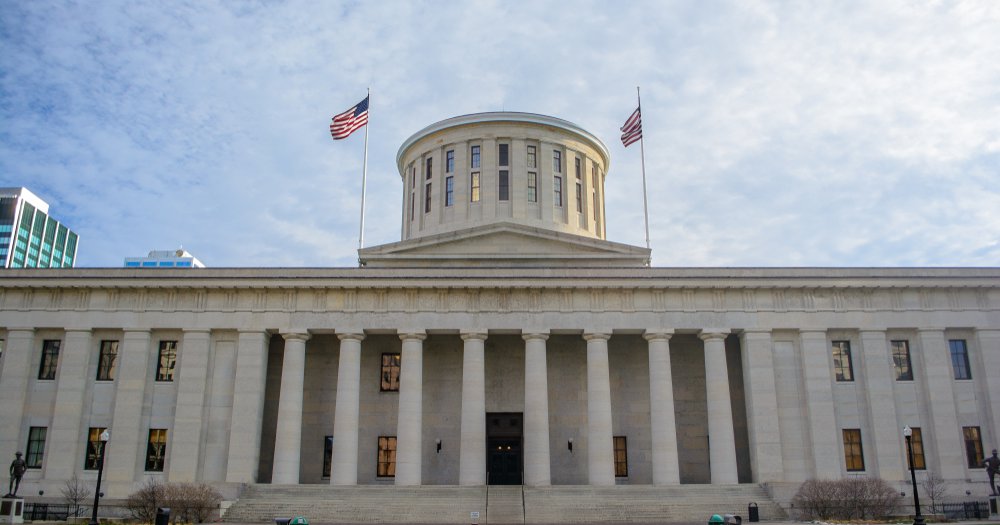
In December 2016, Ohio鈥檚 Republican-controlled legislature passed a bill that banned local regulations on puppy mills, minimum wage, paid sick time, and sex with animals. It also gave telecom companies the greenlight to expedite installation of 5G equipment in public spaces. Senate Bill 331, or the 鈥淧etland Bill,鈥� is the kind of bill that鈥檚 easier to pass during a lame duck session, when the specter of electoral blowback has faded and lawmakers are somewhat less restrained. More importantly, perhaps, it鈥檚 the kind of bill that can鈥檛 survive long as a whole, because the Ohio Constitution contains a single-subject rule鈥攐f which the Petland Bill is a blatant violation.
It鈥檚 been nearly three years since the Petland Bill passed, but it remains a strikingly relevant political parable. The story of SB 331 isn鈥檛 confined to just one state or legislative session: It鈥檚 of a piece with a decade-long nationwide trend of state interference in local democracy, manifesting most prominently in red states interfering with blue cities.
So much for Republicans supporting devolved, localized governance.
In an era of federal gridlock and state budget shortfalls, cities have become America鈥檚 true laboratories of democracy. But despite the admirable job cities have done to accommodate their increasing, and increasingly diverse, populations, their capacity to govern and solve issues of local concern are being stymied by state 鈥減reemption laws鈥濃�攚hen the state government restricts or withdraws municipal governments鈥� authority to legislate on a certain issue. The Petland Bill鈥檚 bans on local regulations and ordinances concerning pet stores, labor, and 5G are all preemption laws.
In confronting states鈥� abuse of preemption, it鈥檚 important to remember that preemption is an inherently benign legal tool, traditionally consisting of 鈥渁 judicial determination of whether a local law is inconsistent with pre-existing state law,鈥� according to legal scholar Richard Briffault. In other words, the preemption laws of old were minimum statewide standards (鈥渇loor preemption鈥�)鈥攐ften civil rights standards鈥攖hat all localities were required to meet, but were free to build upon as they saw fit.
But not anymore. Today, 鈥渃eiling preemption鈥� and 鈥渧acuum preemption鈥� reign supreme鈥攆or instance, when a state sets a maximum standard for the minimum wage that cities cannot exceed, or when it nullifies a city鈥檚 minimum wage ordinance but fails to adopt a single statewide wage to take its place, creating a regulatory vacuum.
The old motives behind state preemption of local authority have also shifted: The core underpinnings of judicial determination, citizen initiative, federalism, and respect for the role of local governance are no longer relevant.
Instead, preemption has been co-opted primarily by conservative state legislators and their contributors who seek to disempower progressive, regulation-prone cities. The decade since Republicans won control of the majority of state legislatures (including Ohio鈥檚) has seen in the frequency and range of preemption laws, targeting issues as broad as , , , , , , , , , , , , and more. We鈥檝e reached the point where, as preemption expert Mark Pertschuk , 鈥渁lmost every issue that matters to American voters is at risk of being preempted.鈥�
In short, the weaponization and escalation of state preemption to suppress local policymaking is arguably one of the most important鈥攁nd invisible鈥攖rends in politics today. But once you know it, you鈥檒l spot it everywhere.
Take labor-related preemption laws: Since 2000, the percentage of Americans living in states where cities can鈥檛 set their own minimum wage went to more than 60 percent. The of that increase happened over the last nine years. In that same decade, the number of states that bar localities from requiring employers to provide paid sick time to workers jumped from one to 23. Between 2014 and 2019, 44 states preempted local regulations of 鈥渢ransportation network systems,鈥� proactively shutting down any future city efforts to mandate stricter protections for Uber and Lyft drivers.
Then there are the preemption bills that punish local officials or governments for contravening state preemption laws. In 2017, for instance, Texas enacted a preemption law against sanctuary cities that threatened officials who 鈥渁dopt, enforce, or endorse鈥� a sanctuary city policy with fines of up to $25,500 per day and removal from office. A 2016 Arizona law threatens to bankrupt cities that deviate from state law. Back in 2011, the Florida Legislature鈥攂acked by the National Rifle Association鈥攔efitted the state鈥檚 long-held firearm preemption law with penalties on local officials for enacting new or enforcing old gun control policies. Former Tallahassee Mayor Andrew Gillum felt the weight of this development when Florida鈥檚 gun lobby came after him for keeping on the books two inert gun ordinances that prohibited firing a gun in a public park.
While state preemption misuse is concerning in and of itself, it鈥檚 also symptomatic of an even more unsettling hypocrisy. As both the punitive laws above and the Petland Bill illustrate, Republican-led legislatures are happy to forsake their commitment to the 鈥渓ittle guy鈥� struggling to compete in a rapidly-transforming economy鈥攁s well as to their dual philosophies of local control and constitutional adherence鈥攚hen those tenets conflict with their rural constituents鈥� more closely-held social values or a friendly lobbyist鈥檚 self-interest.
Indeed, most modern preemption laws stem from conservative special interests which fear the rapid diffusion of progressive city laws could hurt corporate profits or clash with their ideological vision for America. Members and allies of the conservative-aligned, industry-funded American Legislative Exchange Council are also well aware of how the process works, and have deployed an aggressive, multisector, cross-state strategy to slow it down. The results reveal the disturbing frailty of local democracy in the era of state preemption.
In many ways, the Ohio Petland Bill epitomizes this strategy. The original bill was in reaction to two Ohio cities passing animal protection ordinances limiting where pet stores can purchase puppies. Petland feared that more cities would follow suit, and for good reason: Some 250 U.S. cities have voted to expel pet stores that buy from puppy mills, including Miami, New York City, Chicago, Boston, and Salt Lake City. Love for puppies being what it is, Ohio Republicans suspected the bill wouldn鈥檛 command enough support on its own and, in an effort to bolster its appeal, tacked on an amendment outlawing bestiality. The local minimum wage preemption, meanwhile, was a proactive move to crush Cleveland鈥檚 scheduled public vote on increasing the minimum wage to $15 per hour. Telecom giant AT&T lobbied to accelerate their 5G installation timeline in order to head off a predicted flood of resistance from localities.
The bill also demonstrates Republican legislators鈥� willful disregard for good governance in favor of political expediency. Ohio, along with 42 other states, has a single-subject rule in its state constitution that鈥檚 meant to prohibit logrolling (where bills that have no hope of passing on their own are combined with enough other duds into an omnibus with majority support)and riding (when unpopular amendments are grafted onto to otherwise popular bills). Both tactics undermine transparency and the public will, and are considered forms of legislative misconduct.
It鈥檚 therefore unsurprising that Ohio Senate President Larry Obhof extolled Ohio鈥檚 standing as a single-subject state at a . His stance, however, was weakened by the fact that he鈥檇 helped pass the Petland Bill鈥攁 prime example of what the single-subject rule was designed to prevent.
Multiple Ohio county courts have since found the Petland Bill to be in violation of the constitution鈥檚 single subject rule, and while cities can look to such partial victories for inspiration, local officials and civil society groups attempting to fight back on legal procedural grounds face an uphill battle. A successful legal challenge premised on a single-subject argument is often just a detour on the road to implementation. When a bill like SB331 goes before a court, it鈥檚 unlikely to survive fully intact. However, the process and politics of striking down provisions one by one, sometimes county by county, are . As preemption laws work their way through the courts, residents and officials alike are left asking, what鈥檚 in effect, again鈥攁nd where, exactly? Ultimately, there鈥檚 an excellent chance some significant portion of the bill remains in force or gets re-enacted later.
While four courts invalidated all or portions of the Petland Bill, a fifth upheld the bill in its entirety. The status of its labor provisions, in particular, remain unclear鈥攂ut what is clear is, to Petland, the bill was a win. It鈥檚 since spawned others: Petland bills have been introduced in at least four states either in reaction to or anticipation of cities moving to regulate the supply and sale of puppies.
And that鈥檚 the point. Over the last 10 years, red states have increasingly used this new, aggressive form of preemption to run roughshod over predominantly blue cities. They鈥檝e done so because they can鈥攁nd because, for now, the rewards lawmakers reap by supporting and disseminating preemption laws that favor their contributors outweigh the risks of being called out by constituents for hypocritical, undemocratic governing practices.
Laws should not be treated as mere suggestions鈥攁 sentiment that would likely resonate with most of the local governments and officials who have defied preemption laws in the last decade. The essential question is not what to do with 鈥渄elinquent鈥� officials like Gillum; instead, we should ask what can be done to check state legislators who, in their haste to prevent the spread of stricter local regulations, are abusing their power over cities. While state lawmakers can鈥檛 be prosecuted for their votes (which is a good thing), it鈥檚 important that elected officials still be held accountable for violating the public trust. And for this to happen, champions of local democracy need to educate themselves on the legal and political tools at hand that will empower them to fight back.
Deputy Director, Political Reform Program