Hollie Russon Gilman
Senior Fellow, Political Reform Program
It鈥檚 that time again. Every few years, the country鈥檚 attention shifts to Iowa, where campaign staffers are currently preparing for the first major contest in the 2020 Democratic presidential primaries. As of this week, polls suggest a near , with former Vice President Joe Biden, Sen. Bernie Sanders, former Mayor Pete Buttigieg, and Sen. Elizabeth Warren all within a few percentage points of one another.
For pundits and staffers, the biggest question is, of course, who will win. But let鈥檚 zoom out for a minute. With so much sweat, preparation, and poured into the Iowa caucuses, what does it actually teach us about our democracy?
Contemporary American civic life is increasingly digitized and depersonalized, and opportunities for actual engagement are dwindling. Election turnout is dismal ( out of 32 developed countries), and has been for . You might think we鈥檙e politically destined for indifference鈥攗ntil, that is, you hit the ground in Iowa.
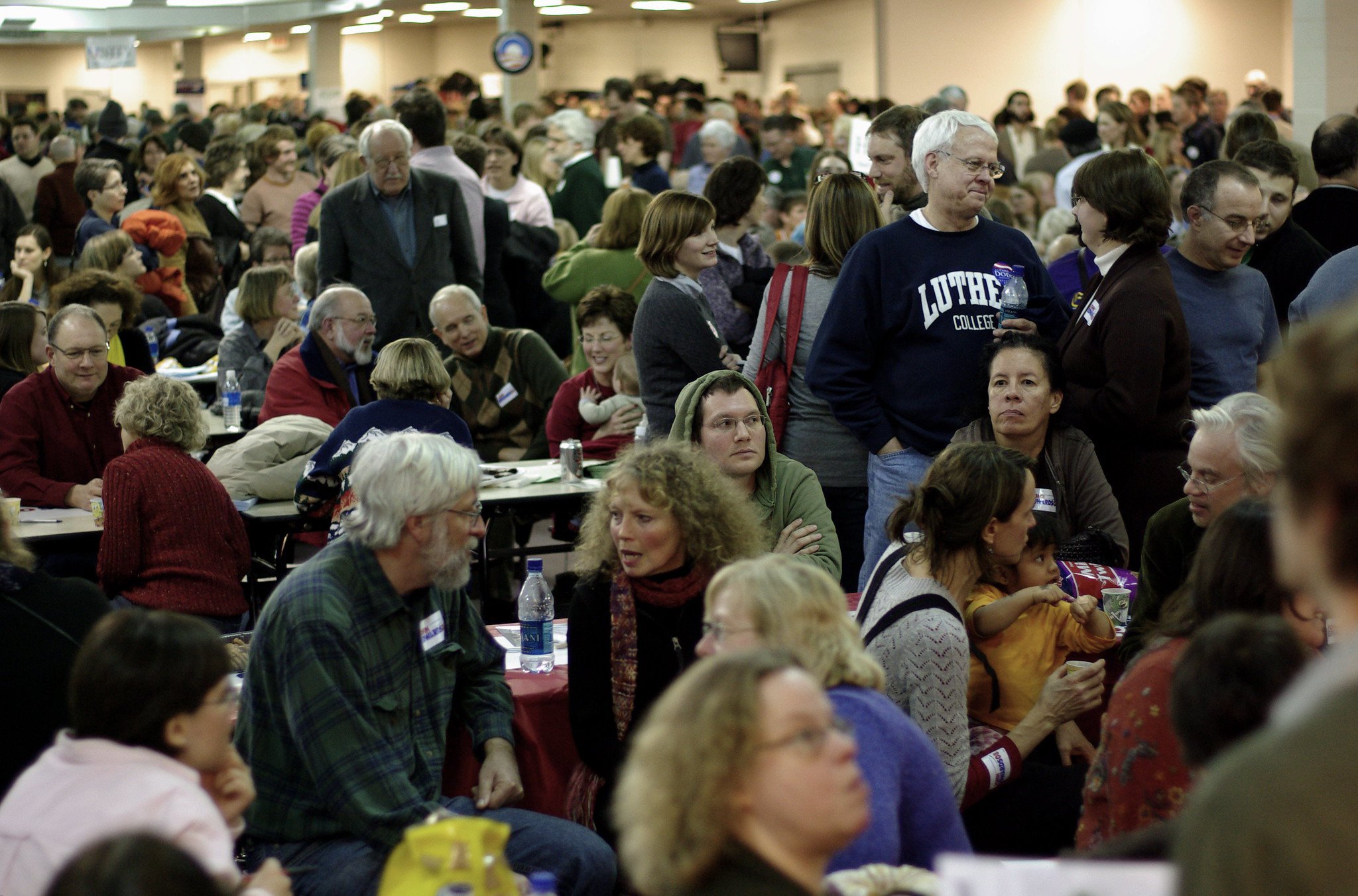
The Iowa caucus is unique in the primary process. It's not just a vote-and-go-home deal鈥攊t鈥檚 participatory and deliberative. Politics are hashed out over pancake breakfasts and midnight sessions around the kitchen table; volunteers attend birthday parties, make sick calls, and give out their personal cell phone numbers. People vote with their feet. They shout and squabble; husbands and wives show up just to cancel each other鈥檚 vote. In other words, it鈥檚 human politics鈥攁nd while that gets messy, it also makes Iowa one of the few places in the United States where citizens have a vocal say in their democracy.
So, here are a few lessons from the Iowa caucuses:
First, don鈥檛 give up on the value of face-to-face engagement. While the carnivalesque aspects of the caucuses warrant some cynicism and critique ( was at my caucus location when I volunteered in 2008), at its best, the Iowa caucus taps into Alexis de Tocqueville鈥檚 ideal of 鈥渃ivic voluntarism.鈥� People are empowered through dialogue and deliberation within their community. They take themselves out of their habitual roles and assume new identities in civic political fora.
People vote with their feet. They shout and squabble; husbands and wives show up just to cancel each other鈥檚 vote.
Second, democracies should be designed to equitably distribute political and economic power. The caucuses fall woefully short in this regard: Iowa, which is 90 percent white, does not represent the country as a whole鈥攁nd it fails to give voice to the clustered in America鈥檚 metropolises. The in-person, deliberative process can also exclude voters with disabilities or shift work, or without transportation or childcare. Shifting power to communities of color, working-class communities, and traditionally marginalized groups is crucial鈥攁nd efforts to do so must stretch beyond simply reforming Iowa or our elections.
Third, the Iowa caucuses鈥� recent rule changes remind us that democracy is not a static object, but a living organism鈥攐ne that must adapt and evolve in order to survive. This year, the caucuses will also take place in 鈥�71 in Iowa, 25 in other states, and three international sites in France, Scotland, and the Republic of Georgia鈥攐ffering remote Iowans the chance to participate.
Other groundbreaking changes include the 鈥攚hich could theoretically allow more than one candidate to declare victory鈥攁nd the addition of , which will lock supporters of viable candidates into their selected choice.
It remains to be seen whether these changes will make the process more transparent and democratic, or whether they鈥檒l just lead to even more confusion and infighting. Regardless, they illustrate something important: How we structure political processes matters. Rules define the experience of engagement鈥攁nd the media鈥檚 subsequent interpretation of events.
Shifting power to communities of color, working-class communities, and traditionally marginalized groups is crucial鈥攁nd efforts to do so must stretch beyond simply reforming Iowa or our elections.
Iowa鈥檚 larger lesson for U.S. democracy lies not in the quirky caucus math or the onslaught of East Coast elites championing their favorite political horse. Rather, it鈥檚 in how to inject higher-quality participation into more aspects of political life鈥攂oth during and between elections.
For example, could deliberative caucuses be placed throughout the country, especially in traditionally under-resourced communities and rural communities, to ensure more diversity in who gets facetime with elected officials? In between elections, can we build more opportunities for residents to have an active say in the governing process鈥攅specially those who are often excluded from traditional civic engagement processes?
Cities around the world are experimenting with methods like participatory budgeting, , and that bring civic power to non-citizens and historically marginalized residents. Such radically different civic infrastructure, as I write in my new book with Sabeel Rahman, is needed so to sustain and deepen the opportunity for people to affect policy.
The Iowa caucus has many flaws, and its critiques are warranted. Even so, its spirit can still inspire us to make our democratic processes more inclusive and participatory. No matter who wins, the Iowa caucus demonstrates that there鈥檚 plenty of value in engaging directly with 鈥渨e the people鈥濃�攁nd in trusting our democracy enough to constantly challenge, reexamine, and redefine its processes.
Senior Fellow, Political Reform Program