Carrie Gillispie
Project Director, Early Development & Disability
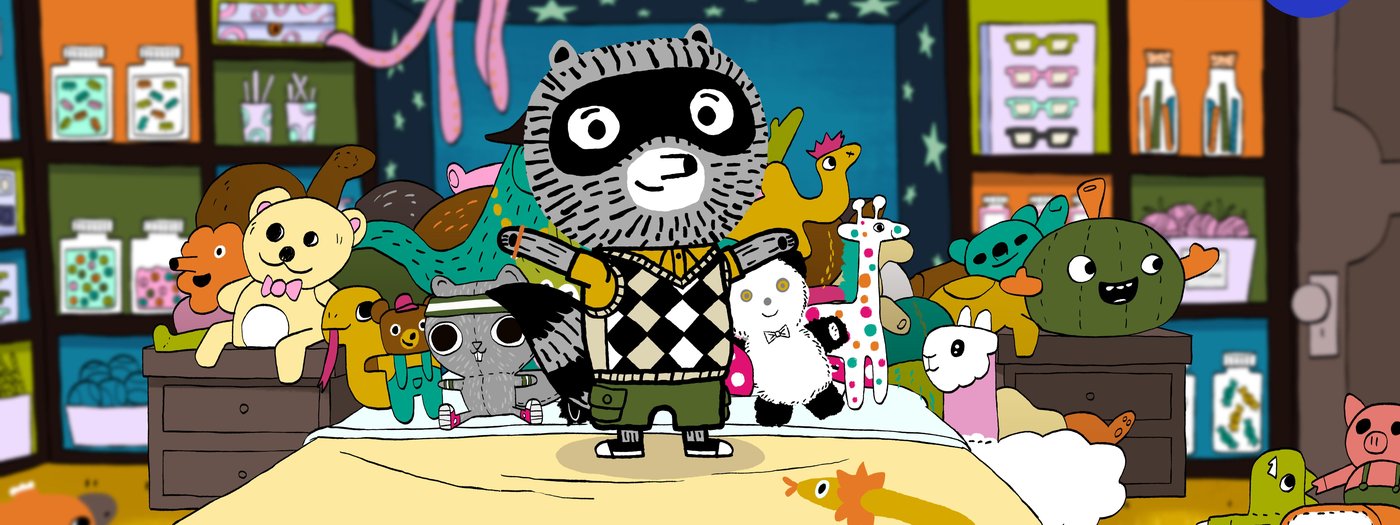
Despite growing divisions in the United States and uncertainty around critical education and work issues, a young raccoon named Carl gives me hope for the future. The new PBS Kids show 鈥攖he first series on the network to star an openly disabled main character鈥攕potlights the adventures of Carl, a raccoon with autism who loves collecting things, and his crew of neurodivergent and neurotypical animal friends. Carl is voiced by a child with autism, just as his predecessor Max (a non-lead character on the hit show Daniel Tiger), was voiced by an autistic actor. To my kids, Carl is just another fun cartoon about friendship, but to me, he鈥檚 a hopeful sign that perhaps disability inclusion could become the norm for the next generation.
Disability permeates all aspects of society: Anyone can become disabled at any time, and in the U.S. lives with a disability, whether visible or invisible. Research shows that when people with disabilities are truly included, everyone benefits鈥攚hether they are disabled or not. Beyond that, inclusion doesn鈥檛 just bring moral and social benefits; it has , too. The power of inclusion begins : When children with and without disabilities interact, they , make new friends, learn to appreciate human diversity, and create a sense of belonging. By fostering this understanding early, we can raise a generation of adults who innately understand disability inclusion, and the U.S. can reap its many benefits.
A child鈥檚 school years are critical not only for building math and reading skills, but for shaping how they see the world. When students with disabilities are integrated into the classroom community, kids learn that disability is another one of the many ways that people differ. (As my preschooler put it: people have a variety of 鈥渧oices, water bottles, and favorite books.鈥�) But far too many schools still fail to include students with disabilities in meaningful ways. From infancy on, parents of children with disabilities face huge . And far too many students with disabilities are , with a number of these students .
When students with disabilities are integrated into the classroom, kids learn that disability is another one of the many ways that people differ.
I鈥檝e witnessed firsthand the power of inclusive schools. At a Massachusetts preschool, I worked with a four-year-old who had recently arrived from a smaller, more isolating program. On his first day, he looked around in wonder, realizing that school was a place where he belonged. By the end of the year, his language skills flourished as he built friendships with classmates who quickly adapted to effectively communicate with a friend, even though he had more limited speech. In Washington, DC, I worked with neurodivergent high schoolers who visited a college campus and chatted with disabled college students about accessing support services, joining clubs, and having fun鈥攍earning that they, too, could have the full college experience they deserve.
These success stories didn鈥檛 happen organically: They鈥檙e the result of thoughtful policy choices. Teachers are key to inclusion but don鈥檛 receive nearly enough professional development for it, leading to frustration and burnout. To get there, Congress should , while more existing so that teachers have the .
Unfortunately, many children with disabilities grow into adults who face barriers to employment or are pushed out of workplaces that don鈥檛 fully include them, or severely underpay them. Yet, companies who prioritize disability inclusion often . Workplace inclusion isn鈥檛 just about accommodations (most of which cost little or nothing); it鈥檚 about creating an environment and culture where employees with disabilities truly feel they belong. In fact, inclusion at school is a for students with disabilities in the workplace and in living independently later in life.
The good news is we can build a truly inclusive workplace, and society, by starting with our youngest generations. By ensuring all of our youngest Americans feel a sense of belonging from the start, we can raise a generation that sees Carl the raccoon and his buddies as second nature and the start of a brighter, more inclusive future.
Project Director, Early Development & Disability