Maresa Strano
Deputy Director, Political Reform Program
In the months since COVID-19 arrived on the United States鈥� shores and derailed our 2020 election season, one statement has been uttered repeatedly: 鈥淚n a democracy, no one should be forced to choose between health and the right to vote.鈥� This particular iteration, courtesy of a from Sen. Amy Klobuchar, came in mid-April as COVID-19 cases and bipartisan consensus over lockdown measures were reaching their peak.
At the time, the sentiment resonated with a broad, bipartisan audience. Of the 16 states still requiring voters to provide an excuse to vote absentee, over half of them, including five Republican-controlled states, adjusted their qualification criteria . Republican Governor Mike DeWine of Ohio became a of voting by mail, defying both and his own record as former state attorney general of fighting . Congressional Republicans promptly agreed to send $400 million in election assistance to states.
Some Republican-led states will extend coronavirus-related measures to ease and expand alternative voting methods to the general election. But as states begin to reopen and many Republican leaders and voters insist on a return to normalcy, whatever fragile consensus we had over pandemic-time voting measures seems to have crumbled.
So, where does this leave prospects for expanding vote-by-mail and other measures?
First, ongoing efforts to prepare states for a one-off flood of mail ballots will persist, despite dwindling hopes for another infusion of federal funding. The National Association of Secretaries of State (their states鈥� chief elections officers) will likely keep up their internal 鈥攊nstituted once it became clear that this year鈥檚 elections wouldn鈥檛 be able to proceed as usual鈥攖o discuss procedural changes and share vote-by-mail best practices. And democracy-oriented foundations, donors, advocacy groups, and lawmakers will continue to work to lower vote-by-mail barriers for poor, minority, and younger voters, such as by pushing states to and providing .
Still, such remedies may not be enough to compensate for the billions of additional federal dollars for state election assistance currently being blocked by the Republican-controlled Senate. Nor are they an adequate substitute for long-term, bipartisan commitments to growing mail-in voting capacity among our most polarized and segregated states. For instance, politically divided states like Wisconsin鈥攚here about this year (compared to a historic average of 6 percent), and where thousands were disenfranchised by a 鈥攚ould need both federal funds and political will to execute a massive and, most importantly, reliable mail voting operation this November. In a hotbed of toxic partisanship like Wisconsin, where the GOP-led legislature is opposed to any voting rights expansion that might give Democrats an advantage, a state-driven plan to give election administrators the necessary training and equipment would almost certainly be dead on arrival. The same applies in many other swing states.
Unfortunately, given the influence these states exert over the electoral calculus, any mishaps arising from inadequate preparation could prove disastrous. Slapdash attempts to scale mail-in voting at the state level will at best generate inefficiencies, unnecessary costs, delays, and modest levels of litigation. At worst, they could result in abnormally high rates of ballot rejection, counting errors, and devastating legal battles that will ultimately grant the courts, rather than ordinary citizens, the power to decide who wins and loses.
Universal optional vote-by-mail is a worthy goal for all states. Indeed, absentee voting has become a norm of civic life: Nearly one in four Americans cast absentee ballots in 2016, and 26 percent voted by mail in 2018. Five states鈥擶ashington, Oregon, Colorado, Hawaii, and Utah鈥攔un their elections by mail, and several others, including California, have established systems for doing so. In 34 states and Washington, D.C., voters are free to request a mail ballot without any excuse. In short, mail balloting deserves greater public investment, pandemic or no pandemic鈥攊t鈥檚 popular, can save money, and makes voting more convenient for Democrats and Republicans alike.
Of course, optional is the operative word. Many communities鈥攕uch as Native Americans, who don鈥檛 always have easy access to the postal system; people without fixed addresses (including many students or those experiencing homelessness); and people with certain disabilities鈥攕till depend on in-person voting. There are also issues of inequity and insecurity: Mailed ballots, and younger voters, are more likely to be discarded based on issues often outside of voters鈥� control, such as , clerical errors, and trivial inconsistencies between personal information on the ballot and poll records. , or in the first place鈥攁n found that one-third of 75 Washington, D.C. voters who turned out for Tuesday鈥檚 primary never received their mail ballot.
Most of these can be ameliorated (though not eliminated) through robust voter outreach and education, handwriting analysis training for signature verifiers, ballot tracking software, and cameras at ballot drop-off sites. On the other hand, issues stemming from partisan-legal disputes鈥攚hich breed confusion, misinformation, and distrust in our democratic institutions鈥攁re significantly thornier.
This is a legitimate concern. Absentee ballots are lightning rods for consequential election-related litigation: The forced thousands of Wisconsinites who didn鈥檛 get their absentee ballots to turn out in person, resulting in at least . Legal battles over absentee balloting are already , with the battle lines clearly drawn between the Republican and Democratic National Committees and their proxies.
States looking to avoid another Wisconsin-like 鈥攐r, worse, a 鈥攃an use the next few months to clarify their rules for foreseeable issues. But if they don鈥檛 want to avoid such conflicts, then what? The main battleground states in this year鈥檚 presidential race鈥擯ennsylvania, Wisconsin, Michigan, Florida, Arizona, and North Carolina鈥攈ave Republican-dominated legislatures with and . As law professor Rick Hasen , even if these states decide to punt counting decisions to the courts, the decision will probably break along similarly partisan lines.
Simply put, states face a range of hurdles to responsibly increasing mail ballot options. Thus, rather than fixating on short-term approaches for a single cycle, let鈥檚 consider how these developments can spur greater voting accessibility and engagement in the long haul.
First, while the pandemic has highlighted gaps in states鈥� early voting infrastructures鈥攁s of 2020, there are still 10 states without in-person early voting, and even more lack weekend voting options鈥攊t鈥檚 also spurred residents to try alternative voting methods, such as vote-by-mail. Similarly, circumstances have also forced states that don鈥檛 offer online voting registration鈥攁 cost-effective service that goes hand-in-hand with mail-in voting鈥攖o in this cycle.
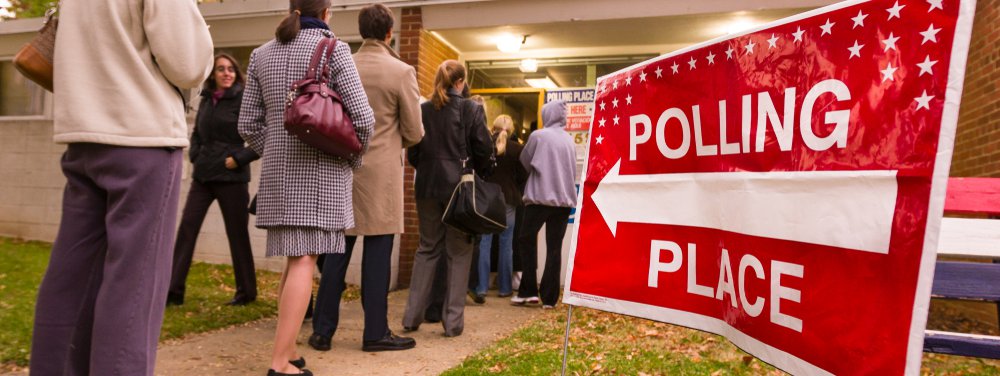
In addition, more states are considering letting people cast their ballots at instead of precinct-based polling places鈥攁 move that would reduce Election Day staffing costs, lines, and overcrowding at polling stations. Even before the era of social distancing, endless queues and restricted voting windows had become : Voter suppression efforts and budget issues were fueling polling place cuts and consolidations across the country鈥攅specially in the urban areas of states with limited early and mail-in voting options. This trend has , who are less likely to have the flexibility of standing in line all day. And, , COVID-19 has made matters worse: In cities like Indianapolis, polling place reductions and missing absentee ballots contributed to long lines and bottlenecks, offering a bleak preview of what鈥檚 to come in November.
Of course, as we rely more on mail-in and in-person early voting, ballot design will become increasingly important. The average starting time for in-person early voting is 22 days before the election, which leaves plenty of time for shakeups and dropouts. Ranked-choice ballots, as , can limit the incidence of early votes becoming wasted votes.
Although the pandemic has prompted renewed interest from most states in improving voting accessibility, getting temporary changes to stick and spread will require initiative and financial commitment from progressive-leaning cities and counties鈥攑articularly those within red and purple states. For instance, when Pennsylvania rejected a measure to send mail ballots with prepaid postage, Allegheny County (where Pittsburgh is located) . Milwaukee, Wisconsin has voted to , and plan to send mail ballots to all registered voters.
While statewide action is still the safest bet, local governments could still, as Brennan Center Fellow Zachary Roth notes, provoke a as peer counties come under pressure to match such reforms. Of course, states may crack down鈥攁s Arizona did when a , concerned about mass polling place closures, started mailing ballots to every primary voter. Here, again, is where those partisan-legal disputes kick in.
The risks of such conflicts, as discussed above, are great. But at the end of the day, the COVID-19 crisis will expose more Americans鈥攅ither through media, word of mouth, or direct experience鈥攖o reforms aimed at making voting easier, more secure, and more equitable than one would have thought possible just a few months ago. Regardless of how this election and its attendant lawsuits pan out, that level of exposure will leave an indelible mark on our democracy.
Deputy Director, Political Reform Program